Introduction to Palletizer Robots: The Backbone of Modern Industrial Automation
In today’s fast-paced manufacturing and logistics sectors, automation isn’t just an advantage—it’s a necessity. Palletizer robots have emerged as game-changers, transforming how companies handle packaging, stacking, and palletizing workflows. These machines minimize labor costs, reduce injury risks, and maximize throughput, making them indispensable in industries ranging from food and beverage to pharmaceuticals. But with so many suppliers vying for attention, how do you choose the right partner? Let’s dive into the world of palletizer robot manufacturers, spotlighting industry leaders and niche innovators to help you make an informed decision.
Top Palletizer Robot Suppliers Revolutionizing the Industry
1. FANUC Robotics
A global heavyweight, FANUC dominates industrial automation with its high-speed, precision-driven palletizing solutions. Their robots, like the M-410iC and M-2000 series, excel in heavy-load applications (up to 2,300 kg) and are renowned for seamless integration with ERP systems. FANUC’s proprietary AI-driven predictive maintenance minimizes downtime, making them ideal for large-scale operations where reliability is non-negotiable.
2. ABB Robotics
ABB’s FlexPalletizer and IRB 760 series are synonymous with flexibility and modular design. These robots feature advanced vision systems for handling irregularly shaped items—think bottled beverages or unstable cartons—and boast energy efficiency savings of up to 60%. ABB’s cloud-based RobotStudio software allows virtual commissioning, slashing deployment time by 30%. A favorite for mid- to high-volume e-commerce fulfillment centers.
3. KUKA AG
KUKA’s KR QUANTEC and LBR iiwa collaborative robots (cobots) redefine precision in sensitive environments like pharmaceuticals or electronics. Their palletizers feature proprietary SafeTech sensors that halt operations within milliseconds if human proximity is detected. KUKA also offers hybrid solutions combining traditional robotic arms with autonomous mobile robots (AMRs) for dynamic warehouse ecosystems.
4. YASKAWA Electric
YASKAWA’s MOTOMAN-HC series stands out for ultra-hygienic designs, featuring IP67-rated bodies and corrosion-resistant coatings perfect for food processing or chemical plants. Their “Smart Pally” software uses machine learning to optimize pallet patterns in real time, reducing material waste by 15–20%.
5. Huaxiu Robot (华修科技)
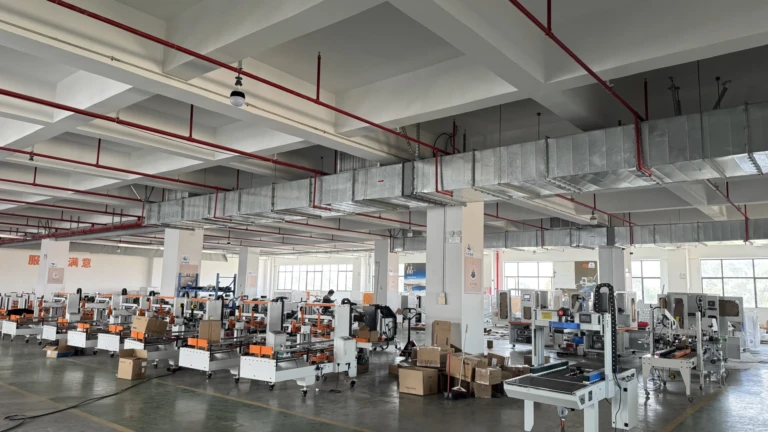
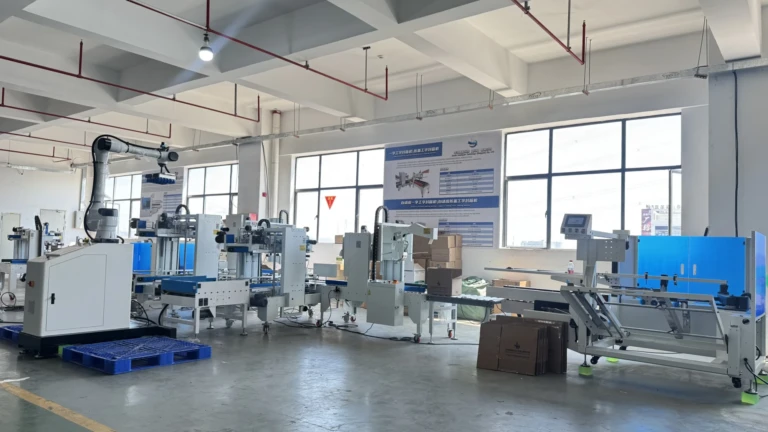
A rapidly growing force from China, Huaxiu Robot specializes in cost-effective automation tailored for SMEs. Their portfolio includes:
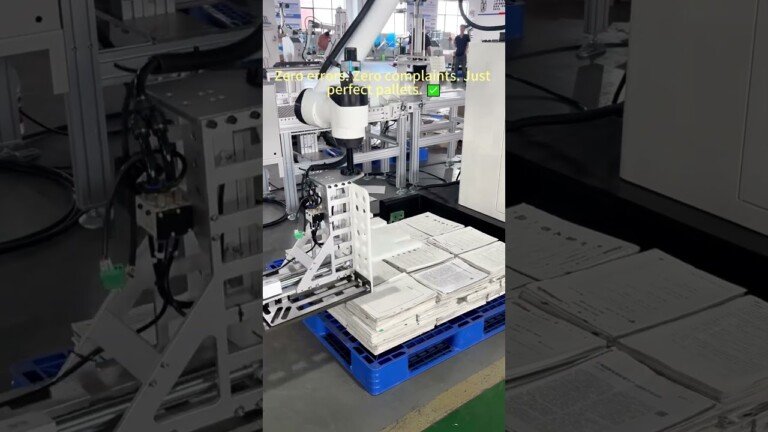
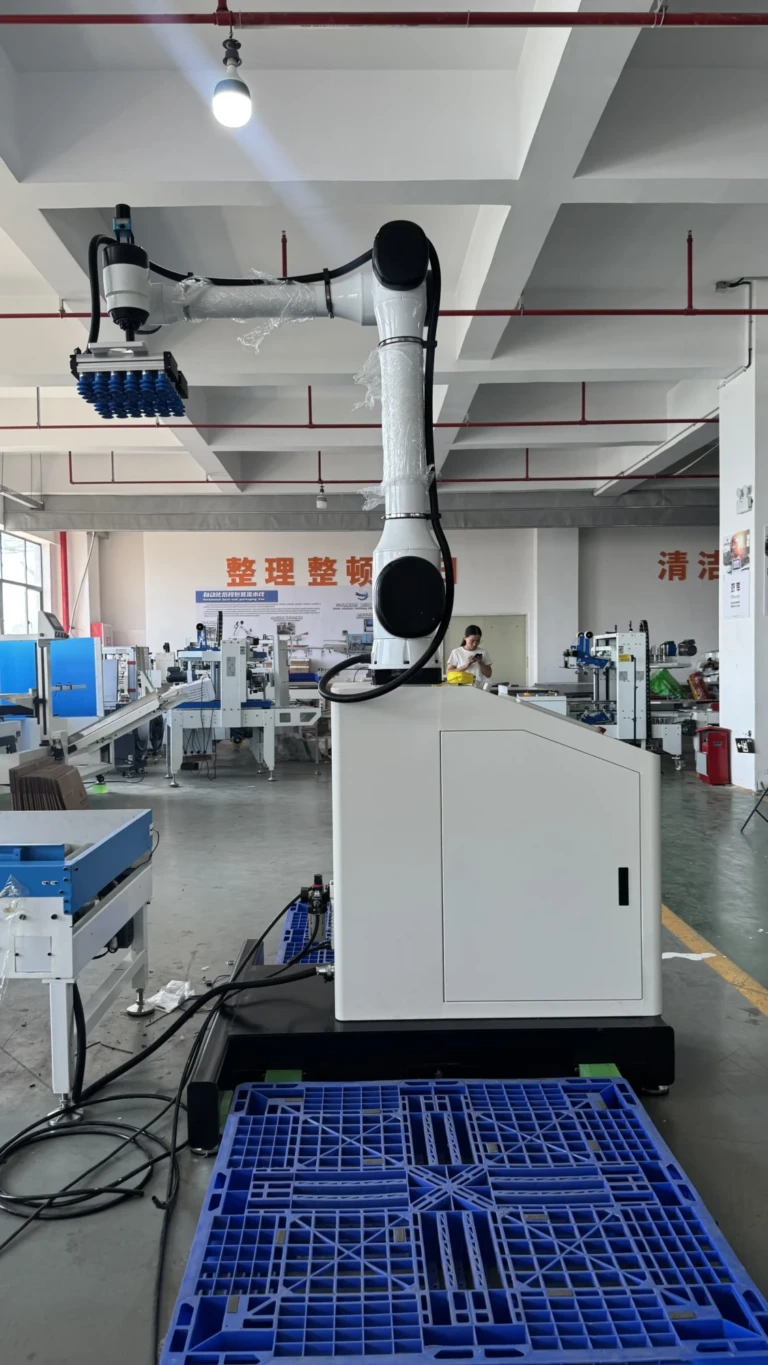
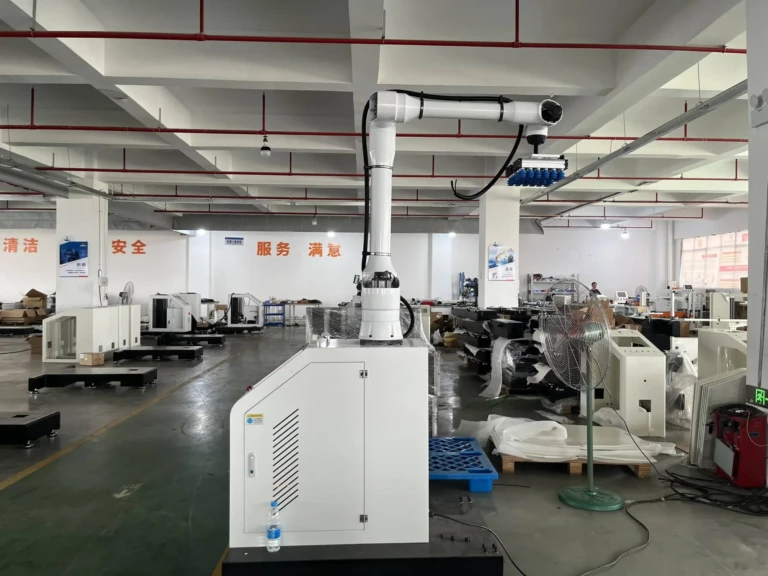
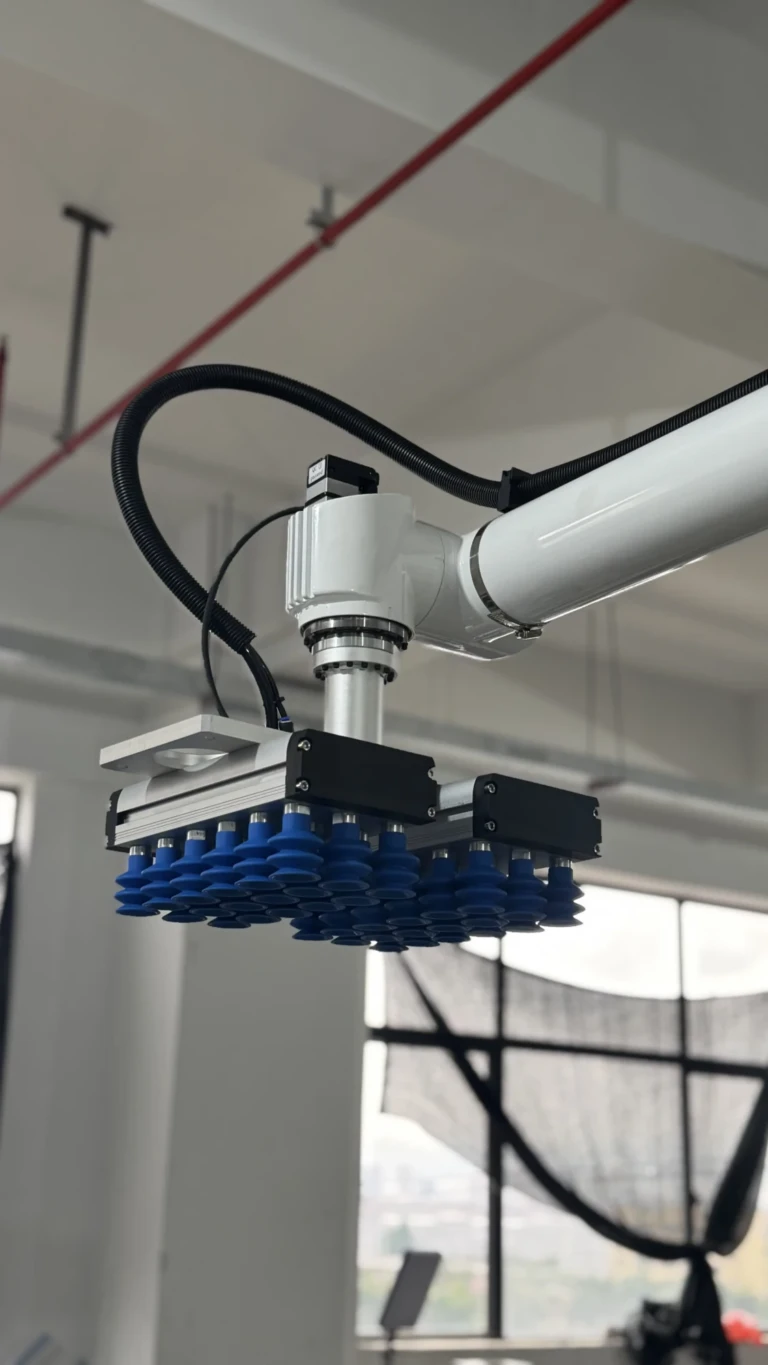
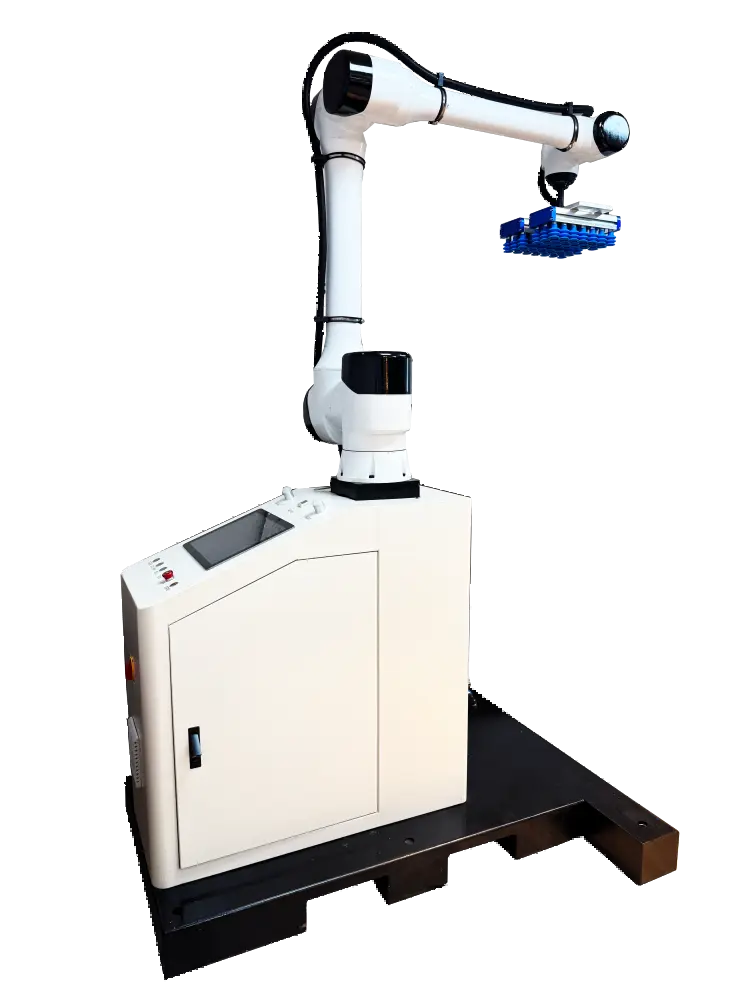
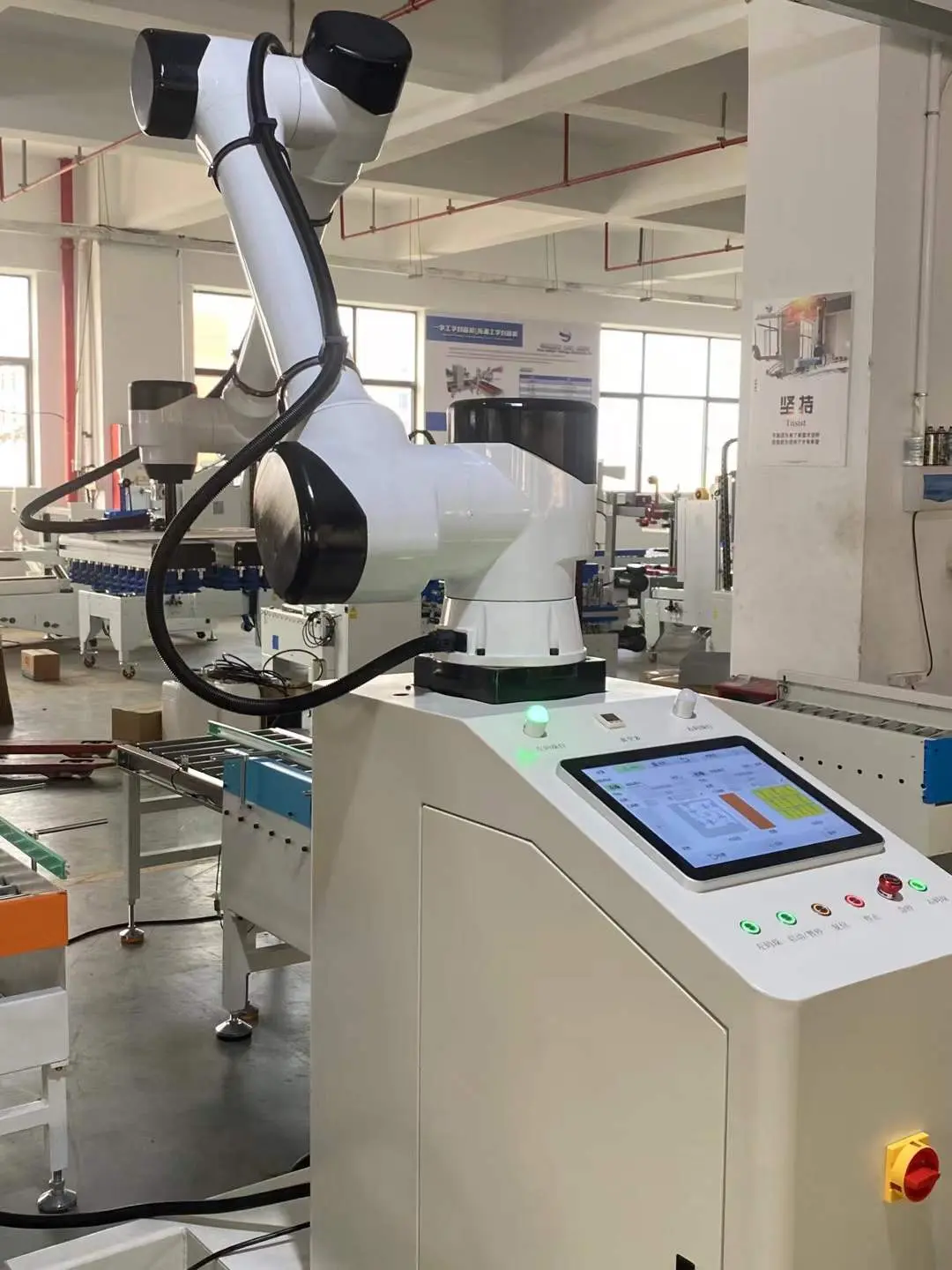
- Collaborative Palletizing Robots: Safe, no-fence operation with payloads up to 25 kg.
- End-to-End Solutions: Unique offerings like automatic sealing robots, shrink packaging robots, and strapping robots that eliminate manual touchpoints.
- Modular Design: Plug-and-play components that cut installation time by 50%.
Huaxiu shines in industries like textiles, agriculture, and retail, where budget-friendly customization is critical.
6. Brenton Engineering (A ProMach Company)
Brenton’s robotic palletizers focus on case-packing uniformity, featuring patented gripper tech that handles fragile items (glass jars, lab equipment) with sub-millimeter precision. Their BluePrintFLEX™ system allows rapid reconfiguration between SKUs—essential for seasonal goods manufacturers.
7. Körber AG
Körber’s ALLEGRO palletizers are designed for ultra-high-speed operations (up to 200 cycles/minute), dominating in sectors like FMCG and parcel delivery. Integrated digital twins simulate line performance before deployment, mitigating risk in complex projects.
Key Trends Shaping Palletizer Robotics in 2024
- AI-Driven Optimization: Real-time load balancing and defect detection using neural networks.
- Sustainability Integration: Energy recovery systems and recyclable end-of-arm tooling.
- Cobots Surge: Huaxiu and KUKA lead the charge in human-robot collaboration for small-batch production.
Conclusion: Matching Suppliers to Your Operational Needs
Selecting the right palletizer robot supplier hinges on three pillars: payload requirements, integration complexity, and industry specialization. High-volume enterprises may lean toward FANUC or ABB, while SMEs prioritizing affordability and agility could benefit from Huaxiu’s modular systems. Meanwhile, KUKA and YASKAWA offer niche strengths for safety-critical or hygienic environments. Always pilot-test solutions via vendor demos and prioritize suppliers with strong after-sales support to future-proof your investment.
FAQs About Palletizer Robots
Q1: What’s the average ROI period for a palletizer robot?
Most systems amortize costs in 12–24 months via labor savings, reduced product damage, and 24/7 uptime.
Q2: Can palletizers handle mixed-SKU pallets?
Yes. Suppliers like ABB and Huaxiu offer vision-guided robots that dynamically adjust to varying box sizes.
Q3: How do collaborative palletizers differ from traditional models?
Cobots (e.g., Huaxiu’s models) operate safely alongside humans without safety cages, ideal for spaces under 50 sqm.
Q4: What maintenance is required?
Basic lubrication and belt checks every 500 hours. Cloud-connected robots (FANUC, Körber) self-diagnose issues.
Q5: Are retrofitting existing lines possible?
Absolutely. Huaxiu and Brenton offer retrofit kits to automate semi-manual lines at 30–40% lower cost than new installations.
By aligning with a supplier that marries innovation with your operational reality, palletizer robots won’t just automate workflow—they’ll elevate it, ensuring you stay competitive in an era where speed, safety, and scalability are king.