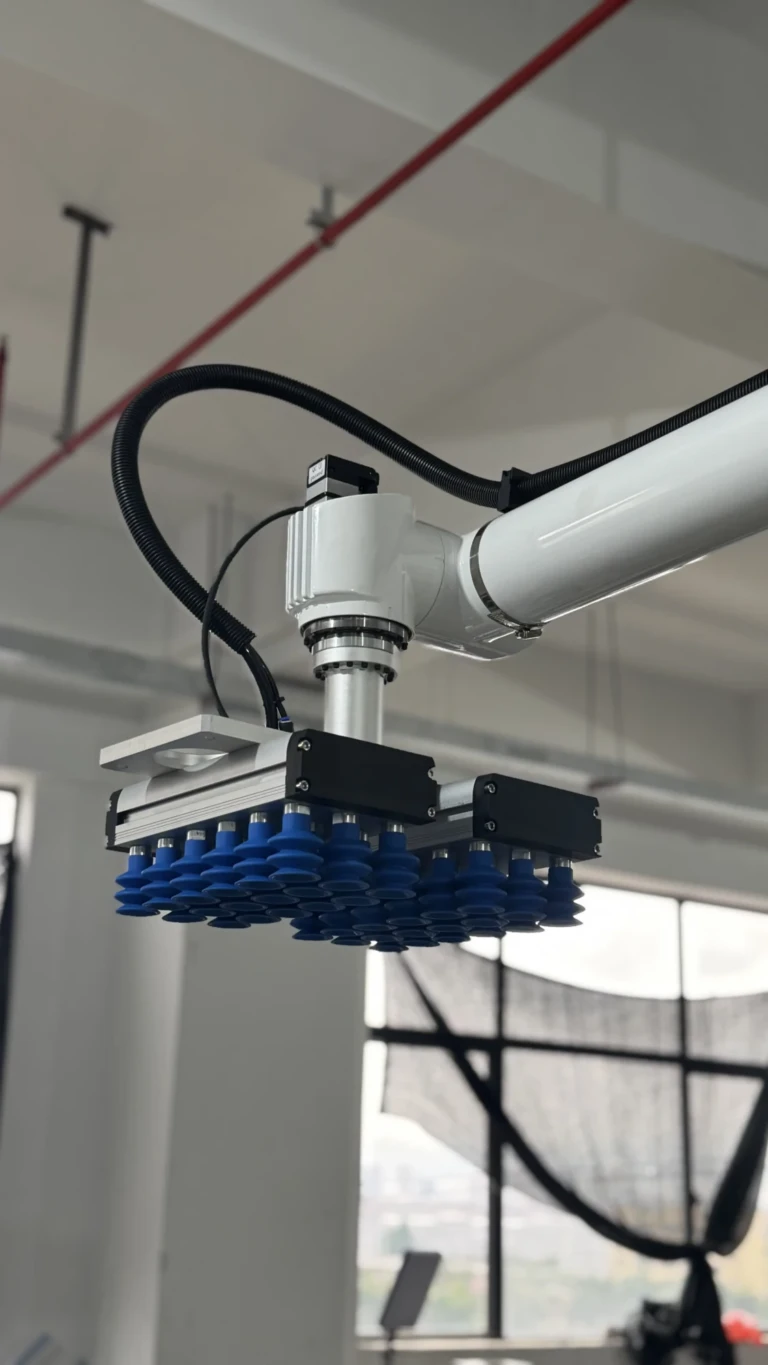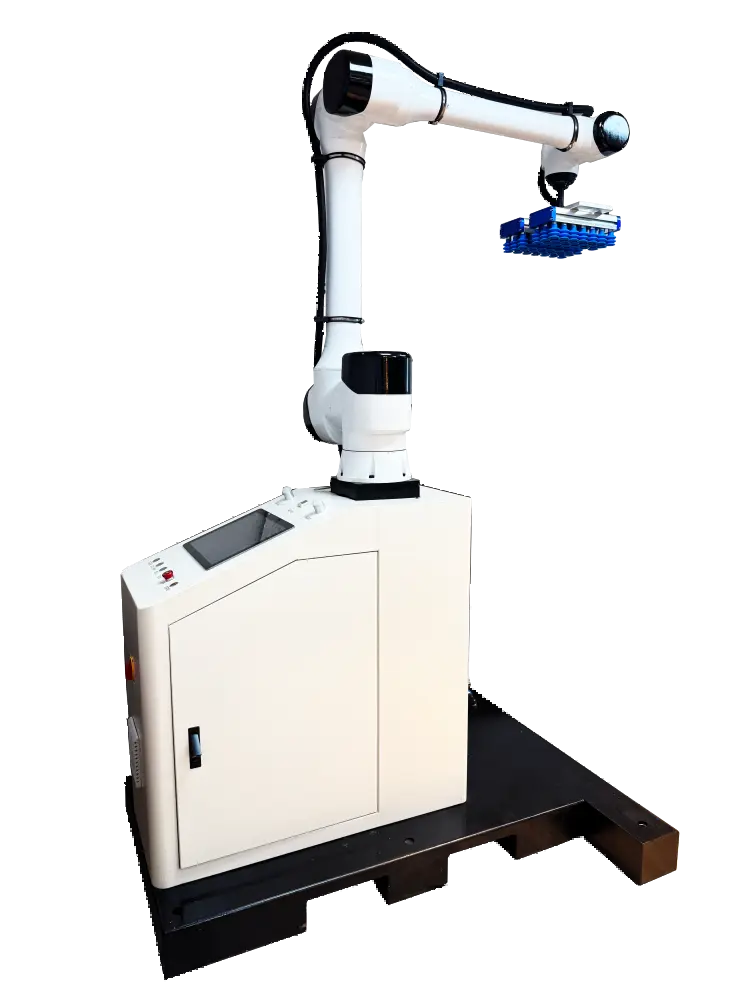

The Logistics Revolution: How 4-Lane Pallet Robots Are Transforming Warehouse Efficiency
In today’s hyper-competitive supply chain landscape, speed, precision, and scalability aren’t just advantages—they’re survival requirements. Enter the 4-Lane Pallet Robot, an engineering marvel designed to redefine what’s possible in automated material handling. For businesses grappling with labor shortages, rising costs, and demand volatility, this technology isn’t just an upgrade—it’s a game-changer.
Breaking Down the 4-Lane Pallet Robot
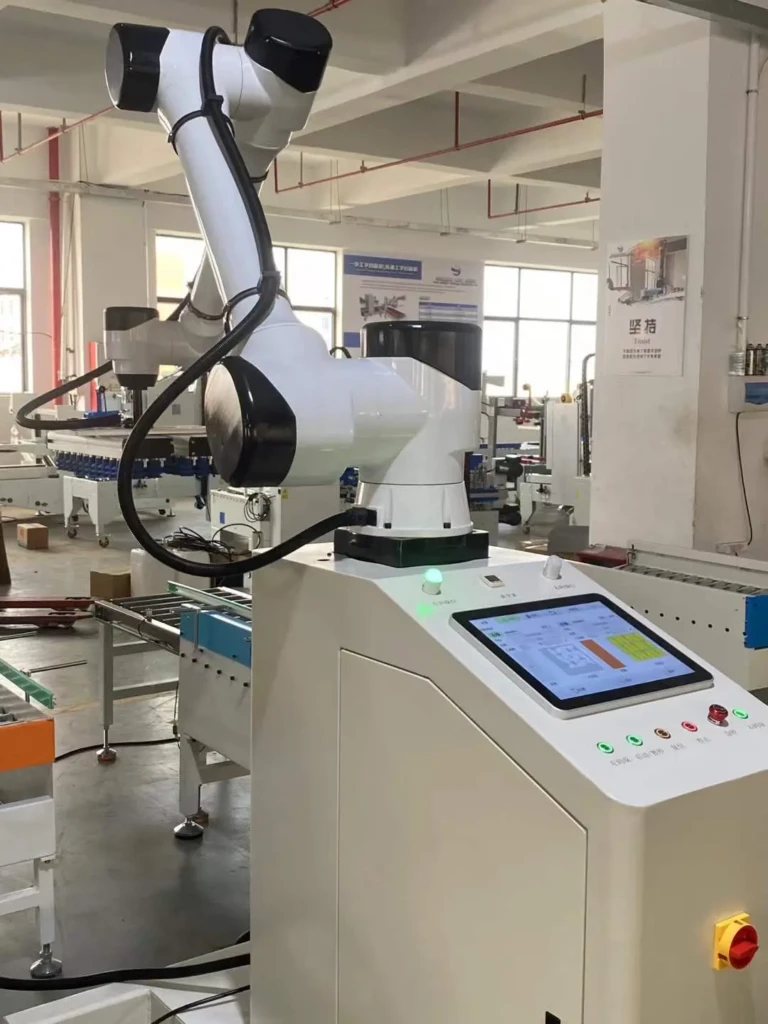
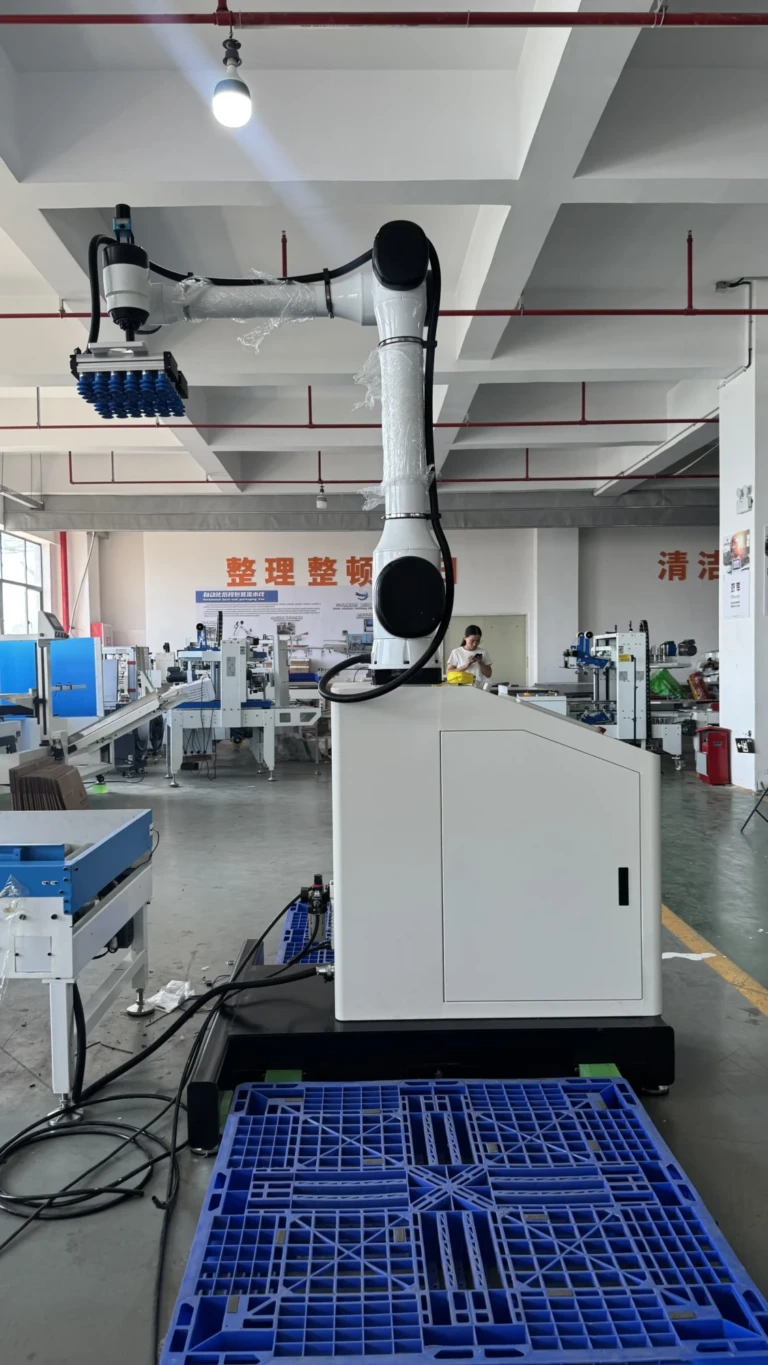
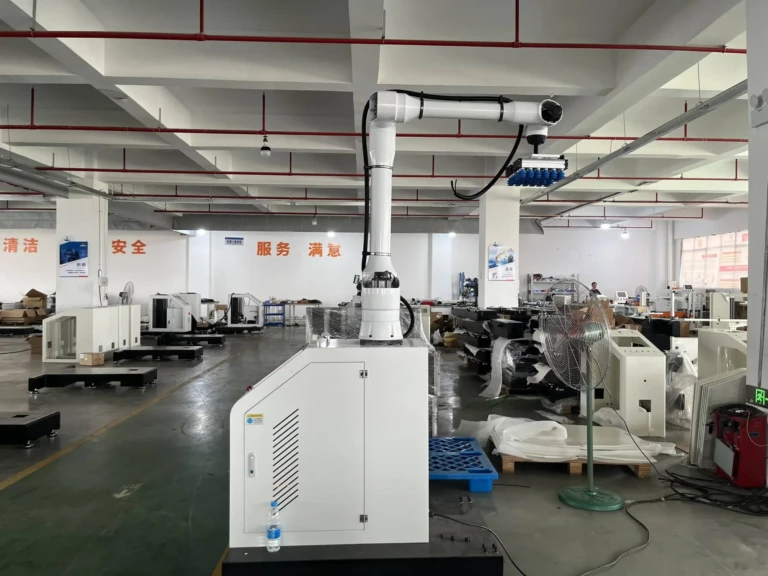
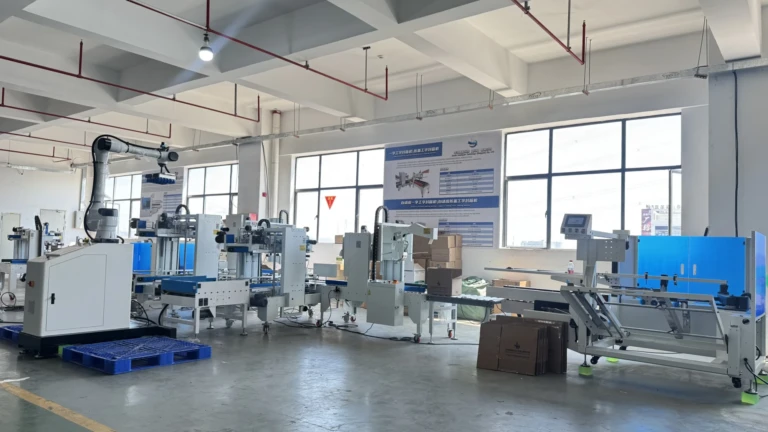
Unlike traditional single- or dual-lane systems, a 4-lane palletizing robot leverages advanced robotics and intelligent lane management to handle four product lines simultaneously. Imagine a scenario where one machine orchestrates the palletizing of mixed-SKU orders, fragile items, and high-speed bulk loads—all without missing a beat. This parallel-processing capability eliminates bottlenecks, slashes cycle times, and maximizes throughput in ways older systems simply can’t compete with.
Core Advantages in Operations
-
Unmatched Throughput
With four independent lanes, the system can process 1,500–2,000+ cases per hour—up to 4x faster than conventional robots. For industries like beverages, pharmaceuticals, or e-commerce fulfillment, this means meeting same-day shipping deadlines effortlessly. -
Labor Optimization
One 4-lane robot replaces 6–8 manual laborers while reducing ergonomic risks like repetitive strain injuries. Workflow continuity improves, and staff can be redeployed to value-add tasks like quality control. -
Space Efficiency
By consolidating multiple production lines into a single footprint, warehouses reclaim up to 30% of floor space—critical for facilities operating in high-rent urban areas or retrofitting legacy infrastructure. -
Zero-Downtime Flexibility
Advanced vision systems and AI-driven software enable instant product recognition and lane-switching. Whether handling unevenly sized boxes, fragile glassware, or irregular polybags, the robot adapts without manual reprogramming. - Error Elimination
Precision grippers and laser-guided placement ensure pallets are stacked with millimeter accuracy—reducing load shifts, shipment damages, and costly returns.
The Huaxiu Ecosystem: Beyond the Pallet Robot
The true power of a 4-lane system is amplified when integrated with complementary automation from innovators like Huaxiu Robots. Picture this:
- Automatic Unpacking Robots pre-process incoming shipments, feeding products directly into the palletizer.
- Sealing & Strapping Robots secure loaded pallets in seconds, while Stretch Film Packaging Robots weatherproof them for transit.
- Pallet-Forming Robots autonomously build or repair pallets, creating a closed-loop system.
This synergy erases manual touchpoints, turning warehouses into lights-out operations capable of 24/7 productivity.
Who Wins with 4-Lane Automation?
- Food & Beverage: Handle mixed pallets of cans, bottles, and snack boxes without cross-contamination risks.
- Pharmaceuticals: Comply with FDA traceability mandates via integrated barcode scanning and digital logs.
- 3PL Providers: Scale operations overnight to accommodate seasonal spikes or new client onboarding.
The ROI Reality Check
A typical 4-lane pallet robot achieves payback in 12–18 months through:
- 60–70% labor cost reduction
- 35–50% higher daily output
- 90%+ reduction in product damage claims
Conclusion: The Future Is Multi-Lane
The 4-lane pallet robot isn’t just another piece of equipment—it’s a strategic asset that future-proofs your operations. In an era where consumers expect faster deliveries and flawless order accuracy, investing in scalable automation is no longer optional. Companies like Huaxiu Robots are leading this charge with modular, interoperable systems that turn logistical chaos into competitive advantage.
As warehouses evolve into smart distribution hubs, those who embrace multi-lane robotics will dominate their markets—while laggards struggle to keep pace.
FAQs: Demystifying 4-Lane Pallet Robots
Q1: How does a 4-lane robot handle different box sizes on the same pallet?
A: Advanced 3D vision cameras scan each item in real-time, while AI software calculates optimal stacking patterns. Grippers can switch suction/vacuum modes instantly to secure anything from shoeboxes to industrial drums.
Q2: Is this system compatible with existing warehouse management software (WMS)?
A: Yes. Huaxiu’s robots operate on open-API architectures, enabling seamless integration with SAP, Oracle, or custom WMS platforms for end-to-end data visibility.
Q3: What about maintenance downtime?
A: Predictive analytics monitor motor wear, belt tension, and software health, scheduling maintenance during low-demand periods. Most components are modular—swapping a gripper takes under 10 minutes.
Q4: Can it work alongside human employees safely?
A: Absolutely. Collaborative robots (cobots) feature force-limited joints, emergency stop sensors, and light curtains that halt motion if a worker enters the safeguarded zone.
*Q5: What’s the energy consumption compared to manual labor?
A: A 4-lane robot uses roughly 4–6 kWh per hour—equivalent to running 2–3 home air conditioners. This is vastly more efficient than the HVAC/lighting needed for a manual crew in the same space.
Q6: How future-proof is the technology?
A: With over-the-air (OTA) software updates and expandable lanes, systems can be upgraded for new products, regulations, or IoT integrations without costly hardware replacements.
By adopting 4-lane palletizing robots, businesses aren’t just automating—they’re reimagining efficiency. The question isn’t whether you can afford this technology, but whether you can afford to ignore it.