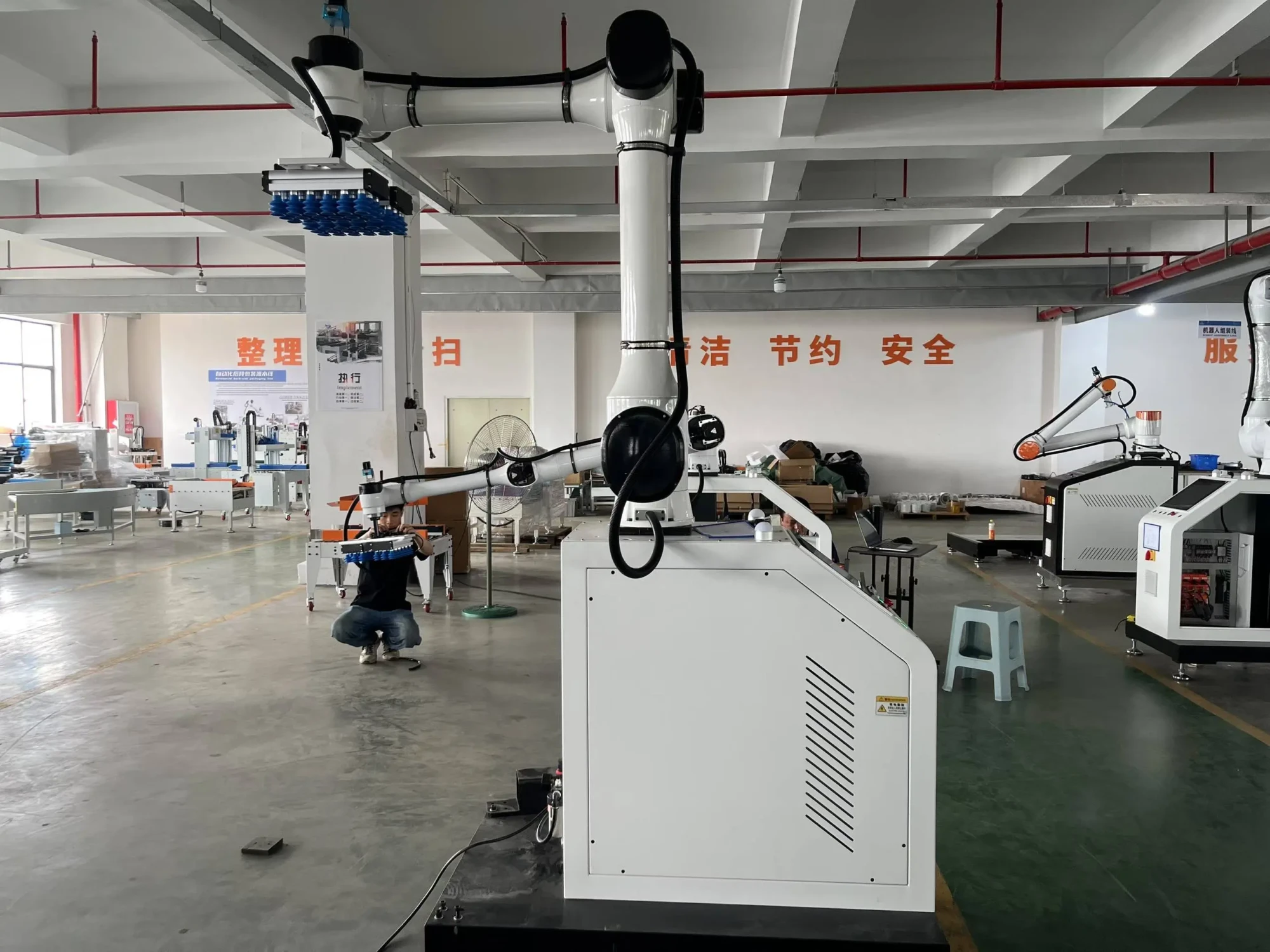
Unlocking Warehouse Efficiency: A Deep Dive into Rdc Robotic Palletizer Solutions
In today’s fast-paced manufacturing and logistics sectors, efficiency and precision are non-negotiable. The rise of automation, particularly robotic palletizing systems, has revolutionized how businesses handle repetitive, labor-intensive tasks like stacking products onto pallets. Rdc Robotic Palletizer Solutions represent the cutting edge of this transformation, offering unparalleled speed, accuracy, and scalability. This article explores their impact, technology, and the broader ecosystem of automation tools—like those from Huaxiu Robot—that maximize operational productivity.
What Are Robotic Palletizers & Why Do They Matter?
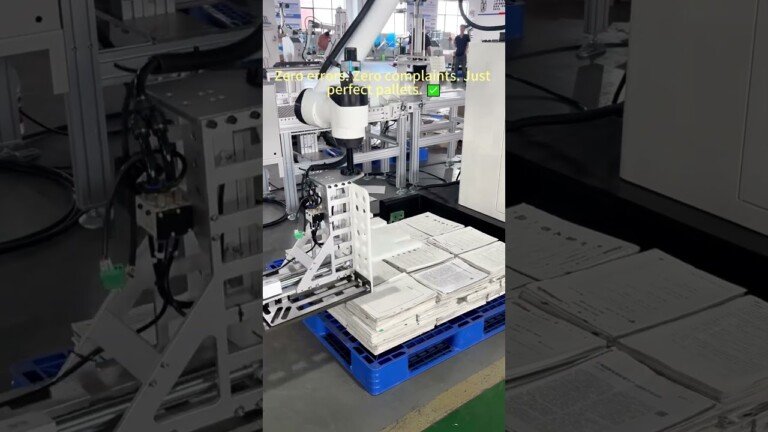
Robotic palletizers automate the process of arranging boxes, containers, or bags onto pallets for storage or shipment. Traditional manual palletizing is prone to inconsistencies, worker fatigue, and safety risks, especially in high-volume environments. Robotic systems eliminate these issues by using advanced algorithms, grippers, and vision systems to handle items of varying sizes, weights, and fragility with surgical precision.
The ROI is compelling:
- 15–25% Faster Throughput: Robots work nonstop without breaks.
- 99.9% Accuracy: Reduced product damage and misaligned pallets.
- 50–70% Labor Cost Savings: Reallocating human labor to value-added tasks.
- Improved Workplace Safety: Minimizing ergonomic strain from heavy lifting.
Evolution of Palletizing: From Conveyors to Collaborative Robots
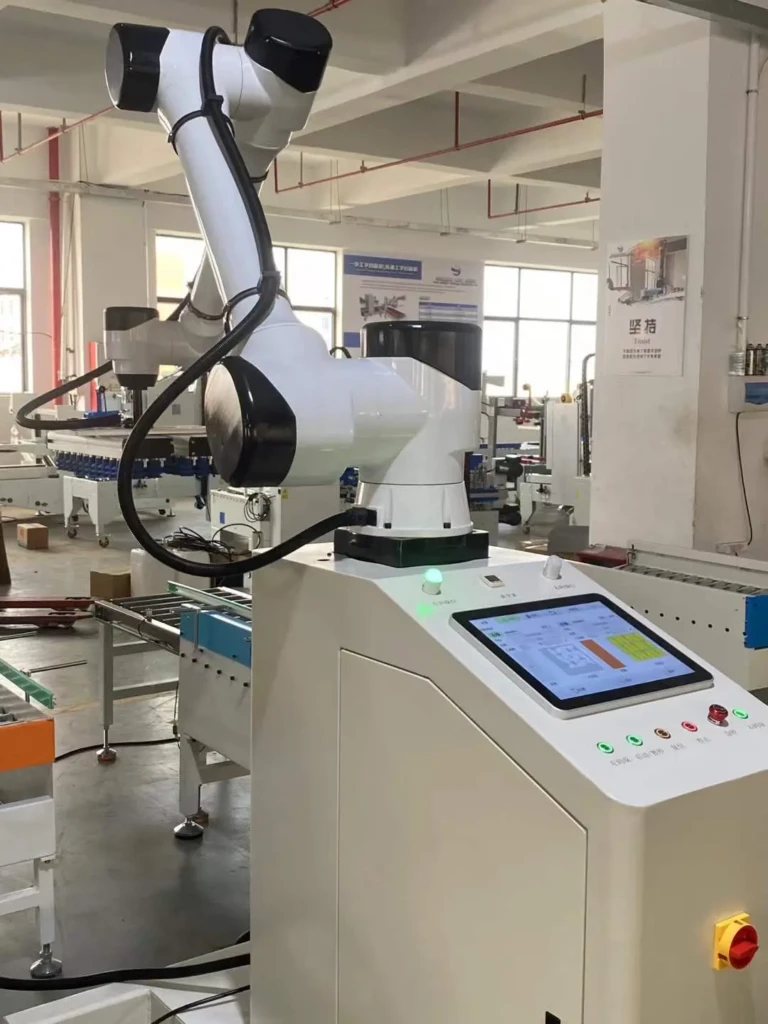
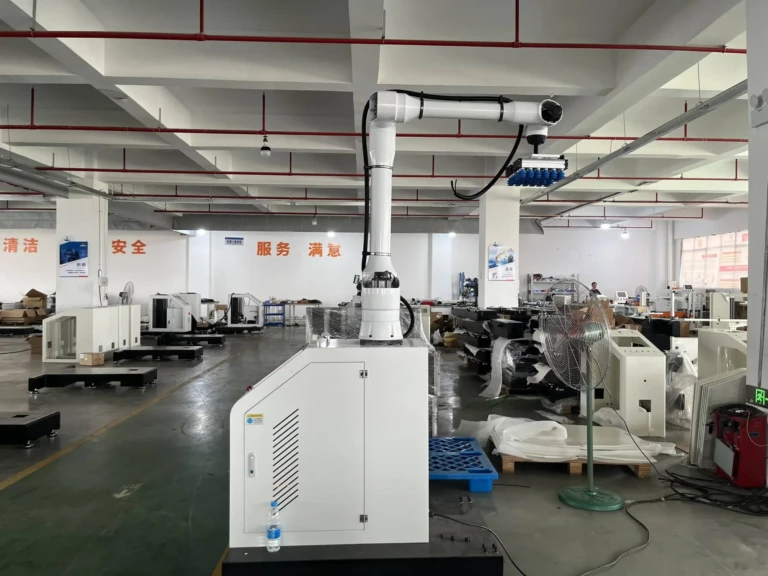
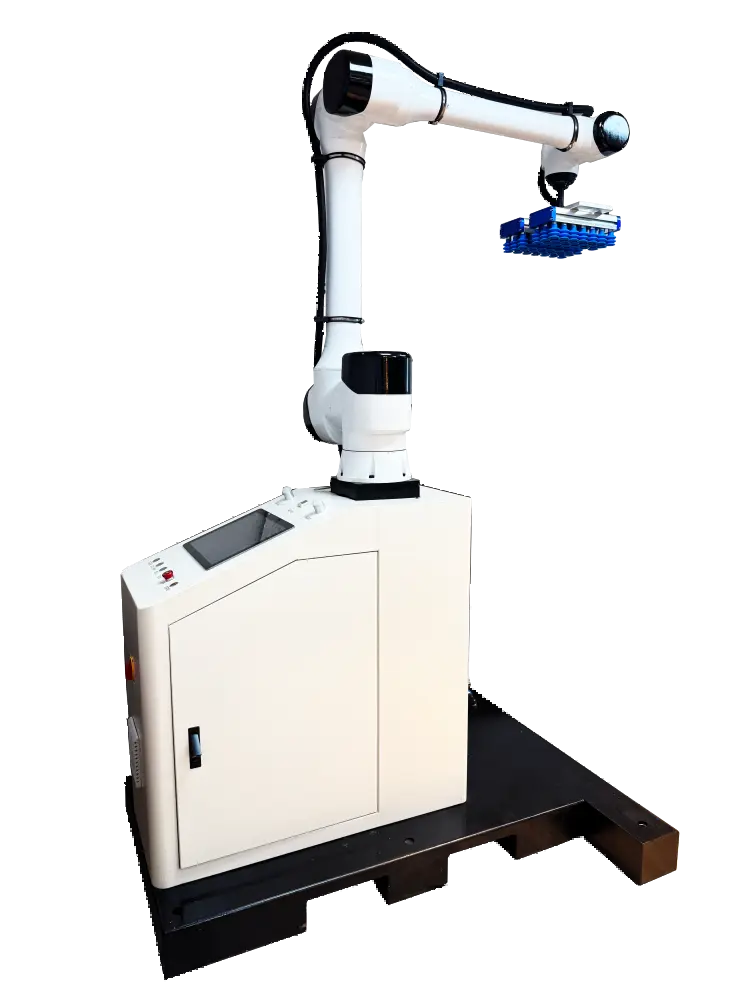
Early palletizing systems relied on fixed robotic arms with limited adaptability. Modern solutions like Rdc Robotic Palletizers leverage breakthroughs in AI, machine vision, and collaborative robotics (cobots). Huaxiu Robot, a leader in this space, offers collaborative palletizing robots that operate safely alongside humans without cages—ideal for facilities with space constraints. These cobots are programmable via intuitive interfaces, reducing setup time and enabling rapid redeployment for seasonal demands.
Core Features of Rdc Robotic Palletizing Systems
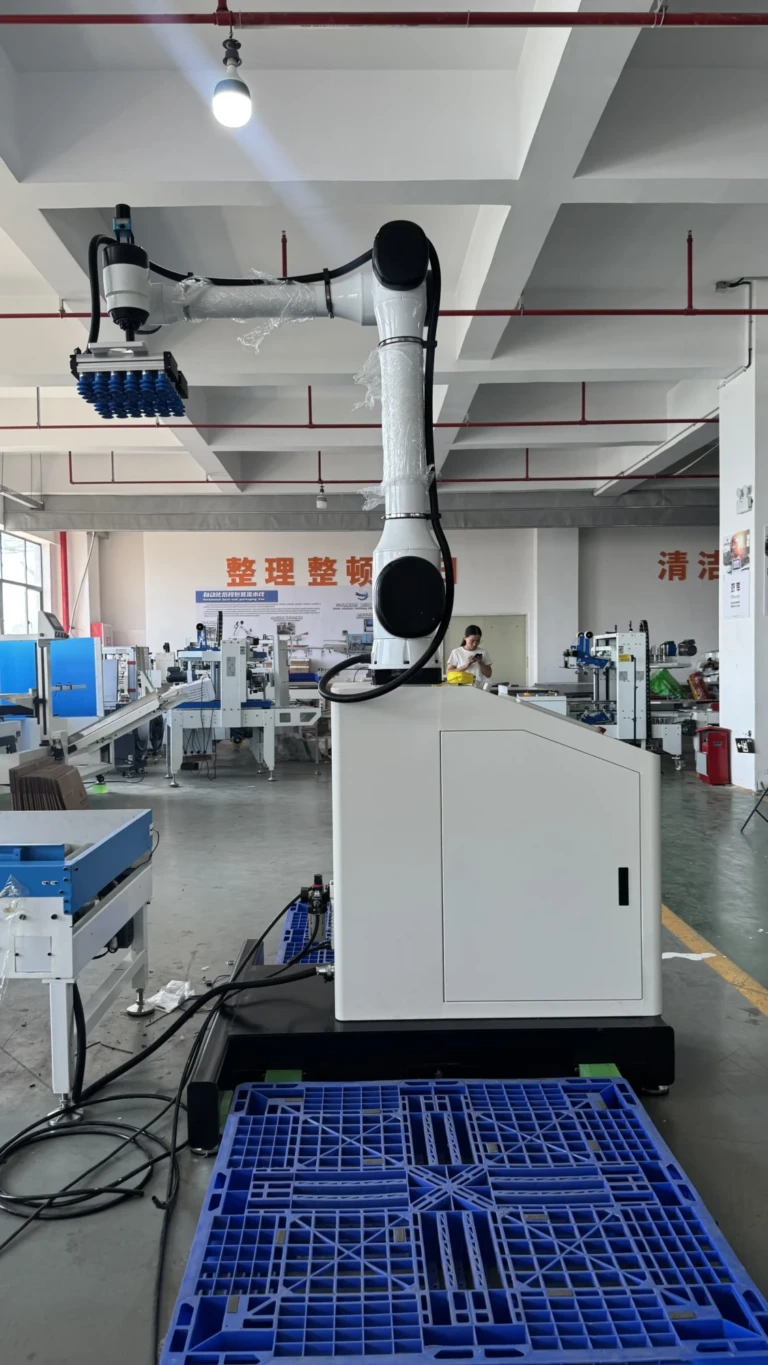
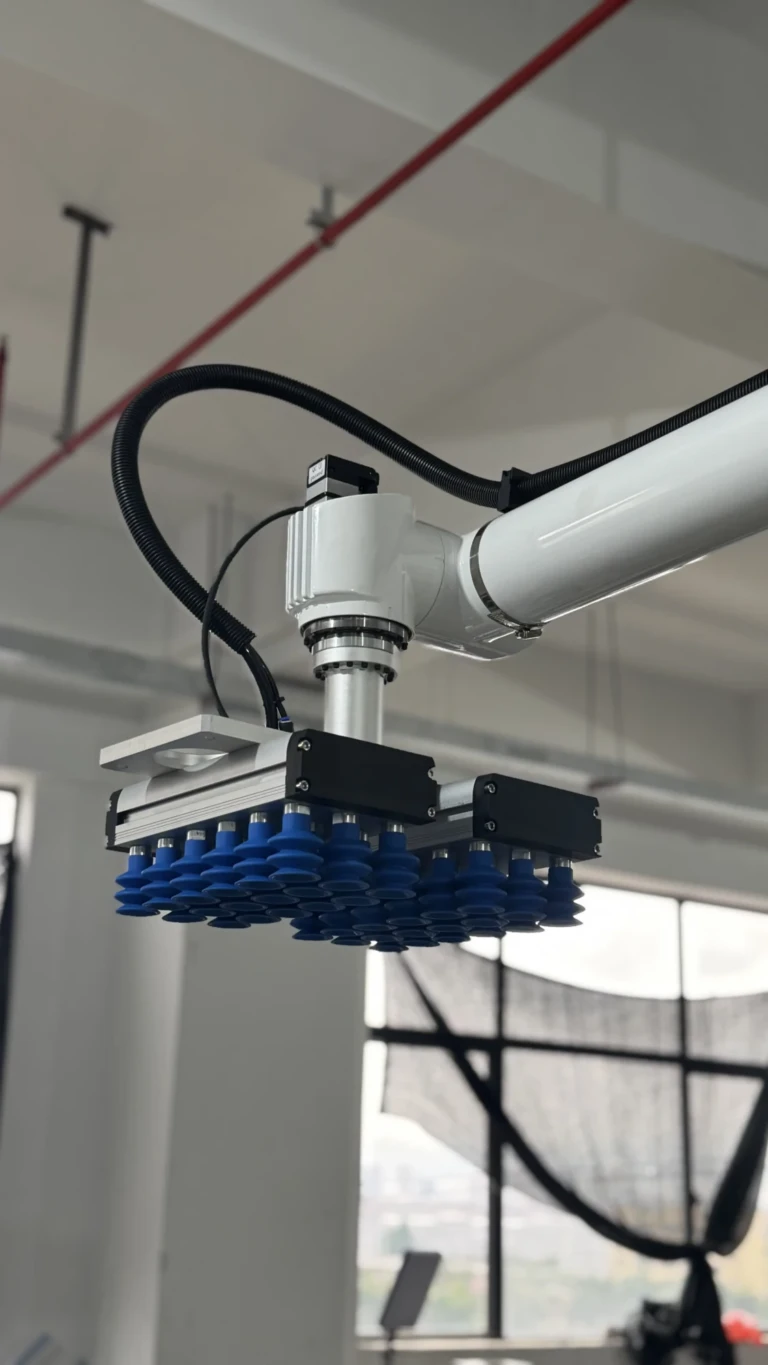
- Adaptive Gripping Technology:
Vacuum, clamp, or hybrid grippers handle diverse loads—from fragile glass bottles to 50kg sacks—without retooling. - 3D Vision Integration:
Cameras scan incoming products to adjust grip points and stacking patterns dynamically, even on irregularly shaped items. - Cloud-Connected Analytics:
Real-time performance monitoring via IoT sensors predicts maintenance needs and optimizes workflow. - Scalable Payload Capacity:
Systems range from lightweight cobots (5–20kg) to heavy-duty industrial robots (300kg+).
Beyond Palletizing: Complementary Automation Solutions
For end-to-end optimization, Rdc solutions integrate seamlessly with other Huaxiu Robot innovations:
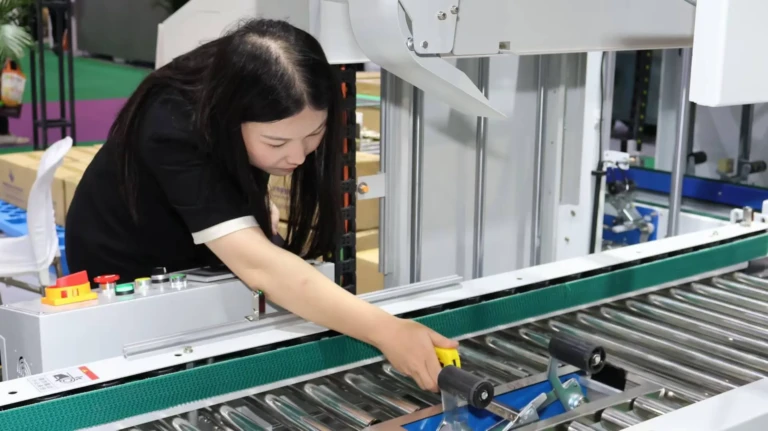
- Automatic Unpacking/Sealing Robots: Streamline inbound/outbound packaging processes.
- Shrink Wrap & Stretch Film Robots: Secure pallets for transit with minimal material waste.
- Pallet Forming & Strapping Robots: Automate pallet assembly and reinforcement.
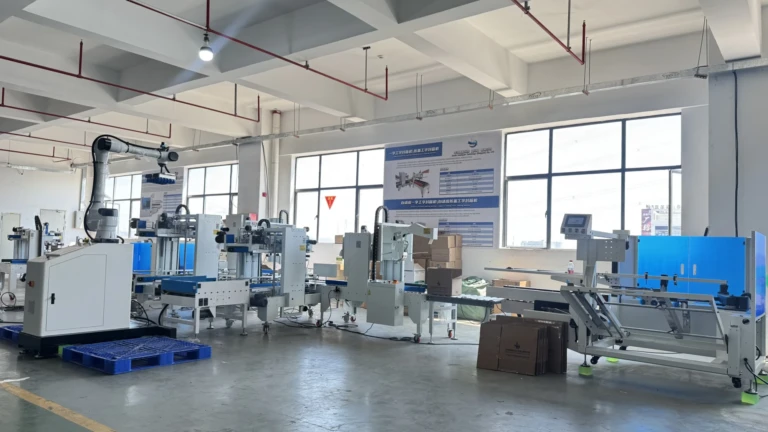
These systems create a unified "smart packaging line," eliminating bottlenecks and manual handoffs.
Industries Transformed by Robotic Palletizers
- Food & Beverage: Hygienic, washdown-ready robots handle perishables while meeting FDA standards.
- Pharmaceutical: Error-free stacking of sensitive shipments (e.g., vaccines) with traceability logs.
- E-commerce: Rapid decanting and palletizing for SKU-intensive fulfilment centers.
- Building Materials: Precise stacking of heavy or irregularly shaped items like tiles or pipes.
Customization: The Key to Deployment Success
No two facilities have identical needs. Rdc’s engineers collaborate with clients to tailor solutions:
- Layout Optimization: Designing compact workcells for tight spaces.
- Software Customization: Adapting stacking algorithms for mixed-SKU pallets.
- Peripheral Integration: Syncing with existing conveyors, AGVs, or WMS platforms.
Dispelling Myths About Robotic Palletizers
Myth 1: "They’re too expensive for SMEs."
Reality: Modular systems now offer payback periods under 12 months. Leasing and RaaS (Robotics-as-a-Service) models further lower entry costs.
Myth 2: "Implementation disrupts operations."
Reality: Phased rollouts minimize downtime. Huaxiu’s plug-and-play cobots can be installed in under 8 hours.
The Future: AI-Driven Autonomy & Sustainability
Next-gen palletizers will feature self-learning algorithms that optimize stacking patterns in real-time for maximum pallet density (reducing shipping costs by up to 15%). Sustainability is also a focus—energy-efficient motors and recyclable packing materials align with ESG goals.
Conclusion
Rdc Robotic Palletizer Solutions are no longer a luxury but a strategic necessity for businesses competing in an era of tight margins and soaring consumer expectations. By automating one of the most physically demanding warehouse tasks, companies unlock consistent throughput, safer workplaces, and long-term cost advantages. Paired with Huaxiu Robot’s ecosystem of complementary automation tools—from sealing robots to stretch film wrappers—the path to a fully optimized, future-ready facility is clearer than ever.
FAQs
Q1: How much space does a robotic palletizer require?
A: Compact cobots can operate in as little as 2m². Heavy-duty systems may need 5–8m², but 3D simulations during planning ensure efficient use of floor space.
Q2: Can these robots handle mixed-SKU pallets?
A: Yes. Advanced vision systems and AI-powered software allow instant recognition and grouping of different products into custom pallet configurations.
Q3: What maintenance is involved?
A: Daily visual checks and quarterly professional servicing (e.g., lubricating joints, calibrating sensors) suffice. Most systems self-diagnose issues via cloud alerts.
Q4: Are robotic palletizers safe around humans?
A: Collaborative models (ISO 10218-compliant) feature force-limiting sensors that stop motion upon contact. Traditional industrial robots require safety fencing.
Q5: How do I justify the investment to stakeholders?
A: Focus on metrics: A typical system processes 800–1,200 units/hour, reduces labor costs by ~$60k/year (per shift), and cuts product damage losses by up to 40%.
Q6: Can they integrate with our existing ERP/WMS?
A: Absolutely. Most solutions support APIs for SAP, Oracle, and other platforms to synchronize pallet data, inventory counts, and shipping manifests.
By embracing Rdc’s palletizing innovations, businesses aren’t just automating a task—they’re future-proofing their operations. For specialized use cases, explore Huaxiu Robot’s portfolio to discover how strapping robots, fully automatic stretch film wrappers, or semi-automatic sealing robots can amplify your ROI. The age of intelligent, end-to-end automation is here.