Introduction
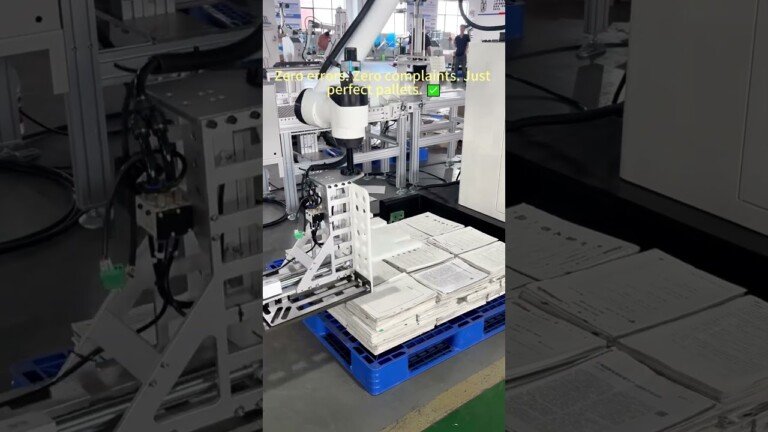
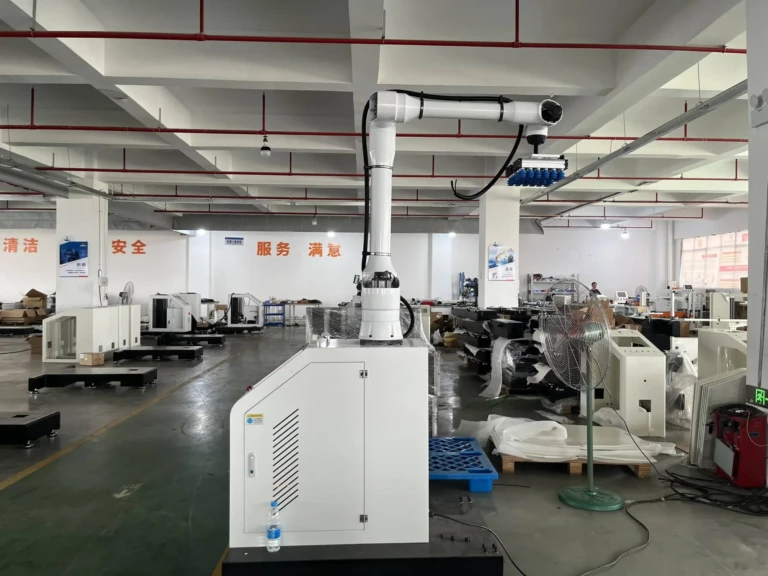
The logistics and manufacturing sectors have undergone radical transformation with automation, and robotic palletizers have emerged as indispensable tools for industries handling bulky, repetitive tasks—especially bagged goods like cement, food, fertilizers, and pharmaceuticals. Traditional manual palletizing is labor-intensive, error-prone, and increasingly unsustainable amid labor shortages. Enter Huaxiu Robot, a pioneer in robotic bag-handling solutions that blend precision, speed, and flexibility to redefine productivity.
The Problem with Traditional Bag Palletizing
Manual palletizing of bags poses multiple challenges:
- Physical Strain: Workers face repetitive stress injuries from lifting 25–50 kg bags.
- Inconsistency: Human fatigue leads to unstable pallets, risking collapse during transport.
- Scalability Issues: Meeting seasonal demand spikes becomes difficult with fixed labor pools.
- Cost Overruns: High turnover, training costs, and Workers’ Compensation claims add hidden expenses.
Even earlier-generation automation struggled with complex bag types (woven polypropylene, paper, laminated), variable weights, and mixed-SKU pallet patterns.
How Robotic Palletizers Revolutionize Bag Handling
Huaxiu Robot’s palletizing systems leverage advanced robotics, AI, and machine vision to overcome these barriers. Here’s what sets them apart:
1. Intelligent Bag Recognition & Adaptive Gripping
Bags aren’t uniform—they shift during conveyance, crease, or deform under weight. Huaxiu’s robots use real-time 3D vision systems combined with force-torque sensors to:
- Detect bag orientation, dimensions, and surface texture.
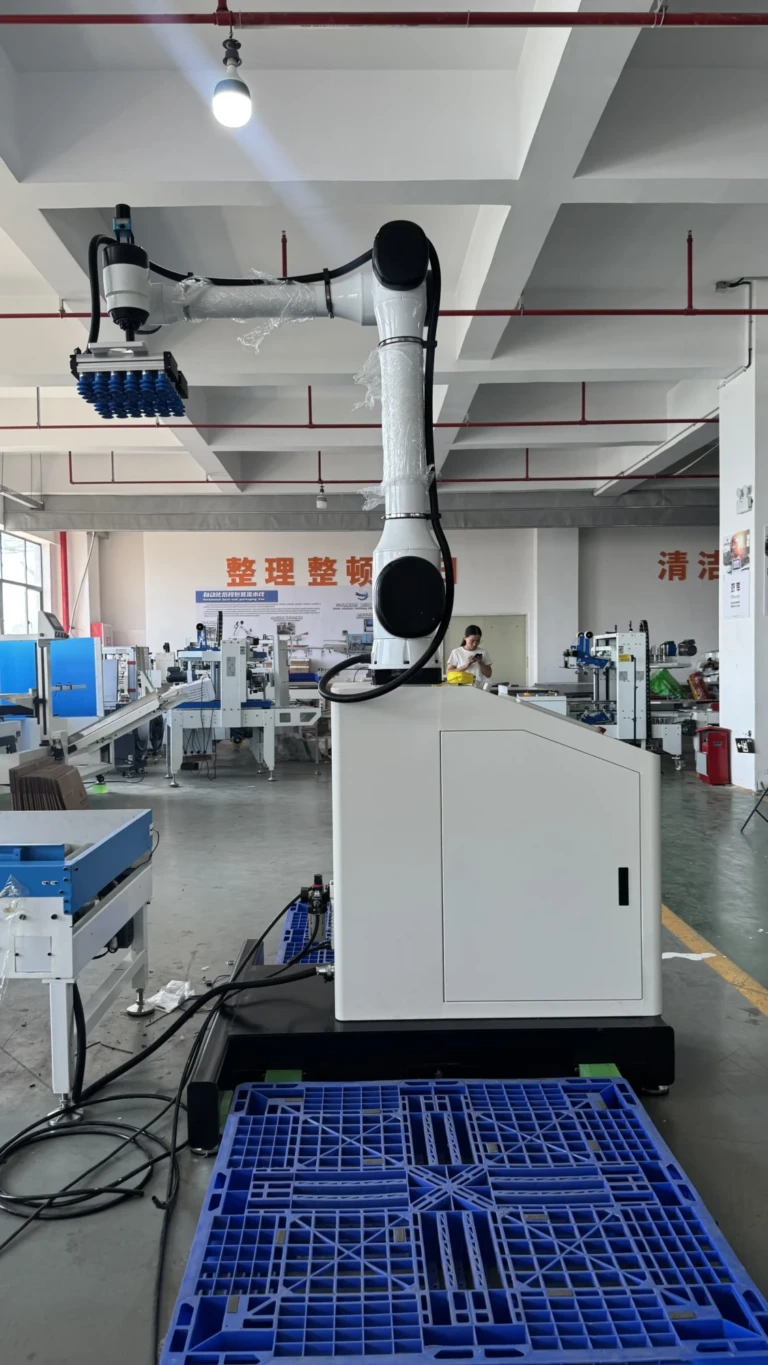
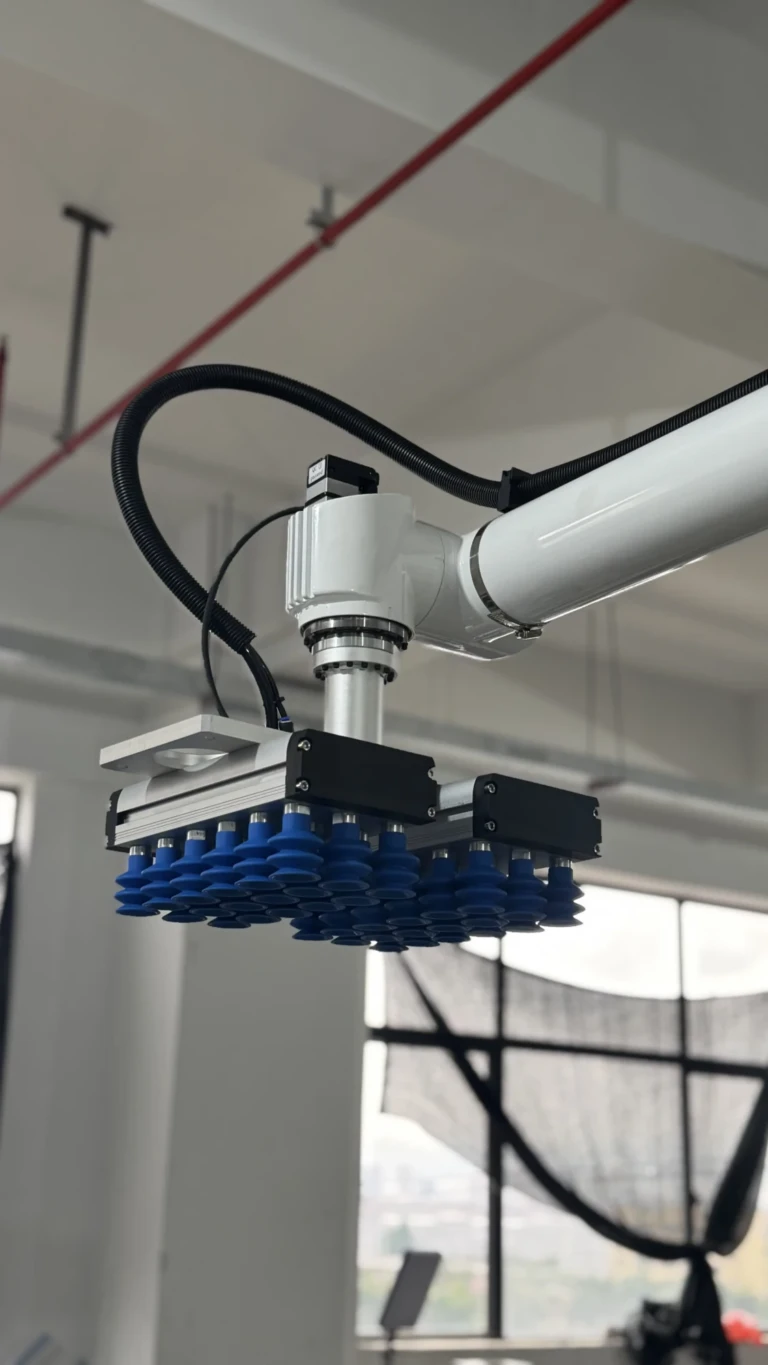
- Automatically adjust gripper pressure (vacuum, mechanical, or hybrid) to prevent tears.
- Stabilize irregularly shaped or partially deflated bags (e.g., flour, grains).
2. High-Speed Precision for Demanding Throughputs
Unlike traditional robots limited to 8–10 cycles per minute, Huaxiu’s high-speed gantry and articulated robots achieve 15–22 bags/minute with <±2mm repeatability. Their proprietary motion algorithms account for:
- Acceleration/deceleration to minimize product inertia shifts.
- Optimized path planning to avoid collisions in multi-robot cells.
3. Collaborative Flexibility
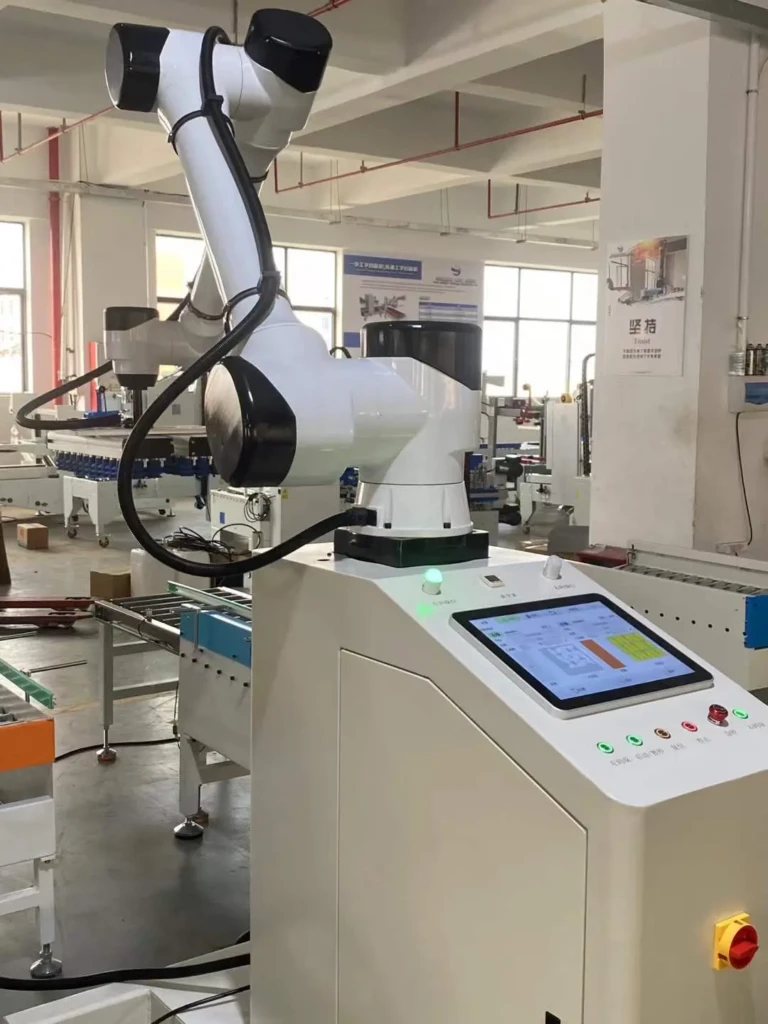
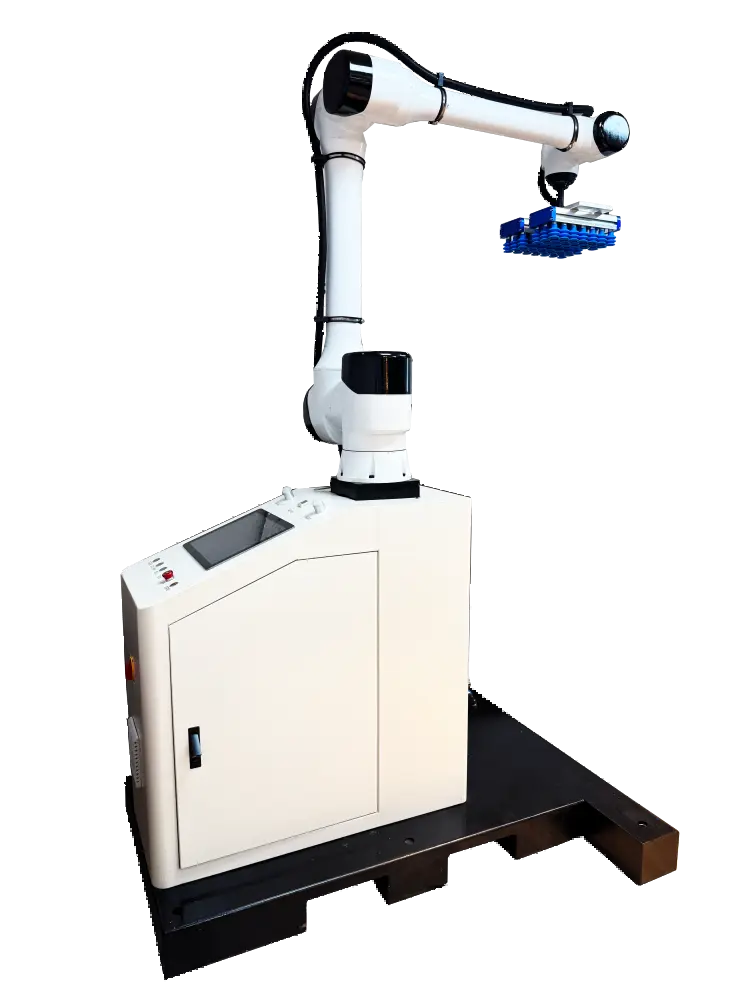
For facilities retrofitting automation into existing lines, Huaxiu’s collaborative palletizing robots (cobots) operate safely alongside humans. Features include:
- Power- and force-limiting sensors for ISO/TS 15066 compliance.
- No safety cages required, maximizing floor space.
- Intuitive programming via teach pendants or drag-and-drop interfaces.
4. Hybrid Palletizing Systems
Huaxiu’s modular designs integrate seamlessly with their complementary technologies:
- Automatic Sealing/Unpacking Robots: Prep bags before palletizing without manual intervention.
- Shrink Wrapping & Strapping Robots: Apply secondary packaging post-palletizing in a single synchronized flow.
- Pallet Forming & Conveyance: Automate empty pallet dispatching and finished pallet removal.
Key Innovations: Beyond Basic Stacking
Huaxiu’s engineers have tackled niche challenges to deliver unmatched versatility:
Multi-Layered AI Decision-Making
A hybrid AI system evaluates multiple variables in real time:
- Pallet Stability: Dynamically adjusts stacking patterns based on bag weight distribution.
- Downstream Logistics: Customizes pallet heights/patterns to fit truck or container dimensions.
- Anomaly Detection: Flags damaged bags before palletizing, triggering reject arms.
Sustainable Design
- Energy-efficient servo motors reduce power consumption by 35% vs. hydraulic systems.
- Predictive maintenance alerts minimize downtime and spare part waste.
Cold Chain & Hazardous Environment Capabilities
Models with IP67-rated components and anti-corrosive coatings operate in:
- Freezer warehouses (-30°C) for frozen food bags.
- Explosive atmospheres (ATEX certification) for chemical powders.
ROI-Driven Outcomes
Businesses deploying Huaxiu’s systems report:
- 50–70% Labor Cost Reduction: 1 robot replaces 2–3 shifts of manual workers.
- 98% Pallet Integrity: Eliminates load failures and associated freight claim costs.
- Space Savings: Compact footprints allow automation in tight facilities.
- Fast Payback: ROI often achieved in <18 months through waste reduction and throughput gains.
Case Study: Cement Manufacturer Cuts Costs by 63%
A leading Asian cement producer faced chronic pallet collapse issues due to variable 50 kg bag sizes. After integrating Huaxiu’s robotic palletizers with vacuum grippers and LiDAR scanning:
- Throughput increased from 600 to 1,100 bags/hour.
- Product damage fell from 5% to 0.2%.
- Labor costs dropped by 63% within the first year.
Conclusion
Huaxiu Robot’s palletizing solutions represent the convergence of durability, intelligence, and adaptability—essential traits in today’s fast-paced industrial landscape. By automating bag handling end-to-end (from sealing to stretch wrapping), businesses unlock scalability, safety, and profitability previously deemed unattainable. As labor shortages intensify and e-commerce demands faster turnarounds, robotic palletizers will transition from “luxury” investments to operational imperatives.
FAQ Section
Q1: Can robotic palletizers handle different bag sizes on the same line?
Yes. Huaxiu’s systems auto-detect bag dimensions via machine vision and adjust grippers and stacking patterns accordingly—ideal for facilities producing multiple SKUs.
Q2: How difficult is integration with legacy equipment?
Huaxiu robots use universal communication protocols (Ethernet/IP, PROFINET, MODBUS) and include plug-and-play interfaces, minimizing retrofitting complexity.
Q3: What’s the typical ROI period?
Most clients achieve payback in 12–24 months through labor savings, reduced waste, and higher throughput.
Q4: Are these robots safe to work near humans?
Collaborative models feature force-limited joints, collision detection, and emergency stops, complying with global safety standards (ISO 10218, ISO/TS 15066).
Q5: Do they work with ventilated or slippery bags (e.g., fish feed)?
Yes. Specialized grippers with porous suction cups or pinch mechanisms securely handle perforated, oily, or textured surfaces.
Q6: What maintenance is required?
Daily inspections (5–10 mins) and quarterly professional servicing. Cloud-based monitoring provides real-time health diagnostics.
Q7: Can they build mixed-weight pallets?
Absolutely. AI algorithms distribute heavy/light bags to optimize center-of-gravity stability.
Q8: How does Huaxiu support sustainability goals?
Energy recovery systems, predictive maintenance, and recyclable end-of-arm tooling reduce carbon footprints by up to 40%.
Inquire today about Huaxiu Robot’s tailored bag-handling solutions—engineered for resilience in the most demanding environments.