The Unsung Heroes of Modern Warehousing: How Robotic Box Palletizers Are Redefining Efficiency
In today’s fast-paced manufacturing and logistics landscape, speed, precision, and scalability aren’t just competitive advantages—they’re survival imperatives. Among the innovations quietly revolutionizing these sectors, robotic box palletizers stand out as transformative workhorses. These automated systems are no longer a futuristic concept reserved for Fortune 500 companies; they’ve become accessible, versatile solutions for businesses of all sizes aiming to streamline operations. Let’s explore why this technology is indispensable for modern supply chains and how companies like Huaxiu Robot are leading the charge.
The Pain Points of Manual Palletizing
Before automation, palletizing relied heavily on human labor—a process fraught with challenges:
- Physical Strain: Repetitive lifting of heavy boxes leads to fatigue and injuries, increasing absenteeism and workers’ compensation claims.
- Inconsistency: Human error causes misaligned layers, unstable pallets, and product damage during transit.
- Bottlenecks: Manual palletizing struggles to keep up with high-speed production lines, creating workflow inefficiencies.
- Rising Labor Costs: With global labor shortages and wage inflation, dependency on manual labor is financially unsustainable.
Enter robotic palletizing systems—engineered to eliminate these pain points while delivering measurable ROI.
The Mechanics of Efficiency: How Robotic Palletizers Work
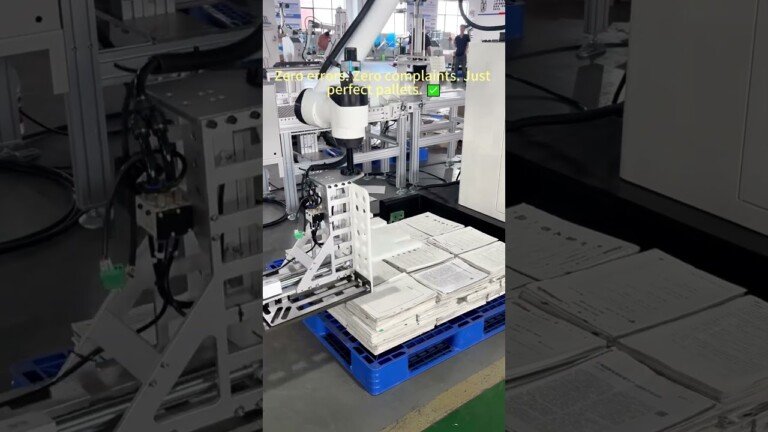
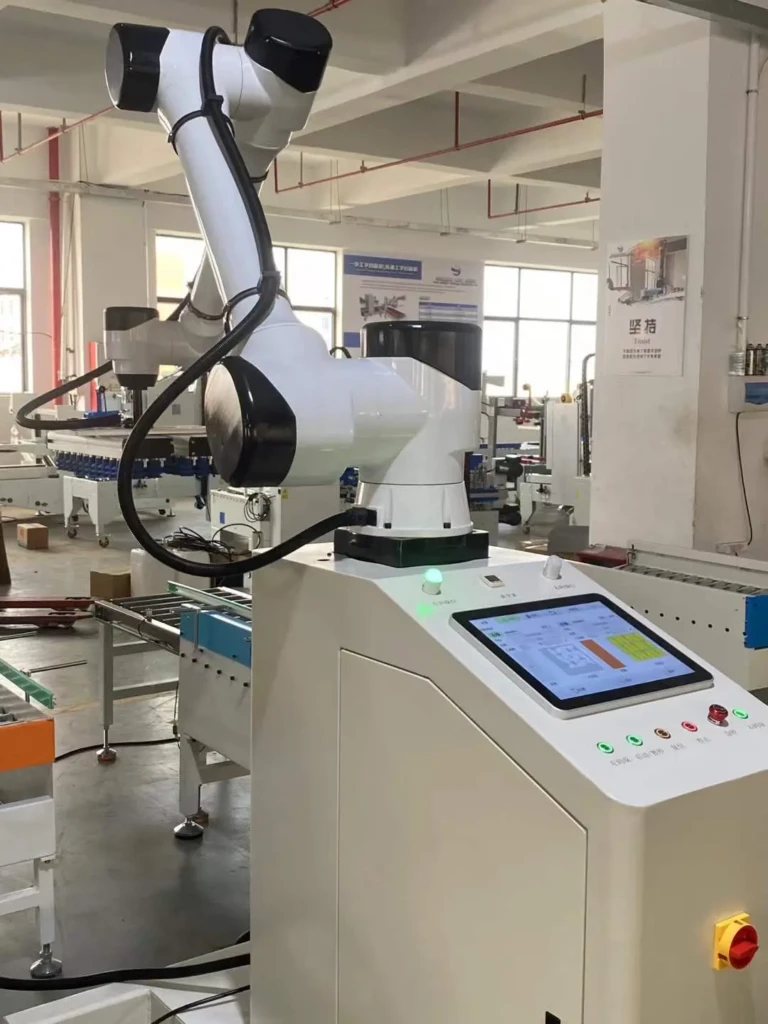
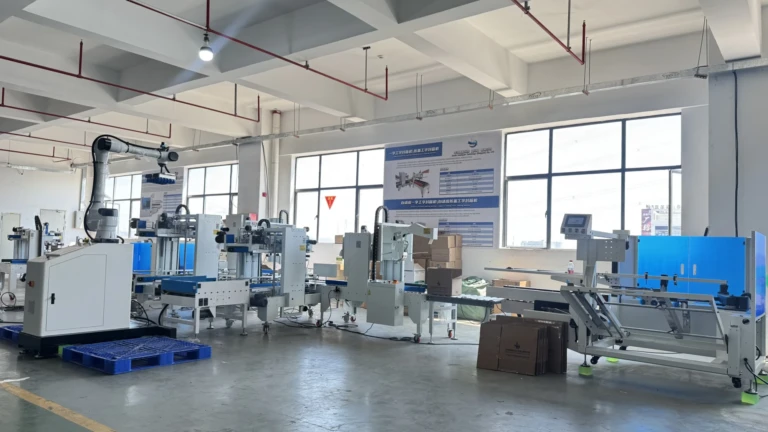
Modern robotic palletizers, like those developed by Huaxiu Robot, integrate advanced technologies to optimize the entire packaging line:
- Smart Sensing & Gripping: Equipped with vision systems and AI, robots identify box sizes, weights, and orientations, adjusting grip strength and placement patterns dynamically.
- Adaptive Programming: Users can switch between pallet patterns (column, interlocked, pinwheel) via intuitive interfaces without downtime.
- Seamless Integration: These systems sync with upstream/downstream equipment (e.g., automatic unpacking robots, stretch film wrappers) for end-to-end automation.
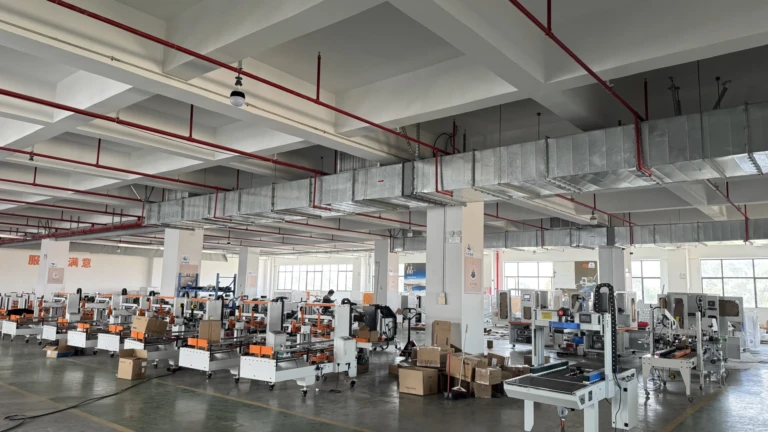
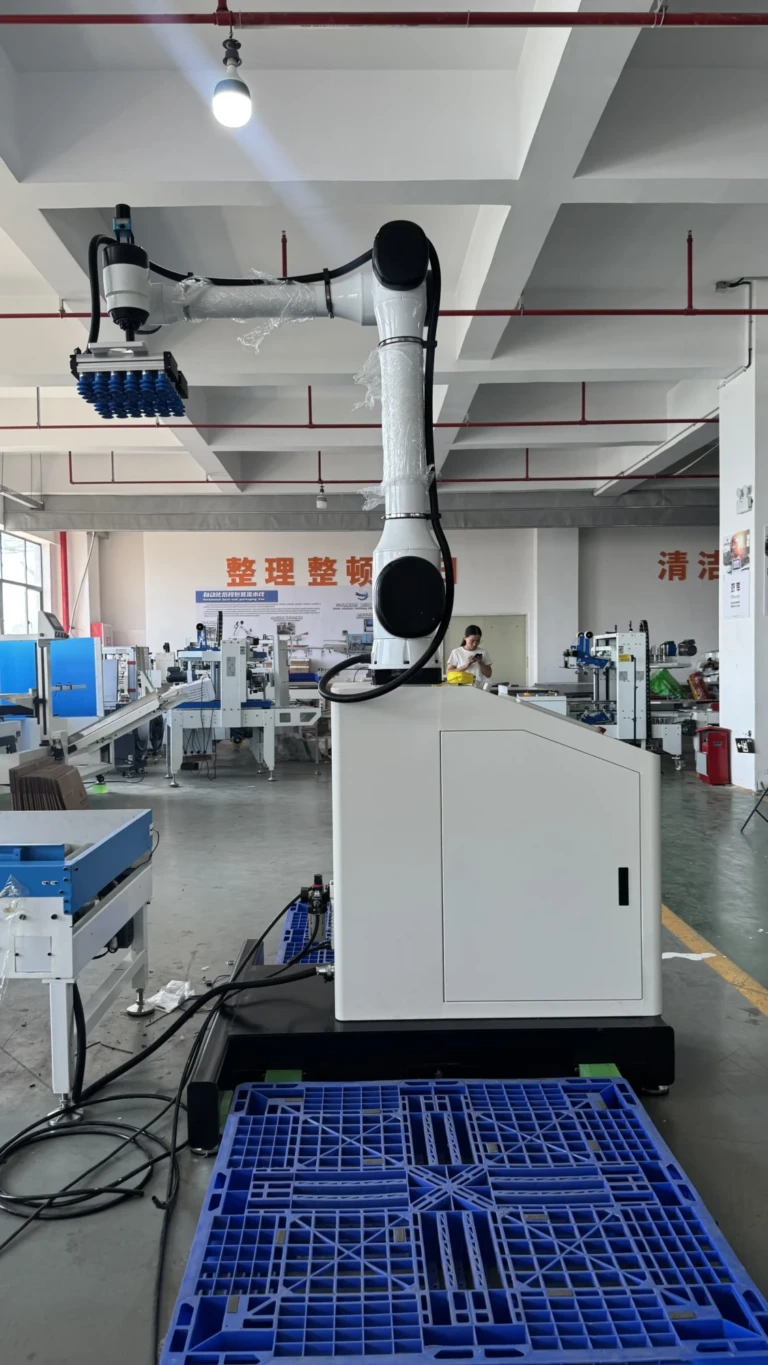
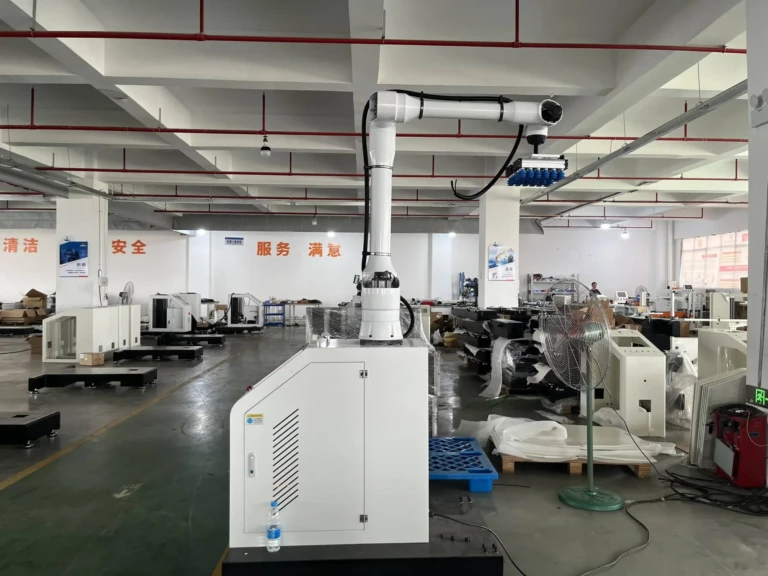
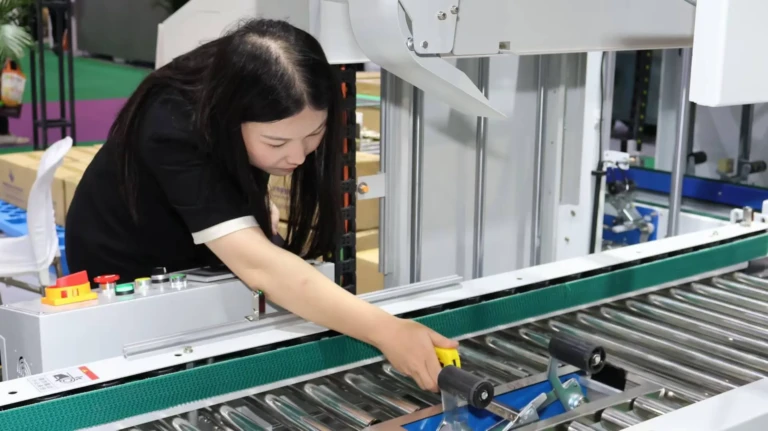
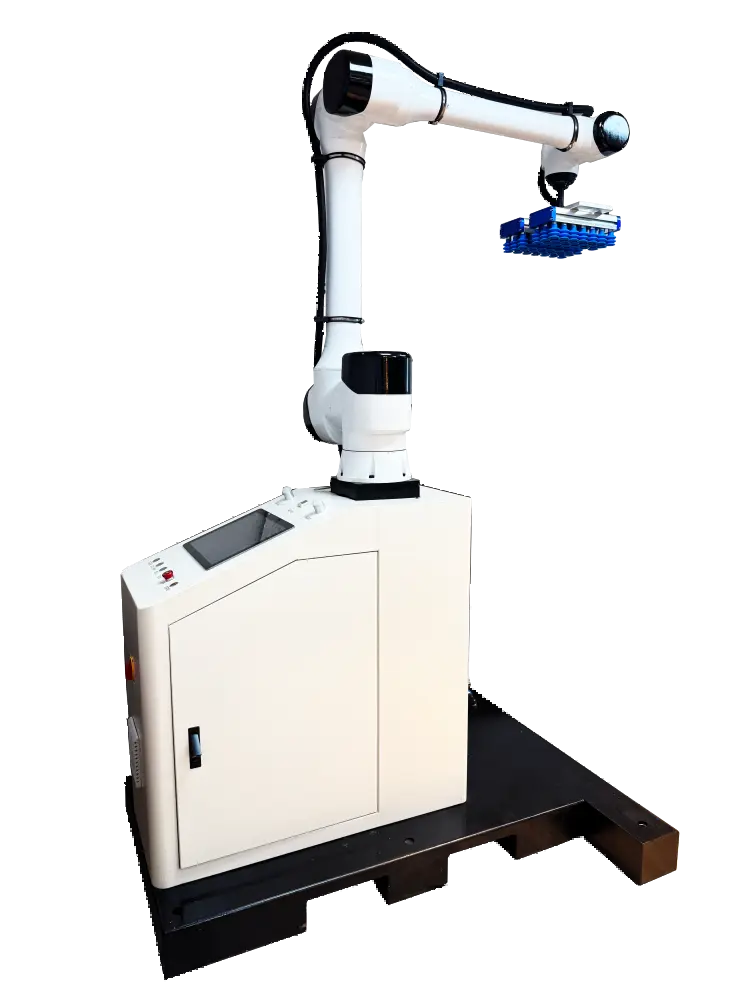
Huaxiu Robot’s portfolio—encompassing collaborative palletizing robots, semi-automatic sealing robots, and fully automated strapping solutions—ensures compatibility with diverse operational scales, from small-batch artisanal producers to 24/7 mega-distribution centers.
6 Ways Robotic Palletizers Transform Operations
- Throughput Multiplied: Robots operate continuously at speeds exceeding 1,500 cycles per hour—unmatched by human teams—reducing congestion at the end-of-line.
- Pinpoint Accuracy: Advanced algorithms calculate optimal stacking sequences, minimizing wasted space and maximizing trailer utilization (critical given soaring freight costs).
- Labor Reallocation: Workers transition from repetitive tasks to supervisory, maintenance, or quality control roles, boosting morale and operational oversight.
- Space Optimization: Compact designs (e.g., Huaxiu’s collaborative models) fit into tight footprints, freeing floor space for inventory or value-added processes.
- Risk Reduction: Eliminating manual handling cuts workplace injuries by up to 72%, per OSHA data, while consistent pallets minimize load collapses.
- Hyper-Flexibility: Quick-change tooling handles everything from fragile electronics to 50lb bags of pet food, facilitating agile responses to market shifts.
Industry-Specific Applications: Beyond Basic Stacking
- Food & Beverage: Huaxiu’s stainless-steel IP69K-rated palletizers meet USDA hygiene standards, preventing contamination during raw meat or dairy handling.
- Pharmaceuticals: Audit-compliant traceability features ensure precise lot/batch stacking for recalls or compliance checks.
- E-Commerce: Mixed-SKU palletizing algorithms adapt to unpredictable assortments, slashing fulfillment times during peak seasons.
Choosing the Right System: Key Considerations
Not all palletizers are created equal. Businesses should evaluate:
- Payload Capacity: Huaxiu’s models range from 5kg (for lightweight cosmetics) to 1,500kg (industrial chemicals).
- Integration Depth: Compatibility with ERP/WMS systems (e.g., SAP, Oracle) for real-time inventory tracking.
- Scalability: Modular designs that allow adding cobots or shrink-wrapping units as demand grows.
- ROI Timeline: Most enterprises break even within 12–18 months via labor savings and error reduction.
The Future: AI-Driven Predictive Palletizing
Emerging trends will further amplify efficiency:
- Machine Learning: Systems analyze historical data to preemptively adjust stacking patterns based on seasonal demand or carrier specifications.
- Sustainability Focus: Reduced film usage via optimized pallet shapes lowers plastic waste by ~15%.
- Human-Robot Collaboration: Huaxiu’s cobots with force-sensing tech safely work alongside staff without safety cages.
Conclusion: Efficiency as a Continuous Journey
Robotic box palletizers aren’t merely tools—they’re strategic enablers that redefine productivity benchmarks. By automating one of the most labor-intensive stages in logistics, companies gain agility, scalability, and resilience against market volatility. Huaxiu Robot’s holistic ecosystem—from pallet-forming robots to end-of-line strapping solutions—provides a unified approach to automation, ensuring businesses future-proof their operations while maximizing today’s ROI.
As warehousing evolves from cost centers into value generators, embracing robotic palletizing is no longer optional. It’s the cornerstone of next-generation efficiency.
FAQs: Demystifying Robotic Palletizers
Q1: Are robotic palletizers compatible with existing packaging lines?
Yes. Huaxiu’s systems feature universal PLC interfaces and mechanical adapters, enabling seamless integration with conveyors, sealers, and labelers from most OEMs.
Q2: How do cobots differ from traditional industrial palletizers?
Collaborative robots (cobots) are lighter, mobile, and require minimal safety barriers, making them ideal for facilities with space constraints or hybrid manual/automated workflows.
Q3: What’s the typical implementation timeline?
For standard configurations, installation and training take 2–4 weeks. Custom solutions may require 8–12 weeks for engineering and testing.
Q4: Do robotic systems require specialized maintenance?
Huaxiu’s palletizers include self-diagnostic modules and predictive maintenance alerts. Annual servicing by certified technicians ensures peak performance.
Q5: Can they handle irregularly shaped items?
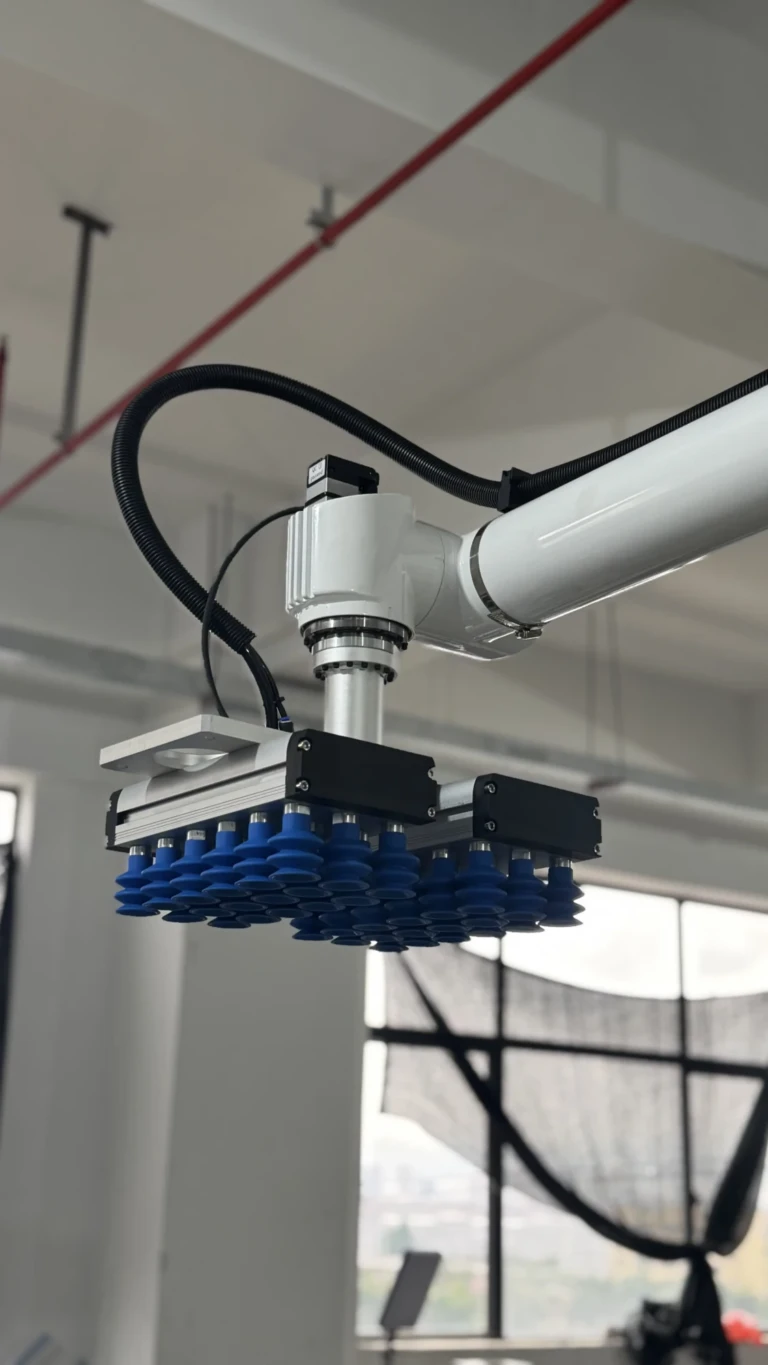
Absolutely. Custom EOAT (end-of-arm tooling) options—vacuum grippers, mechanical claws, or magnetic lifters—accommodate cylinders, pouches, or amorphous bundles.
Q6: What ROI metrics should I track?
Key indicators include labor cost reduction, throughput increase, damage claim decreases, and energy consumption per pallet. Most clients report 30–50% efficiency gains within six months.
Q7: Are there options for low-volume/high-mix producers?
Yes. Huaxiu’s semi-automatic sealers and modular palletizing units allow incremental automation, scaling as production needs evolve.
By addressing these FAQs, businesses can confidently navigate their automation journey, leveraging robotic palletizers not just as machinery, but as catalysts for operational excellence.