
The Rise of Automation: A Comprehensive Guide to Robotic Drum Palletizer Solutions
The logistics, manufacturing, and chemical industries face a common challenge: efficiently and safely palletizing heavy drums, barrels, or cylindrical containers. Traditional manual methods are labor-intensive, prone to injuries, and lack the precision needed for modern supply chains. Robotic drum palletizers emerge as a game-changing solution, revolutionizing how businesses handle bulk materials. In this guide, we explore the technology, advantages, and selection criteria for these robotic systems, with insights into how companies like Huaxiu Robot are leading the charge.
Why Robotic Drum Palletizers Are a Necessity
Drum palletizing presents unique complexities:
- Weight & Safety Risks: Steel or plastic drums often weigh 200–2,000 lbs. Manual lifting risks back injuries, crushing incidents, and OSHA violations.
- Precision Requirements: Drums must be stacked in stable, interlocked patterns (e.g., pyramid or tiered configurations) to prevent collapses during transit.
- Throughput Demands: High-volume industries like chemicals or food processing require speeds exceeding 20 drums per hour.
Robotic palletizers eliminate these hurdles with speed, repeatability, and adaptive programming.
Types of Robotic Drum Palletizer Systems
Not all robotic solutions are alike. Selection depends on facility space, payload, and workflow flexibility:
-
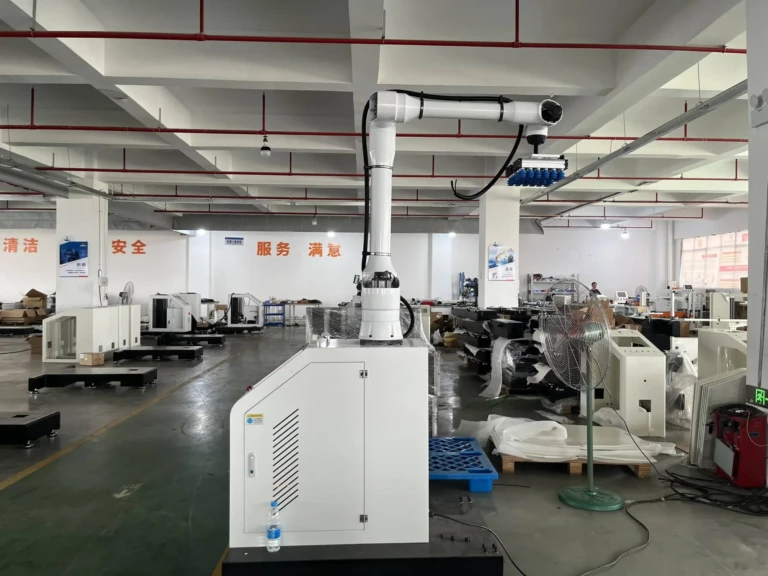
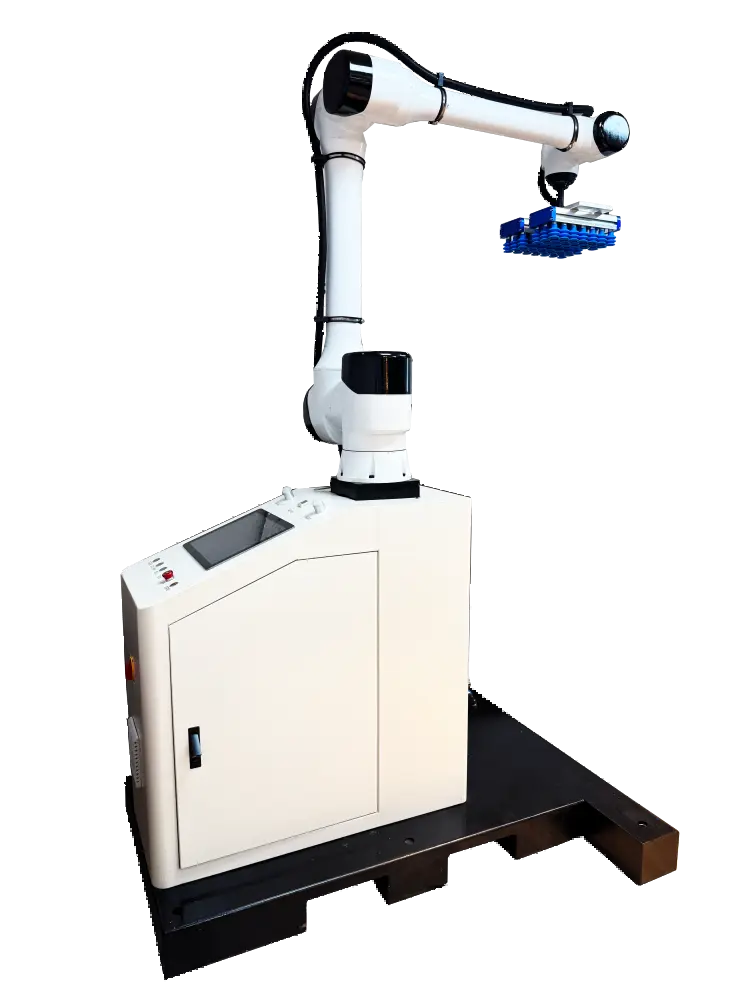
Collaborative Palletizing Robots (Cobots)
- Ideal for hybrid workspaces where humans and robots share tasks.
- Feature force-sensing technology to pause upon unexpected contact.
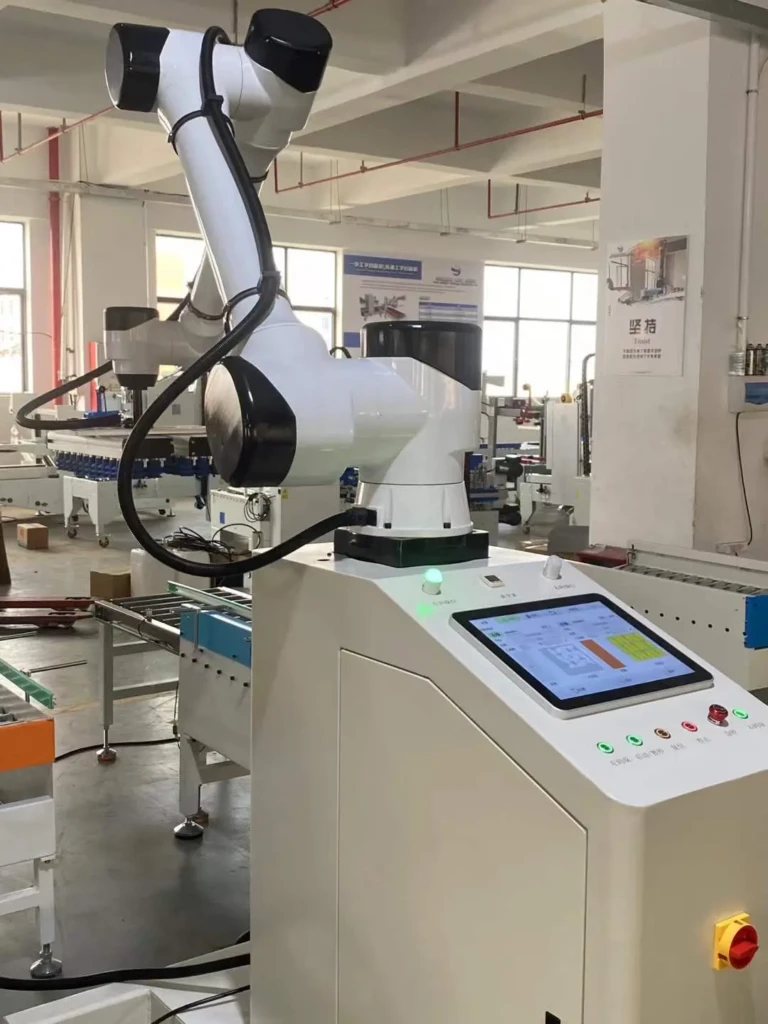
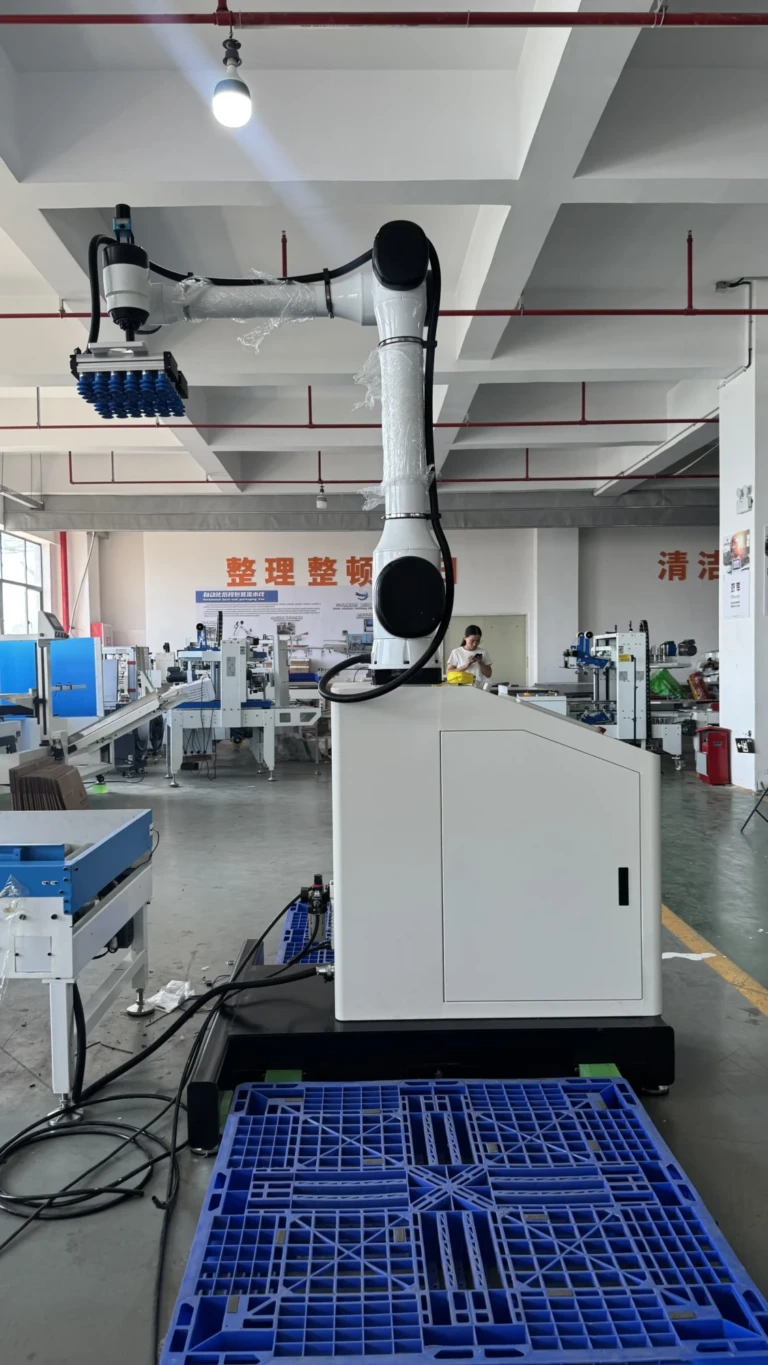
- Huaxiu Robot’s collaborative models can handle drums up to 1,100 lbs, perfect for mid-sized operations.
-
High-Capacity Industrial Robots
- Heavy-duty articulating or gantry robots capable of lifting 2,000+ lbs.
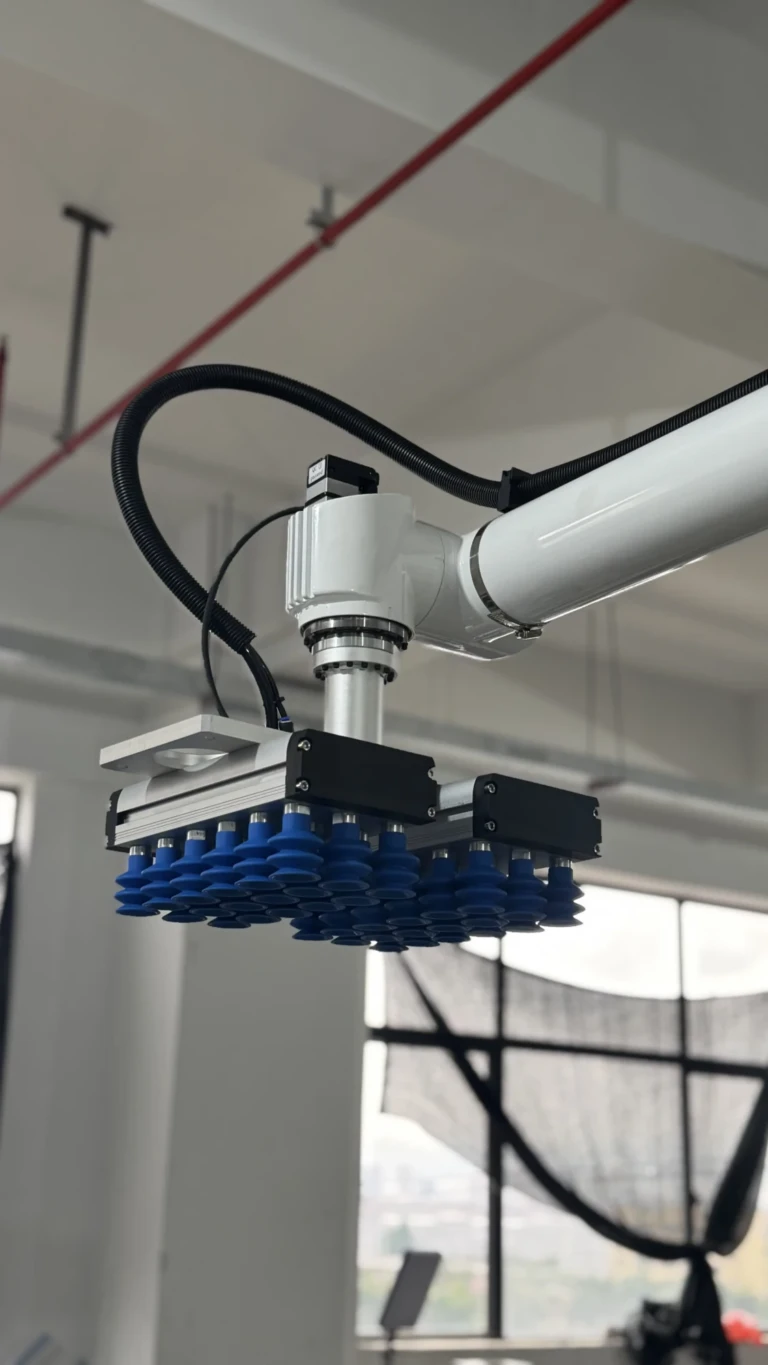
- Integrated with advanced grippers (e.g., vacuum, clamp, or drum-lifting forks).
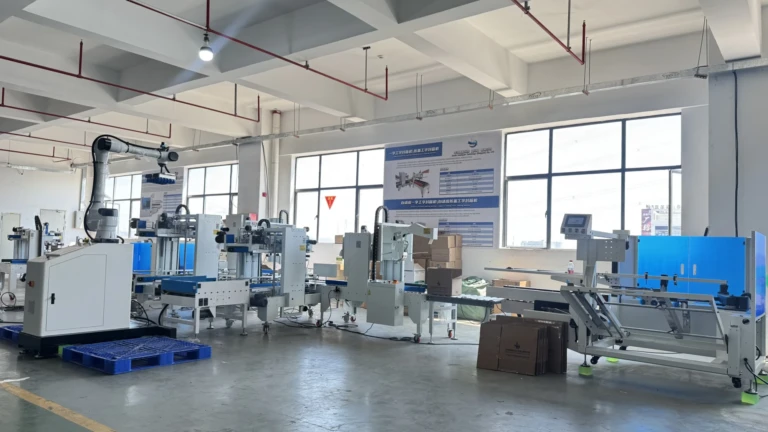
- End-to-End Automated Lines
- Combine palletizing with peripheral systems:
- Automatic Unpacking/Sealing Robots: Prepare inbound/outbound drums.
- Strapping/Stretch Film Wrapping Robots: Secure loads post-palletization.
- Pallet Forming Robots: Assemble or repair pallets autonomously.
- Combine palletizing with peripheral systems:
Core Benefits of Automating Drum Palletizing
A well-integrated robotic system delivers transformative ROI:
- Safety First: Remove workers from high-risk lifting tasks. Huaxiu’s systems include collision detection and emergency stops.
- Unmatched Consistency: Robots place drums within millimeters of programmed positions, optimizing load stability.
- 24/7 Productivity: Run overnight or during shifts without fatigue, boosting throughput by 50–200%.
- Space Optimization: Compact robotic cells can be retrofitted into existing layouts, unlike bulky conveyor systems.
- Data-Driven Insights: IoT-enabled palletizers track cycle times, maintenance needs, and error rates in real time.
Key Features to Look for in a Solution
When evaluating robotic drum palletizers, prioritize these capabilities:
- Adaptive Grippers: Must handle varying drum sizes, materials (steel, plastic, fiber), and fill levels.
- Software Intelligence: User-friendly interfaces with offline programming (e.g., digital twins for simulation).
- Modular Design: Compatibility with Huaxiu’s shrink packaging, strapping, and sealing robots for end-to-end automation.
- Scalability: Ability to add robots or reconfigure patterns as business needs evolve.
Industries Revolutionized by Drum Palletizers
- Chemicals & Pharmaceuticals: Handle hazardous materials safely with explosion-proof models.
- Food & Beverage: Comply with hygienic standards using washdown-ready robots.
- Agriculture: Palletize fertilizer, oils, or syrups with minimal product loss.
Integration & Implementation Best Practices
Deploying a robotic palletizer isn’t just “plug-and-play.” Success hinges on:
- Workflow Analysis: Map current processes to identify bottlenecks.
- Peripheral Synergy: Pair palletizing robots with Huaxiu’s automatic sealing or stretch film packaging robots for seamless flow.
- Staff Training: Upskill operators to manage programming and troubleshooting.
The Future of Drum Palletizing
Next-gen innovations are underway:
- AI-Powered Vision Systems: Robots autonomously adjust to damaged drums or irregular shapes.
- Mobile Palletizing AMRs: Autonomous Mobile Robots transport and stack drums across facilities.
- Sustainable Designs: Energy-efficient motors and recyclable grippers align with ESG goals.
Conclusion
Robotic drum palletizers are no longer a luxury—they’re a strategic imperative for industries handling heavy cylindrical loads. By automating this physically demanding task, businesses slash costs, enhance safety, and future-proof their operations. Leading providers like Huaxiu Robot offer comprehensive solutions, from collaborative robots to fully integrated packaging lines. As technology evolves, we’ll see smarter, greener, and more adaptable systems redefine material handling.
FAQs About Robotic Drum Palletizers
Q1: How much floor space is needed for a robotic palletizing cell?
A: Huaxiu’s compact designs can fit in spaces as small as 8×8 ft. Gantry robots require more overhead clearance but maximize vertical stacking.
Q2: Can one robot handle multiple drum sizes?
A: Yes! Advanced grippers and programmable logic allow quick changeovers between drum diameters (e.g., 20–30 inches).
Q3: Are these systems safe near flammable materials?
A: Explosion-proof models (ATEX/ISO-certified) are available for chemical or paint industries.
Q4: What’s the typical ROI timeline?
A: Most clients see payback within 12–24 months via labor savings, reduced injury claims, and higher throughput.
Q5: Do Huaxiu’s robots integrate with existing ERP/WMS software?
A: Absolutely. Their systems support API-based connectivity for real-time inventory tracking.
Q6: How is maintenance handled?
A: Huaxiu offers remote diagnostics and predictive maintenance alerts, minimizing downtime.
Embracing robotic drum palletization isn’t just about keeping up—it’s about leaping ahead. For businesses ready to transcend manual limitations, the future of efficiency starts now.