The Hidden Hero of Modern Warehousing: How Robotic EOAT is Transforming Pallet Handling
Imagine a bustling warehouse floor. Boxes rumble down conveyor belts, forklifts zigzag through narrow aisles, and workers heave 50-pound packages onto wooden pallets — a symphony of organized chaos. For decades, this scene relied on human muscle, straining backs, and meticulous precision to stack pallets safely. But a quiet revolution is unfolding, led not by human hands, but by robotic End-of-Arm Tooling (EOAT). This unsung hero is redefining efficiency, safety, and scalability in pallet handling, pushing logistics into a new era of automation.
Why Pallet Handling Demanded a Revolution
Palletizing – the art of stacking goods onto pallets for storage or transport – has long been a bottleneck in supply chains. Manual palletizing is error-prone, physically taxing, and struggles to keep pace with e-commerce-driven demand spikes. Even traditional automated systems, often rigid and inflexible, faltered when faced with mixed SKUs, irregular package sizes, or rapid changeovers.
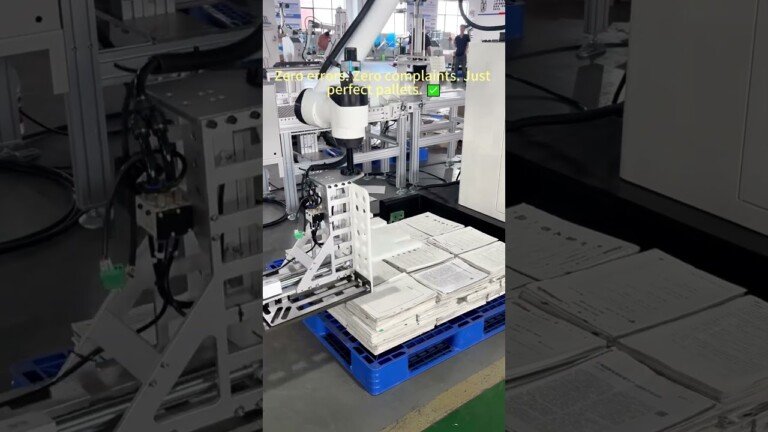
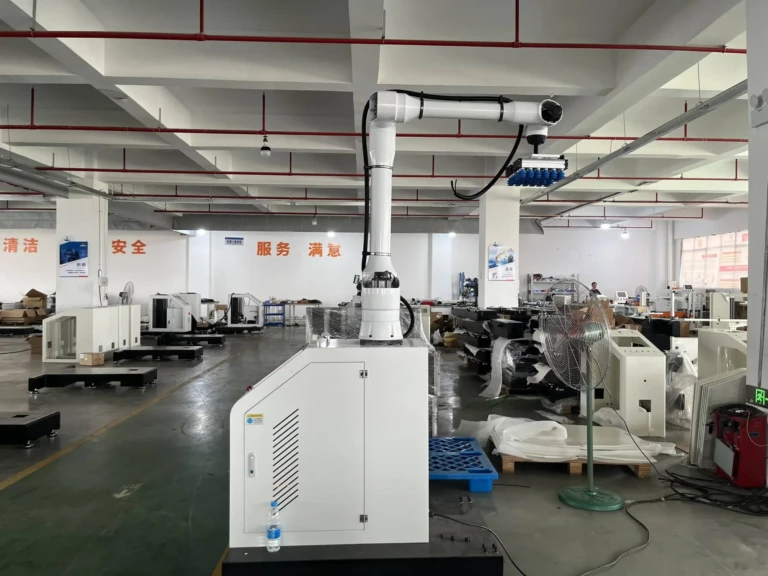
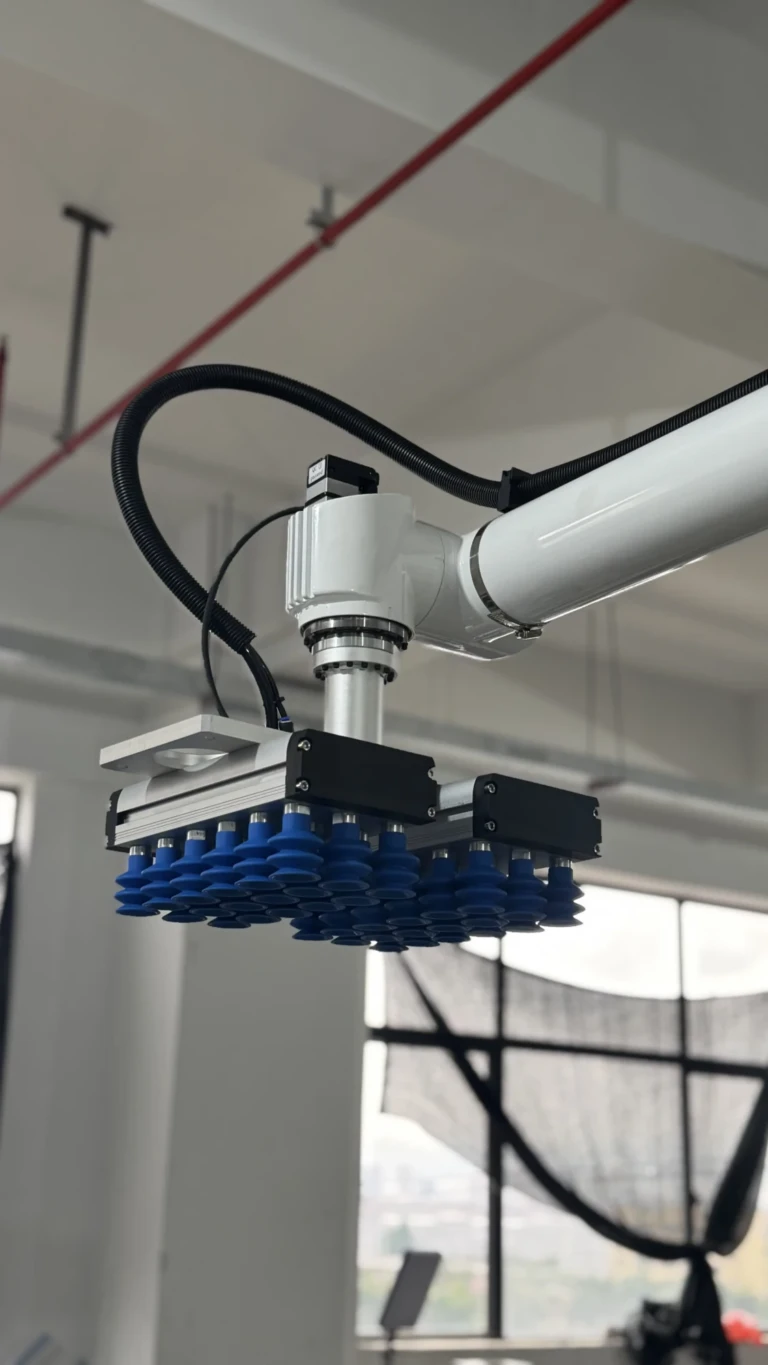
Enter Robotic EOAT. Think of it as the "Swiss Army knife" attached to a robotic arm, equipped with specialized tools to grip, lift, rotate, and place items with superhuman precision. Unlike fixed automation, modern EOAT solutions are intelligent, adaptable, and integrated with vision systems and advanced software, enabling them to handle the complexities of modern packaging and palletizing.
Huaxiu Robot: Pioneering the EOAT Ecosystem
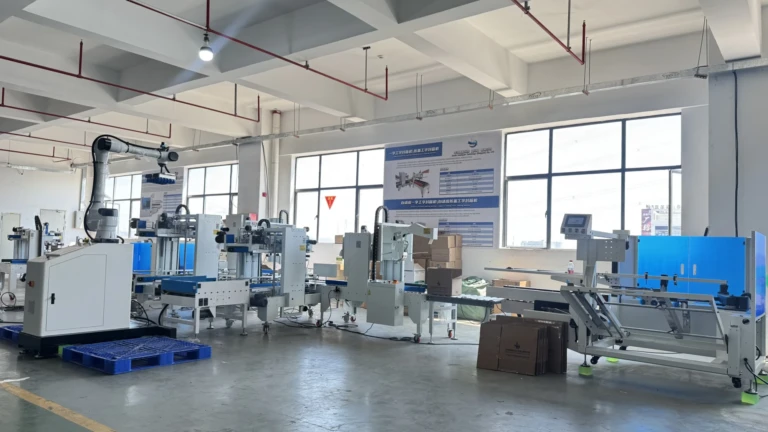
At the forefront of this transformation is Huaxiu Robot, a company specializing in comprehensive robotic solutions that streamline the entire palletizing workflow. Their product portfolio tackles every stage of the process, creating a seamless ecosystem:
1. Intake & Preparation:
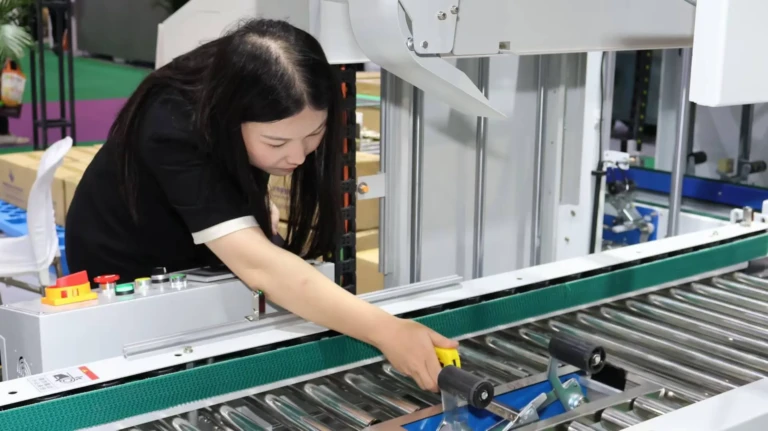
- Automatic Unpacking Robots: Efficiently unload goods from shipping containers or boxes, prepping them for palletizing without manual intervention.
- Automatic Sealing Robots: Securely seal boxes with consistent accuracy, replacing inconsistent manual taping.
- Semi-Automatic Sealing Robots: Offer flexibility for operations needing partial automation alongside manual processes.
2. Core Palletizing & Stabilization:
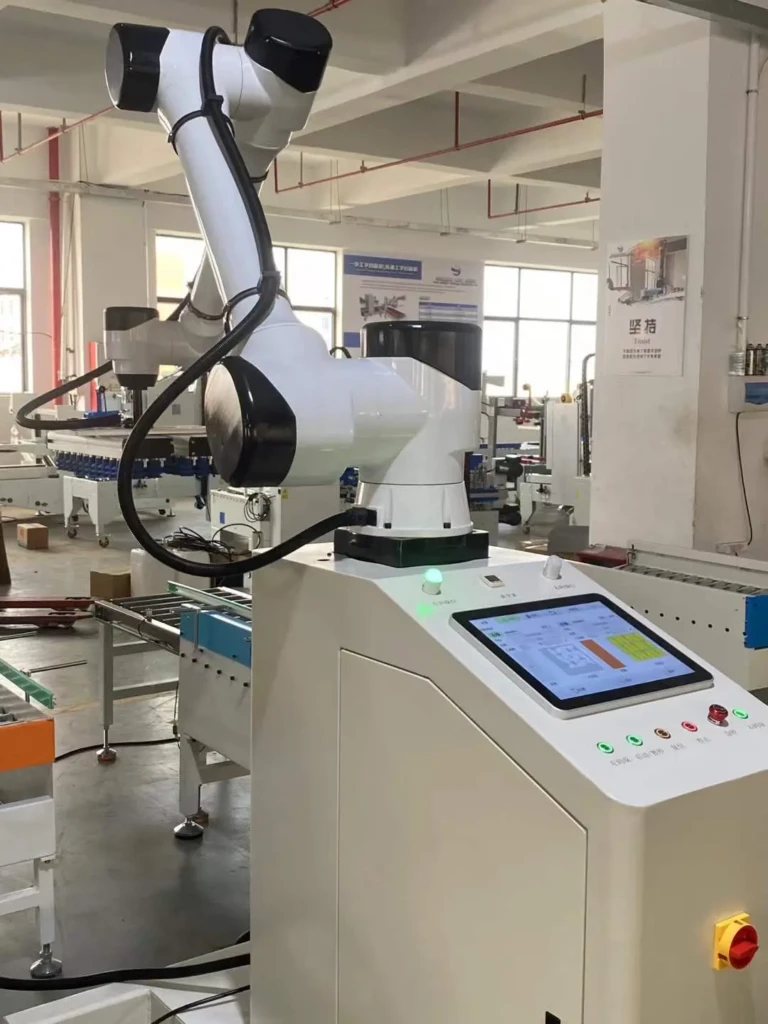
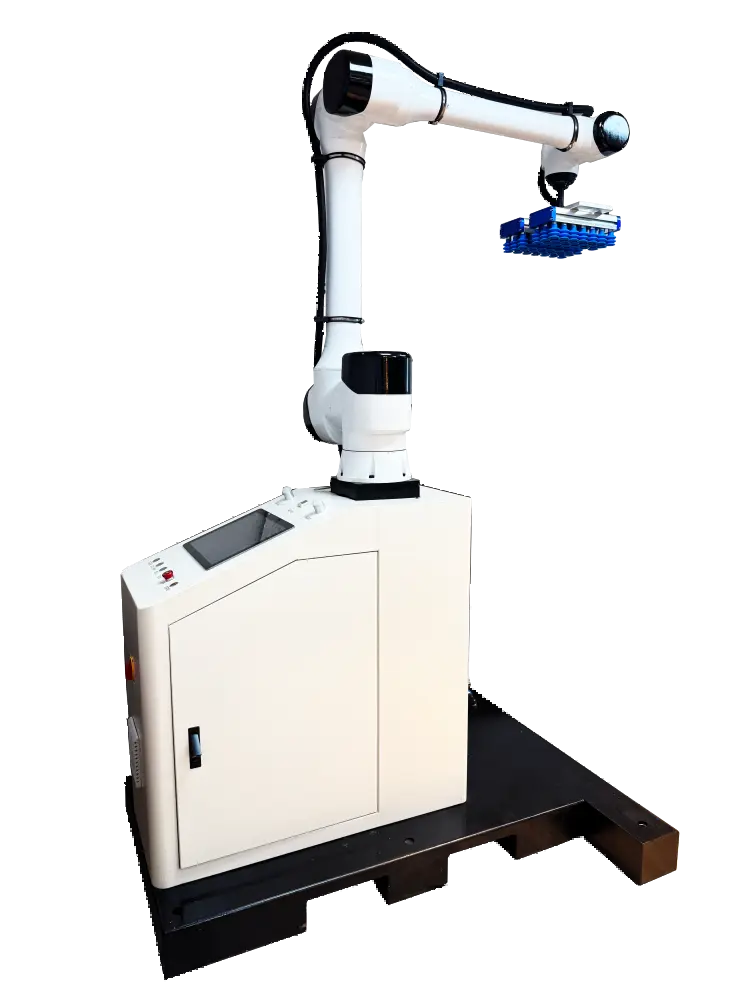
- Collaborative Palletizing Robots (Cobots): Work safely alongside humans, ideal for flexible, lower-volume operations or environments with space constraints.
- Pallet Forming Robots: Automate the precise assembly of empty pallets, ensuring correct alignment for stacking.
- Shrink Packaging Robots: Apply shrink wrap securely around palletized loads using consistent heat and tension.
- Fully Automatic Stretch Film Packaging Robots: Apply stretch film with optimal tension and pattern to stabilize pallets for transport, minimizing film waste.
3. Finalizing & Securing:
- Strapping Robots: Automatically apply straps or bands around palletized goods for maximum load security during transit.
Beyond Muscle: The Intelligence Powering Modern EOAT
The true power of Huaxiu’s robotic EOAT systems lies not just in their mechanical strength, but in their intelligence:
- Vision-Guided Precision: Integrated cameras and sensors enable real-time package identification, size detection, and orientation checks, allowing robots to adjust grips and placement on the fly for mixed-SKU palletizing.
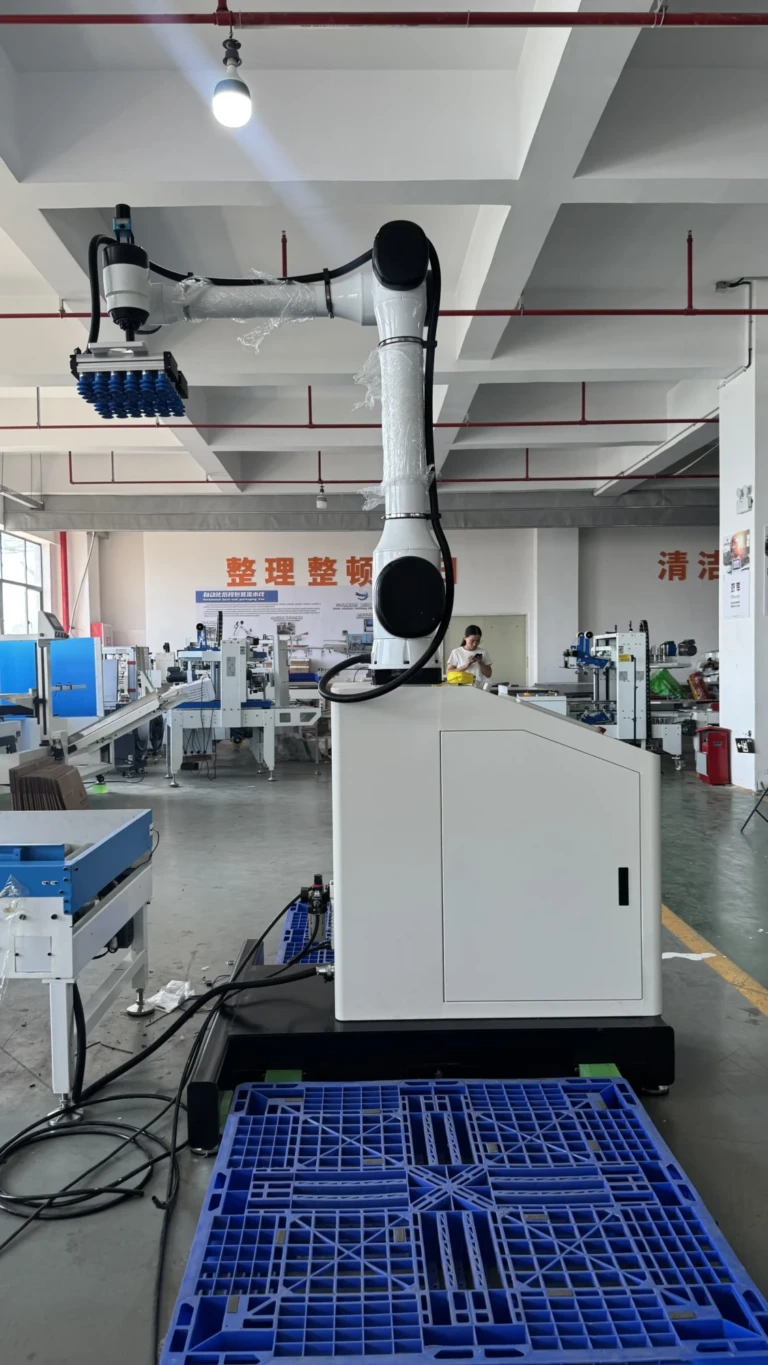
- Adaptive Gripping Technology: EOAT utilizes a variety of grippers – vacuum-based, mechanical, pneumatic, or hybrid – chosen based on product weight, fragility, and surface type. A single robot can often switch tools mid-task for handling diverse items.
- Optimized Pallet Patterns: Advanced software calculates the most stable and space-efficient stacking pattern for each unique load, maximizing trailer space and minimizing product damage risk.
- Seamless Integration: These systems seamlessly connect with Warehouse Management Systems (WMS) and Enterprise Resource Planning (ERP) software, enabling real-time data tracking, predictive maintenance alerts, and performance analytics.
Why This Revolution Matters: Impact Beyond the Warehouse Floor
The shift to robotic EOAT isn’t just about replacing manual labor; it’s about transforming business operations:
- Skyrocketing Efficiency: Robots work 24/7, stacking pallets consistently faster than humans, with cycle times reduced by up to 50% or more.
- Uncompromised Safety: Removing workers from repetitive lifting motions drastically reduces musculoskeletal injuries, a major cost and liability in warehousing.
- Superior Product Integrity: Precise placement and consistent force application minimize product damage during handling, saving costs on returns and waste.
- Space Optimization: AI-driven pallet pattern generation optimally utilizes cubic space within trailers and containers, cutting shipping costs.
- Scalability On-Demand: Robotic systems can be easily reprogrammed and scaled to handle seasonal peaks or new product lines without major infrastructure overhauls.
The Future is Flexible: Where EOAT is Headed Next
The evolution of robotic EOAT points toward even greater autonomy and adaptability:
- AI-Powered Self-Learning: Future systems will continuously analyze stacking patterns, grip success rates, and environmental factors to autonomously optimize their own performance without human reprogramming.
- Hyper-Customizable Grippers: EOAT will incorporate more modular designs, allowing rapid on-the-fly changes between gripper types for handling highly diverse product mixes within a single pallet.
- Mobile Palletizing Robots: Combining EOAT with Autonomous Mobile Robots (AMRs) will enable dynamic palletizing directly at the point of production or order picking, eliminating fixed conveyors.
- Sustainability Focus: Innovations in gripper materials and stretch film application will minimize material waste, while energy-efficient designs reduce overall operational carbon footprint.
Conclusion: Embracing the EOAT Advantage isn’t Optional – It’s Essential
The era of manual palletizing is fading. Robotic EOAT, as exemplified by innovators like Huaxiu Robot, is no longer a luxury for mega-warehouses; it’s a strategic necessity for any business looking to compete in the age of instant fulfillment, labor shortages, and razor-thin logistics margins.
The benefits are undeniable: safer workplaces, resilient supply chains, and bottom-line growth driven by unprecedented efficiency. Whether you’re handling fragile electronics, uneven produce boxes, or densely packed pharmaceuticals, there’s an EOAT solution designed for your specific challenge. The revolution isn’t coming – it’s already stacking pallets in a warehouse near you.
FAQs: Robotic EOAT and Pallet Handling Automation
Q: Is robotic EOAT only suitable for large warehouses with high-volume operations?
A: Not at all! Huaxiu Robot offers solutions like collaborative palletizing robots (cobots) ideal for SMEs. These smaller, flexible systems are cost-effective for lower volumes and can safely work alongside human staff.
Q: How do robots handle irregularly shaped or fragile items?
A: Advanced EOAT utilizes adaptive grippers (soft robotics, vacuum cups with pressure sensitivity) and 3D vision systems. The robot can adjust gripping force and placement strategy in real-time to prevent damage.
Q: What about the upfront investment cost? What’s the typical ROI?
A: While initial costs vary, most businesses see a full ROI within 12-24 months through labor savings, reduced product damage, decreased worker compensation claims, and increased throughput. Huaxiu Robot offers consultative ROI analysis based on your operation.
Q: Can robotic palletizing systems integrate with my existing warehouse infrastructure?
A: Yes. Huaxiu systems are designed for interoperability. They connect with common WMS/ERP platforms, conveyor systems, and can often be retrofitted into existing workflows with minimal disruption.
Q: Are these systems difficult to program and maintain?
A: Modern systems feature intuitive interfaces. Basic pallet patterns can often be set up via simple drag-and-drop software. Huaxiu provides comprehensive training and remote diagnostics for proactive maintenance.
Q: How does robotic palletizing impact employment? Does it eliminate jobs?
A: While automation changes job roles, it often creates higher-skilled positions in robot programming, maintenance, and system supervision. It also alleviates the strain of repetitive, physically demanding jobs, redirecting human workers to areas requiring problem-solving and customer service skills.