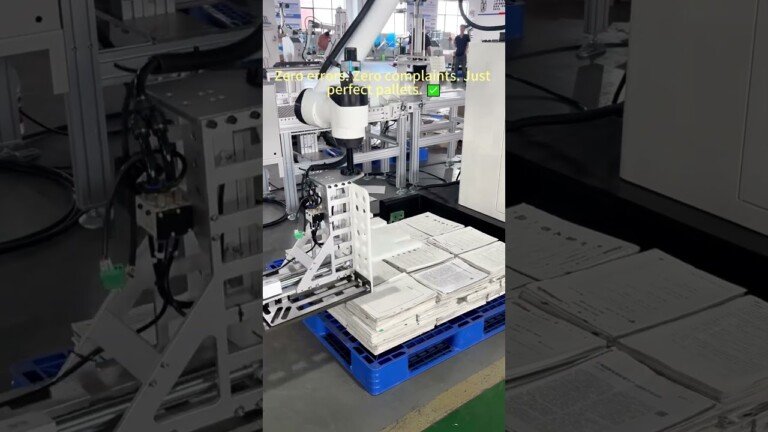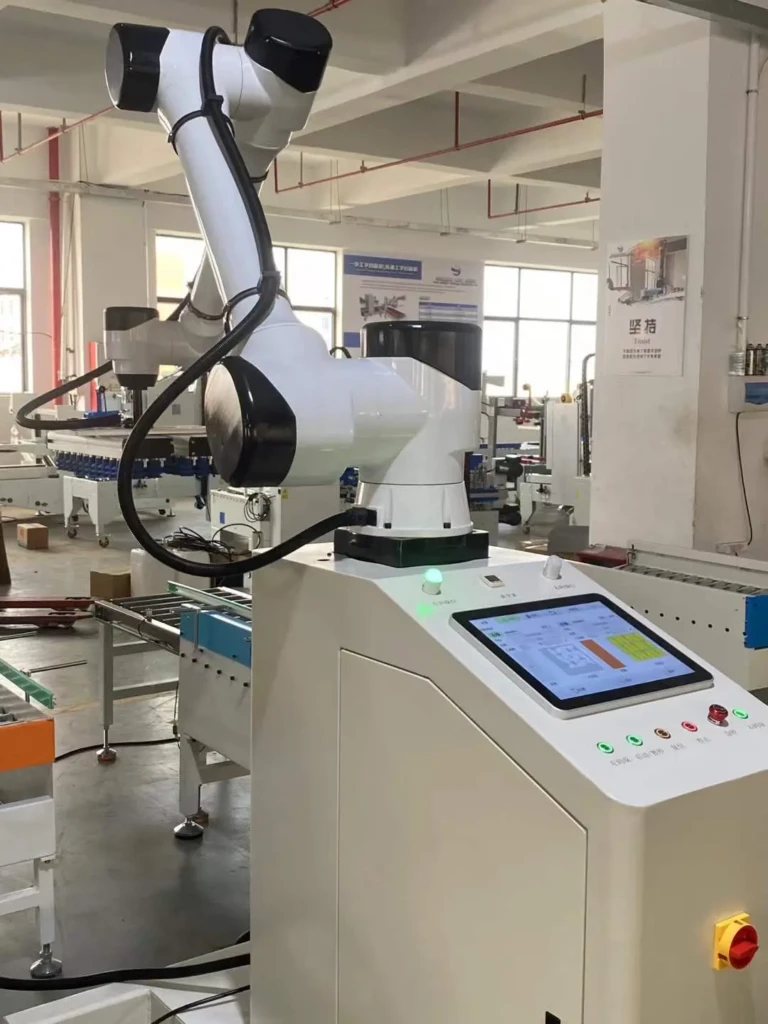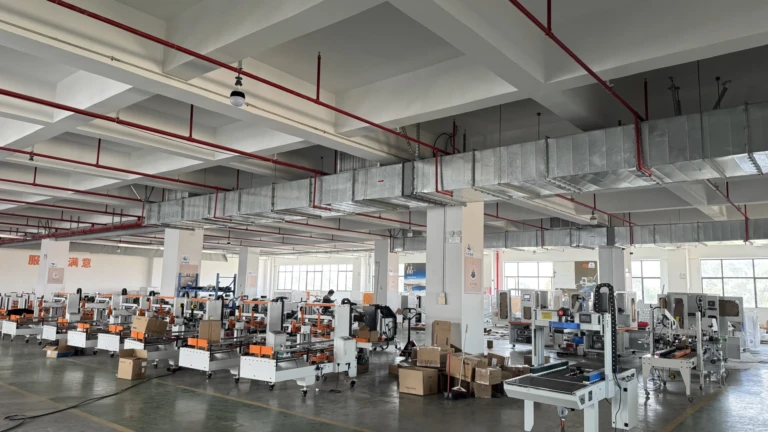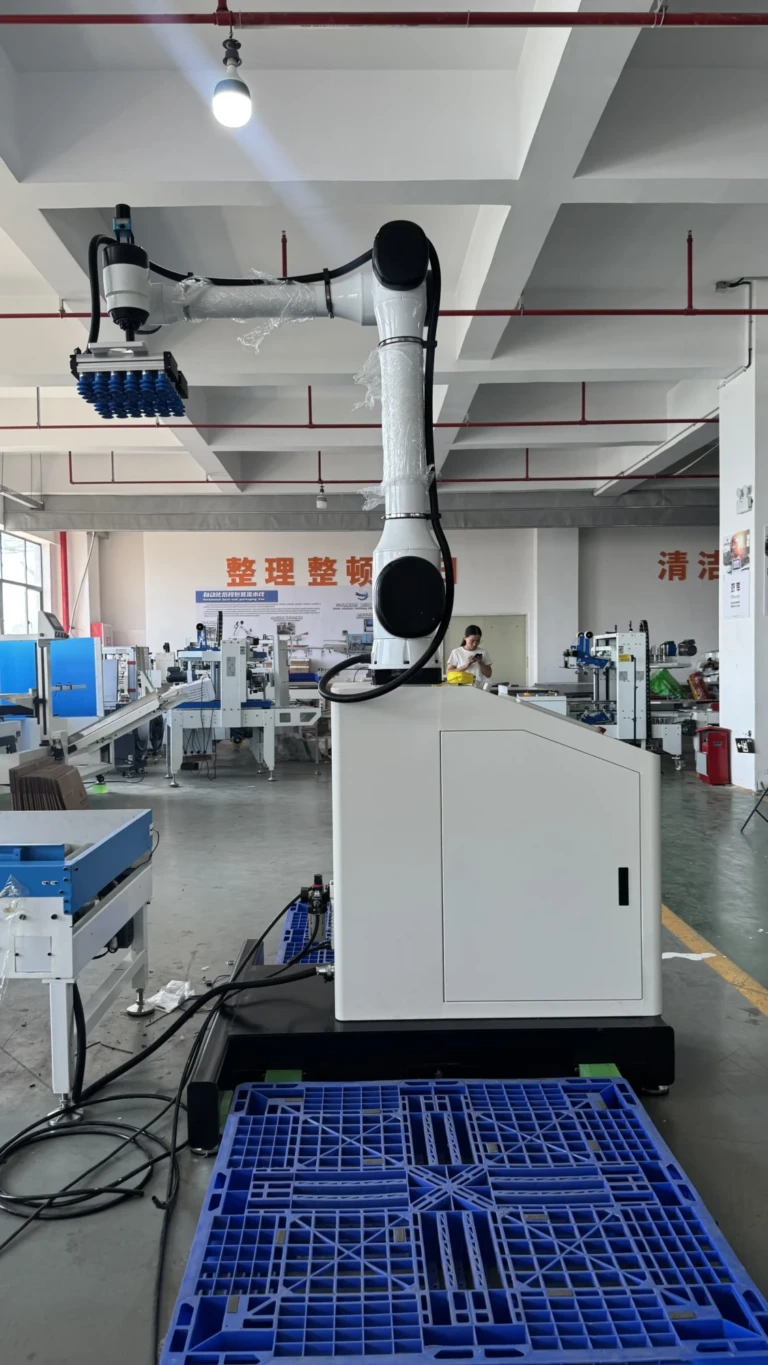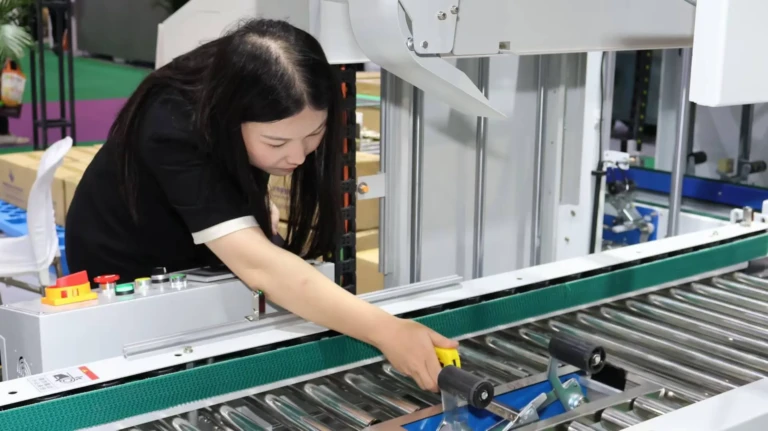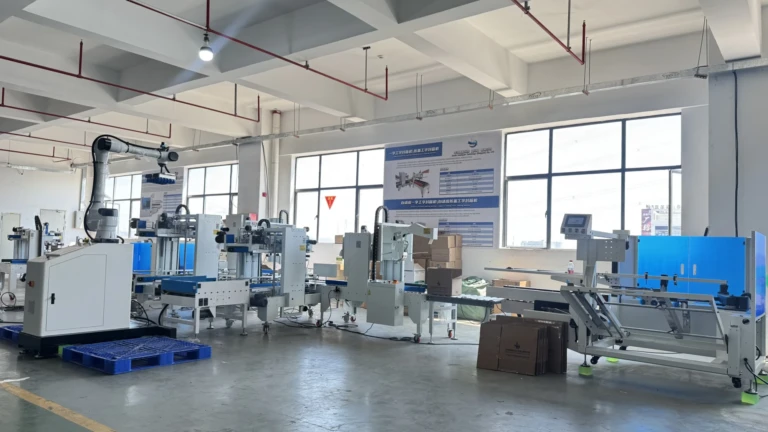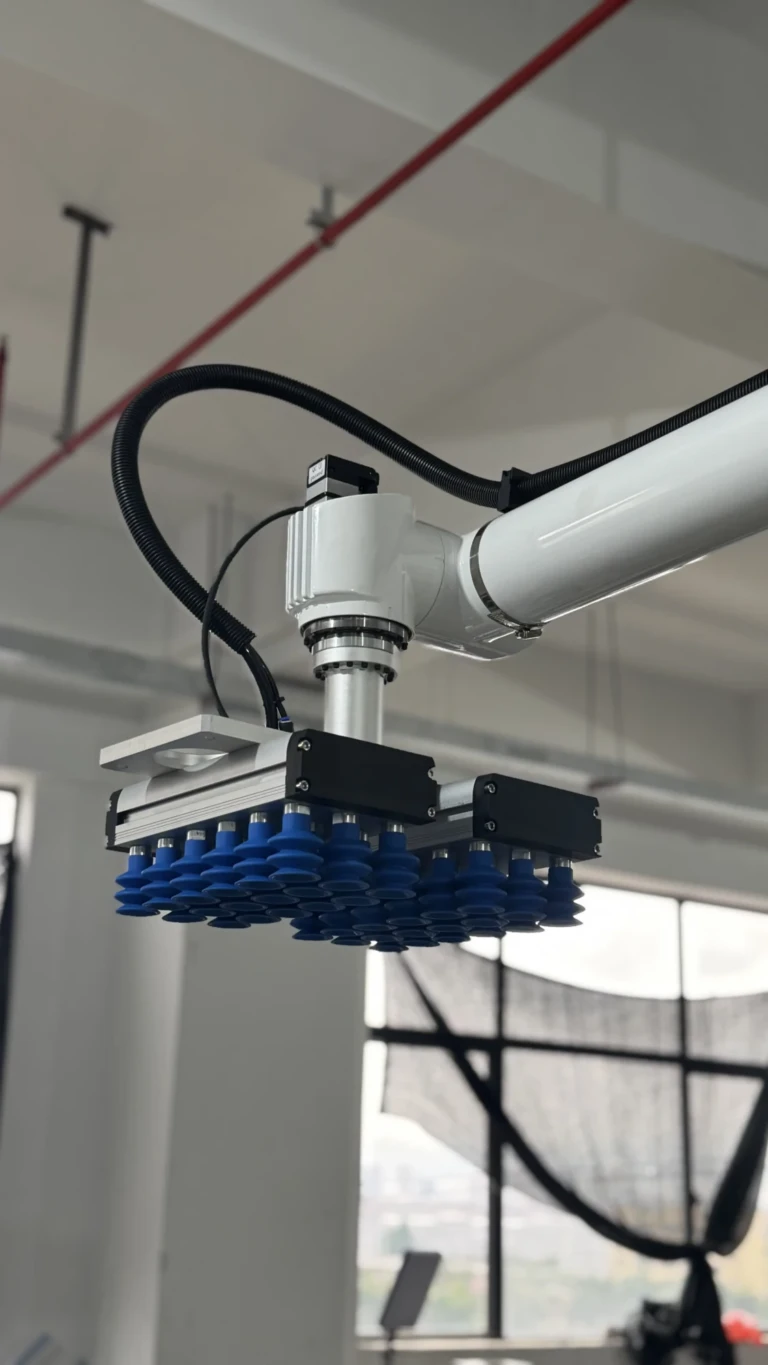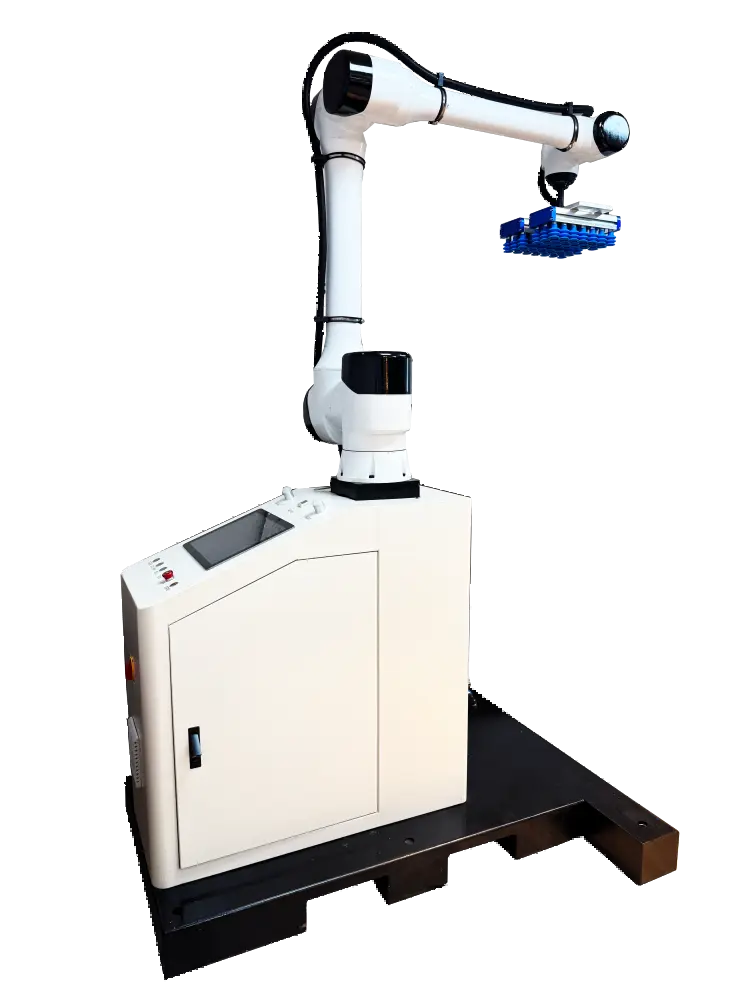
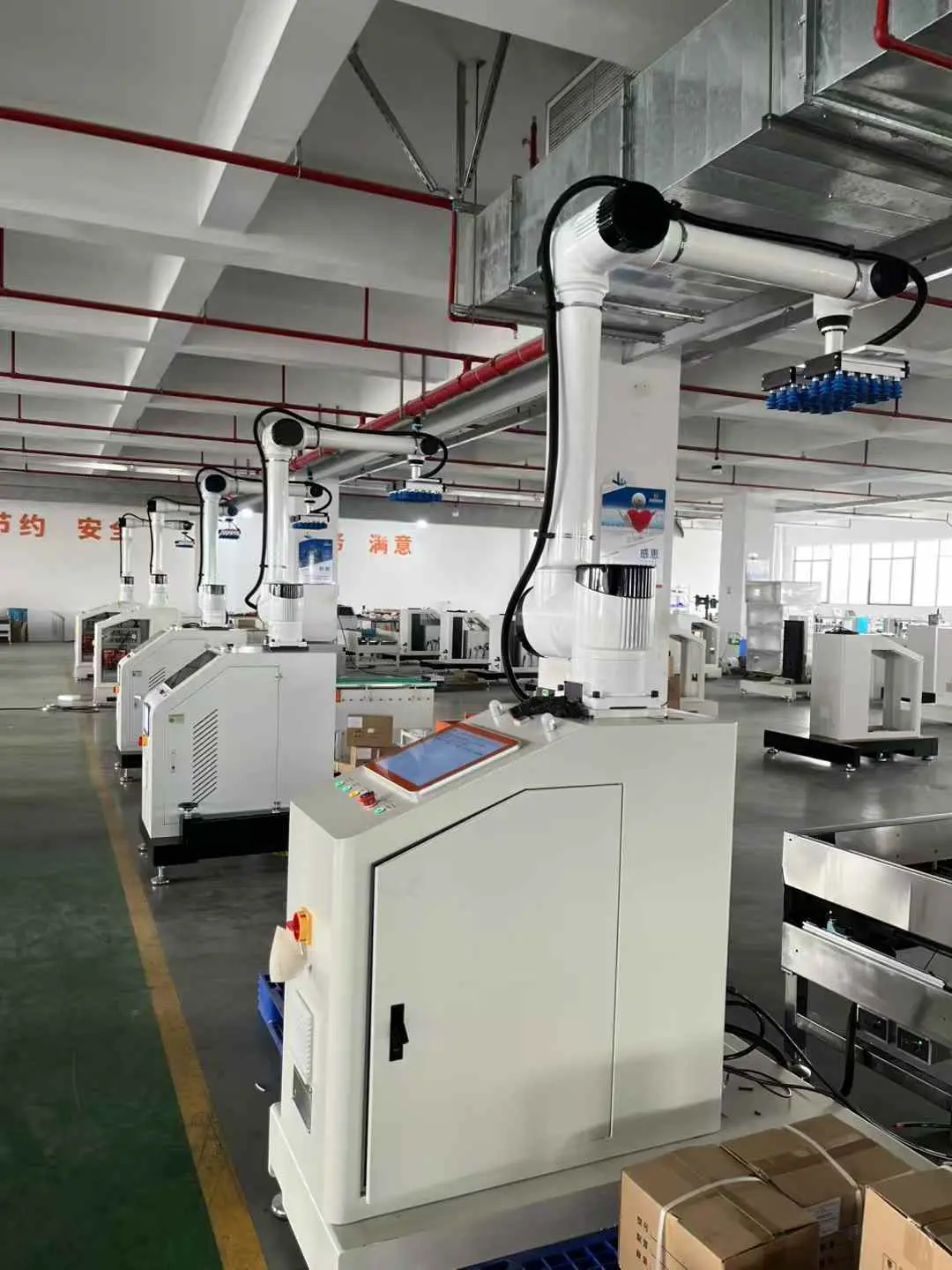
For decades, supply chains relied on manual palletizing—grueling, error-prone labor where workers repetitively stacked boxes onto pallets, often under tight deadlines and physically demanding conditions. The inefficiencies were glaring: inconsistent stacks leading to damaged goods, productivity bottlenecks during peak seasons, rising labor costs, and workplace injuries. Today, that paradigm is undergoing a seismic shift. Advanced robotic palletizers are emerging as the backbone of modern warehousing and distribution, delivering unprecedented speed, precision, and scalability. In this blog, we’ll unpack how these intelligent machines are transforming logistics operations—and why companies like Huaxiu Robot are leading the charge with end-to-end automation ecosystems.
The Anatomy of a Robotic Palletizer Revolution
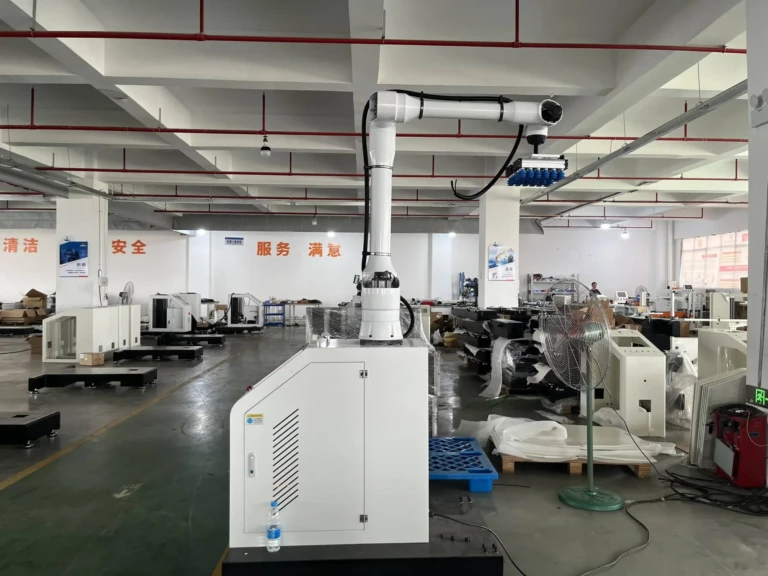
At their core, robotic palletizers are complex systems designed to automate the stacking and organizing of products onto pallets with little to no human intervention. Unlike earlier generations of industrial robots, modern units integrate machine vision, 3D sensors, and AI-driven path-planning algorithms to handle irregularly shaped items, mixed-SKU loads, and dynamic workflows. Here’s how they stand out:
- Adaptive Intelligence: Advanced systems like Huaxiu’s collaborative palletizing robots use real-time object recognition to adjust gripper force and stacking logic based on package dimensions, material fragility, and weight distribution.
- Speed-to-Value: While humans typically palletize 8–10 units per minute on average, robotic arms can achieve rates of 30+ units per minute with zero fatigue—translating to a 300% throughput increase.
- Floor Space Optimization: Compact, articulated-arm designs minimize footprint, freeing up warehouse space for storage or other value-added processes.
Supply Chain Pain Points Solved
What do these technical capabilities mean for businesses navigating volatile supply chains? Let’s break down the tangible ROI drivers:
1. Slashing Labor Costs and Turnover
Labor shortages continue to plague logistics: 73% of warehouse operators cite hiring difficulties as a top challenge. Robotic palletizers eliminate dependency on manual stackers, reduce headcount pressures, and allow staff to upskill into supervisory or quality-control roles. With Huaxiu’s semi-automatic sealing robots handling secondary packaging, teams can focus on strategic tasks like inventory optimization.
2. Reining In Product Damage
Poorly stacked pallets cost the global supply chain over $10 billion annually in damaged goods. Robotic systems ensure uniform weight distribution, optimal layer patterns, and adherence to load height limits—critical for fragile items or export shipments facing rigorous transit conditions.
3. Meeting Sustainability Targets
Robotic precision minimizes plastic stretch film, strapping, and corrugate use through tighter wraps and optimized pallet configurations. Huaxiu’s fully automatic stretch film packaging robots, for example, reduce film waste by up to 25% compared to manual methods, aligning with ESG goals.
Beyond Basic Palletizing: The Rise of Integrated Automation
Leading innovators like Huaxiu Robot recognize that static palletizing is only one node in the logistics ecosystem. Their portfolio addresses upstream and downstream processes with seamless integration:
- Automatic Unpacking Robots: Unload inbound containers autonomously, feeding products to palletizing lines.
- Shrink Packaging Robots: Apply protective wraps post-palletizing for humidity-sensitive goods like textiles or pharmaceuticals.
- Strapping & Pallet-Forming Robots: Stabilize loads for transport with automated tensioning and knotting, even building custom pallet designs on demand.
This holistic approach eliminates process silos, slashing handling times while giving warehouses the flexibility to scale workflows during seasonal peaks.
Safety, Ergonomics, and the Human-Robot Partnership
Critics once feared robots would displace jobs, but the data tells a different story:
- Injury rates in manual palletizing roles are 50% higher than the warehousing average due to heavy lifting, twisting motions, and repetitive stress.
- Collaborative robots (cobots) like Huaxiu’s solutions operate in fenceless environments with force-limiting sensors, allowing humans to safely oversee operations.
By automating high-risk tasks, companies see 30–60% reductions in recordable incidents while retaining—and reskilling—their workforce.
Implementation Insights: From Feasibility to Operational Excellence
While robotic palletizers promise transformative gains, successful deployment hinges on strategic planning:
- ROI Calculation: Factor reduced labor, damage claims, energy usage, and throughput gains. Most enterprises break even in 12–24 months.
- System Integration: Ensure compatibility with existing WMS, PLCs, and material handling equipment. Huaxiu’s API-friendly robots simplify interoperability.
- Scalability: Start with a single-line installation (e.g., deploying stretch film robots for a key SKU) then expand across facilities.
Operational tip: Pilot during off-peak periods to refine gripper settings and pallet patterns before full rollout.
The Road Ahead: AI, IoT, and Autonomous Logistics
Next-gen palletizers are poised to leverage deeper predictive capabilities:
- Machine Learning for Load Optimization: Algorithms that analyze historical shipment data to predict optimal stacking sequences, reducing freight costs.
- IoT Edge Connectivity: Real-time monitoring of robot health (e.g., servo temperatures, gripper wear) via cloud platforms, enabling preemptive maintenance.
- 5G-Enabled Mobility: Autonomous mobile robots (AMRs) with onboard palletizing arms that navigate warehouses, serving multiple production lines.
With vendors like Huaxiu embedding these innovations, robotic palletizers will evolve from task-specific tools to adaptive “brains” orchestrating supply chain resilience.
Conclusion
Robotic palletizers are no longer a futuristic luxury—they’re a competitive necessity for supply chains battling labor instability, margin pressures, and sustainability mandates. Solutions like Huaxiu Robot’s end-to-end portfolio (from automated unpacking to strapping and sealing) demonstrate how layering automation at every touchpoint drives quantifiable efficiency. The result? Faster order fulfillment, reduced operational risk, and the agility to thrive in an era of constant disruption.
FAQs: Demystifying Robotic Palletizers
Q1: What ROI timeline can businesses expect after deploying robotic palletizers?
A: Payback periods range from 12–30 months depending on shift volume, labor costs, and damage reduction. High-throughput facilities (e.g., beverage distribution) often achieve ROI faster due to energy savings and throughput gains.
Q2: Can robotic palletizers handle irregularly shaped items like bags or bottles?
A: Yes. Advanced vacuum grippers, adaptive arms, and vision systems enable handling of soft packaging, unstable loads, and variable geometries. Huaxiu’s systems can even palletize mixed SKUs on a single pallet autonomously.
Q3: Are these systems safe to operate alongside human workers?
A: Absolutely. Collaborative robots feature force-limited joints, emergency stops, and laser scanners that halt motion if a worker enters a predefined zone. Most modern units meet ISO 10218 safety standards.
Q4: How do robotic palletizers integrate with existing packaging lines?
A: Through PLCs, APIs, or Ethernet/IP protocols. Leading providers offer plug-and-play interfaces compatible with common WMS and ERP systems, reducing downtime during installation.
Q5: What maintenance is required for robotic palletizing systems?
A: Minimal—typically lubrication of joints, belt inspections, and sensor calibration. Predictive AI tools can forecast part failures before they occur, scheduling maintenance proactively.
Q6: Do these robots require specialized programming skills?
A: No. Intuitive graphical interfaces allow operators to program pallet patterns via drag-and-drop templates or even voice commands.
Ready to transform your logistics efficiency? Explore how tailored robotic palletizing ecosystems can future-proof your operations—reach out to discuss scalable solutions.