
The Rise of Automation in Logistics: Why Tote Palletizing Robots Are Revolutionizing Warehouses
In today’s fast-paced logistics landscape, efficiency and precision are non-negotiable. Among the most transformative innovations is the tote palletizing robot—a solution that’s reshaping how warehouses handle inventory, reduce costs, and meet escalating customer demands. But what exactly makes these robotic systems indispensable? Let’s dive into the key benefits driving their adoption across industries.
1. Unmatched Speed and Consistency
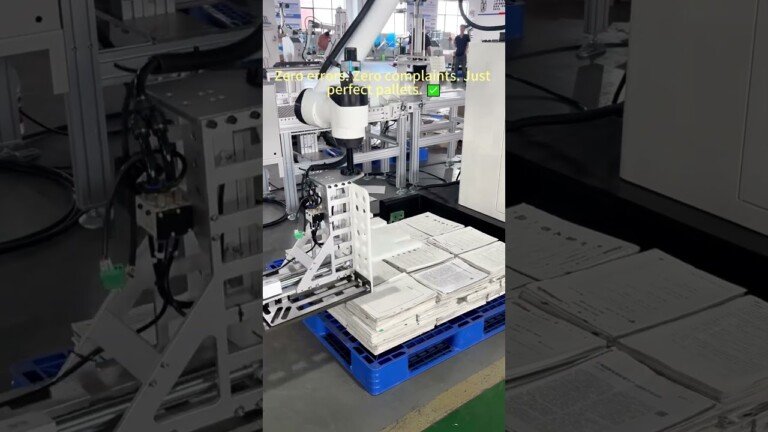
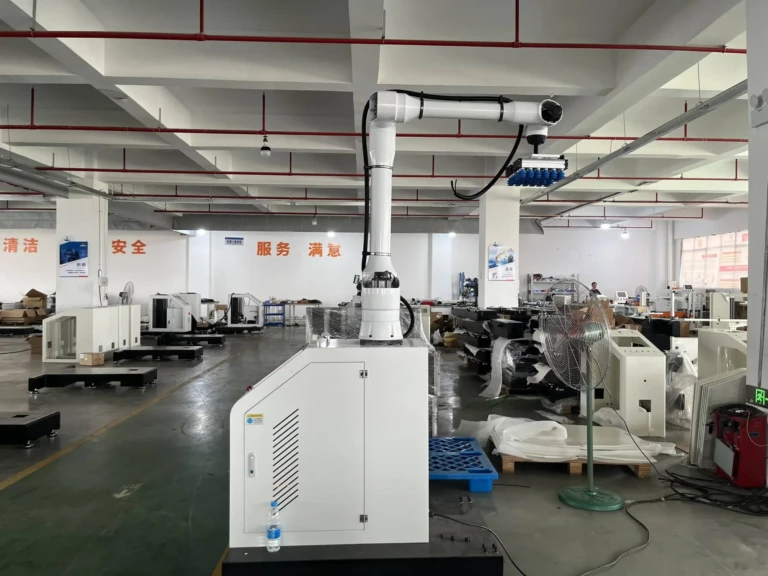
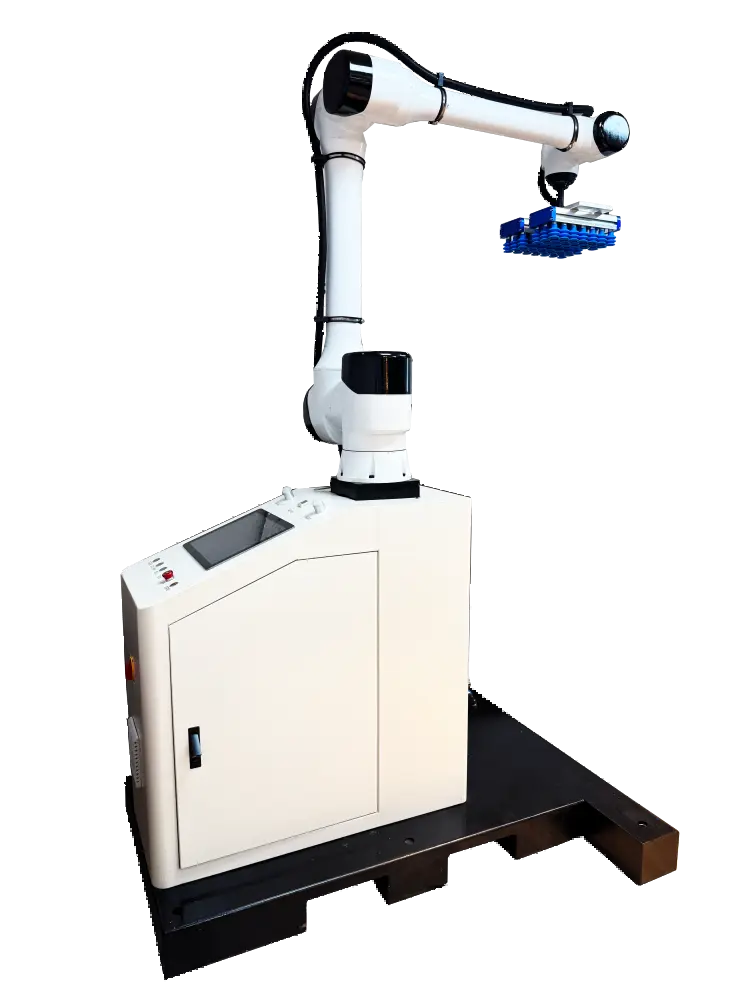
Human workers fatigue, take breaks, and vary in performance—robots don’t. Tote palletizing robots, such as Huaxiu Robot’s collaborative palletizing models, operate 24/7 at speeds exceeding 1,500 units per hour. Their precision ensures every tote is stacked uniformly, minimizing shifting during transit and reducing product damage by up to 60%. For high-volume facilities like e-commerce fulfillment centers, this consistency is a game-changer.
2. Labor Cost Reduction
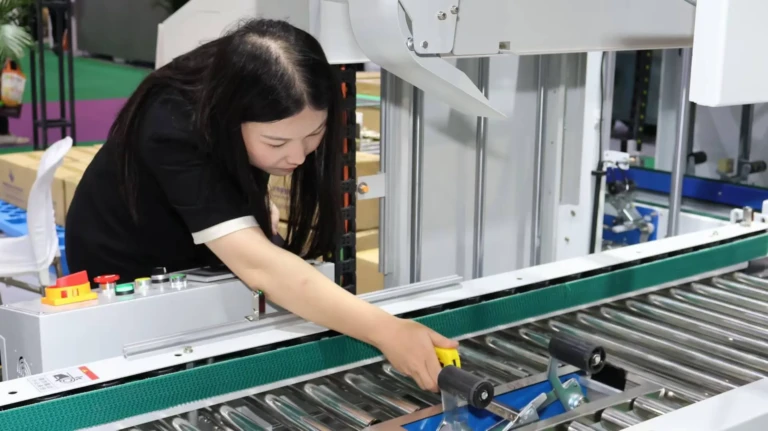
Labor shortages and rising wages plague the logistics sector. Automating tote palletizing eliminates repetitive, physically demanding tasks—freeing employees for higher-value roles like quality control or supervision. Huaxiu’s fully automatic stretch film packaging robots, for instance, seamlessly integrate with palletizing systems, cutting dependency on manual labor while slashing operational costs by 30–50% over time.
3. Enhanced Workplace Safety
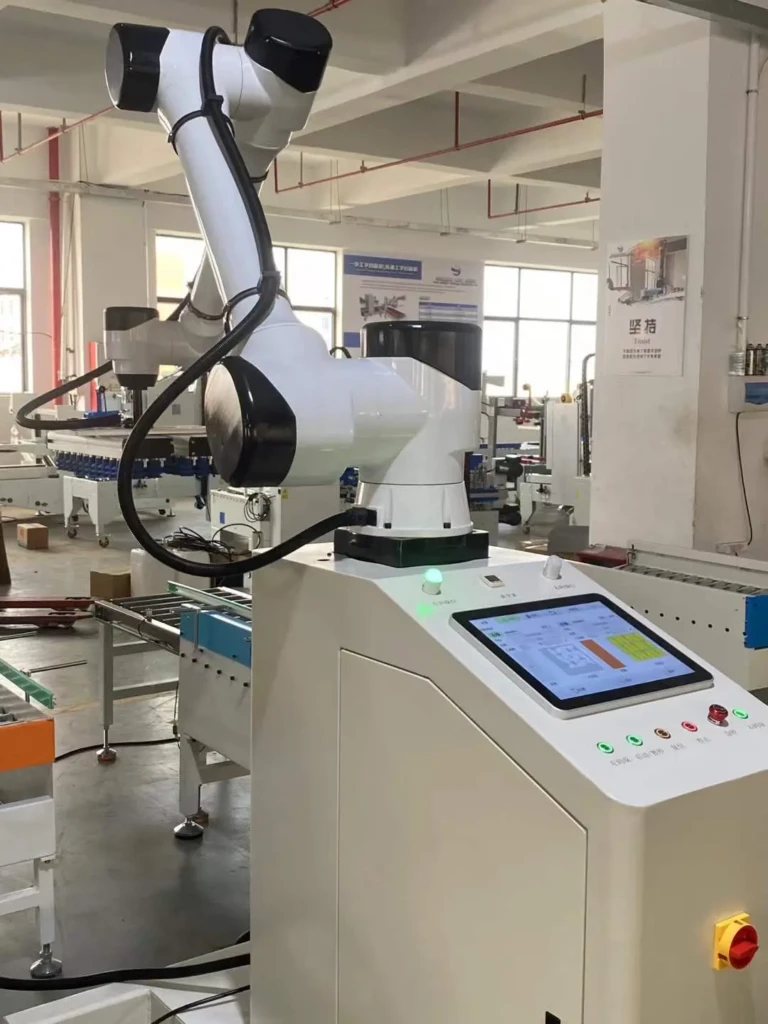
Palletizing heavy totes risks injuries like strains, falls, or musculoskeletal disorders. Robots handle weights up to 150 lbs effortlessly, reducing workplace accidents. Advanced sensors and collision-avoidance systems (featured in Huaxiu’s collaborative palletizing robots) ensure safe operation around human staff, aligning with OSHA standards and boosting employee morale.
4. Space Optimization
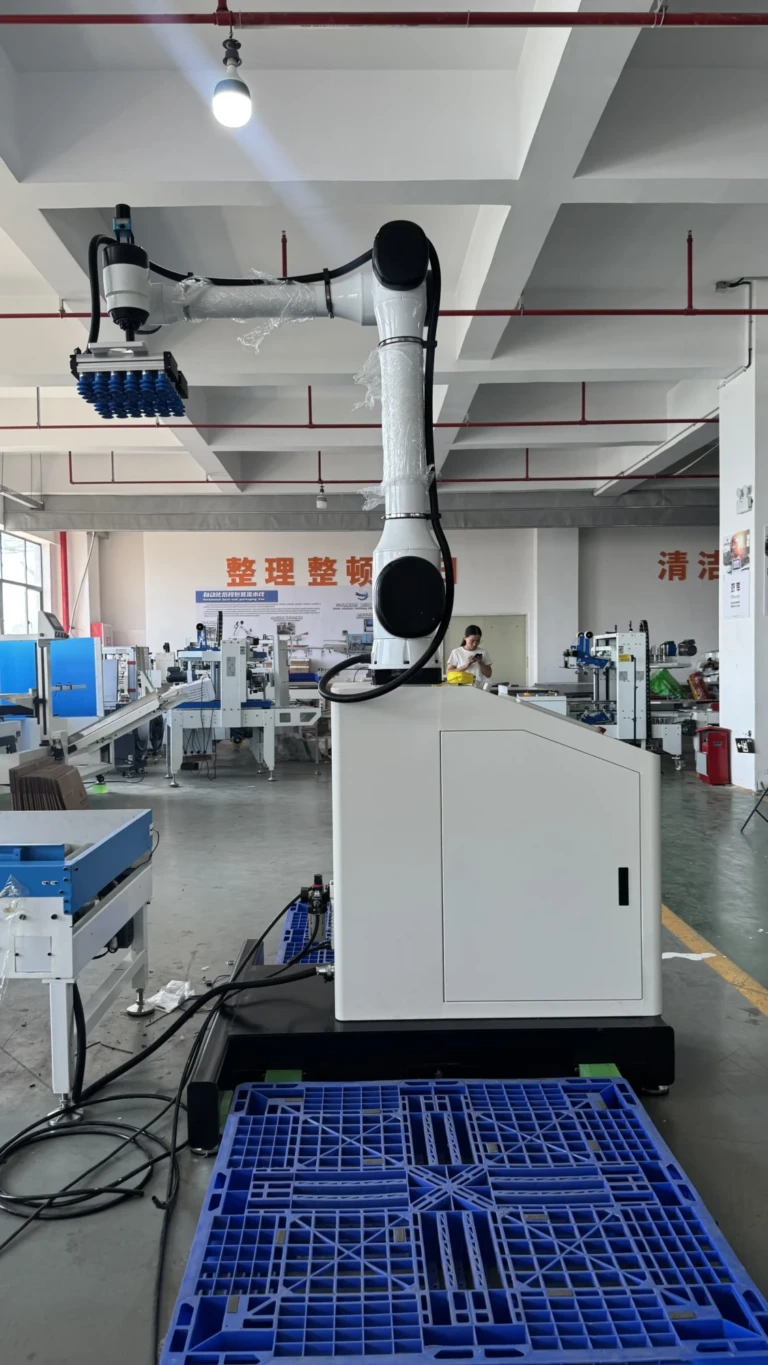
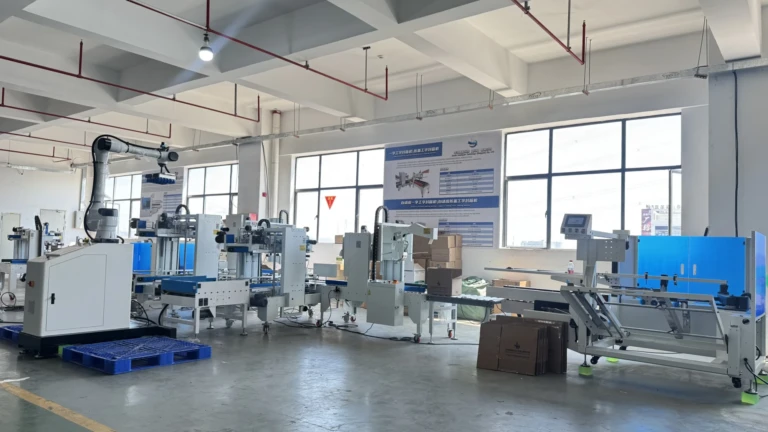
Unlike fixed conveyor lines, robotic arms require minimal floor space. Huaxiu’s compact pallet-forming robots use advanced algorithms to build denser, pyramid-free pallet configurations, optimizing vertical storage and warehouse real estate. This scalability is critical for facilities expanding SKU varieties without costly infrastructure overhauls.
5. Flexibility for Dynamic Workflows
Modern warehouses juggle diverse product sizes, weights, and stacking patterns. Tote palletizing robots shine here: with Huaxiu’s AI-driven models, operators can reprogram stacking sequences via intuitive no-code interfaces. Whether handling fragile electronics or irregularly shaped pharmaceuticals, these robots adapt instantly, future-proofing operations against changing market demands.
6. Improved Traceability and Quality Control
Integrated vision systems scan barcodes or RFID tags during palletizing, ensuring 100% inventory accuracy. Huaxiu’s strapping robots, synchronized with palletizers, flag damaged totes before final packaging—preventing costly recalls and enhancing compliance in regulated industries like food and pharmaceuticals.
Sustainability: An Added Advantage
Beyond productivity gains, tote palletizing robots promote sustainability. Precise stacking reduces packaging waste, while energy-efficient motors (like those in Huaxiu’s shrink-packaging robots) lower carbon footprints. For brands committed to ESG goals, automation is a strategic ally.
Conclusion
Tote palletizing robots are no longer a luxury—they’re a necessity for businesses striving to compete in the age of instant gratification. From accelerating throughput to safeguarding workers and resources, Huaxiu Robot’s portfolio of automated solutions (including sealing, stretch-wrapping, and strapping robots) empowers warehouses to achieve operational excellence. As AI and machine learning evolve, these systems will only grow smarter, faster, and more accessible—making now the time to invest in the future of logistics.
FAQs About Tote Palletizing Robots
Q: How difficult is it to integrate a palletizing robot into existing workflows?
A: Most modern robots are designed for plug-and-play integration. Huaxiu’s collaborative models, for example, sync with common WMS/ERP systems and can be deployed in under a week.
Q: Are these robots suitable for small or irregularly shaped totes?
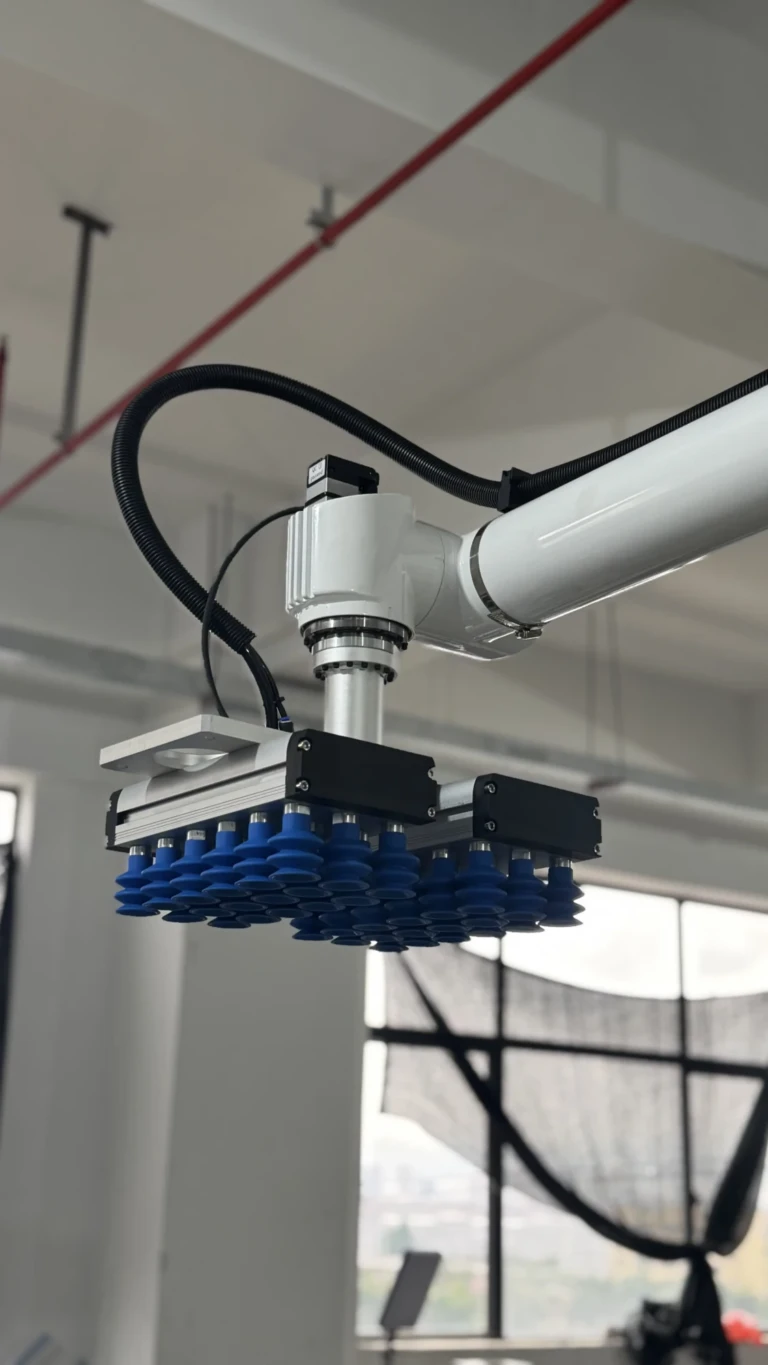
A: Yes. Adaptive grippers and 3D vision systems enable handling of various sizes, materials, and shapes—even mixed SKUs on the same pallet.
Q: What’s the typical ROI timeframe?
A: Most facilities recover costs within 12–24 months through labor savings, efficiency gains, and reduced product loss.
Q: Do I need to overhaul my entire warehouse to use a palletizing robot?
A: No. Semi-automatic solutions like Huaxiu’s semi-automatic sealing robots allow phased automation, coexisting with manual processes during transition periods.
Q: How reliable are these robots in cold storage or harsh environments?
A: Huaxiu’s IP67-rated robots withstand temperatures as low as -22°F (-30°C) and high-dust settings, ensuring reliability in food processing or chemical warehouses.
Q: Can a single robot handle multiple tasks beyond palletizing?
A: Absolutely. Many models switch roles—like Huaxiu’s stretch film packaging robots, which palletize, wrap, and label pallets in a single cycle.
Q: What safety certifications do these robots hold?
A: Reputable systems comply with ISO 10218 (safety for industrial robots) and ISO/TS 15066 (collaborative robot standards).
Interested in optimizing your warehouse? Explore how Huaxiu Robot’s end-to-end automation solutions can transform your workflow—without compromising scalability or safety.