Introduction
In today’s fast-paced manufacturing and logistics sectors, efficiency is not just a goal—it’s a necessity. Enter automated palletizing robots, the unsung heroes transforming warehouses and production floors worldwide. These advanced machines streamline the process of stacking products onto pallets, replacing repetitive labor with precision, speed, and consistency. Whether you’re handling boxes, bags, or irregularly shaped items, palletizing robots automate what was once a bottleneck in supply chain operations. This guide dives deep into how these robotic systems work, their benefits, key applications, and what to consider when integrating them into your workflow—with insights into Huaxiu Robot’s cutting-edge solutions.
What Are Automated Palletizing Robots?
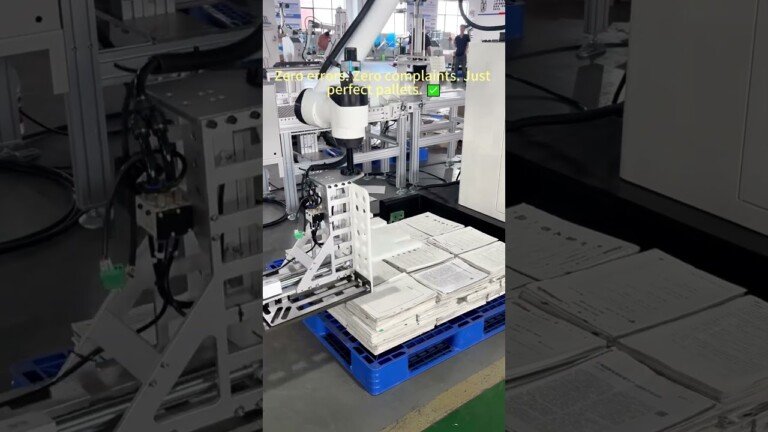
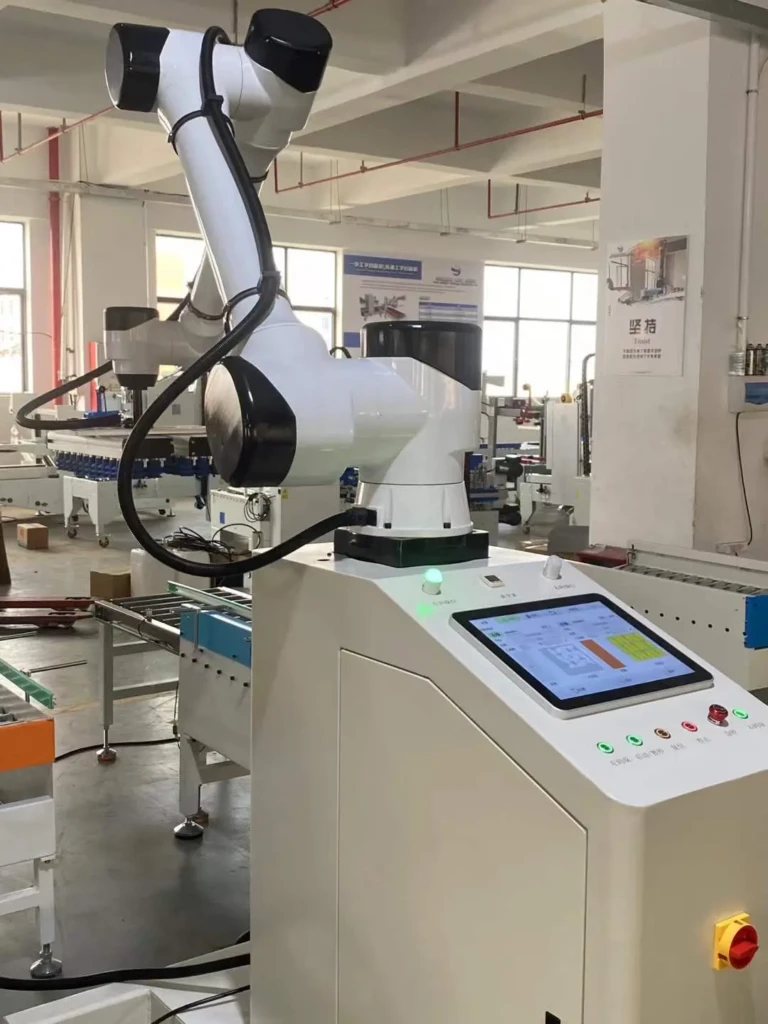
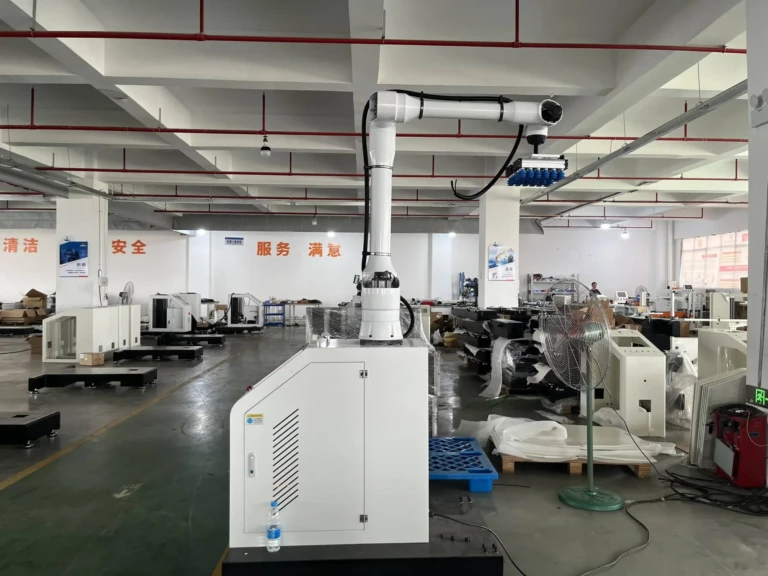
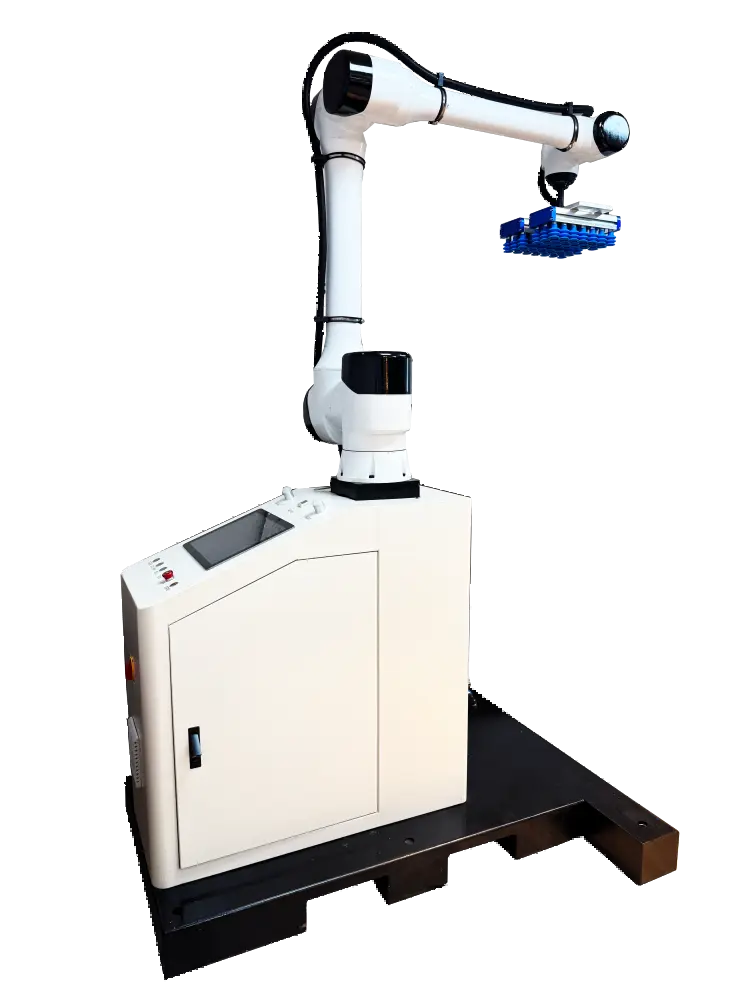
Automated palletizing robots are programmable machines equipped with robotic arms, grippers, and vision systems designed to pick, place, and arrange products onto pallets according to predefined patterns. They operate within structured environments like factories or warehouses, often synchronized with conveyors or packaging lines. Unlike manual palletizing, these robots eliminate variability while handling heavy loads (up to 2,000+ lbs) and complex configurations.
Types of Palletizing Robots
- Articulated Robots:
Flexible “arm-style” robots with multiple rotational joints for intricate movement, ideal for mixed-case palletizing. - Gantry/Cartesian Robots:
Linear robots mounted on overhead frames, excelling at high-speed, heavy-load applications (e.g., beverage stacks). - Collaborative Robots (Cobots):
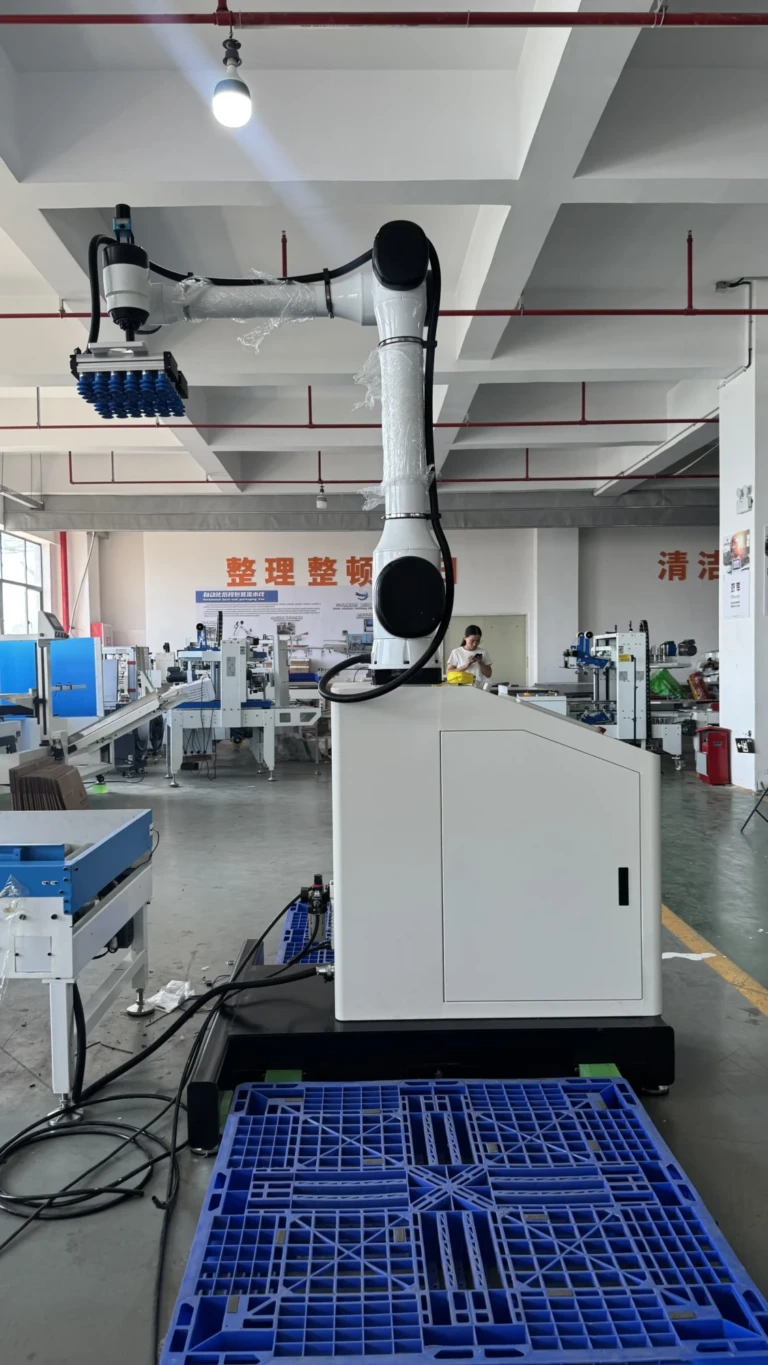
Safe for shared workspaces, cobots like Huaxiu’s collaborative palletizing robots work alongside humans with zero safety barriers. - Delta Robots:
High-speed pick-and-place units suited for lightweight items in food or pharmaceuticals.
Why Invest in Palletizing Automation?
- 24/7 Productivity
Robots work uninterrupted, boosting throughput by up to 500% compared to manual labor. - Cost Savings
Reduce labor shortages, workplace injuries, and product damage—delivering ROI in as little as 12 months. - Flexibility
Reprogram robots in minutes to switch between SKUs, pallet sizes, or patterns—critical for e-commerce agility. - Safety & Ergonomics
Remove workers from lifting heavy loads or operating in hazardous environments.
Huaxiu Robot’s Comprehensive Palletizing Ecosystem
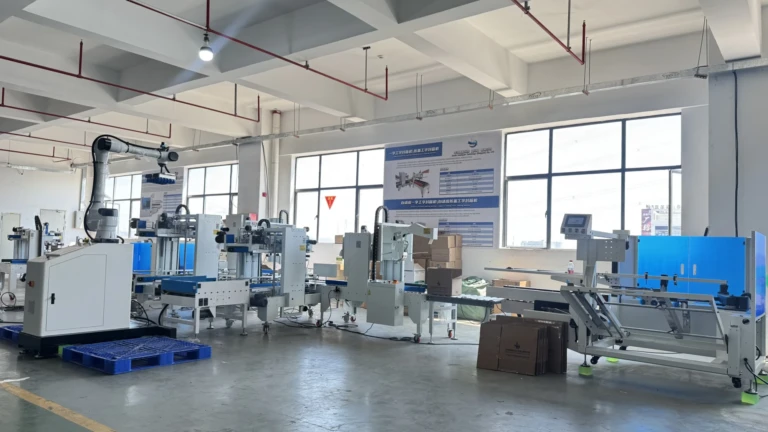
Beyond standalone palletizing units, Huaxiu offers integrated end-to-end packaging solutions to maximize ROI:
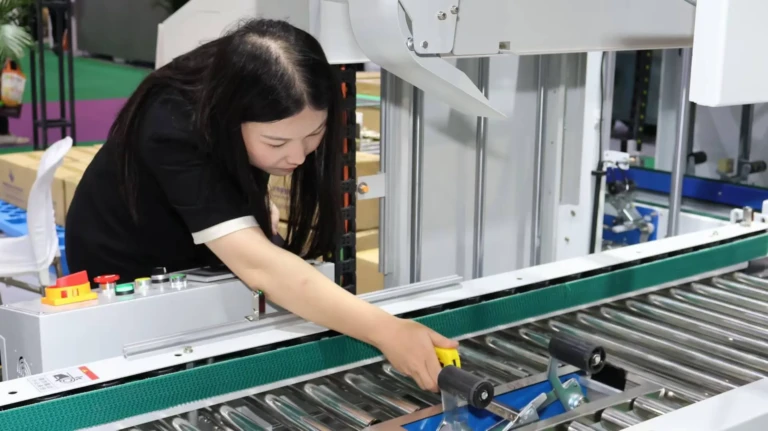
- Automated Unpacking/Sealing Robots: Prep inbound/outbound parcels for palletizing.
- Shrink/Stretch Film Wrappers: Secure pallet loads automatically post-stacking.
- Pallet Forming & Strapping Robots: Build and reinforce pallet bases.
- Semi/Fully Automatic Sealing Systems: Close boxes before stacking.
This holistic approach ensures seamless interoperability—no more "island automation."
Key Applications Across Industries
- Food & Beverage:
Hygienic, washdown-ready robots handle perishables in chilled environments. - Pharma & Chemicals:
Precision stacking of sensitive vials or sacks without contamination risks. - E-Commerce & Logistics:
Dynamic pattern optimization to accommodate endless SKU variations. - Building Materials:
Heavy-duty units stack bricks, tiles, or bags weighing 100+ lbs effortlessly.
Implementing Palletizing Robots: 5 Critical Considerations
- Payload & Reach:
Match robot specs to product weight/size (e.g., Huaxiu’s palletizing robots manage 10–1,500+ lbs). - Integration Complexity:
Ensure compatibility with existing PLCs, WMS, or ERP systems. - Floor Space:
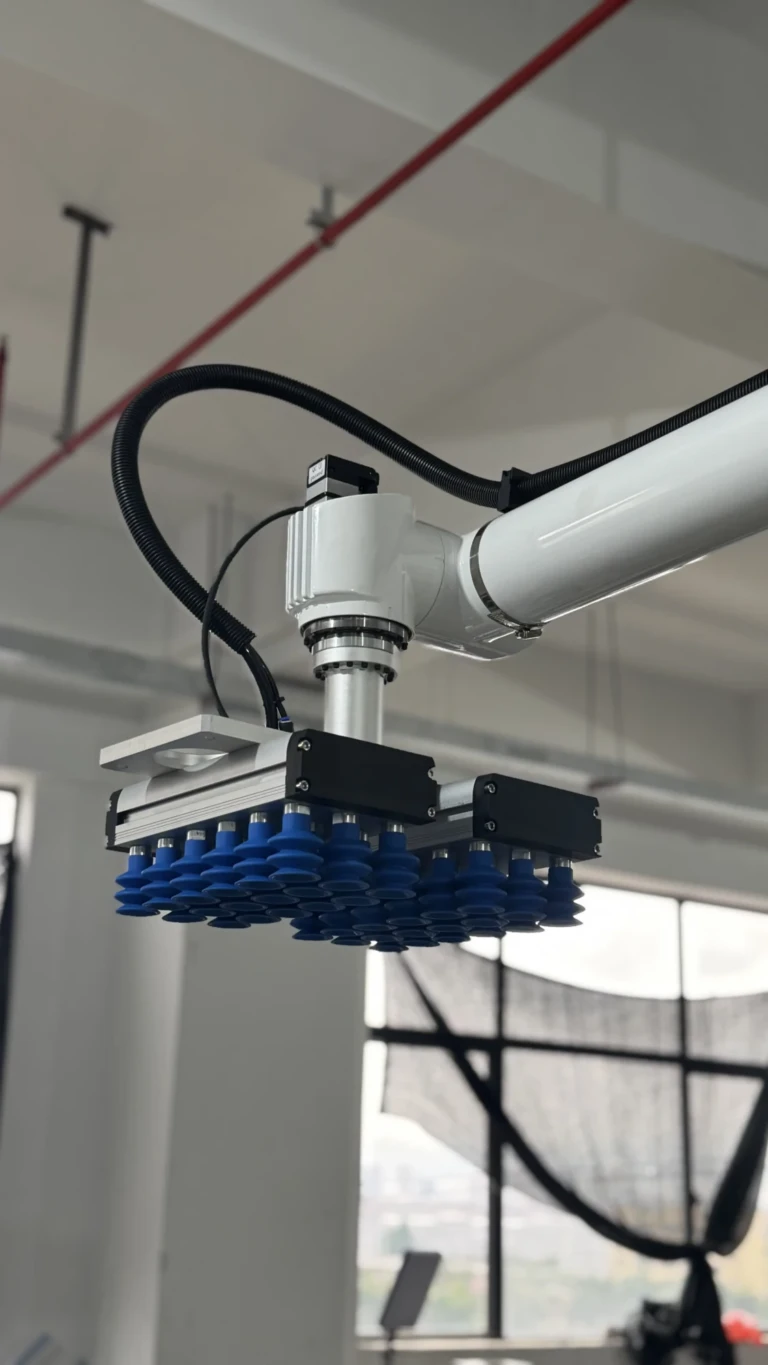
Cobots require minimal space; gantry systems need overhead clearance. - End-of-Arm Tooling (EOAT):
Choose grippers—mechanical, vacuum, or hybrid—based on product fragility. - Scalability:
Opt for modular systems like Huaxiu’s that grow with demand.
The Future of Palletizing: AI, IoT, and Sustainability
Next-gen palletizers leverage machine learning to self-optimize stacking patterns in real time, minimizing material waste. IoT sensors monitor energy usage and predictive maintenance, while lightweight designs cut carbon footprints. Huaxiu’s labs are already testing AI vision-guided robots that adapt to damaged boxes or irregular shapes—future-proofing supply chains.
Conclusion
Automated palletizing robots are no longer a luxury but a strategic imperative for businesses competing in the age of instant delivery and razor-thin margins. By combining speed, precision, and adaptability, they solve labor challenges while unlocking new efficiencies. Brands like Huaxiu Robot push boundaries further with unified ecosystems—from unpacking to sealing and wrapping—delivering turnkey automation tailored to diverse industries. As AI reshapes robotics, early adopters will lead the next wave of innovation, turning warehouses into high-tech hubs of productivity.
FAQs
Q1: How much do palletizing robots cost?
Systems range from $50,000 (cobots) to $300,000+ (high-speed gantry setups). Huaxiu offers scalable entry-level options to enterprise solutions.
Q2: Can robots handle irregularly shaped products?
Yes! Advanced vision systems and customizable EOAT (like adaptive grippers) enable stacking of bottles, sacks, or even loose parts.
Q3: How long does integration take?
Most systems deploy in 4–8 weeks with turnkey support. Huaxiu’s plug-and-play cobots can be operational in days.
Q4: Will robots replace human workers?
No—they augment labor. Workers transition to supervisory or technical roles, improving workplace safety and job satisfaction.
Q5: What maintenance is required?
Routine checks (arming / greasing intervals) and annual servicing ensure longevity. Huaxiu’s IoT-enabled robots self-diagnose issues to minimize downtime.
Q6: Are they compatible with existing pallet types?
Robots adapt to Euro, CHEP, or custom pallets via programmable patterns.
Q7: Do I need to reprogram for new products?
Modern interfaces allow pattern changes via drag-and-drop software—no coding expertise needed.
Explore Huaxiu Robot’s solutions today—where automation meets reliability.