The Hidden Game-Changer in Modern Warehouses: How Autonomous Pallet Robots Are Rewriting the Rules of Logistics
If you’ve ever wondered how your online orders magically appear at your doorstep faster each year—despite global supply chain chaos—look no further than the silent revolution unfolding in warehouses and distribution centers. At the heart of this transformation are Autonomous Pallet Robots (APRs), intelligent machines that move, stack, and manage heavy loads with surgical precision. But this isn’t just about replacing forklifts; it’s about redefining efficiency in an industry where seconds translate into millions.
Why Traditional Logistics Is Reaching Its Breaking Point
The logistics sector has long struggled with three existential challenges:
- Labor dependency: Human operators face physical strain, leading to high turnover (the Bureau of Labor Statistics notes 36% annual turnover in warehousing).
- Inefficiency peaks: During surges like Black Friday, manual systems crack under pressure.
- Safety compromises: OSHA reports 95,000+ forklift injuries annually in the US alone.
Enter Autonomous Pallet Robots—not as incremental upgrades, but as systemic solutions.
The Anatomy of an Autonomous Pallet Robot
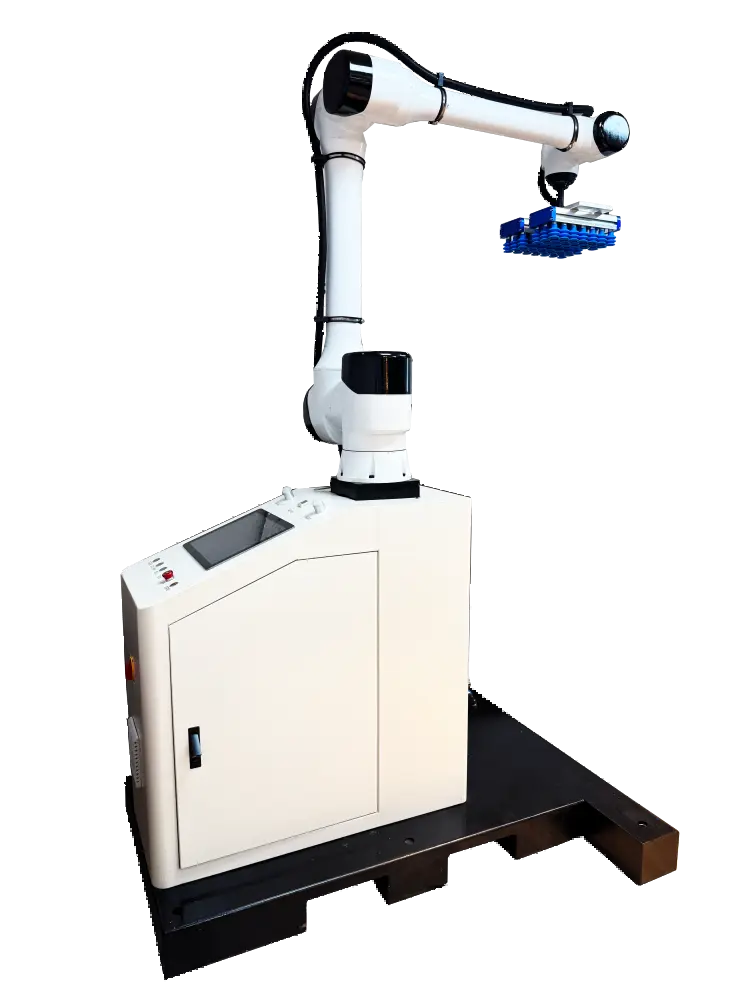
APRs combine cutting-edge technologies to operate in dynamic environments:
- 3D LiDAR & SLAM Navigation
Unlike early AGVs requiring magnetic tape, modern APRs use Simultaneous Localization and Mapping to “see” their surroundings in real time, adjusting paths on the fly around obstacles like fallen boxes or humans. - Force-Torque Sensing
Embedded sensors detect pallet weight distribution, automatically adjusting grip strength to prevent damage to fragile goods (think pharmaceutical vials or glassware). - Swarm Intelligence
Fleets of APRs communicate via 5G mesh networks, collaboratively optimizing routes. When one robot detects a blocked aisle, the entire fleet reroutes within milliseconds—no central server required.
The Huaxiu Advantage: Beyond Single-Robot Functionality
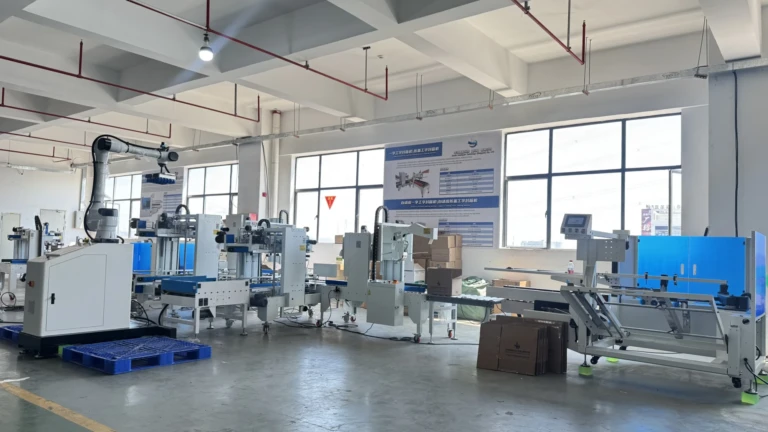
While standalone APRs deliver value, Huaxiu’s integrated ecosystem amplifies their impact:
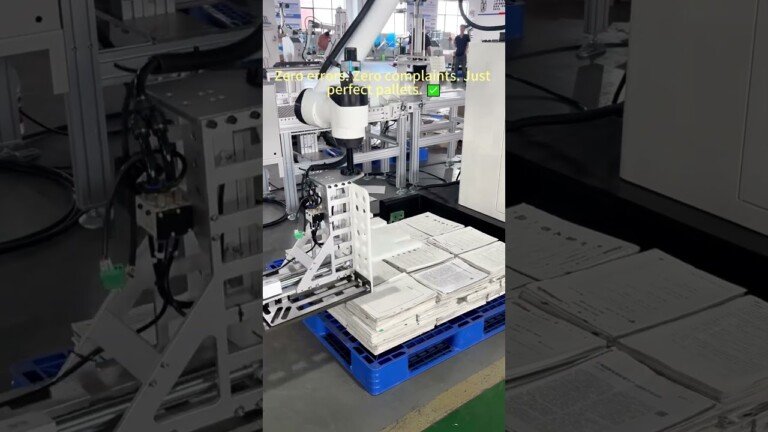
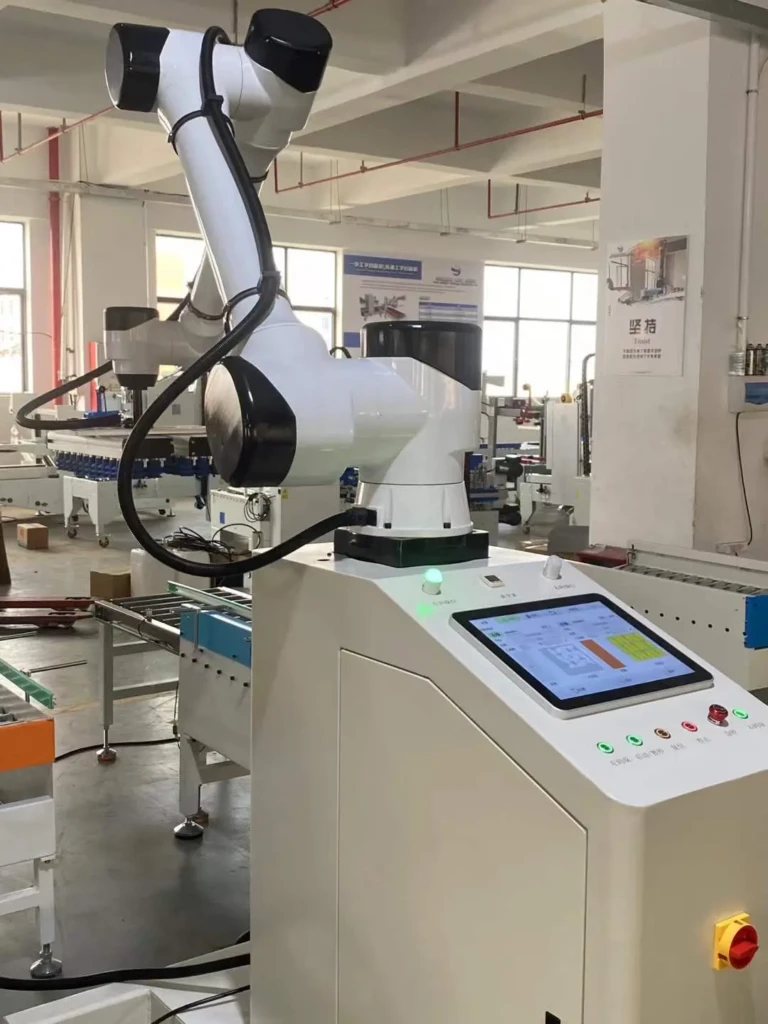
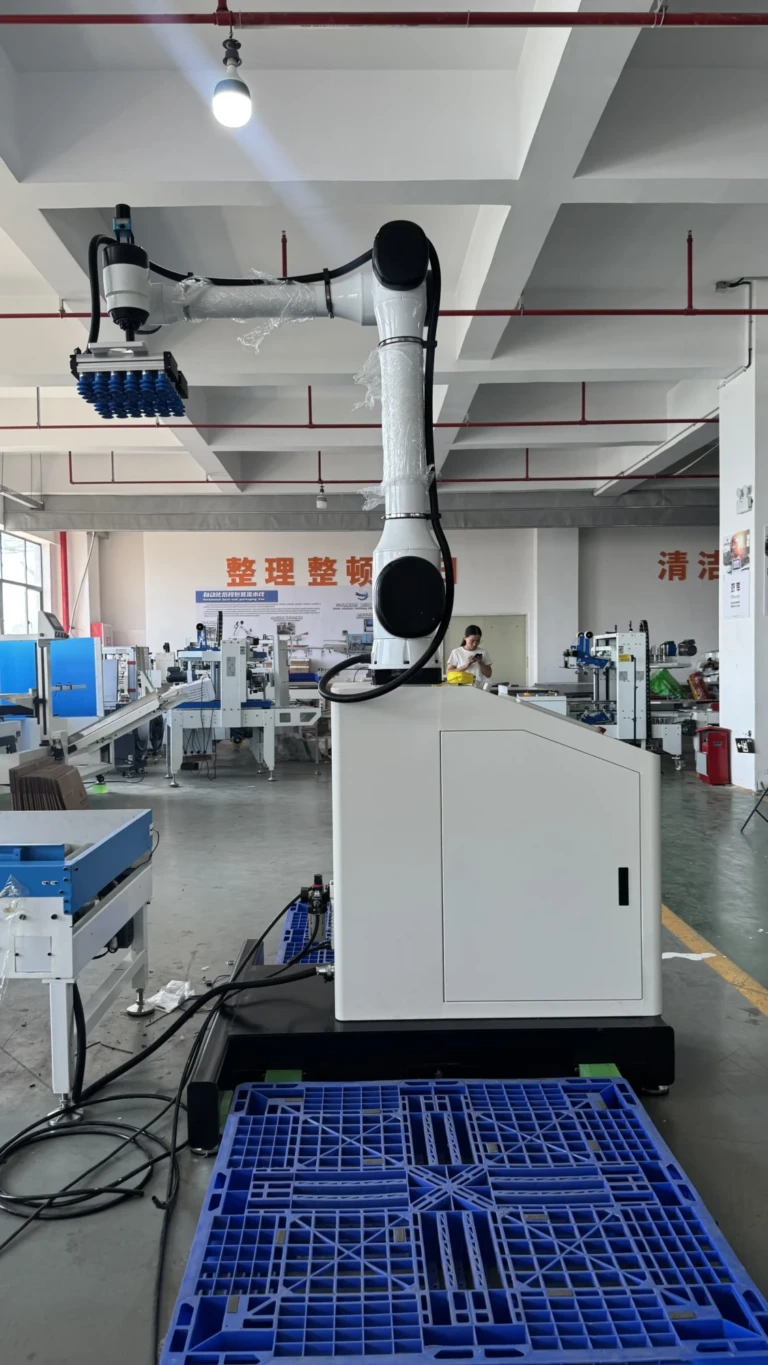
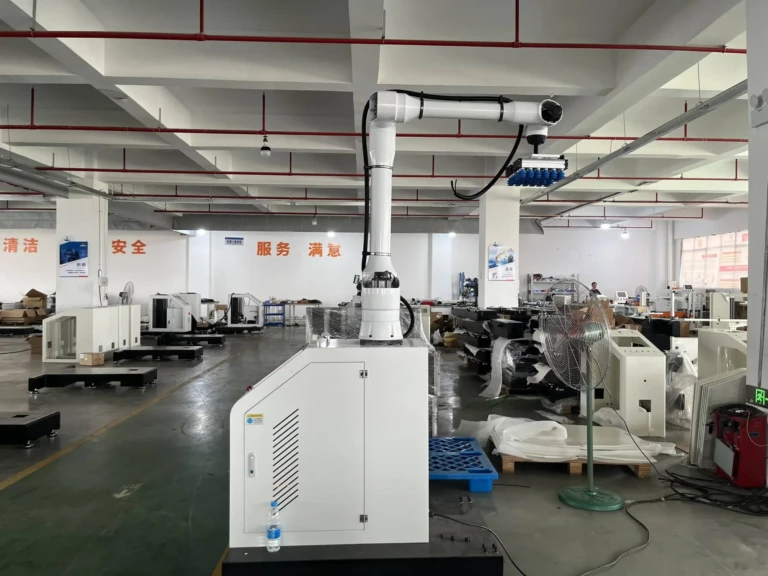
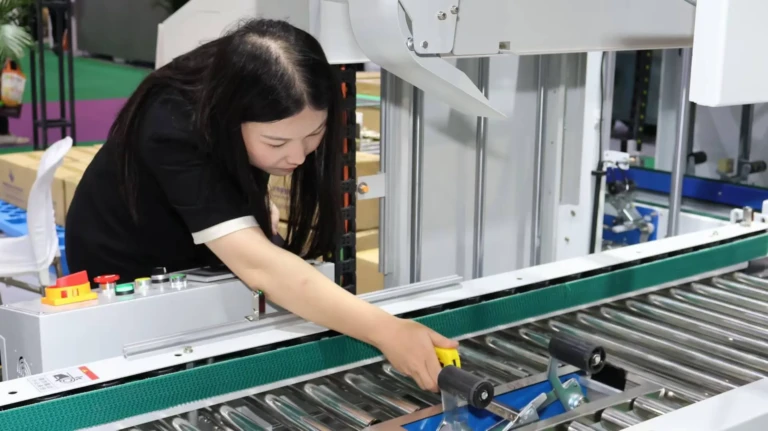
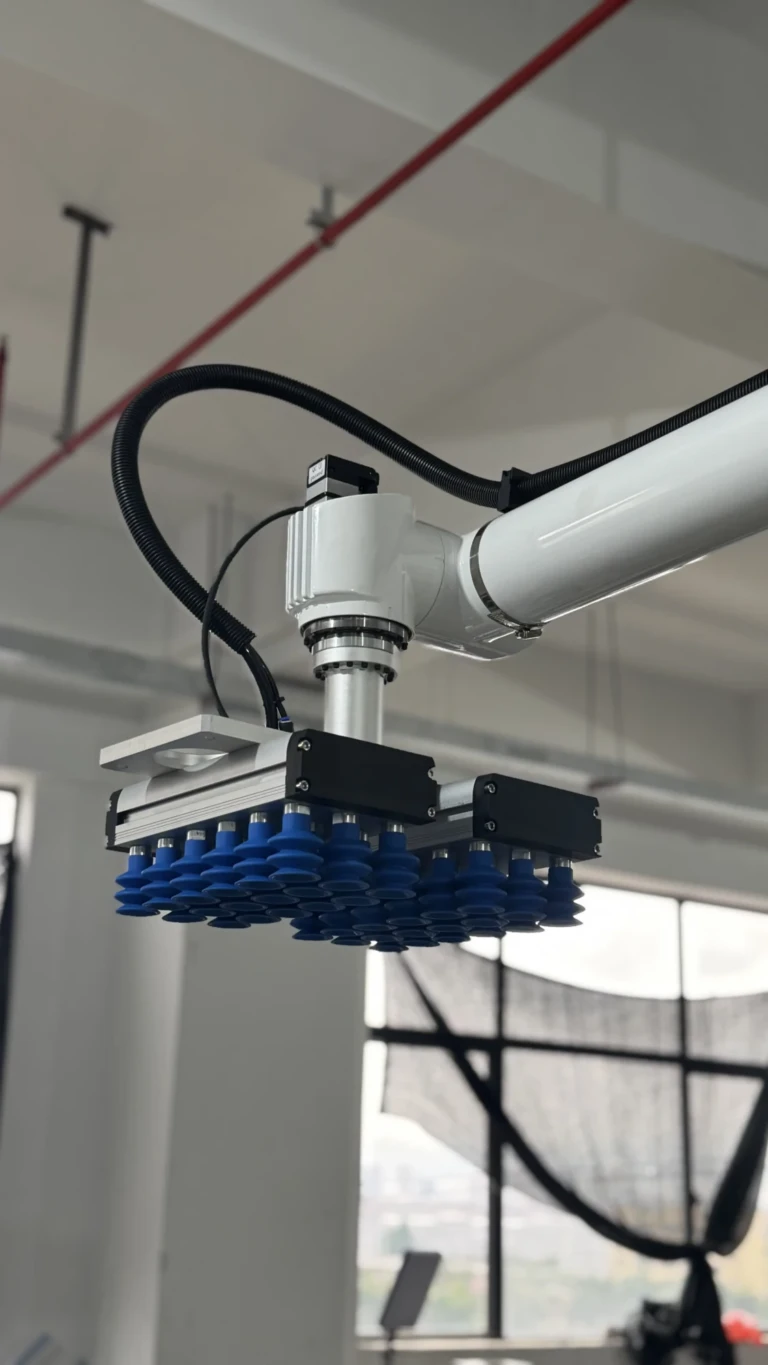
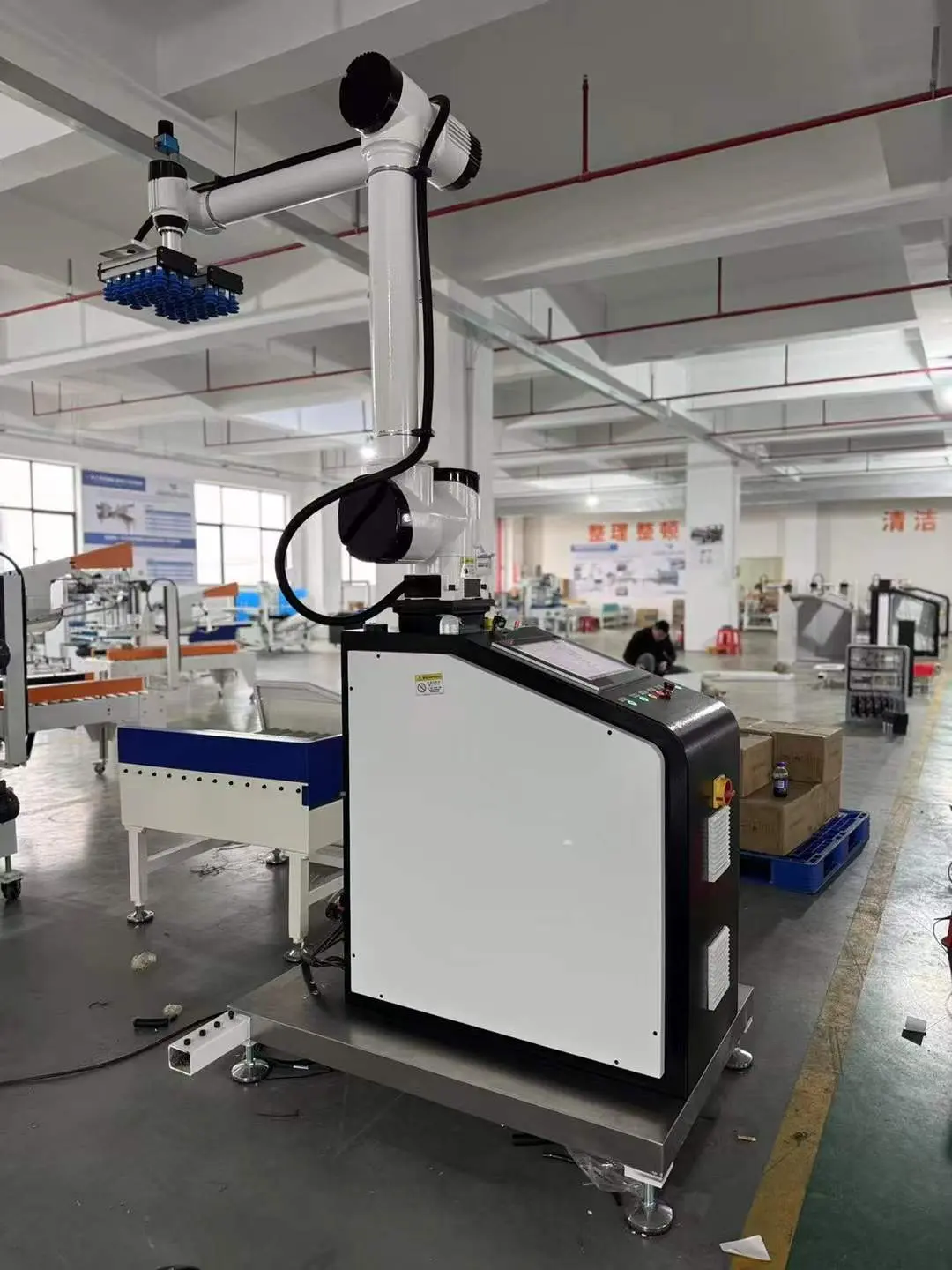
- Precision Handoff Systems: A Huaxiu automatic unpacking robot processes incoming cartons, feeds items to a collaborative palletizing robot that builds mixed-SKU pallets, then transfers them to an APR for transport—all without human touchpoints.
- End-to-End Packaging Synergy: Post-transport, fully automatic stretch film wrapping robots secure loads 40% tighter than manual methods, while strapping robots apply tension-optimized bands, reducing shipping damage claims by up to 27%.
- Adaptable Automation: Semi-automatic sealing robots allow human oversight for custom orders, blending flexibility with automation where needed.
Proven Impact: Metrics That Matter
Companies deploying Huaxiu’s APR-integrated systems report:
- 300%+ Productivity Boost
APRs work 24/7, moving pallets in 60 seconds vs. 5+ minutes for manual forklifts. - 99.98% Operational Uptime
Predictive maintenance algorithms preempt motor or battery failures. - ROI in <12 Months
Reduced labor costs + eliminated palletizing errors (which cost retailers $1.2M annually per warehouse) drive fast payback.
Case in Point: A Korean auto parts supplier slashed loading dock congestion by 73% using Huaxiu’s pallet-forming robots and APRs, which autonomously staged outbound shipments based on truck arrival times.
The Future Is Modular (and Huaxiu Is Ready)
Logistics demands will keep evolving, and APRs must adapt. Huaxiu’s robots are designed for continuous upgradability:
- AI Co-Pilots: Machine learning models analyze historical movement data to predict seasonal workflow bottlenecks.
- Green Logistics: Regenerative braking systems capture kinetic energy, cutting power needs by 22%.
- Blockchain Integration: Each pallet handled by Huaxiu robots logs tamper-proof data (weight, handling conditions) into supply chain ledgers.
Conclusion
Autonomous Pallet Robots aren’t merely automating tasks—they’re enabling supply chains to become self-optimizing networks. By integrating Huaxiu’s robotics ecosystem, warehouses transform from cost centers into strategic assets capable of scaling effortlessly with market demands. The question isn’t whether to adopt APRs, but how quickly your competitors will leave you behind if you don’t.
FAQs
Q: Can APRs handle non-standard pallet sizes or irregular loads?
A: Absolutely. Huaxiu’s robots use adaptive grippers and AI vision to secure euro pallets, plastic bins, or even unbalanced loads like cylinders. Custom profiles can be added via cloud updates.
Q: How do APRs impact existing WMS or ERP systems?
A: They integrate seamlessly via API. Real-time data on pallet locations, battery levels, and throughput feeds directly into platforms like SAP or Oracle.
Q: Are these robots safe around human workers?
A: Yes. Huaxiu’s APRs exceed ISO 3691-4 safety standards, with 360° emergency stop zones and <0.5mph speeds in crowded areas.
Q: What’s the scalability for small warehouses?
A: Start with 2-3 robots handling peak-hour transport, then expand fleets as needed. Huaxiu’s pay-per-pallet leasing models make entry costs accessible.
Q: How do APRs handle floor irregularities or ramps?
A: Quad-motor drives and suspension systems maintain stability on gradients up to 15° and uneven surfaces like dock plates.
Explore how Huaxiu’s Autonomous Pallet Robots can future-proof your operations—request a personalized workflow analysis today.