The Silent Revolution in Logistics: How Autonomous Robots Are Transforming Pallet Handling
For decades, pallet moving—the backbone of global supply chains—relied on repetitive, physically demanding manual labor. Workers lifted, stacked, wrapped, and transported pallets under tight deadlines, often leading to injuries, fatigue, and operational bottlenecks. But today, a new era is unfolding. Autonomous robots are stepping into warehouses, factories, and distribution centers, revolutionizing pallet handling with unprecedented speed, precision, and efficiency.
The Legacy Challenge: Manual Pallet Handling
Traditional methods came with hidden costs:
- Human Limitations: Physical strain led to high injury rates (e.g., back injuries from lifting) and turnover.
- Inconsistency: Human error caused misaligned loads, unstable pallets, or incorrect labeling.
- Scalability Issues: Labor shortages made it hard to meet spikes in demand, like holiday seasons.
Enter autonomous robotics—a fusion of artificial intelligence (AI), computer vision, and advanced mechanics—designed to tackle these challenges head-on.
Inside the Robotic Toolbox: Huaxiu Robot’s Solutions
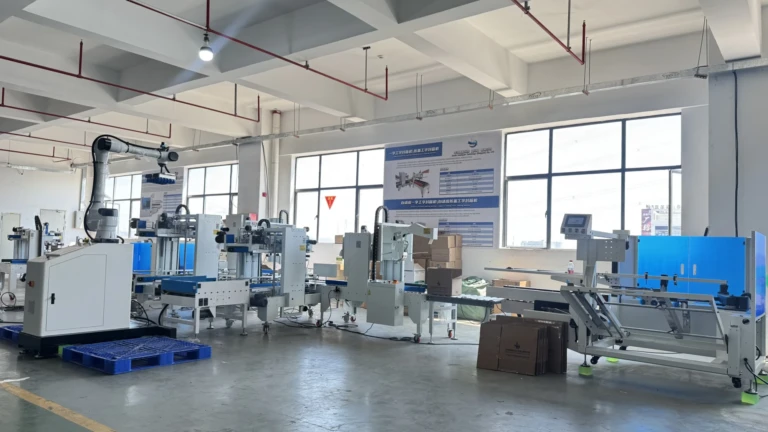
Companies like Huaxiu Robot are pioneering specialized systems that automate every step of pallet handling. Here’s how each innovation fits into the bigger picture:
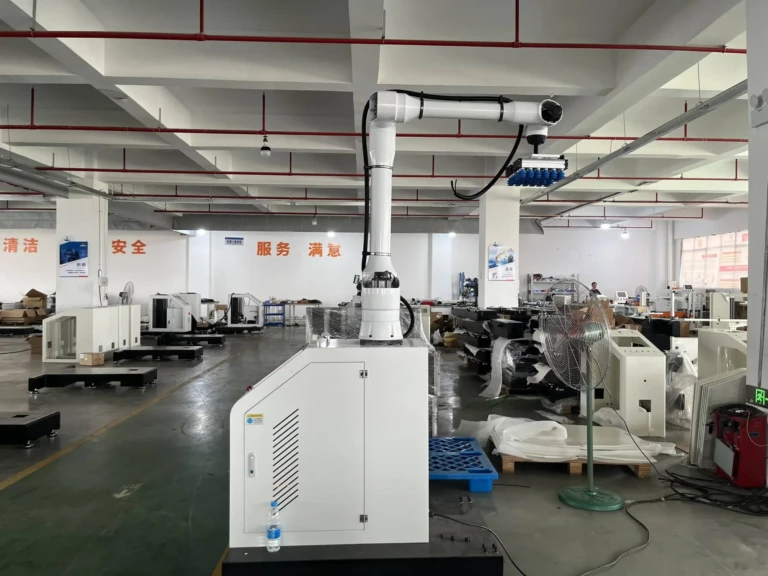
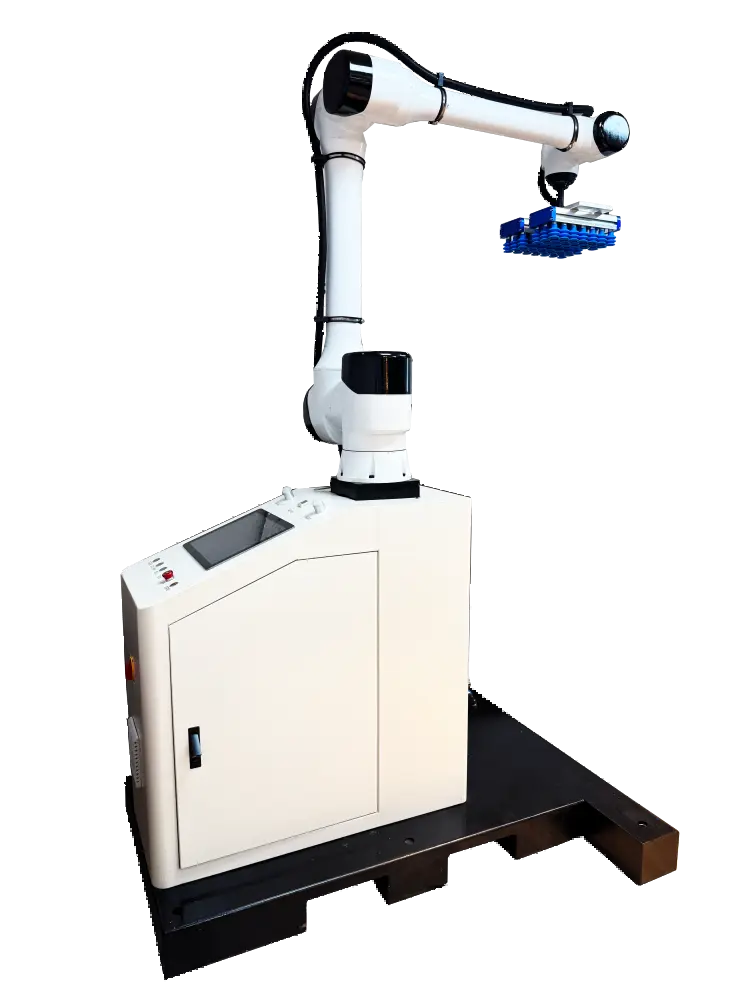
1. Collaborative Palletizing Robots (Cobots)
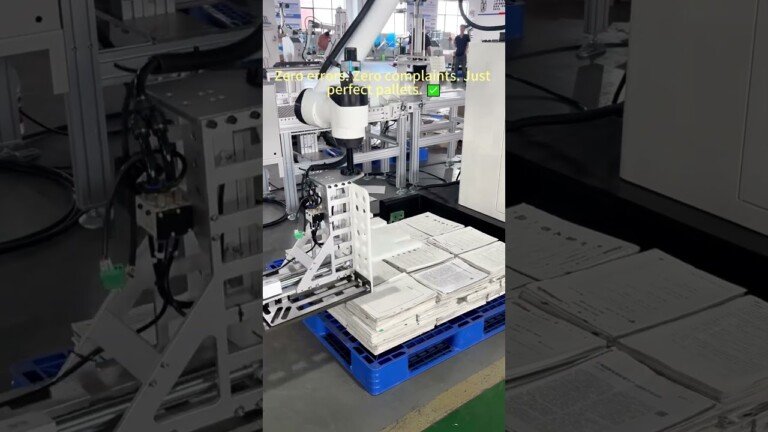
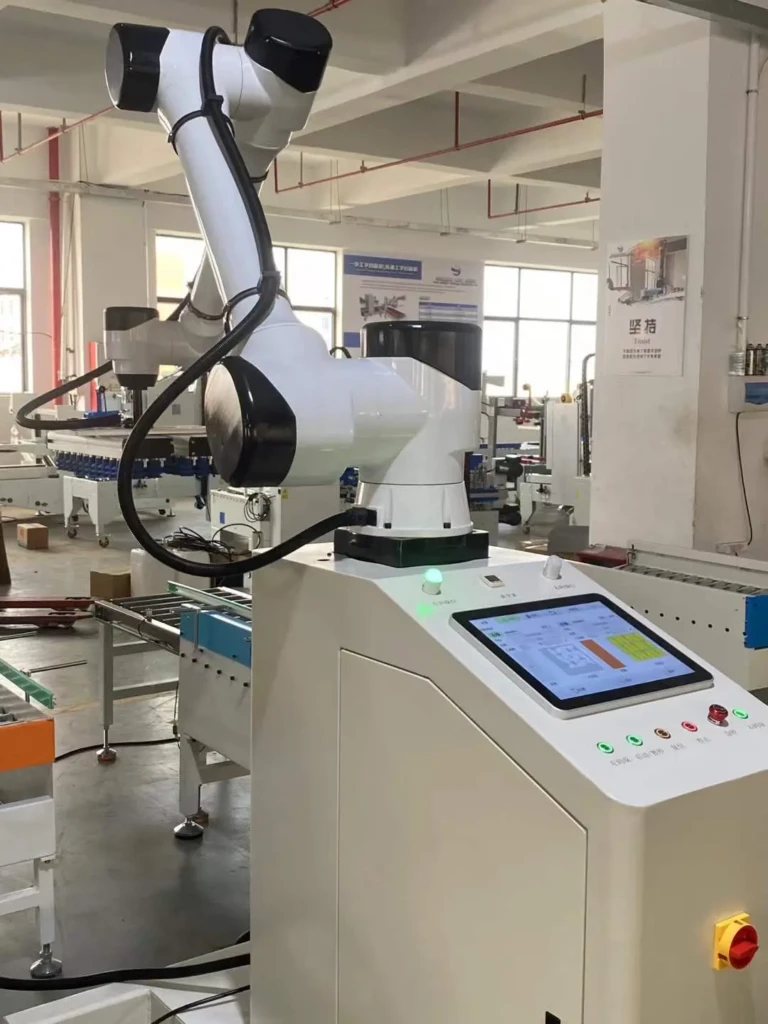
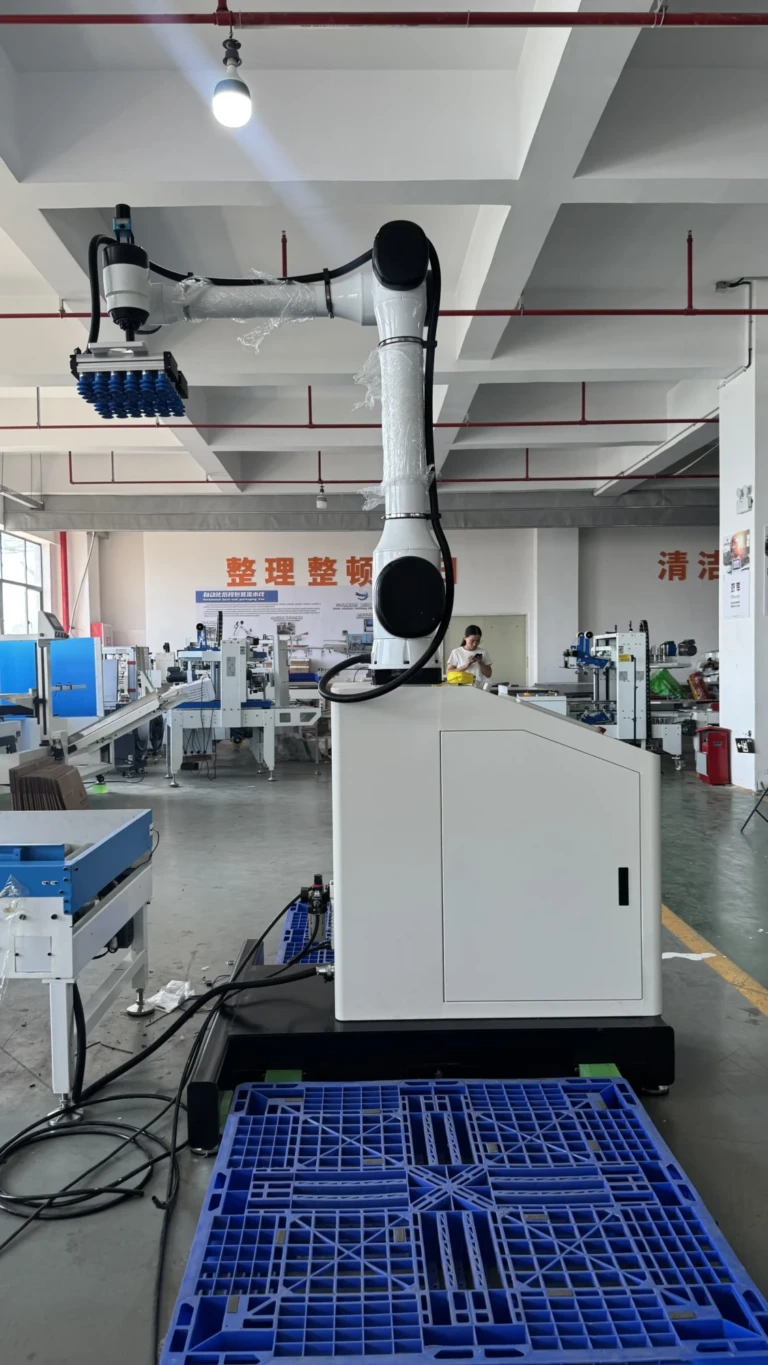
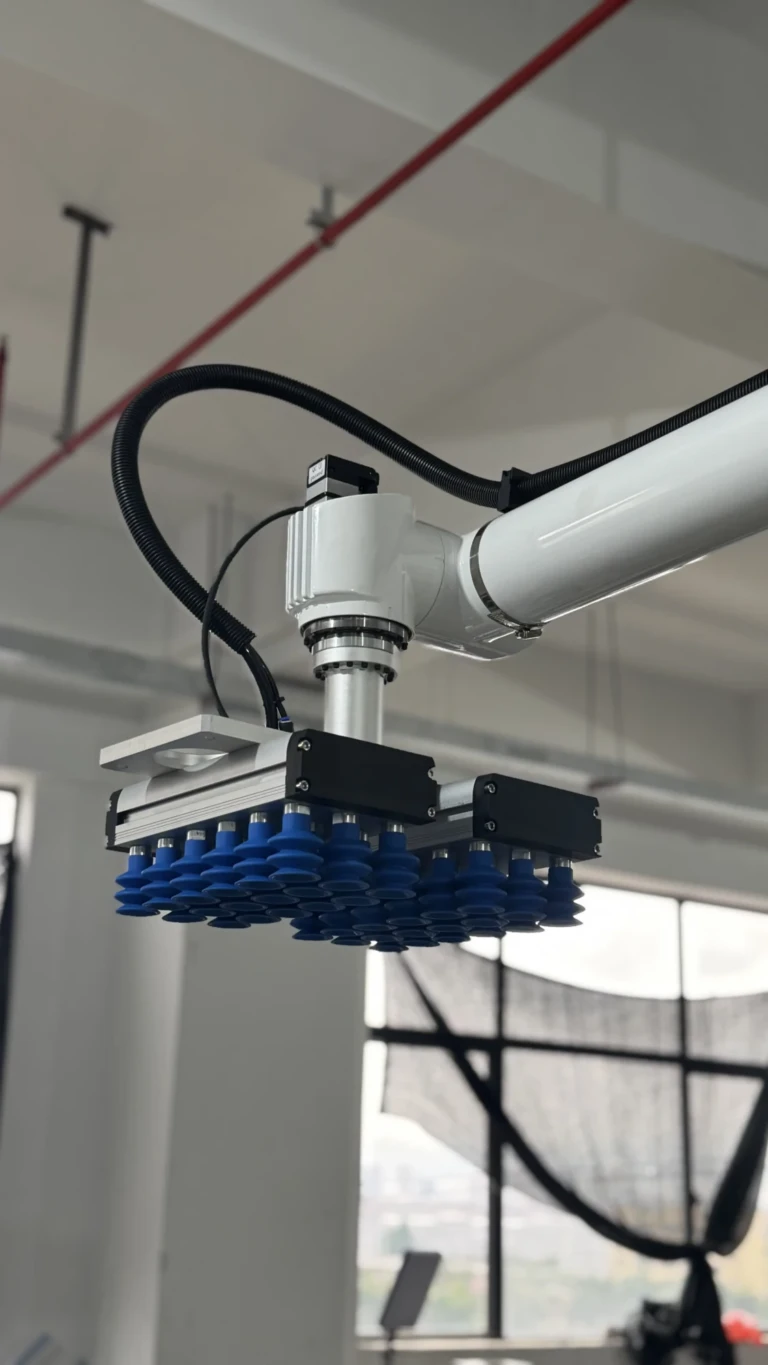
Unlike traditional industrial robots confined to safety cages, Huaxiu’s cobots work alongside humans. Equipped with force sensors and adaptive grippers, they safely load mixed-SKU pallets in real time, adjusting to item weight and shape.
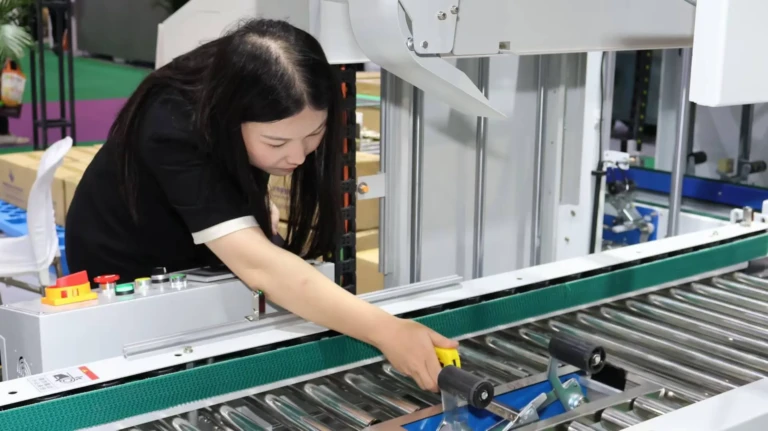
2. End-to-End Packaging Systems
- Automatic Unpacking Robots: Unload inbound shipments with vacuum arms and vision-guided precision, reducing damage risk.
- Sealing & Strapping Robots: Apply tape or straps with millimeter accuracy, ensuring compliance with shipping standards.
- Shrink/Sretch Film Packaging Robots: Wrap pallets autonomously in seconds, optimizing load stability and moisture protection.
3. Pallet Formation & Management
- Pallet Forming Robots: Build custom pallet configurations using AI to maximize space and minimize wasted container shipments.
- Autonomous Mobile Robots (AMRs): Self-navigate crowded floors using LiDAR and SLAM technology to transport pallets between stations without fixed tracks.
Why the Shift Matters: Tangible Benefits
The impact of automation transcends “faster” workflows. Facilities report:
- 50–70% Reduction in Labor Costs: Robots work 24/7 without breaks, offsetting upfront investment in under 2 years.
- 99.9% Load Accuracy: Vision systems scan barcodes, weigh items, and detect defects before pallets move downstream.
- Enhanced Safety: Fewer workplace injuries and ergonomic risks.
- Sustainability Gains: Optimized pallet patterns reduce material waste (e.g., stretch film) and energy use.
Case in Point: Real-World Applications
A major automotive parts supplier integrated Huaxiu’s stretch film robots into their warehouse. Previously, manual wrapping took 5 minutes per pallet—now done in 45 seconds. This cut film usage by 20% and freed staff for quality-control roles. Similarly, a pharmaceutical distributor using AMRs reduced pallet transit time by 60%, ensuring temperature-sensitive vaccines moved swiftly.
Overcoming Implementation Hurdles
Adoption isn’t without challenges, but strategic approaches help:
- Upfront Costs: Modular systems allow phased integration (e.g., start with sealing robots, then add cobots).
- Integration Complexity: Huaxiu’s robots sync with existing WMS/WES via API, minimizing IT overhaul.
- Workforce Adaptation: Upskilling programs transition staff into supervisory or maintenance roles.
The Future of Autonomous Pallet Handling
Innovations on the horizon are poised to deepen this transformation:
- Swarm Intelligence: Fleets of AMRs communicating in real time to avoid congestion.
- AI-Predictive Analytics: Robots anticipating pallet demand based on historical data.
- Blockchain Integration: Immutable tracking of pallet movements from production to delivery.
Conclusion
Autonomous robots are not merely replacing manual pallet handling—they’re redefining it. By eliminating inefficiencies, enhancing safety, and enabling scalable growth, companies like Huaxiu Robot are empowering industries to thrive in an era of e-commerce velocity and supply chain complexity. The question is no longer if automation will dominate logistics, but how quickly organizations can adapt to harness its full potential.
FAQs: Autonomous Pallet Handling Robots
Q1: How soon can we expect ROI after deploying pallet-handling robots?
Most facilities see a full return on investment within 12–24 months through labor savings, reduced waste, and fewer errors.
Q2: Are these robots safe to work near humans?
Yes. Collaborative robots (cobots) have force-limiting sensors and emergency stop protocols. AMRs use 360° obstacle detection to halt instantly if a worker steps into their path.
Q3: Can robots handle irregularly shaped or fragile items?
Advanced vision systems and adaptive grippers allow robots to manage varying weights, sizes, and materials (e.g., glass, cartons, bags).
Q4: Do I need to retrofit my entire warehouse?
No. Solutions like Huaxiu’s AMRs operate in existing environments without infrastructure changes. Sealing/packaging robots can be bolted into current production lines.
Q5: How does AI improve over traditional automation?
Machine learning algorithms enable robots to self-optimize. For example, palletizing robots learn to stack mixed loads more efficiently over time, while predictive maintenance AI reduces downtime.
Q6: What industries benefit most from these robots?
E-commerce, pharmaceuticals, food & beverage, automotive, and third-party logistics (3PL) providers gain significant advantages due to high-volume pallet flows.
The autonomous revolution is here—ready to move your business forward?