
Unlocking Efficiency: How China’s Palletizing Robots Are Reshaping Industrial Automation
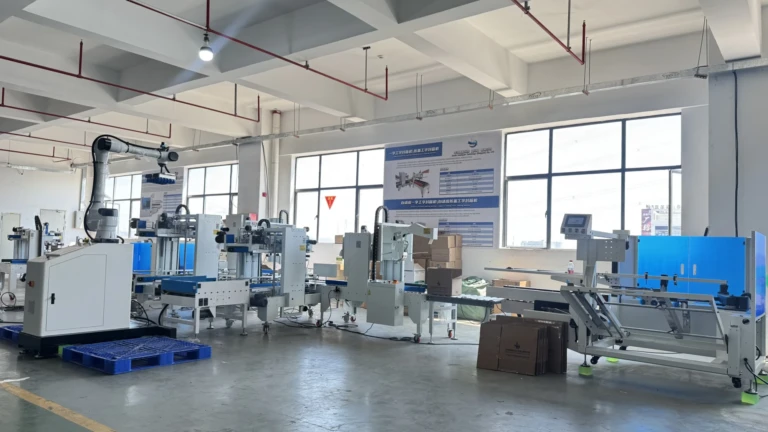
In the heart of the global manufacturing revolution, China has emerged as a powerhouse in warehouse and production line automation. Among its most transformative innovations are palletizing robots, engineered to streamline end-of-line processes with unmatched speed, flexibility, and reliability. Leading this charge is Huaxiu Robot, a trailblazer whose solutions—from collaborative palletizing arms to fully automated stretch film wrappers—are redefining how industries handle packaging, palletizing, and logistics.
The Rise of China’s Palletizing Robotics Ecosystem
China’s manufacturing sector, facing rising labor costs and demand for precision, has pivoted toward automation to maintain competitiveness. Palletizing—the process of stacking goods onto pallets—has traditionally been labor-intensive, prone to inconsistencies, and a bottleneck in high-volume settings. Huaxiu Robot and peers like it answered this challenge by developing robotic systems that not only accelerate throughput but also integrate seamlessly into smart factories.
What sets China’s innovations apart? Three key factors:
- Affordability Without Compromise: Chinese manufacturers leveraged localized supply chains to deliver advanced robotics at a fraction of traditional costs.
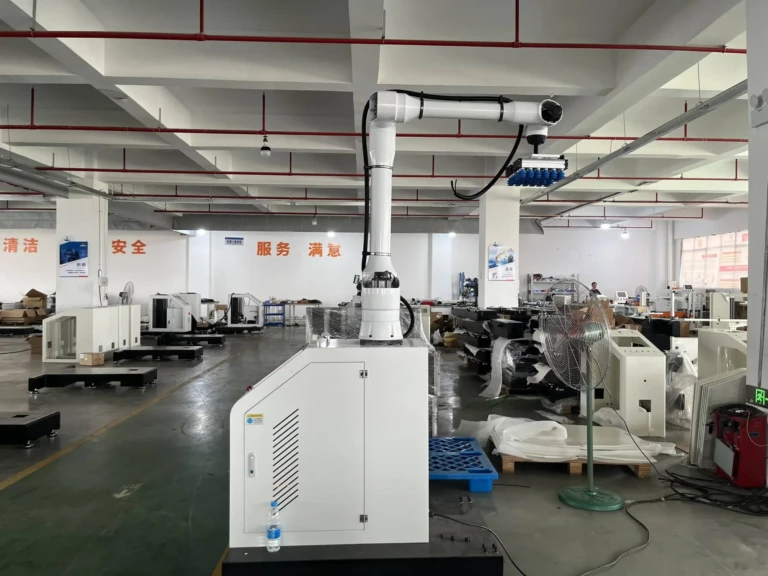
- Modular, Adaptive Designs: Machines like Huaxiu’s collaborative palletizing robots (cobots) can switch tasks swiftly, handling everything from fragile cosmetics to heavy automotive parts without reengineering entire lines.
- End-to-End Automation: Beyond standalone palletizers, Huaxiu offers integrated systems—such as automatic unpacking paired with strapping robots—that cover the entire packaging lifecycle.
Huaxiu’s Flagship Innovations: Beyond Basic Palletizing
Huaxiu’s product suite isn’t just about stacking boxes—it’s about orchestrating a symphony of interconnected processes. Here’s how their robots elevate efficiency:
Collaborative Palletizing Robots
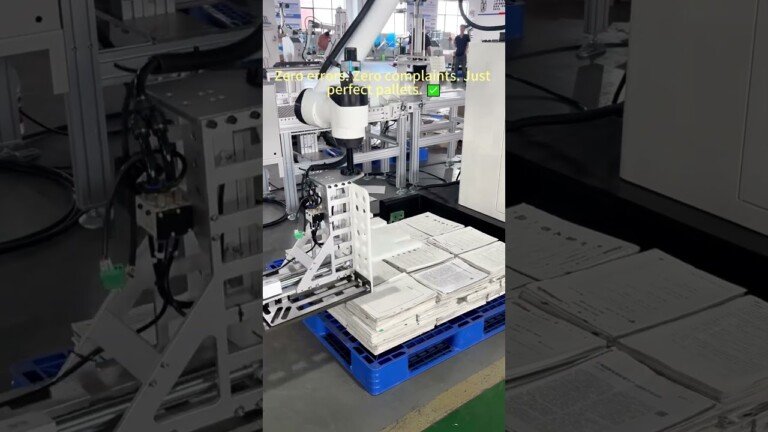
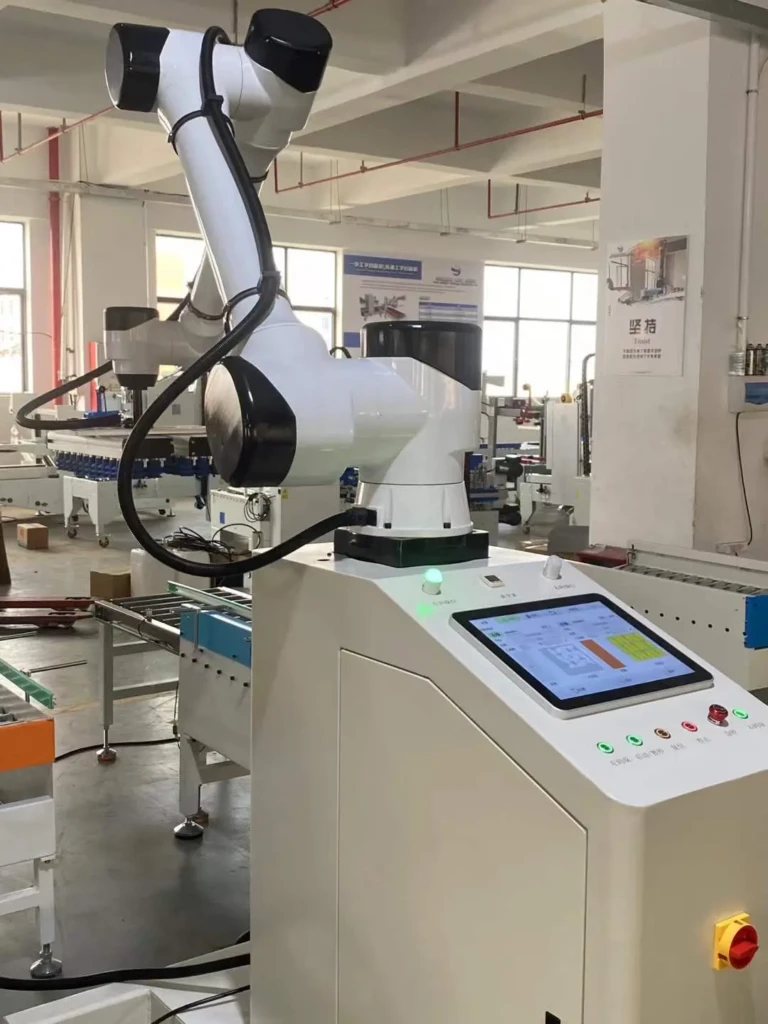
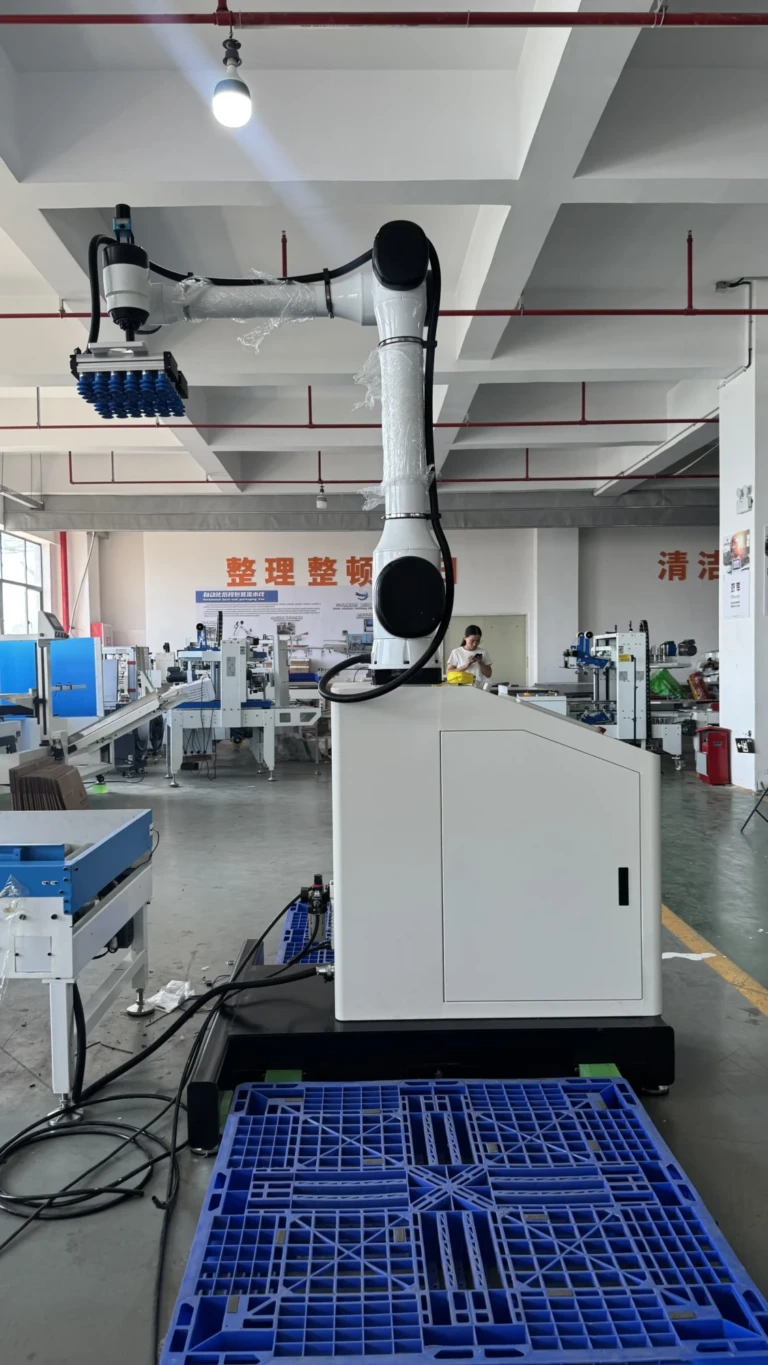
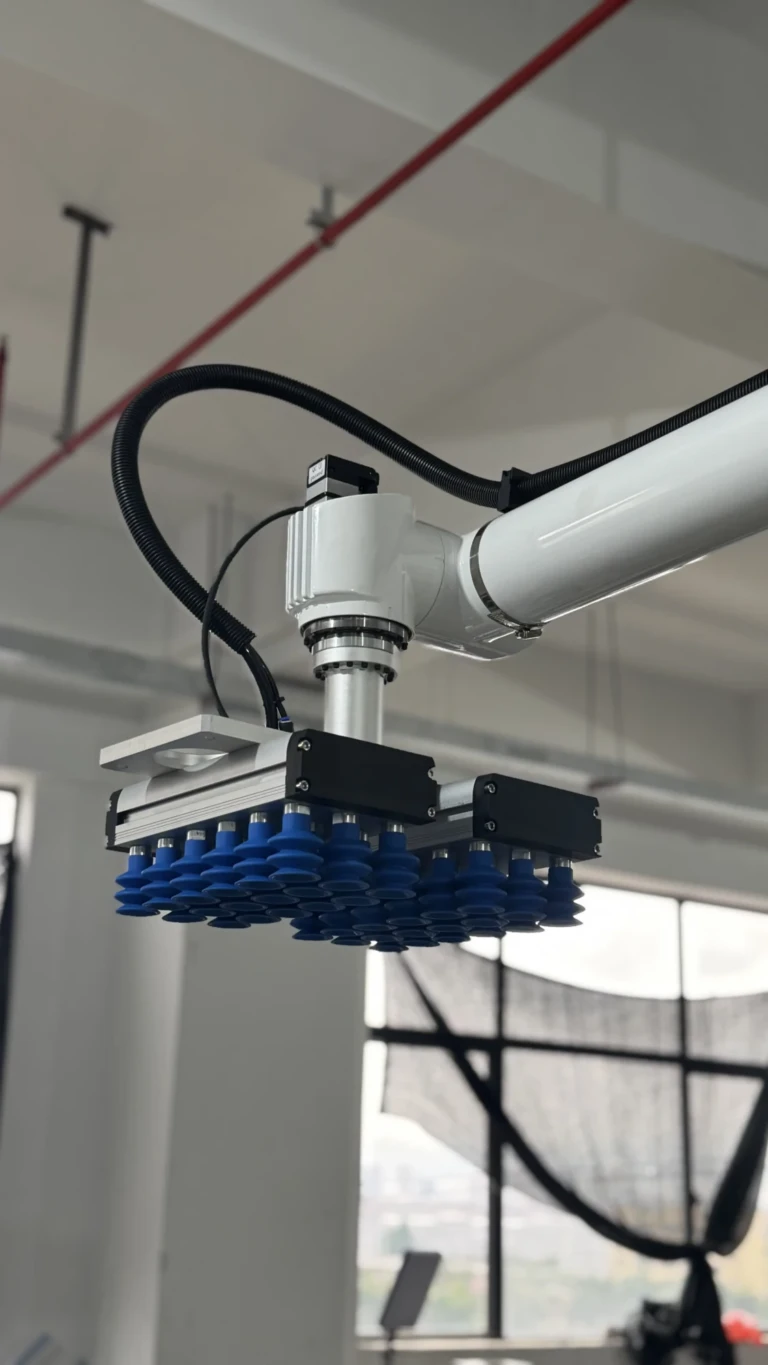
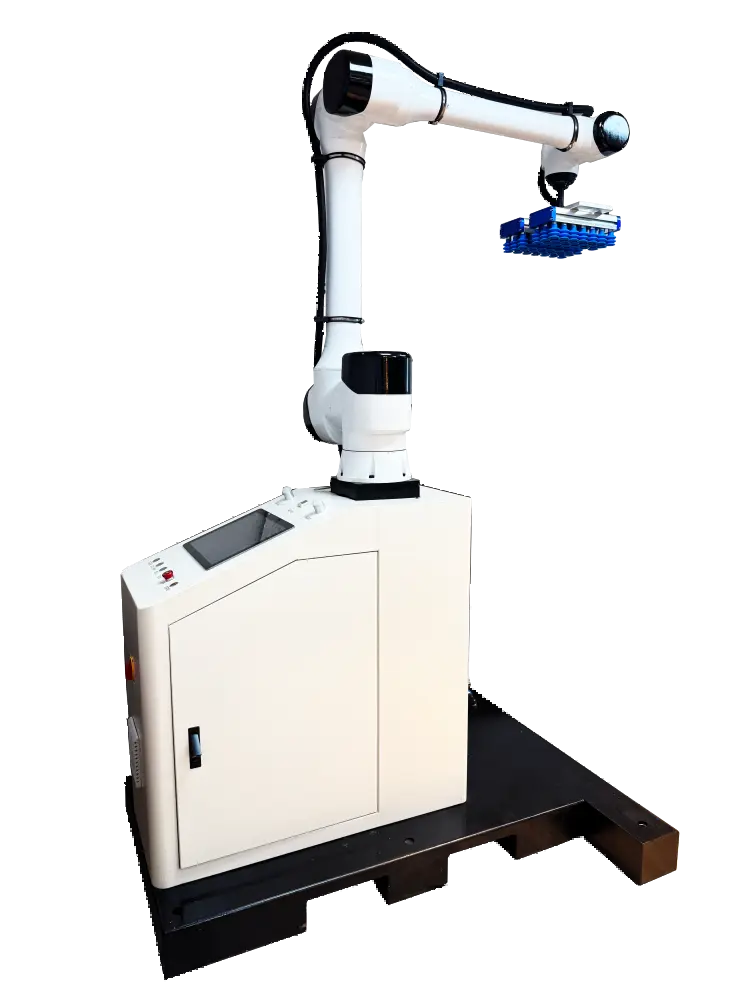
Ideal for small-to-medium enterprises (SMEs), these cobots work alongside humans without safety cages. Equipped with vision systems and force-sensing grips, they adapt to irregular package shapes and mixed-SKU pallets—a game-changer for e-commerce fulfillment centers.
Automated Unpacking & Sealing Robots
These systems use AI-powered vision to identify box seams, slice tapes without damaging contents, and reseal pallets for outbound shipping. They reduce manual handling errors by 90% in applications like pharmaceutical distribution.
Pallet Forming & Stretch Wrapping Solutions
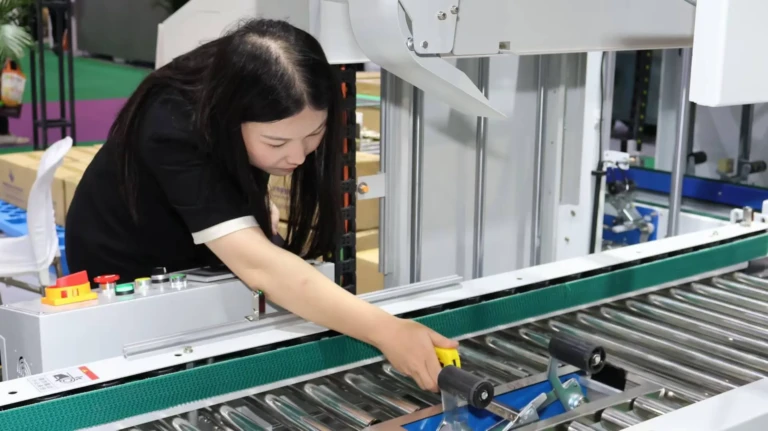
Huaxiu’s pallet forming robots construct custom pallet configurations on demand, while their fully automatic stretch film wrappers apply tension-optimized layers in seconds, eliminating film waste.
Shrink Packaging & Strapping Integration
For industries like beverages or electronics, Huaxiu’s shrink-wrap robots apply heat-activated protection, while robotic strappers secure loads with precision-tensioned bands, crucial for overseas shipments.
Why Chinese Palletizing Robots Are Gaining Global Traction
- Labor Optimization: With factories worldwide struggling to retain manual laborers for repetitive tasks, robots fill the gap while freeing workers for higher-value roles.
- Space Savings: Huaxiu’s compact designs, like their semi-automatic sealing robots, fit into tight footprints—critical for urban micro-fulfillment hubs.
- Data-Driven Insights: Built-in IoT sensors monitor machine health and output metrics, enabling predictive maintenance and real-time line adjustments.
Overcoming Adoption Barriers
While benefits are clear, skeptics cite integration complexity or upfront costs. Huaxiu tackles this through:
- Phased Implementation: Customers can start with semi-automated sealing robots before scaling to full palletizing cells.
- ROI-Centric Models: Most clients recoup investments within 12–18 months via labor savings and throughput gains.
The Future: AI, Sustainability, and Beyond
Next-gen Chinese palletizing robots are embracing AI for dynamic load optimization (reducing material usage by ~15%) and carbon-conscious designs. Huaxiu’s R&D pipeline includes robots powered by renewable energy and biodegradable film wrappers—aligning with global ESG goals.
Conclusion
China’s palletizing robots, exemplified by Huaxiu’s expansive portfolio, are no longer just cost-effective alternatives—they’re becoming the gold standard for agile, future-proof automation. From collaborative arms that safely partner with workers to fully autonomous packaging lines, these innovations empower industries to meet escalating demands for speed, precision, and sustainability. As logistics evolve, Huaxiu and peers will remain pivotal in shaping the automated warehouses of tomorrow.
FAQs: Palletizing Robot Adoption
Q: How do collaborative palletizing robots ensure worker safety?
A: Huaxiu’s cobots feature force-limited joints, collision detection, and emergency stop functions. They’re ISO 10218 compliant and undergo rigorous risk assessments for deployment near humans.
Q: Can these systems handle irregularly shaped items?
A: Yes! Vision-guided grippers adapt to asymmetrical objects (e.g., bags, bottles, or electronics), and AI algorithms optimize stacking patterns in real time.
Q: What industries benefit most from palletizing robots?
A: Food & beverage (hygiene-sensitive), pharmaceuticals (precision handling), e-commerce (mixed-SKU pallets), and chemicals (heavy loads) see the fastest ROI.
Q: How long does integration take?
A: For standard setups, Huaxiu deploys plug-and-play systems in under 2 weeks. Complex lines (e.g., integrating sealing and strapping) may require 4–6 weeks.
Q: Are these robots scalable for growing operations?
A: Absolutely. Modular designs allow adding units or upgrading software—no “rip-and-replace” needed. Cloud-based controls enable fleet management across sites.
Q: What’s the typical payload capacity?
A: Huaxiu’s palletizing cobots handle 5–30 kg, while heavy-duty models manage up to 1,500 kg. Customizable arms address niche requirements.
Q: How does this compare to traditional conveyors or manual palletizing?
A: Robots reduce product damage by 70%, operate 24/7 without fatigue, and cut energy use by 30% versus belt-driven systems.
By demystifying automation hurdles, Huaxiu and China’s robotics pioneers are paving the way for smarter, more resilient supply chains—one pallet at a time.