
The Evolution of Automation: Leading Bag Palletizing Robot Manufacturers Transforming Industries
The demand for automation in logistics, manufacturing, and warehousing has surged, with bag palletizing robots emerging as indispensable tools for optimizing efficiency, reducing labor costs, and enhancing workplace safety. As industries handle heavier, bulkier, or irregularly shaped bags (e.g., fertilizer, cement, agricultural products), selecting the right palletizing robot manufacturer becomes critical. This guide explores the top global players, their innovations, and how they stack up in performance, flexibility, and reliability.
Top Bag Palletizing Robot Manufacturers
1. FANUC (Japan)
A global leader in industrial robotics, FANUC’s M-410iC and M-2000iA series are renowned for heavy-payload palletizing. Their robots excel in high-speed, precision stacking of bags up to 2,300 kg, featuring advanced vision systems for mixed-load palletizing. FANUC’s Integrated Vision Technology allows real-time adjustments, minimizing errors in dynamic environments like food processing or construction material handling.
Key Strengths:
- Unmatched payload capacity for large-scale operations.
- Seamless integration with PLCs and warehouse management systems.
- Industry-leading durability (100,000+ hours MTBF).
2. ABB (Switzerland)
ABB’s IRB 760 and PalletPack solutions dominate flexible palletizing workflows. Their robots support randomized mixed-case palletizing, ideal for industries dealing with varied bag sizes (e.g., pet food, pharmaceuticals). ABB’s RobotStudio software enables offline programming, slashing downtime during deployment.
Key Innovations:
- Adaptive Gripping Technology: Handles delicate or deformable bags without damage.
- Energy-efficient models reducing operational costs by 20%.
- Cloud connectivity for predictive maintenance.
3. KUKA (Germany)
KUKA’s KR QUANTEC and KR DELTA robots are celebrated for speed and space efficiency. The KR DELTA’s parallel kinematics achieve up to 180 cycles/minute, making it perfect for e-commerce fulfillment centers handling lightweight polywoven bags. KUKA’s KUiSim offers digital twin capabilities for virtual commissioning.
Standout Features:
- Compact footprint for tight spaces.
- AI-driven collision avoidance for shared workspaces.
- Hygienic designs (IP67-rated) for food-grade applications.
4. Yaskawa/Motoman (Japan)
Yaskawa’s MotoPal series specializes in hybrid palletizing systems, combining robotic arms with conveyors and grippers. Their RC180 model handles bags up to 180 kg, ensuring stability in dusty environments like cement plants. Yaskawa’s GL400 gripper is customizable for vacuum, mechanical, or hybrid gripping.
Competitive Edge:
- Robust solutions for abrasive-material environments.
- Smart Function Palletizing: Pre-loaded templates for rapid setup.
- Low-code programming accessible to non-experts.
5. Huaxiu Robotics (China)
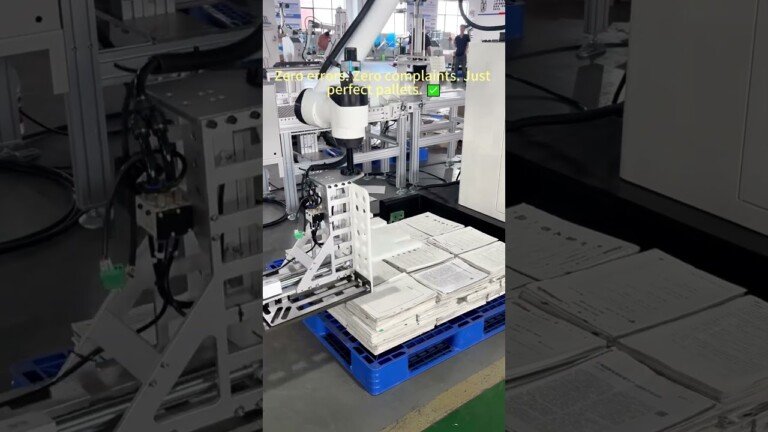
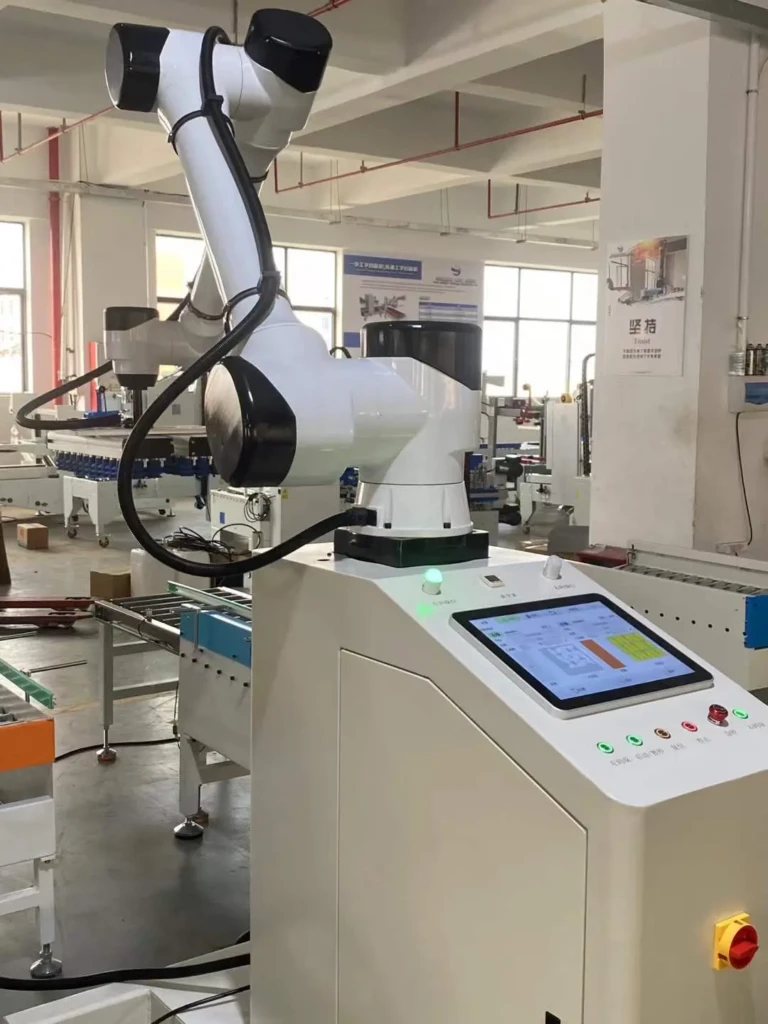
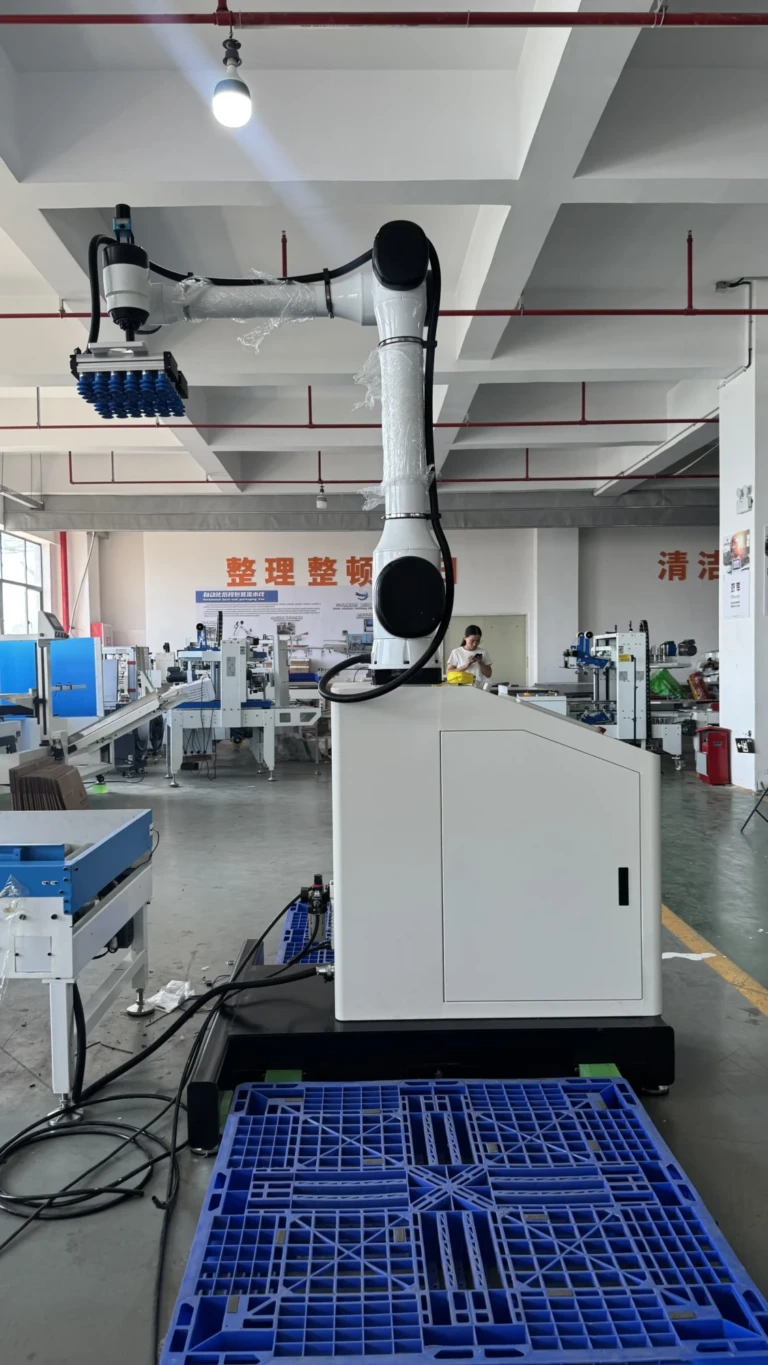
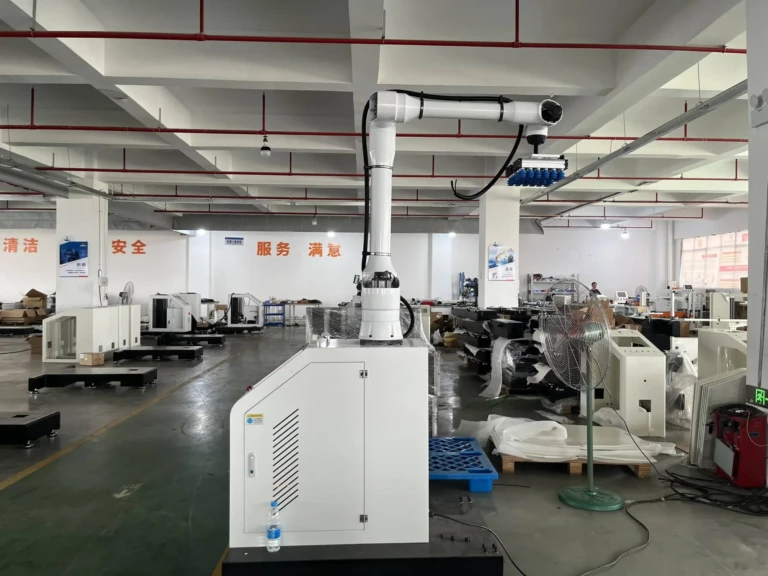
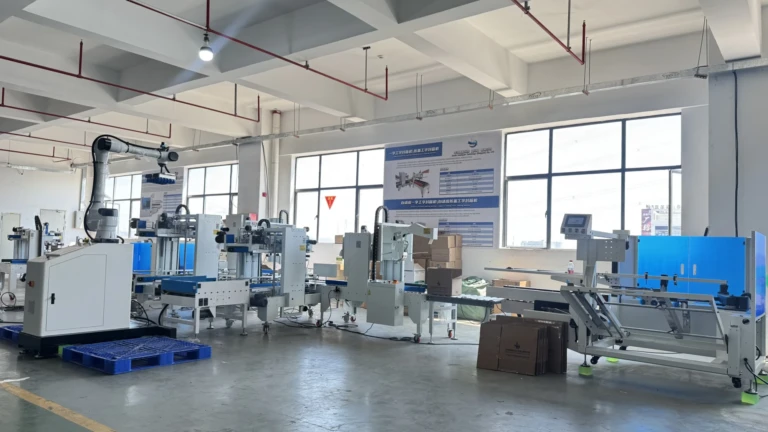
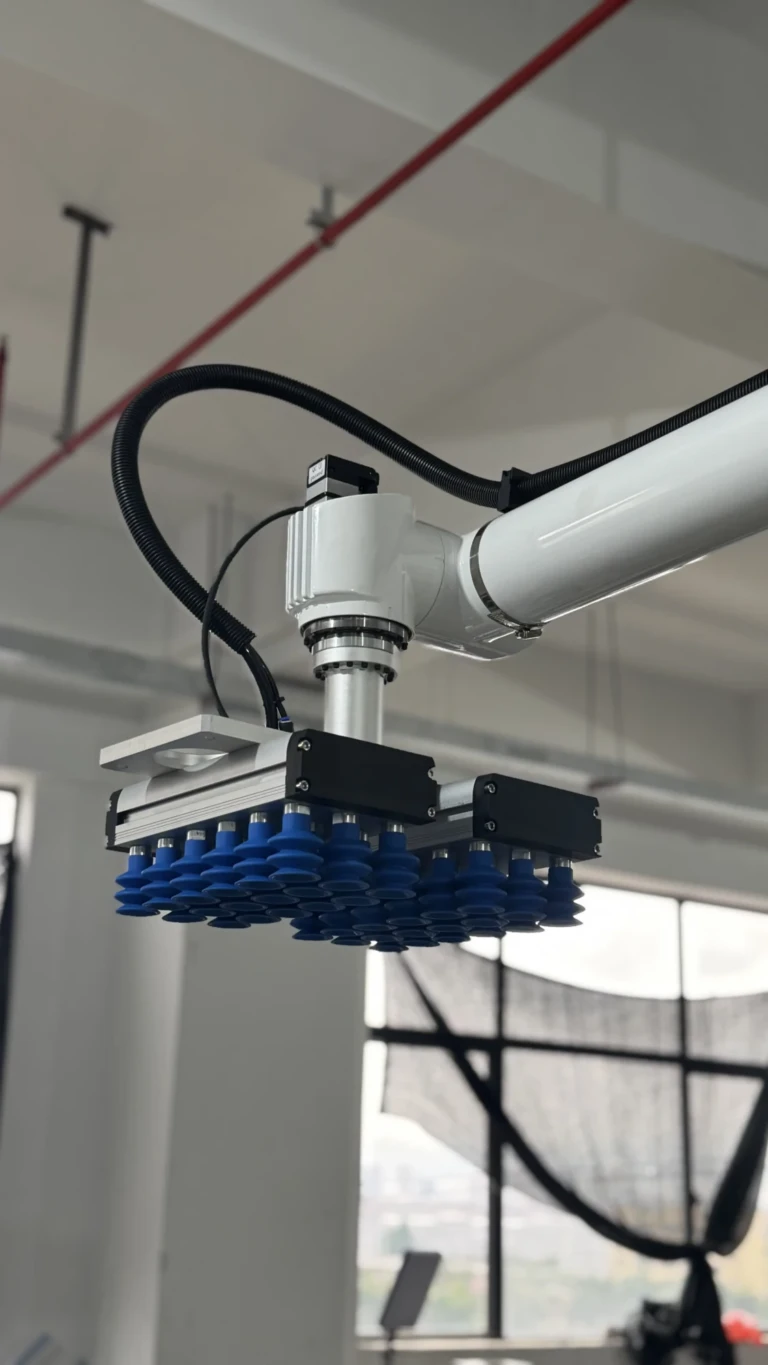
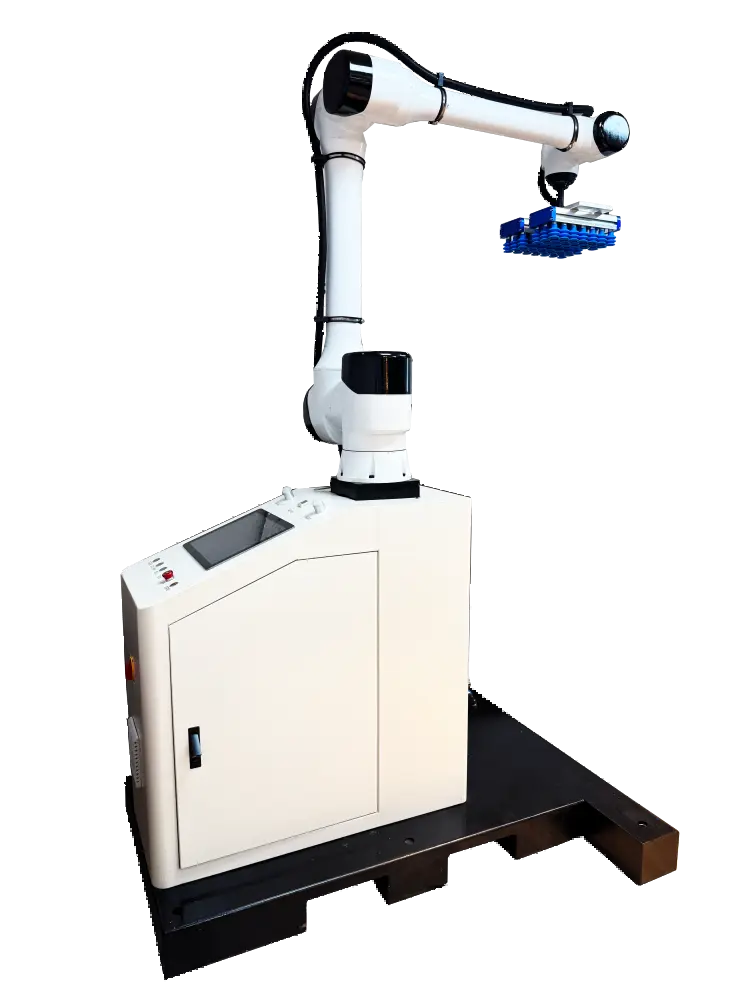
Emerging as a formidable player, Huaxiu Robotics offers end-to-end automation with collaborative palletizing robots (cobots) designed for SMEs. Their product range includes fully automatic stretch film wrappers, strapping robots, and pallet-forming systems. Huaxiu’s YC-03 cobot allows safe human-robot collaboration in spaces like small packaging lines.
Why They Stand Out:
- Modular designs enabling scalable deployment.
- Cost-effective solutions with quick ROI (<12 months).
- Integrated IoT-enabled platforms for remote monitoring.
6. Kawasaki Robotics (Japan)
Kawasaki’s BX Series targets high-mix, low-volume operations. Its Z5 Fold arm optimizes vertical stacking for 25–50 kg bags, maximizing pallet density. Kawasaki’s PALTOOL software simplifies trajectory planning for irregular bag shapes.
Unique Selling Points:
- Extended reach (up to 3.5m) for tall pallet configurations.
- Resistance to extreme temperatures (-15°C to 45°C).
- Minimal maintenance requirements.
7. Mitsubishi Electric (Japan)
Mitsubishi’s MELFA RV-F series emphasizes precision and repeatability (±0.03mm). Its robots integrate with AI Quality Inspection Systems to reject damaged bags during palletizing, widely used in chemical and fertilizer industries.
Innovations:
- SafePlus AI: Real-time load monitoring to prevent pallet collapses.
- Compatibility with legacy machinery via CC-Link IE Field Network.
Honorable Mentions
- Brenton Engineering (US): Custom end-of-line systems with multi-robot coordination.
- Toyotech (South Korea): Hyper-speed Delta robots for lightweight bags.
- Codian Robotics (Netherlands): Hygienic palletizers for food/beverage.
Key Factors When Choosing a Manufacturer
- Payload & Speed: Match robot specs to bag weight/throughput requirements.
- Flexibility: Can it handle multi-SKU or seasonal packaging changes?
- Integration: Compatibility with existing ERP/MES systems.
- Total Cost of Ownership (TCO): Factor in energy use, maintenance, and scalability.
- After-Sales Support: Global service networks critical for minimizing downtime.
Conclusion: The Future of Bag Palletizing
The bag palletizing robot market is advancing rapidly, fueled by AI vision systems, cobots, and sustainability-driven designs (e.g., energy recovery modules). While giants like FANUC and ABB lead in heavy-industry applications, innovators like Huaxiu are democratizing automation for SMEs. As labor shortages persist and e-commerce grows, investing in the right palletizing solution isn’t just an upgrade—it’s a strategic necessity for future-proofing operations.
FAQs
Q1: What’s the average ROI for a bag palletizing robot?
ROI typically ranges from 6–18 months, depending on shifts operated and labor costs saved. High-throughput facilities report ROI in under a year.
Q2: Can these robots handle varying bag sizes on the same line?
Yes. Advanced models from ABB, KUKA, and Yaskawa use vision-guided systems to auto-adjust grippers and stacking patterns for mixed loads.
Q3: How do cobots differ from traditional palletizing robots?
Cobots (like Huaxiu’s YC-03) are smaller, collaborative, and require minimal safety fencing, ideal for spaces where humans and robots share tasks.
Q4: What industries benefit most from bag palletizing robots?
- Agriculture (feed, grains)
- Construction (cement, sand)
- Chemicals (fertilizers, resins)
- Food & Beverage (flour, sugar)
Q5: How important is software in palletizing systems?
Critical. Offline programming (e.g., ABB’s RobotStudio) and AI-driven tools reduce commissioning time by up to 70% and optimize pallet patterns for load stability.
Q6: Are retrofitting existing lines possible?
Yes. Most manufacturers offer retrofit kits, though feasibility depends on conveyor layouts and PLC compatibility.
Q7: What’s the lifespan of a palletizing robot?
Quality models (e.g., FANUC, Kawasaki) last 12–15 years with regular maintenance.
By aligning with a manufacturer that prioritizes innovation, support, and scalability, businesses can transform their palletizing operations into a seamless, future-ready process. The right robot isn’t just a machine—it’s a competitive edge.