Navigating the World of Palletizing Robots: A Comprehensive Buyer’s Guide
In today’s fast-paced industrial landscape, automation is no longer a luxury—it’s a necessity. Among the most transformative innovations are palletizing robots, which streamline end-of-line packaging processes, reduce labor costs, minimize errors, and enhance workplace safety. Whether you’re in food and beverage, pharmaceuticals, logistics, or manufacturing, selecting the right palletizing robot is critical to maximizing efficiency and ROI.
This guide dives into the key factors to consider when investing in palletizing automation, with insights tailored to businesses exploring solutions from leading providers like Huaxiu Robot. Let’s break down what you need to know.
1. Understanding Different Types of Palletizing Robots
Palletizing systems vary widely in design and function. Here’s a quick overview:
- Traditional Robotic Palletizers: High-speed, heavy-duty systems ideal for large-scale operations. They use articulated or gantry-style arms for repetitive heavy lifting (e.g., 100+ kg payloads).
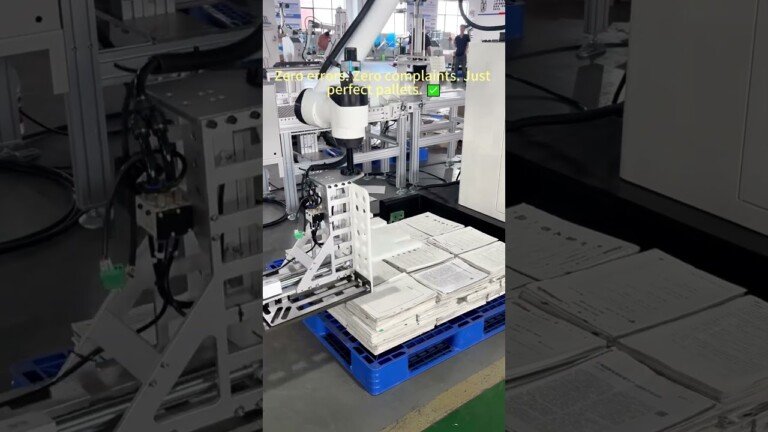
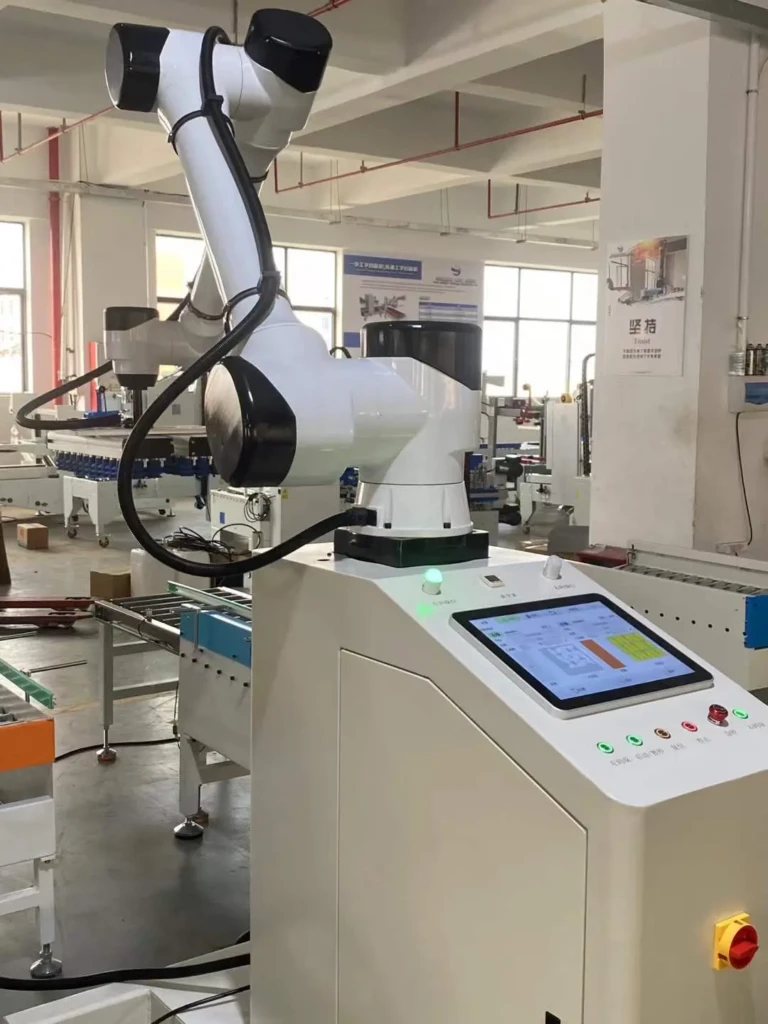
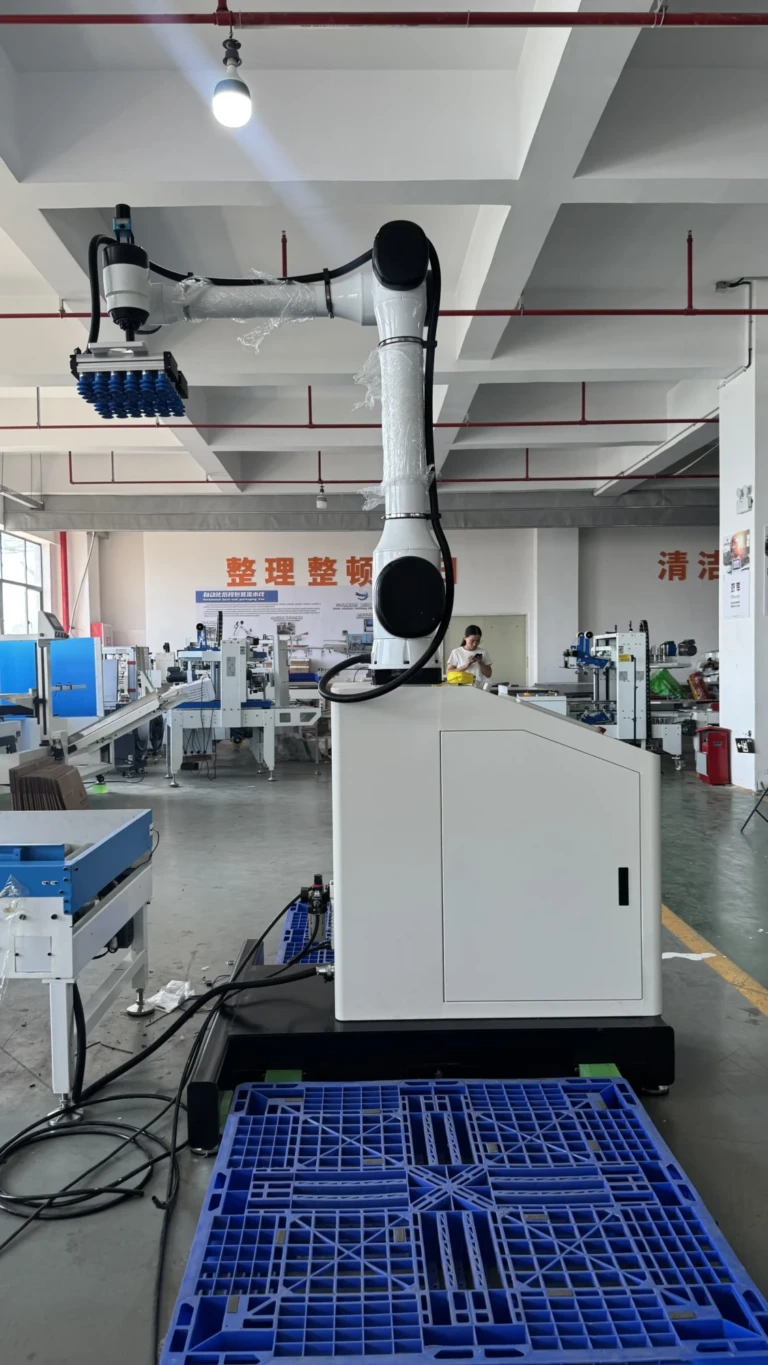
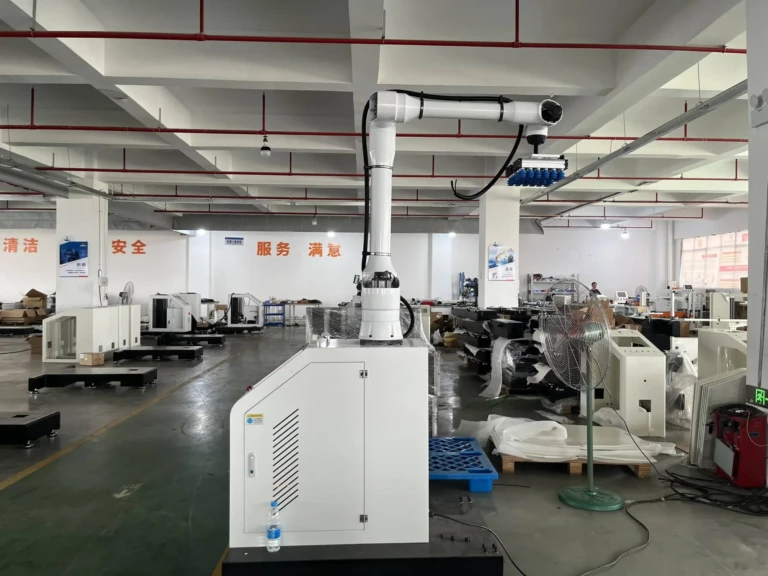
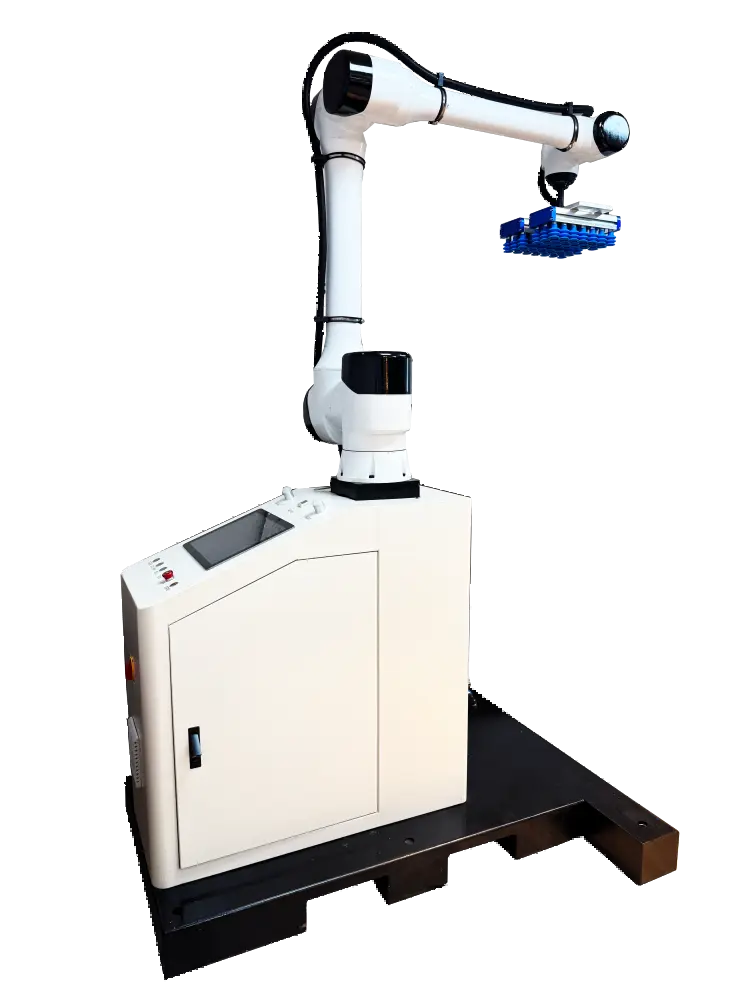
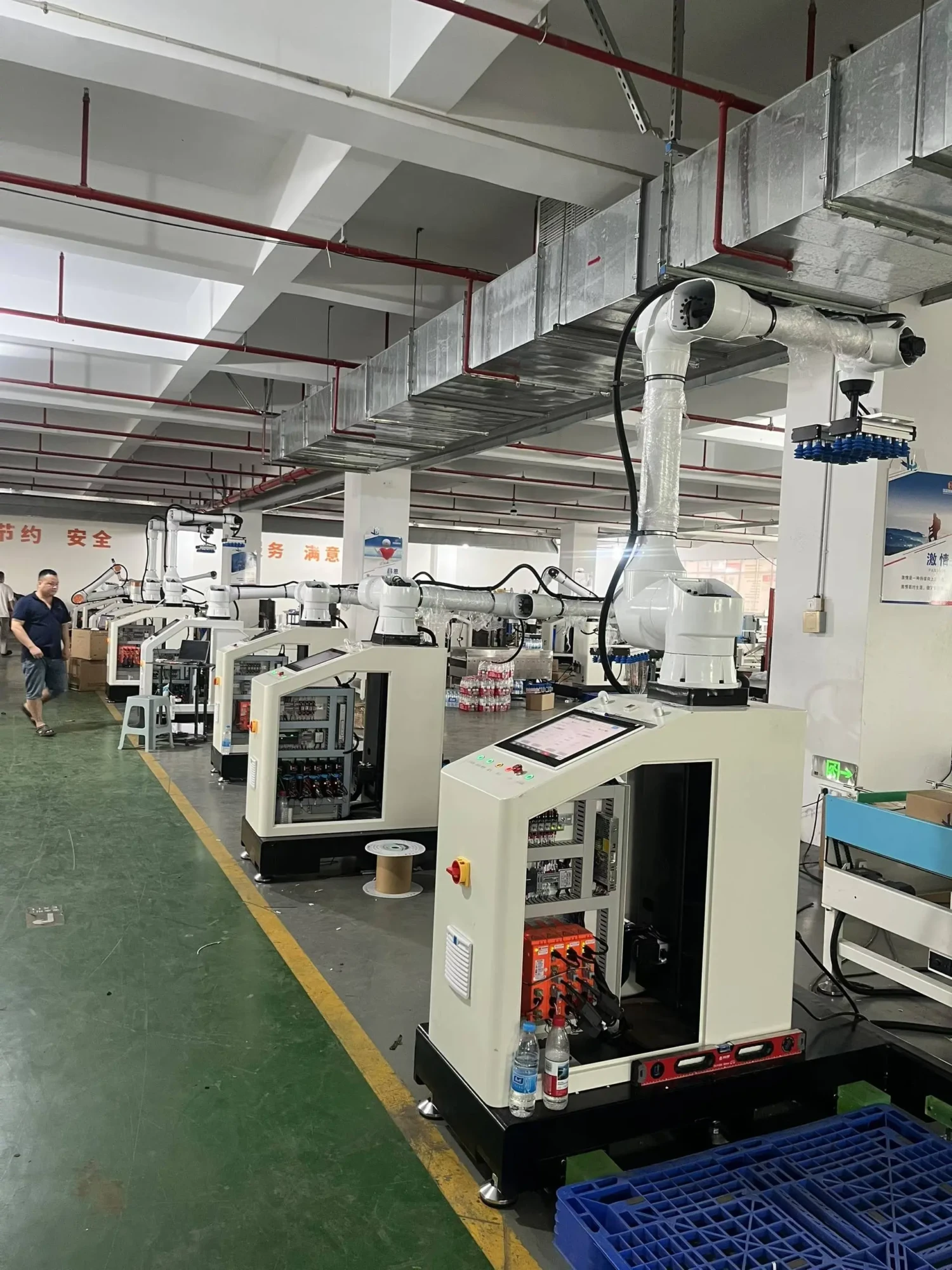
- Collaborative Palletizing Robots (Cobots): These user-friendly robots, like those from Huaxiu Robot, work alongside humans without safety cages. They excel in dynamic environments requiring frequent product or pallet pattern changes.
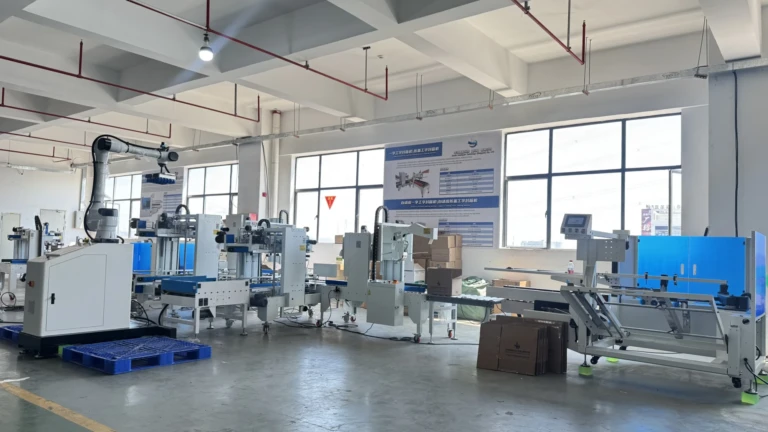
- Integrated Palletizing Cells: Turnkey solutions combining robots with conveyors, sensors, and software for seamless end-to-end automation.
Huaxiu’s Product Highlight: Their collaborative palletizing robots stand out for flexibility and quick deployment, while their fully automatic stretch film packaging robots and strapping robots complement palletizing workflows for complete packaging-line automation.
2. Key Considerations When Choosing a Palletizing Robot
Payload Capacity & Reach
Match the robot’s payload (e.g., 5kg to 1,500kg) and reach (arm length) to your heaviest and bulkiest items. For mixed-load facilities, modular robots with adjustable grippers are ideal.
Speed Throughput
Evaluate cycles per hour (CPH) relative to your production targets. High-speed industries like bottling may prioritize speed, while smaller operations benefit from cobots optimized for moderate, precise work.
Footprint & Integration
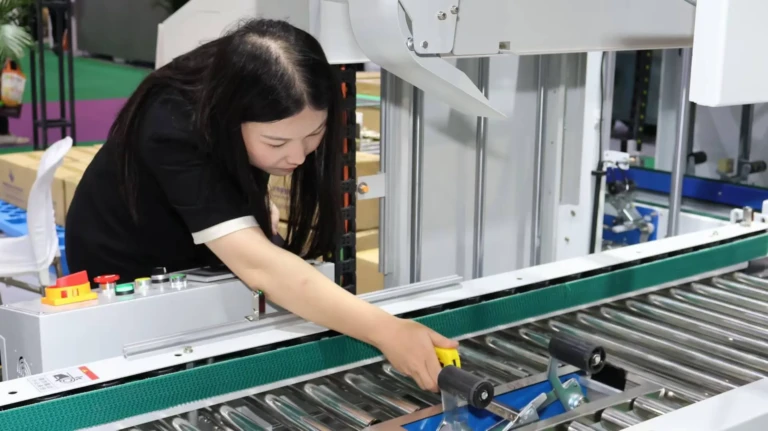
Measure your floor space and assess integration with existing machinery (e.g., conveyors, wrappers). Huaxiu’s semi-automatic sealing robots and pallet-forming robots, for instance, can be staged close to palletizers for compact layouts.
Software & Programming
Look for intuitive interfaces with drag-and-drop pallet pattern builders. Advanced systems offer AI-driven optimization to adapt to new SKUs instantly—reducing downtime during changeovers.
Safety & Compliance
Collaborative robots should meet ISO/TS 15066 safety standards. Features like force-limited joints, obstacle detection, and emergency stops are non-negotiable.
Scalability & Future-Proofing
Opt for systems compatible with smart factory ecosystems (IoT connectivity, data analytics). Huaxiu’s robots often integrate with MES/WMS platforms for real-time monitoring and predictive maintenance.
3. Complementary Automation: Building a Cohesive System
Palletizing is just one link in the packaging chain. Consider bundling robots with:
- Automatic unpacking/unloading robots for inbound material handling.
- Shrink packaging robots or strapping robots to secure palletized loads.
- Sealing robots (automatic or semi-automatic) for carton closing upstream.
Pro Tip: Partner with a supplier like Huaxiu that offers a full suite of interoperable solutions to avoid compatibility headaches.
4. ROI Calculation: Beyond the Sticker Price
While upfront costs vary ($50k–$500k+), evaluate:
- Labor Savings: A single robot can replace 2–4 workers per shift.
- Error Reduction: Minimized product damage and misaligned pallets.
- Uptime: High-reliability systems like Huaxiu’s palletizers operate 24/7 with minimal maintenance.
- Energy Efficiency: Modern servo-driven motors cut power consumption by up to 30% vs. hydraulic systems.
Use case studies—e.g., a beverage plant reducing palletizing costs by 60% within 12 months—to benchmark potential savings.
5. Vendor Selection: What Sets Leaders Apart?
When evaluating providers like Huaxiu Robot, prioritize:
- Industry-Specific Expertise: Experience in your sector (e.g., food-grade robots for hygienic environments).
- Service & Support: Onsite training, remote diagnostics, and spare parts availability.
- Customization: Ability to tailor grippers, software, and safety features to unique workflows.
Conclusion: Automate with Strategy
Investing in a palletizing robot is a strategic move that reshapes productivity, safety, and competitiveness. By assessing payloads, speed, flexibility, and total ecosystem fit, you’ll unlock a solution that grows with your business. Providers like Huaxiu Robot offer not just cutting-edge hardware but end-to-end expertise—ensuring your transition to automation is smooth, scalable, and sustainably profitable.
As Industry 4.0 accelerates, the question isn’t whether to automate palletizing, but how wisely you’ll implement it. Start with a clear operational audit, engage vendors early, and future-proof your line for tomorrow’s demands.
FAQs: Palletizing Robots Demystified
Q1: How much floor space do palletizing robots require?
A: Compact cobots can work in under 5m², while high-speed systems may need 10–15m². Huaxiu’s designs emphasize minimal footprints with vertical reach optimization.
Q2: Can palletizing robots handle fragile or irregularly shaped items?
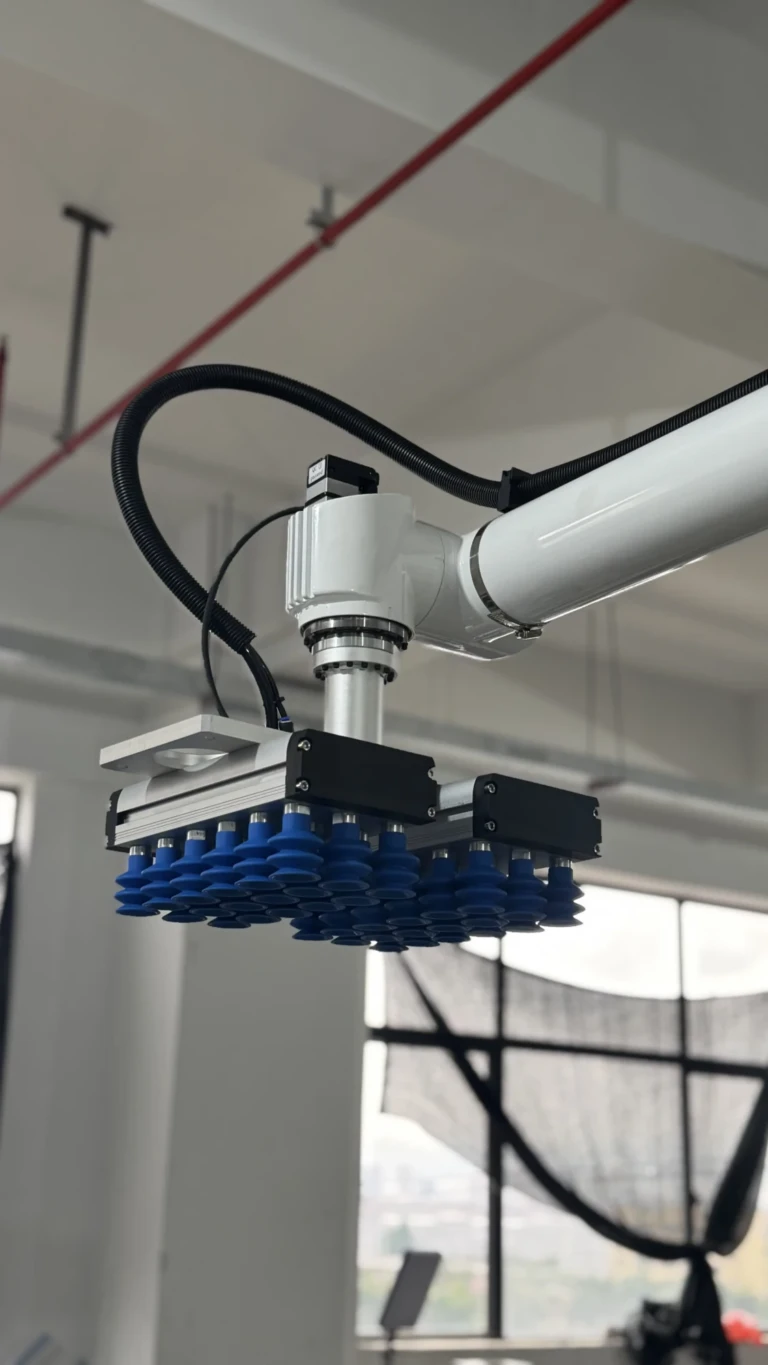
A: Yes! Adaptive grippers (vacuum, claw, or soft robotics) and vision systems allow gentle handling of bottles, bags, or electronics.
Q3: What’s the average ROI timeline?
A: Most businesses see payback in 1–3 years via labor savings and efficiency gains. High-throughput operations may break even faster.
Q4: Are collaborative robots safe around untrained staff?
A: Absolutely. Cobots feature force-sensing technology that stops motion upon contact. Still, operator training is recommended.
Q5: Do I need to overhaul my entire packaging line?
A: Not necessarily. Many robots retrofit into existing lines. Huaxiu’s engineers specialize in phased integrations to minimize disruption.
Q6: How do I maintain a palletizing robot?
A: Daily visual checks, periodic lubrication, and software updates suffice. Huaxiu’s models include self-diagnostic tools for proactive maintenance.
By addressing these facets, you’re equipped to make an informed choice—transforming palletizing from a bottleneck into a benchmark of efficiency. Ready to automate smarter? The future of packaging starts now.