
Introduction
In today’s fast-paced logistics and manufacturing sectors, automation isn’t just a luxury—it’s a necessity. Palletizing robot arms have emerged as game-changers, streamlining operations, reducing labor costs, and minimizing errors. However, choosing the right palletizing robot arm is no small feat. With options ranging from collaborative robots to fully automated systems, making an informed decision requires understanding your operational needs, technical specifications, and long-term goals. Below, we break down key considerations to guide your purchasing journey, leveraging insights from industry leaders like Huaxiu Robot, a pioneer in automation solutions.
1. Assess Your Payload and Speed Requirements
The foundation of choosing a palletizing robot lies in understanding your payload capacity (the weight it can handle per cycle) and cycle time (how quickly it can complete tasks). For example:
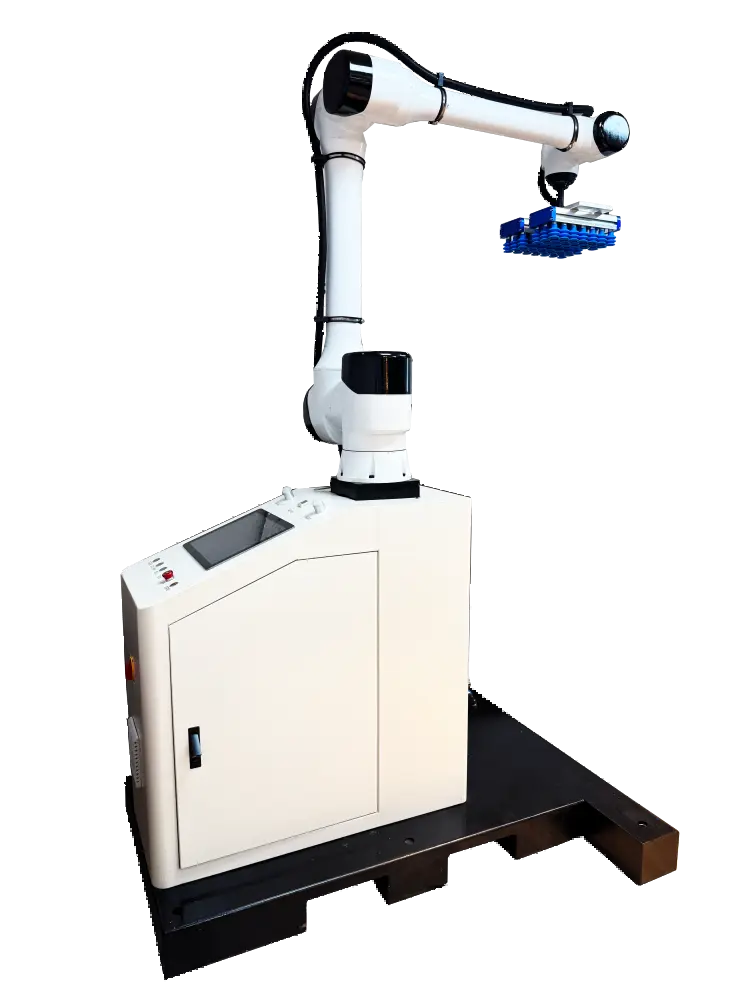
- Light payloads (<20 kg): Collaborative palletizing robots (like Huaxiu Robot’s models) excel in environments where human-robot interaction is frequent.
- Heavier loads (100+ kg): Traditional industrial robots may be better suited for high-speed, heavy-duty palletizing in large warehouses.
Always align your choice with peak operational demands rather than average needs to avoid bottlenecks.
2. Consider Reach and Workspace Layout
A robot’s reach determines how far it can stack items on a pallet. Measure your workspace dimensions, including:
- Pallet size and configuration (e.g., euro pallets vs. custom sizes).
- Robot mounting (floor, wall, or ceiling-mounted).
- Obstacles like conveyor belts or storage racks.
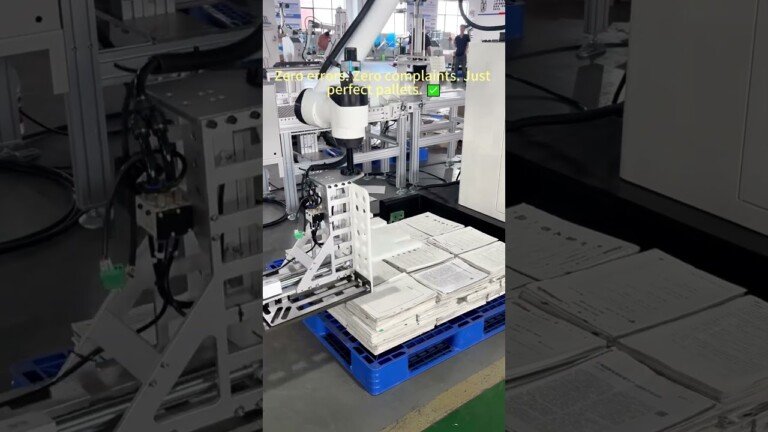
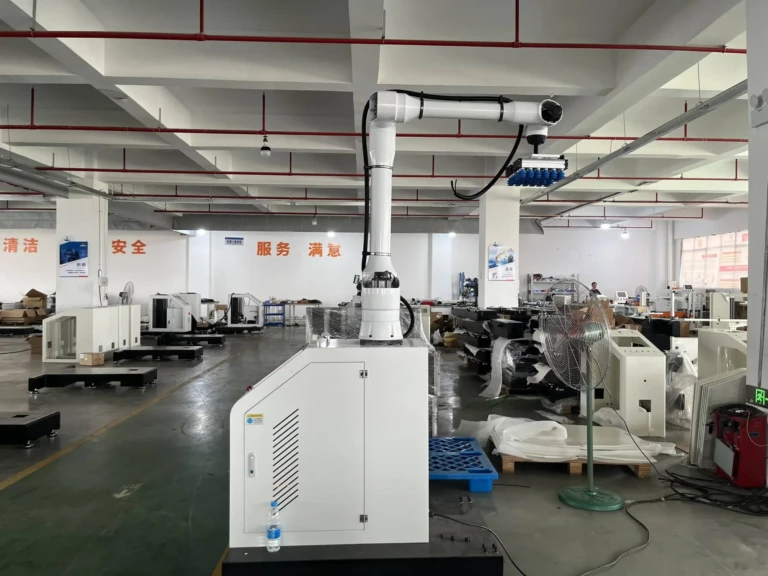
Huaxiu Robot’s palletizing arms, for instance, offer modular designs that adapt to constrained spaces while maintaining precision.
3. Collaborative vs. Traditional Robots: Which Fits Your Workflow?
- Collaborative Robots (Cobots): Ideal for flexible, low-volume tasks. They require minimal safety fencing and can work alongside staff—perfect for SMEs transitioning to automation.
- Traditional Industrial Robots: Built for speed and heavy loads in fully automated lines. These often require safety cages but deliver unmatched productivity for large-scale operations.
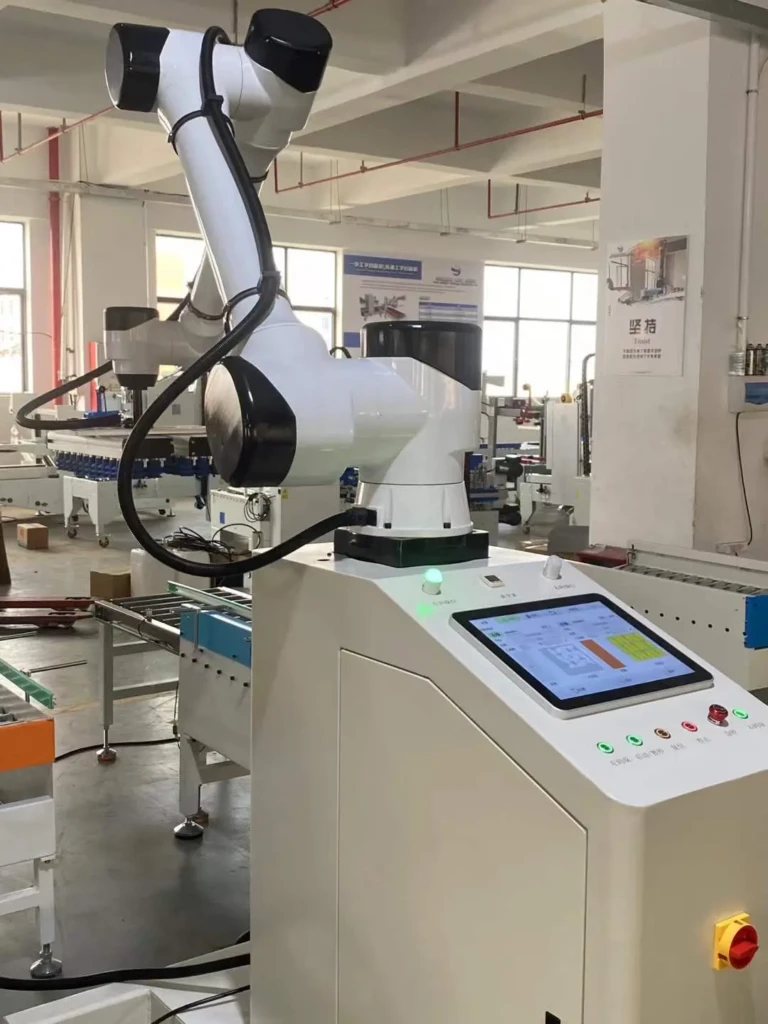
Huaxiu Robot’s collaborative palletizers are engineered with force-limiting sensors, making them safer and easier to deploy.
4. Evaluate End-of-Arm Tooling (EOAT) Flexibility
The EOAT—the robot’s “hand”—must match your product type. Consider:
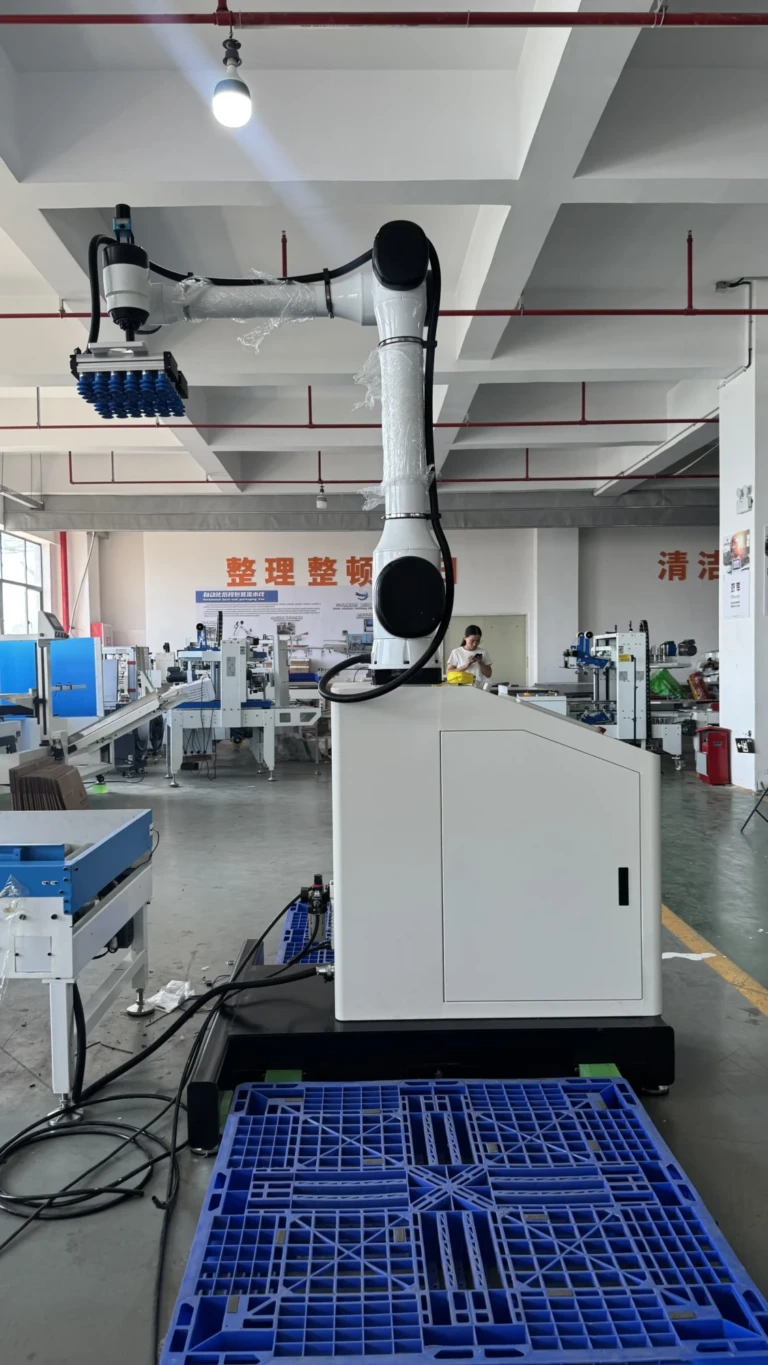
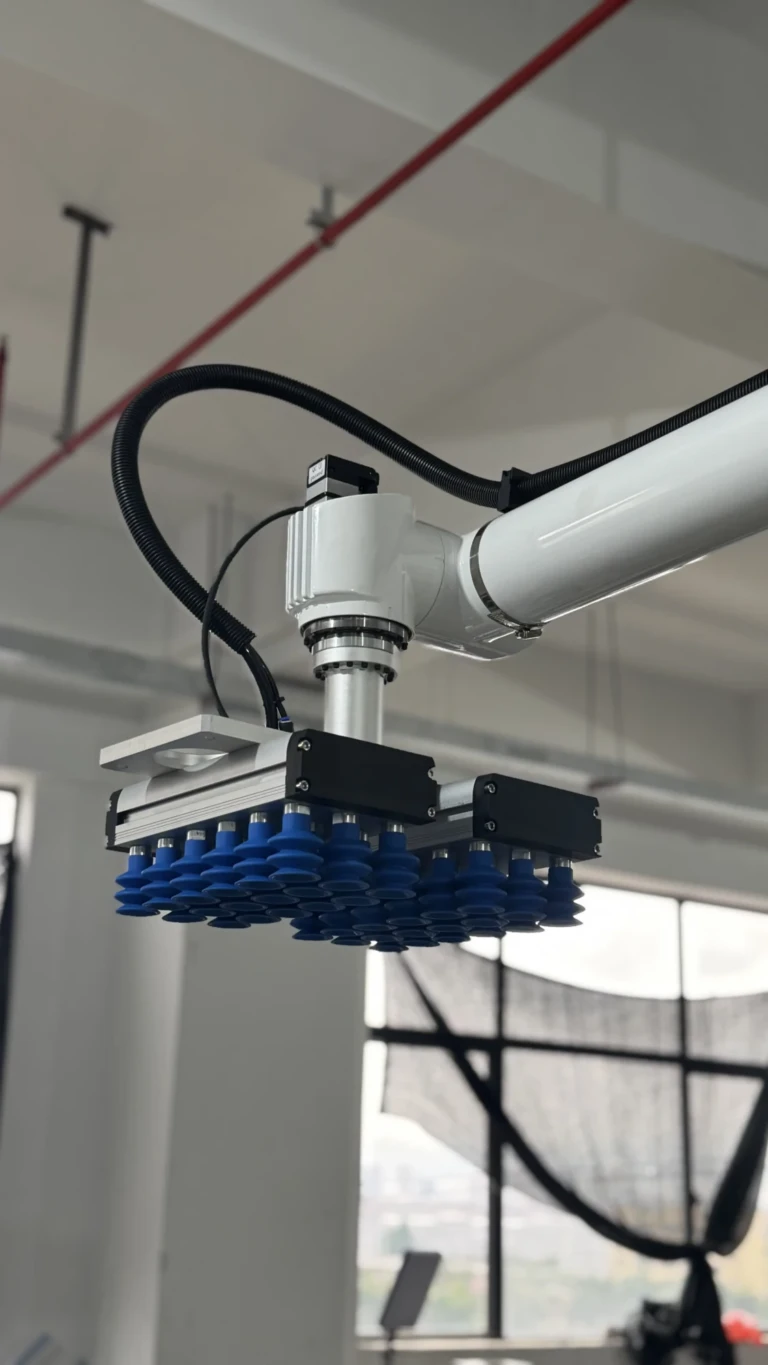
- Vacuum grippers: For boxes or bags with smooth surfaces.
- Mechanical claws: Ideal for irregularly shaped items.
- Custom solutions: Huaxiu offers tailored EOATs for specialized products like shrink-wrapped bundles or fragile items.
Ensure the EOAT can handle product variability if your SKUs change frequently.
5. Integration Capabilities
A palletizing robot is only as good as its ability to communicate with existing systems (e.g., WMS, ERP, or PLCs). Prioritize:
- Plug-and-play connectivity: Huaxiu’s robots often feature universal interfaces for seamless integration with conveyors or vision systems.
- Software compatibility: Look for platforms that support easy programming and real-time adjustments via user-friendly HMIs.
6. Factor in Future Scalability
Your automation investment should grow with your business. Ask:
- Can the robot handle increased throughput if you expand?
- Does the supplier offer modular upgrades?
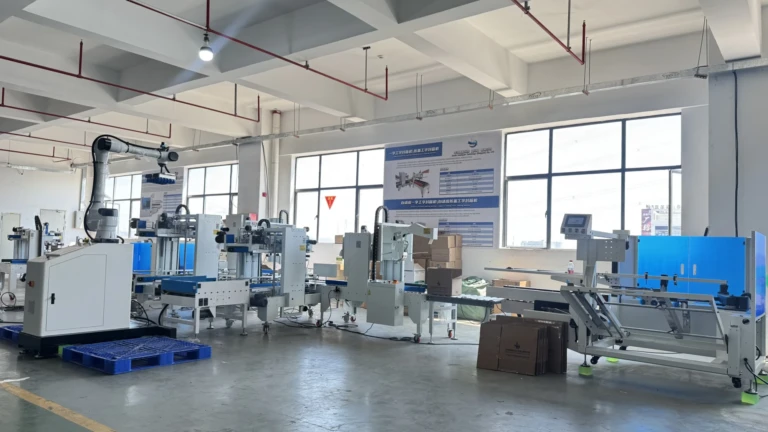
For example, Huaxiu’s systems allow users to add strapping robots or stretch film packaging units to create end-to-end automated palletizing cells.
7. Prioritize After-Sales Support and Training
Even the best robots require maintenance. Reliable suppliers like Huaxiu Robot provide:
- 24/7 technical support: Crucial for minimizing downtime.
- Onsite training: Ensures your team can operate, troubleshoot, and reprogram the robot confidently.
- Spare parts availability: Verify lead times for critical components.
8. Analyze Total Cost of Ownership (TCO)
Beyond the sticker price, calculate:
- Energy consumption: Newer models prioritize energy efficiency.
- Labor savings: Automation can reduce staffing needs by up to 70%.
- ROI timeline: Most palletizing robots pay for themselves in 1–3 years through productivity gains.
Conclusion
Investing in a palletizing robot arm isn’t just about automating repetitive tasks—it’s about future-proofing your operations. By carefully evaluating payload, workspace, flexibility, and scalability, businesses can select a solution that delivers immediate efficiency and long-term value. Brands like Huaxiu Robot exemplify innovation in this space, offering everything from collaborative palletizers to fully integrated packaging lines that adapt to evolving industry demands. As AI and machine learning advance, these systems will only grow smarter, making now the ideal time to embrace automation.
FAQs
Q1: What’s the average cost of a palletizing robot arm?
A: Prices range widely based on capabilities. Entry-level cobots start around $30,000, while high-speed industrial systems can exceed $150,000. Huaxiu Robot offers scalable solutions to fit varying budgets.
Q2: Can I retrofit a robot into my existing production line?
A: Yes! Many modern robots, including Huaxiu’s models, are designed for retrofitting. Compatibility assessments are recommended to ensure seamless integration with conveyors or sensors.
Q3: How safe are collaborative palletizing robots?
A: Extremely safe. Cobots use force sensors, collision detection, and speed restrictions to operate safely near humans without traditional cages (pending risk assessment).
Q4: How long does it take to see ROI after purchasing a robot?
A: Most businesses recover costs within 12-24 months due to labor savings, reduced product damage, and higher throughput.
Q5: Can palletizing robots handle mixed SKU pallets?
A: Advanced systems with vision guidance and AI can dynamically adapt to varying box sizes, weights, and patterns. Huaxiu’s robots excel in high-mix environments.
Q6: What maintenance do these robots require?
A: Routine checks on grippers, joints, and software updates. Huaxiu provides predictive maintenance tools to preempt failures.
With the right palletizing robot, your business can transcend manual limitations, embrace efficiency, and stay ahead in an automated future.