
The Quiet Revolution Transforming Factories: China’s Palletizing Robot Boom
If you’ve walked through a manufacturing plant or warehouse in China recently, you might have noticed something missing: the backbreaking labor of stacking boxes onto pallets. In its place, an army of precision-engineered machines—palletizing robots—is rapidly reshaping logistics, driven by companies like Huaxi Robot whose innovations are setting new global standards. Beyond mere automation, this shift represents a strategic overhaul of China’s industrial backbone, fueled by cutting-edge R&D, economic pragmatism, and relentless efficiency demands. Here’s why this revolution matters—and how it’s unfolding.
Why Palletizing Robotics? The Catalysts of Change
Palletizing—organizing goods onto pallets for storage or transport—has long been a bottleneck in supply chains. Human labor is slow, inconsistent, and prone to injury, especially with heavy or repetitive loads. As labor costs in China rose and global competition intensified, manufacturers faced a crisis: either innovate or lose relevance. Enter robotics.
Chinese firms like Huaxi Robot didn’t just copy existing models; they reimagined palletizing for hyper-scalable, adaptable industrial ecosystems. By integrating AI vision systems, IoT connectivity, and modular designs, their robots handle tasks from fragile food packaging to 50kg industrial parts with near-zero error margins. The result? A 300–400% surge in palletizing efficiency in sectors like beverages, chemicals, and e-commerce fulfillment.
Huaxi Robot’s Arsenal: Beyond Basic Automation
Huaxi has emerged as a linchpin in this transformation, offering solutions tailored to China’s diverse manufacturing landscape. Its product suite eliminates manual intervention at every stage:
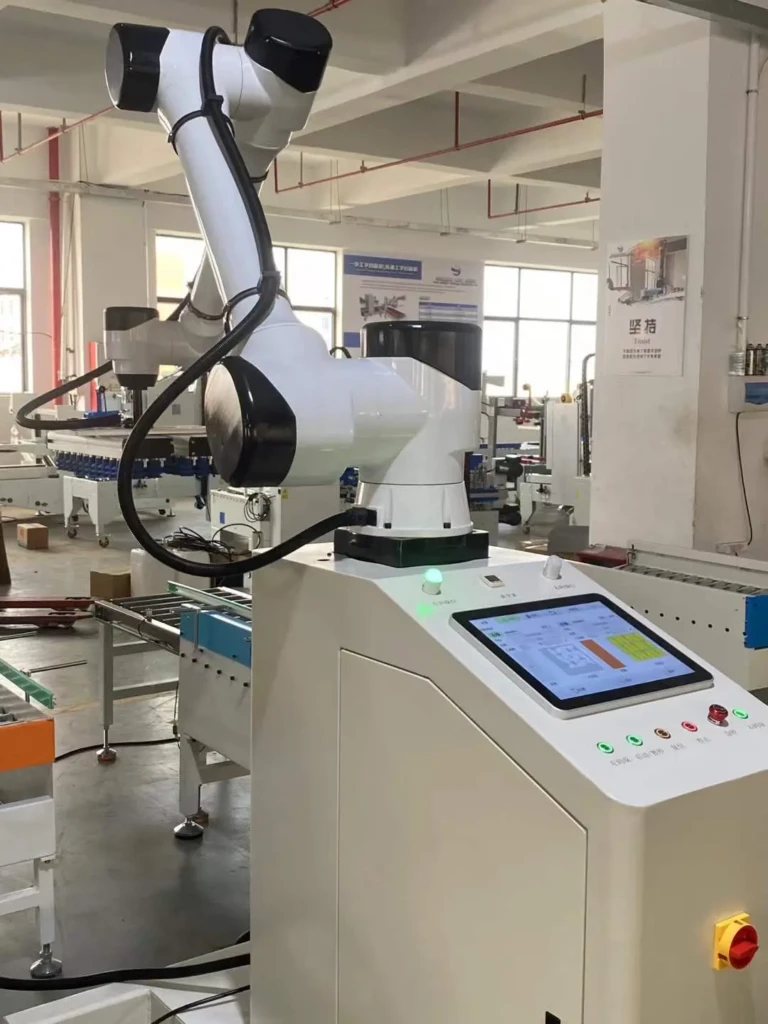
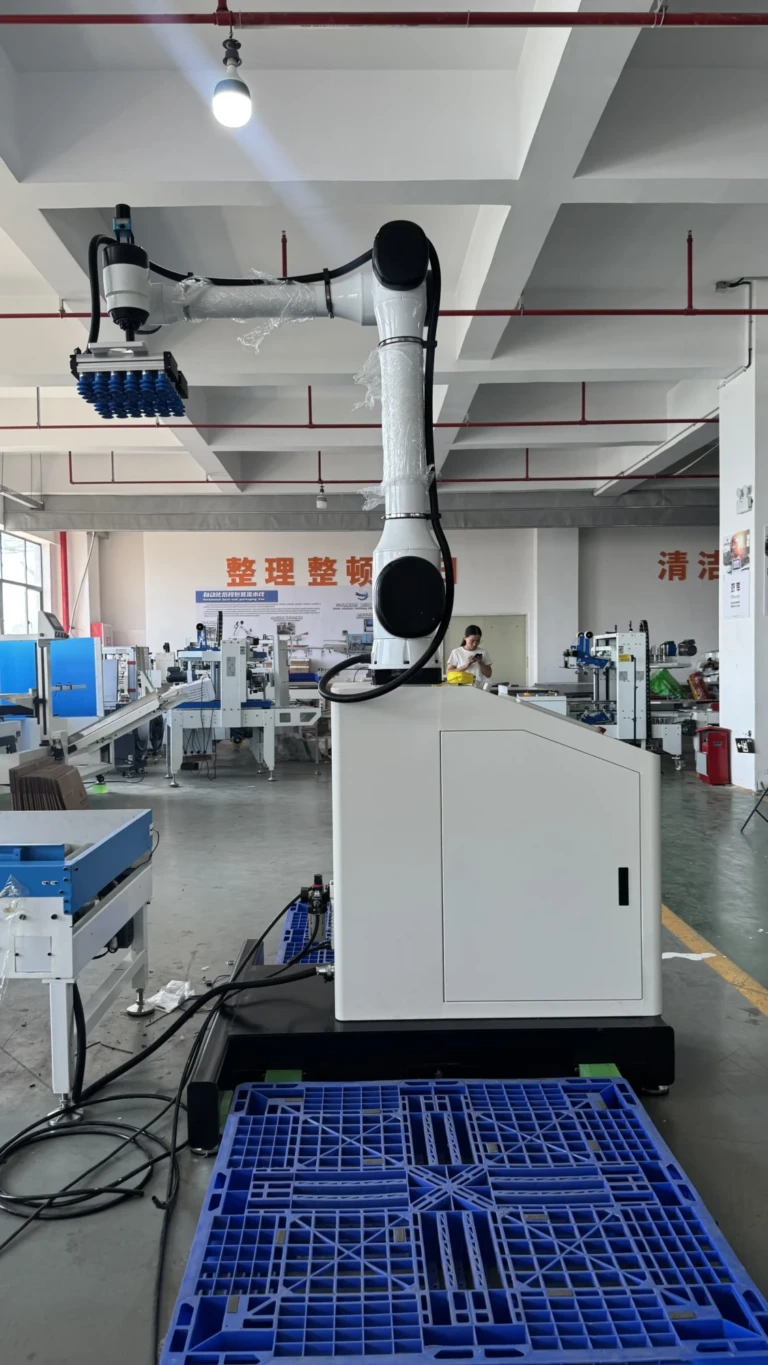
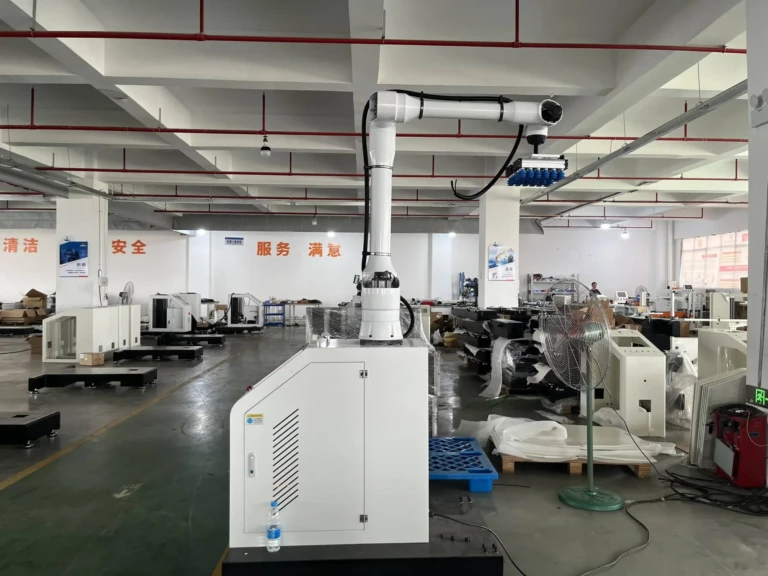
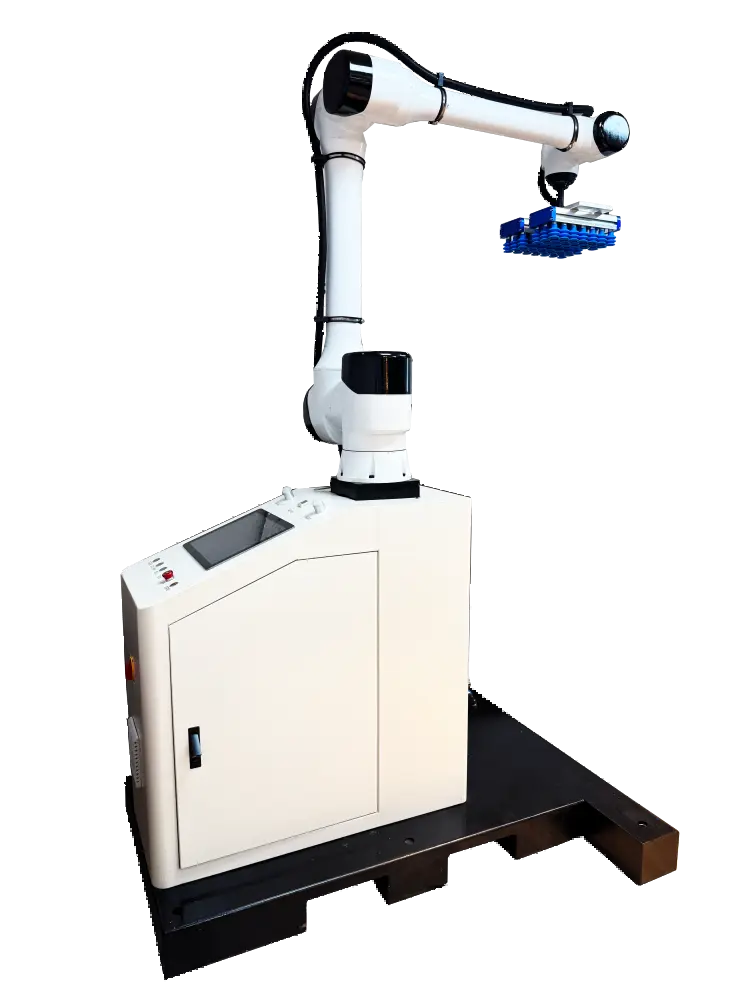
- Collaborative Palletizing Robots (Cobots): Equipped with force-sensing technology, these cobots work safely alongside humans, ideal for SMEs lacking space for full automation.
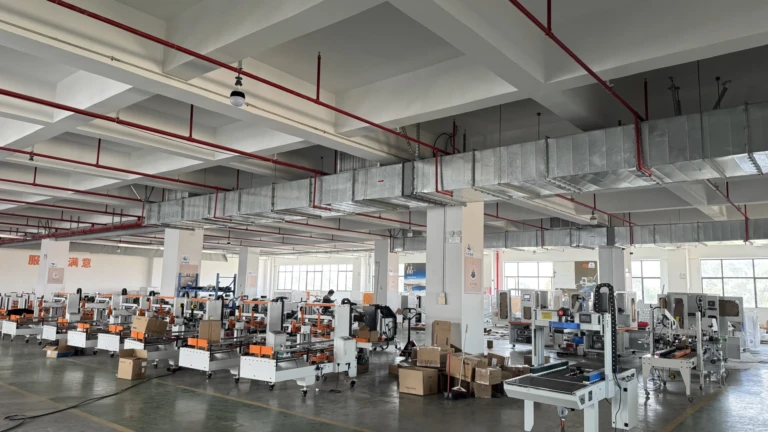
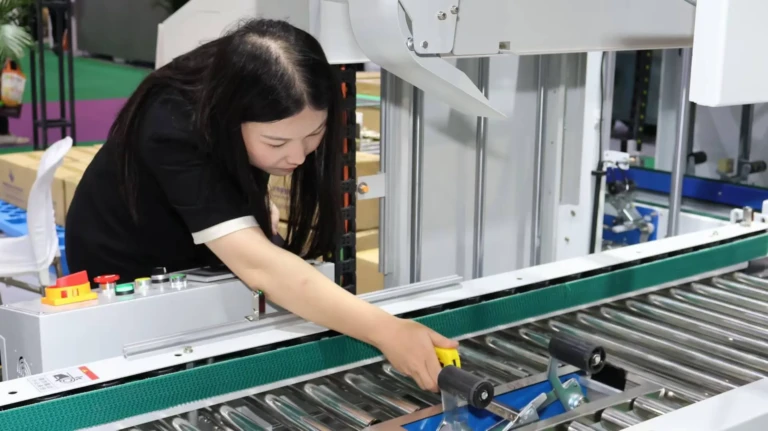
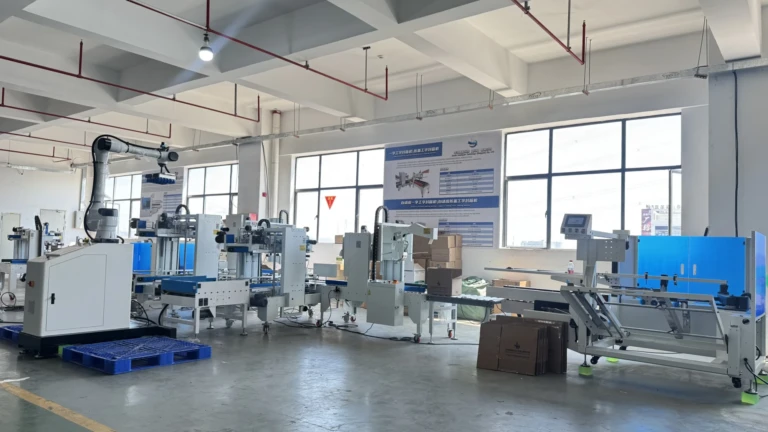
- End-to-End Packaging Lines: From automatic unpacking and sealing to straping and stretch wrapping, Huaxi’s systems unify fragmented processes—no more delays between sealing a box and palletizing it.
- Niche Innovators: For industries like pharmaceuticals, Huaxi’s sanitary-grade robots use IP67-rated materials to maintain sterile environments, while cold-chain models operate flawlessly in -30°C freezer warehouses.
Critically, these aren’t "set-and-forget" machines. Machine learning algorithms allow real-time adjustments—for example, recalibrating grip strength if a box’s weight shifts mid-lift—reducing waste and downtime.
The Data-Driven Advantage
China’s palletizing revolution isn’t just about hardware. It’s a software play. Huaxi’s robots sync with factory management systems via 5G, transmitting performance analytics to optimize workflows. One dairy producer reported a 27% reduction in energy use after AI identified inefficient pallet patterns. Similarly, predictive maintenance cuts repair costs by up to 40% by flagging motor wear before failures occur.
Global Implications: China’s Export Ambitions
While domestic adoption soars, Huaxi and peers like Siasun are eyeing overseas markets. With pricing 20–30% below European or Japanese rivals and comparable technical specs, Chinese palletizing robots are gaining traction in Southeast Asia, Africa, and even Europe. For emerging economies, these robots offer an affordable entry into automation—a pivotal advantage as global supply chains prioritize resilience.
Barriers and Breakthroughs
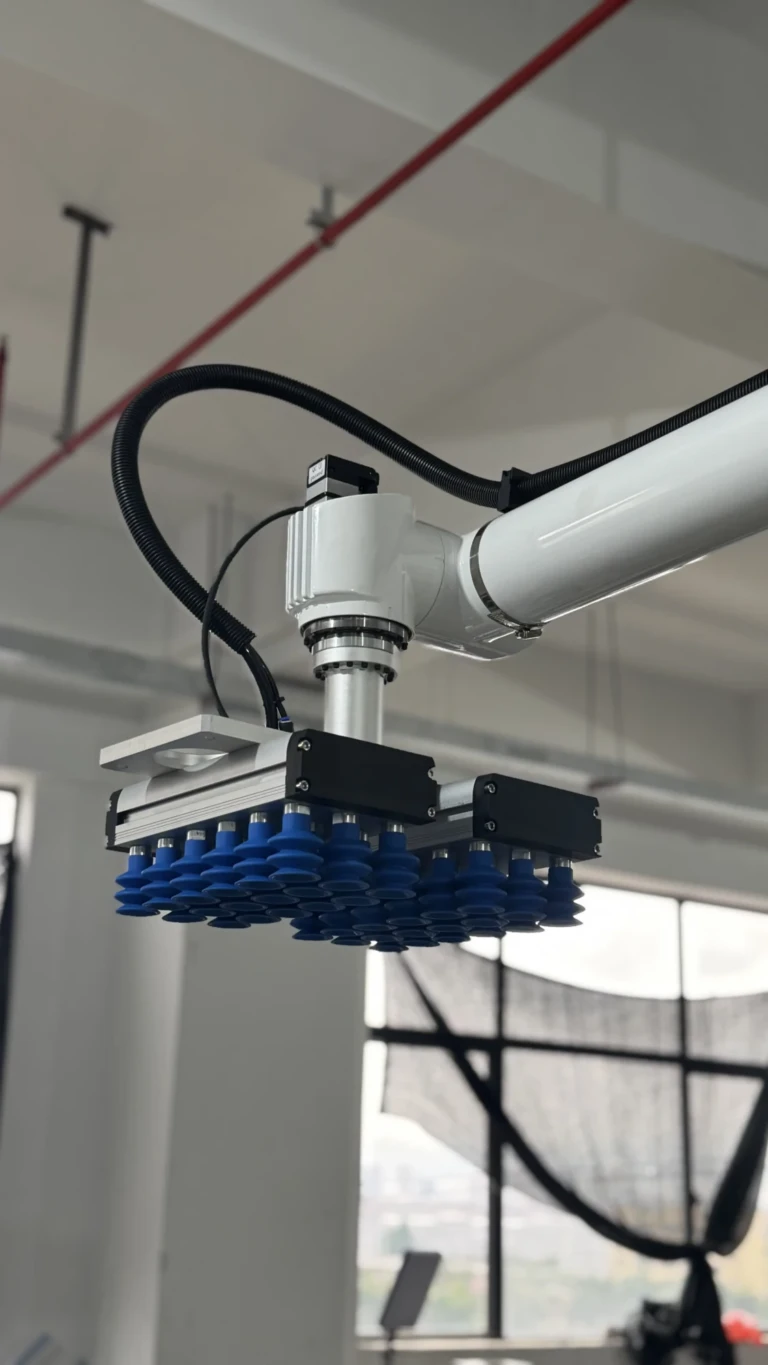
Adoption isn’t seamless. Smaller factories cite high upfront costs (though ROI often materializes in <18 months) and technical unfamiliarity. Huaxi counteracts this with leasing models and AI-powered simulators that train staff virtually. Meanwhile, breakthroughs in gripper technology—such as adaptive vacuum cups that handle irregularly shaped items—expand applications to industries like agriculture and ceramics.
The Road Ahead: Sustainability and Scalability
Future iterations aim to slash environmental footprints. Huaxi’s prototypes use recycled materials for robot components and consume 15% less power than previous models. Solar-compatible power systems are in testing for off-grid facilities. As labor shortages intensify globally, scalable solutions—like Huaxi’s “plug-and-palletize” modular units—will define next-gen logistics.
Conclusion
China’s palletizing robot surge is more than a industrial upgrade—it’s a blueprint for the future of manufacturing. By blending AI, affordability, and adaptability, companies like Huaxi Robot aren’t just automating manual tasks; they’re enabling smarter, greener, and more resilient supply chains worldwide. For businesses lagging in automation, the message is clear: the revolution isn’t coming. It’s already here.
FAQs: China’s Palletizing Robot Revolution
Q1: How much do Huaxi’s palletizing robots cost?
Costs vary by model and payload capacity. Entry-level collaborative robots start around $25,000, while high-speed industrial systems exceed $100,000. Leasing and financing plans are available to ease upfront investments.
Q2: Can these robots handle fragile or irregular items?
Yes. Advanced vision systems and adjustable grippers allow delicate handling of items like glass bottles or deformable bags. Custom end-of-arm tools (EOATs) can be designed for unique product shapes.
Q3: What industries benefit most from automated palletizing?
Food & beverage, pharmaceuticals, consumer electronics, and bulk chemicals see the fastest ROI due to high-volume, repetitive workflows. E-commerce fulfillment centers are also major adopters.
Q4: How do maintenance requirements compare to manual labor?
Robots require minimal maintenance—primarily periodic calibration and part replacements. Predictive AI tools alert technicians to potential issues, reducing unplanned downtime by up to 70%.
Q5: Are these robots safe to work near humans?
Collaborative models (cobots) feature force-limited joints, collision detection, and emergency stops. They comply with ISO 10218 safety standards for human-robot interaction.
Q6: Is retrofitting possible in older factories?
Absolutely. Huaxi specializes in compact, mobile units that integrate into existing layouts without major infrastructure changes.
Q7: What’s the typical ROI period?
Most clients report full ROI within 12–24 months via labor savings, reduced product damage, and increased throughput. High-volume operations may see returns in under a year.
From workshops in Guangdong to Fortune 500 factories, China’s robotics vanguard is proving that intelligent automation isn’t a luxury—it’s the new baseline for survival in 21st-century industry.