Introduction
China’s industrial automation sector is undergoing a seismic shift, fueled by the rapid rise of palletizing robot factories. As global supply chains prioritize speed, flexibility, and cost efficiency, Chinese manufacturers like Huaxiu Robot are seizing the opportunity to redefine material handling processes. This boom isn’t just about replacing manual labor—it’s a strategic response to rising labor costs, supply chain volatility, and the pressing need for 24/7 operational resilience. In this deep dive, we explore the forces behind China’s palletizing robot revolution, spotlight key innovators, and analyze how this trend is reshaping global manufacturing dynamics.
The Catalysts Driving China’s Palletizing Robot Boom
-
Labor Shortages & Rising Wage Pressures
China’s demographic shift—marked by an aging workforce and declining birth rates—has intensified labor scarcity in repetitive, physically demanding roles. Palletizing robots offer a solution, performing tasks with unmatched consistency while slashing long-term labor expenses by up to 60%. -
"Smart Manufacturing" National Policy
Initiatives like Made in China 2025 and the 14th Five-Year Plan prioritize robotics and automation. Subsidies, tax breaks, and R&D grants have accelerated adoption, with over 50,000 industrial robots deployed in logistics alone in 2023. -
E-Commerce & Supply Chain Demands
The meteoric growth of e-commerce giants like Alibaba and JD.com demands faster, error-free order fulfillment. Automated palletizing systems enable warehouses to handle 300–500 packages per hour—triple manual capabilities—while minimizing product damage. - Technological Leapfrogging
Chinese firms are outpacing legacy Western models by integrating AI vision, IoT connectivity, and collaborative robotics (cobots). For example, Huaxiu’s robots use real-time data analytics to self-optimize stacking patterns based on box size and weight.
Huaxiu Robot: A Case Study in Innovation
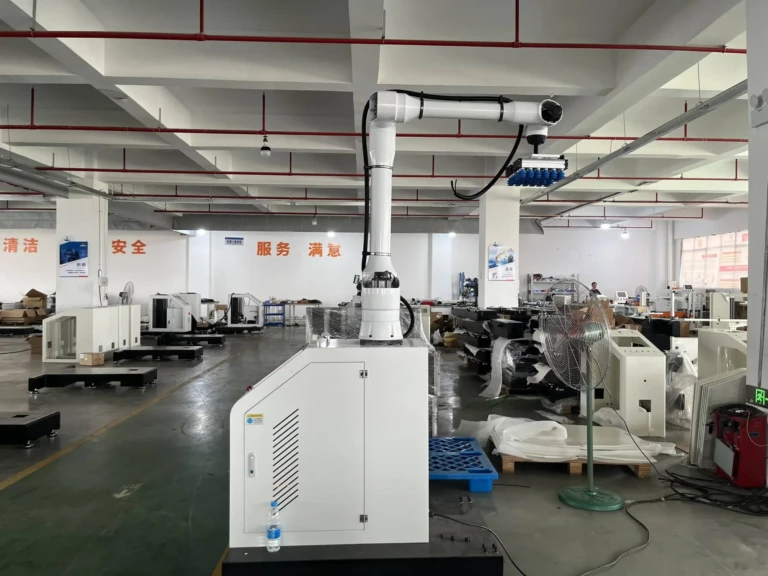
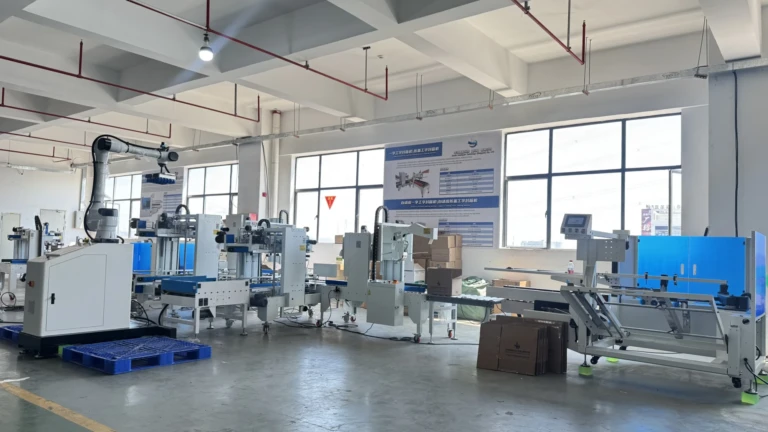
A key player in this boom, Huaxiu Robot, exemplifies China’s shift from imitation to innovation. Their product ecosystem addresses every stage of palletizing:
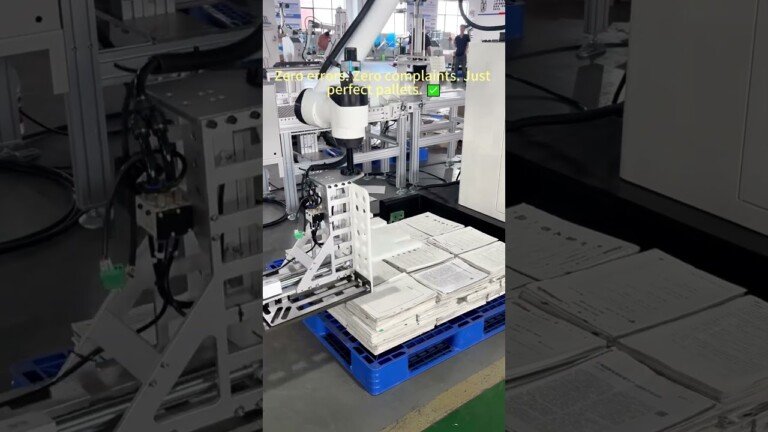
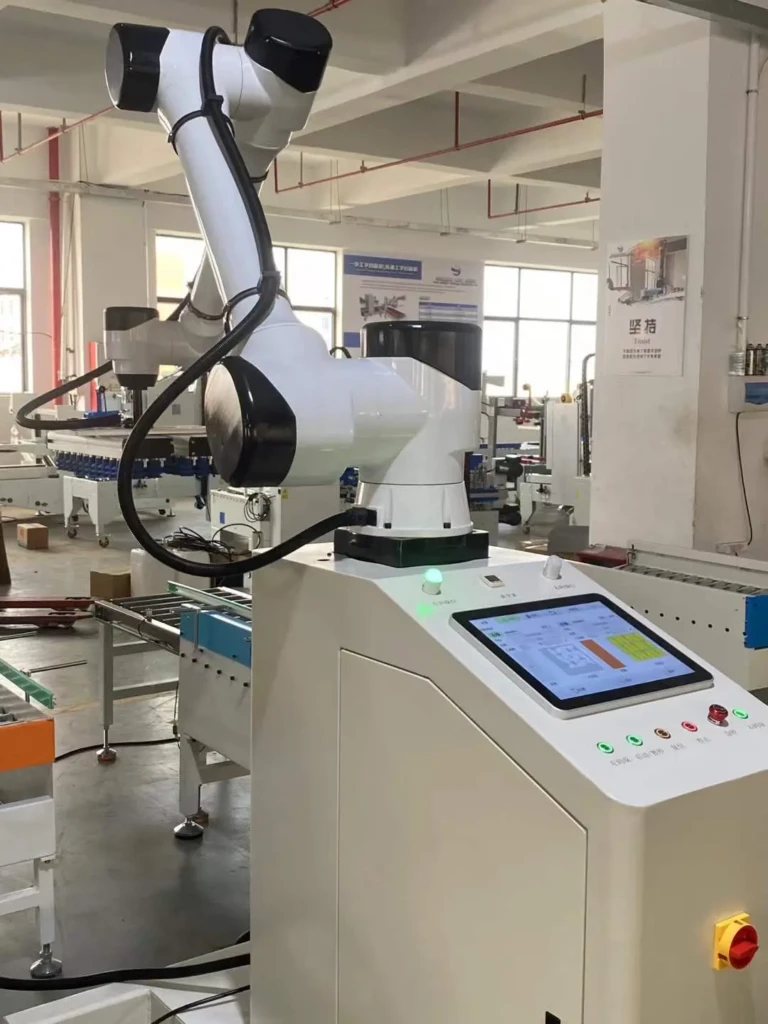
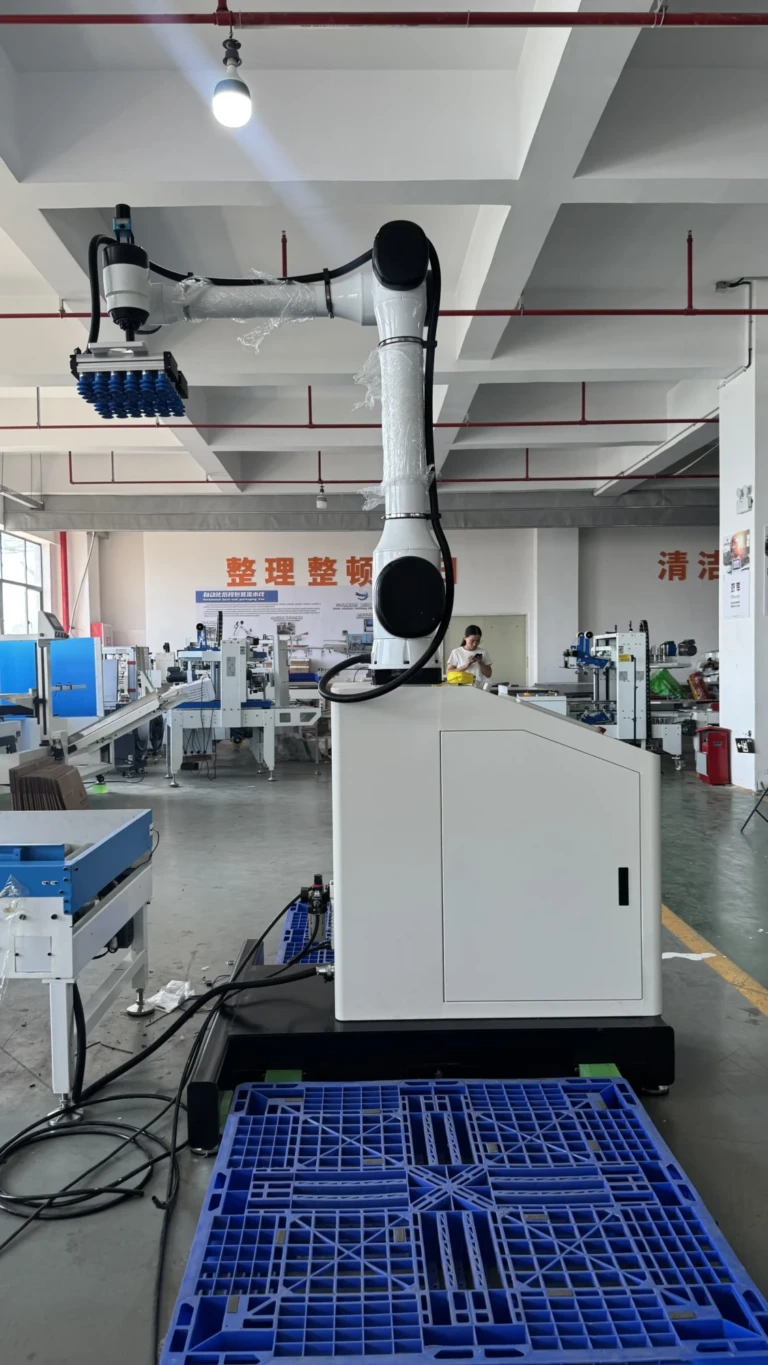
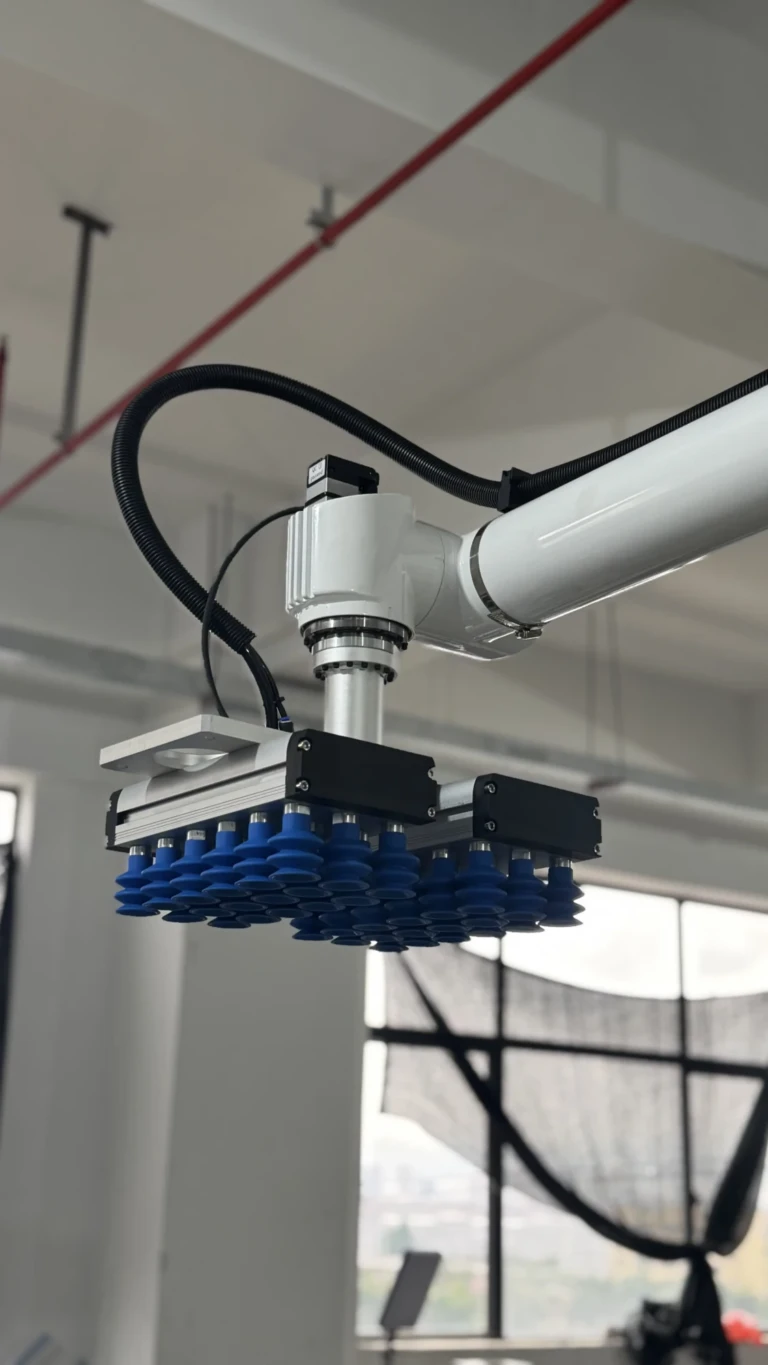
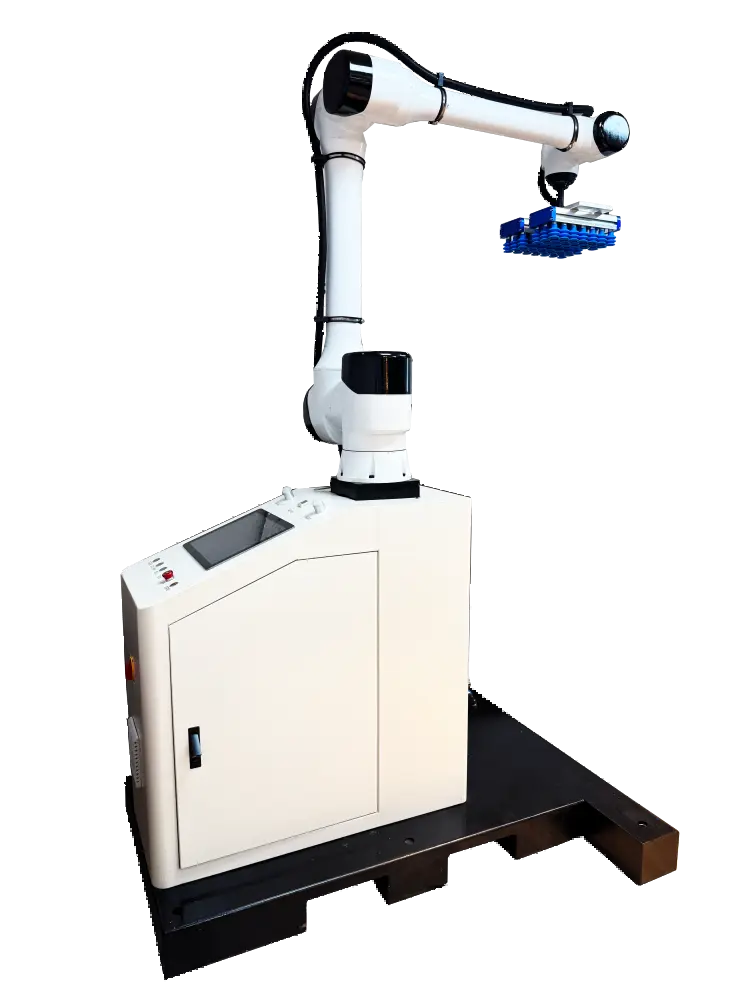
- Collaborative Palletizing Robots: Cobots like the HX-CP500 work alongside humans, requiring no safety cages and adapting to mixed-SKU environments.
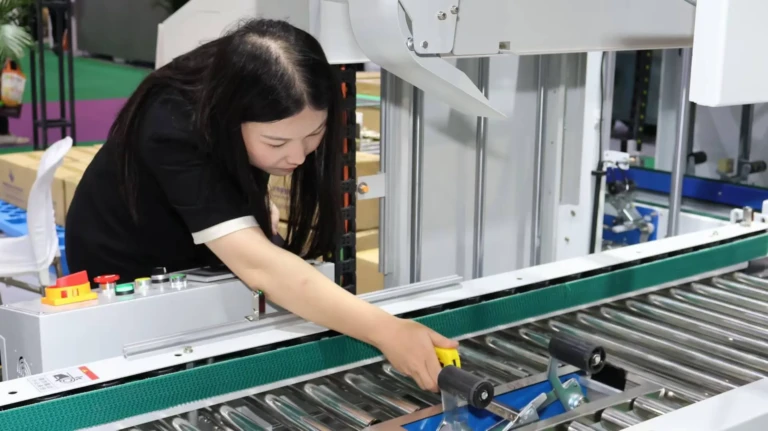
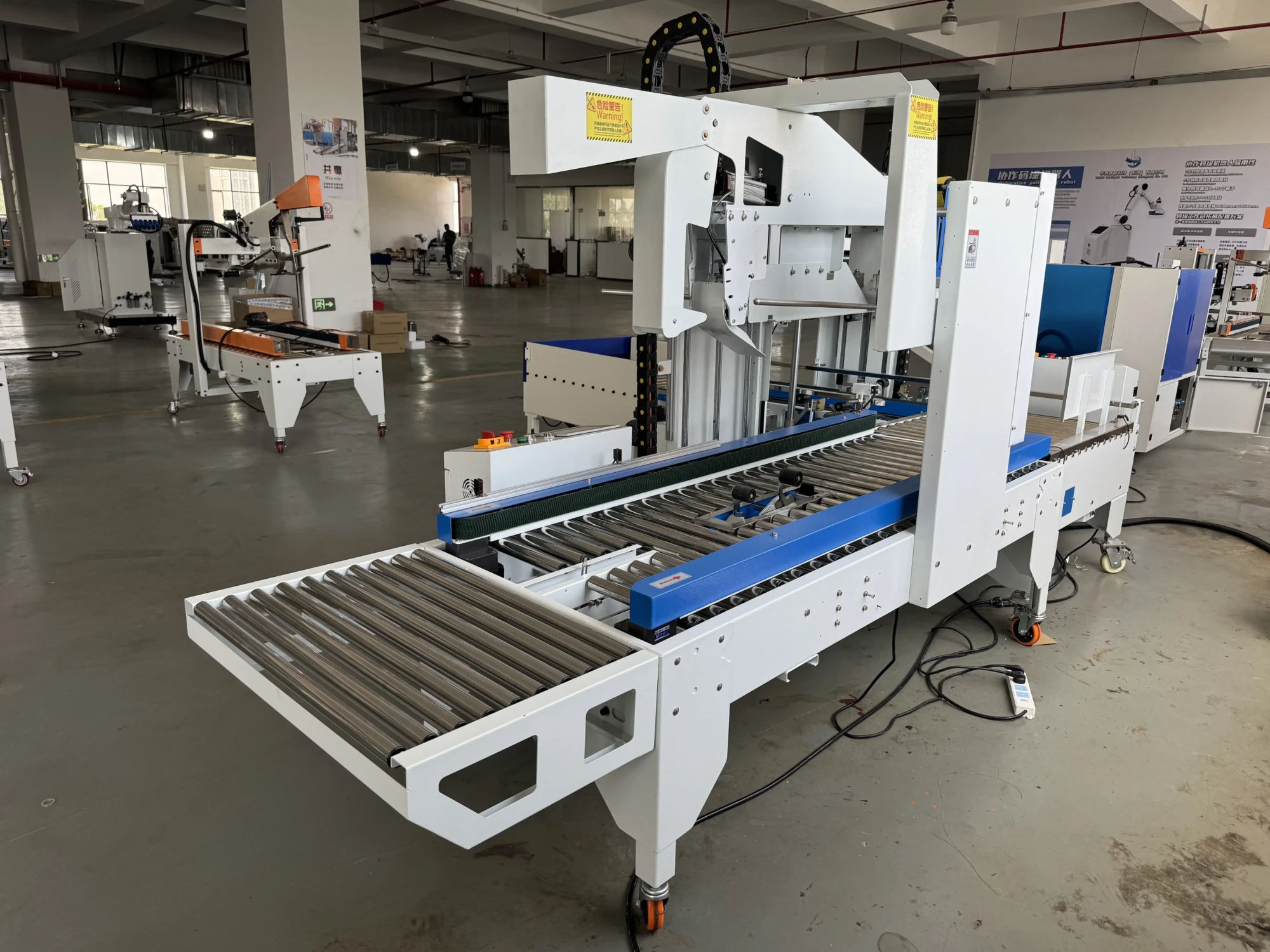
- End-to-End Packaging Automation: From automatic unpacking/sealing robots to strapping robots and stretch film wrappers, Huaxiu eliminates manual touchpoints.
- Ultra-Adaptable Systems: Their pallet-forming robots dynamically adjust to irregularly shaped items, while AI-driven shrink packaging robots minimize film waste by 25%.
This integrated approach cuts palletizing cycle times by 40% and reduces integration costs for SMEs—a critical advantage in China’s fragmented manufacturing landscape.
Technological Trends Reshaping the Industry
-
AI-Powered Vision Systems
Advanced cameras and machine learning algorithms now identify damaged goods, classify items by fragility, and calculate optimal weight distribution—reducing load failures by 90%. -
Plug-and-Play Modularity
Companies like Huaxiu offer modular robots that deploy in <48 hours, contrasting with traditional systems requiring weeks of programming. -
Sustainable Design
Energy-recovery mechanisms in servo motors cut power consumption by 30%, aligning with China’s carbon neutrality goals. - Cloud Robotics
Remote diagnostics, predictive maintenance, and fleet optimization via cloud platforms minimize downtime. Huaxiu’s clients report <1% unplanned stoppages.
Global Market Implications
- Export Surge: China’s palletizing robot exports grew 34% YoY in 2023, undercutting European rivals by 20–40% on price.
- Reshoring Paradox: While automation boosts China’s competitiveness, it also enables "reshoring" for Western firms seeking to reduce Asia-dependent supply chains.
- Emerging Market Dominance: Customized low-cost solutions are capturing markets in Southeast Asia, Africa, and Latin America, where labor costs are rising but infrastructure lags.
Challenges & Future Outlook
- Overcapacity Risks: Domestic competition is fierce, with 200+ vendors vying for market share—consolidation is inevitable.
- Standardization Gaps: Lack of universal communication protocols (e.g., between robots and Warehouse Management Systems) remains a hurdle.
- Next Frontiers: Expect hybrid human-robot workflows, swarm robotics for mega-warehouses, and generative AI for 3D pallet pattern design by 2025.
Conclusion
China’s palletizing robot boom signals broader dominance in industrial automation fueled by policy agility, cost innovation, and relentless R&D. For global manufacturers, these systems offer a dual advantage: slashing logistics costs while future-proofing against supply chain shocks. As companies like Huaxiu Robot push boundaries in AI integration and sustainability, the gap between China and traditional robotics hubs narrows—heralding a new era where scalability meets sophistication. Businesses hesitating to automate palletizing risk being outpaced by competitors leveraging these transformative technologies.
FAQs
Q1: How much does a palletizing robot system cost in China?
A: Entry-level models start at $20,000–$30,000 for cobots, while high-speed industrial systems range from $50,000–$150,000—still 30–50% cheaper than Euro-American equivalents.
Q2: Can these robots handle fragile or irregularly shaped items?
A: Yes. Advanced grippers with force feedback (e.g., Huaxiu’s vacuum-adaptive suction cups) safely manipulate eggs, glass bottles, or soft packages without damage.
Q3: What’s the typical ROI period for palletizing automation?
A: Most Chinese clients achieve ROI in 8–18 months via labor savings, reduced product damage, and increased throughput.
Q4: Are palletizing robots difficult to integrate with existing production lines?
A: Modern systems use open API architectures, enabling seamless integration with PLCs, ERP, and MES systems. Huaxiu offers proprietary middleware for legacy equipment.
Q5: How do Chinese robots comply with international safety standards?
A: Top manufacturers certify products to ISO 10218, ANSI/RIA R15.06, and CE standards. Collaborative models include embedded safety scanners and torque sensors.
Q6: What industries benefit most from palletizing robots?
A: Food & beverage, pharmaceuticals, e-commerce, chemicals, and automotive sectors see the highest adoption due to hygiene, precision, and volume demands.