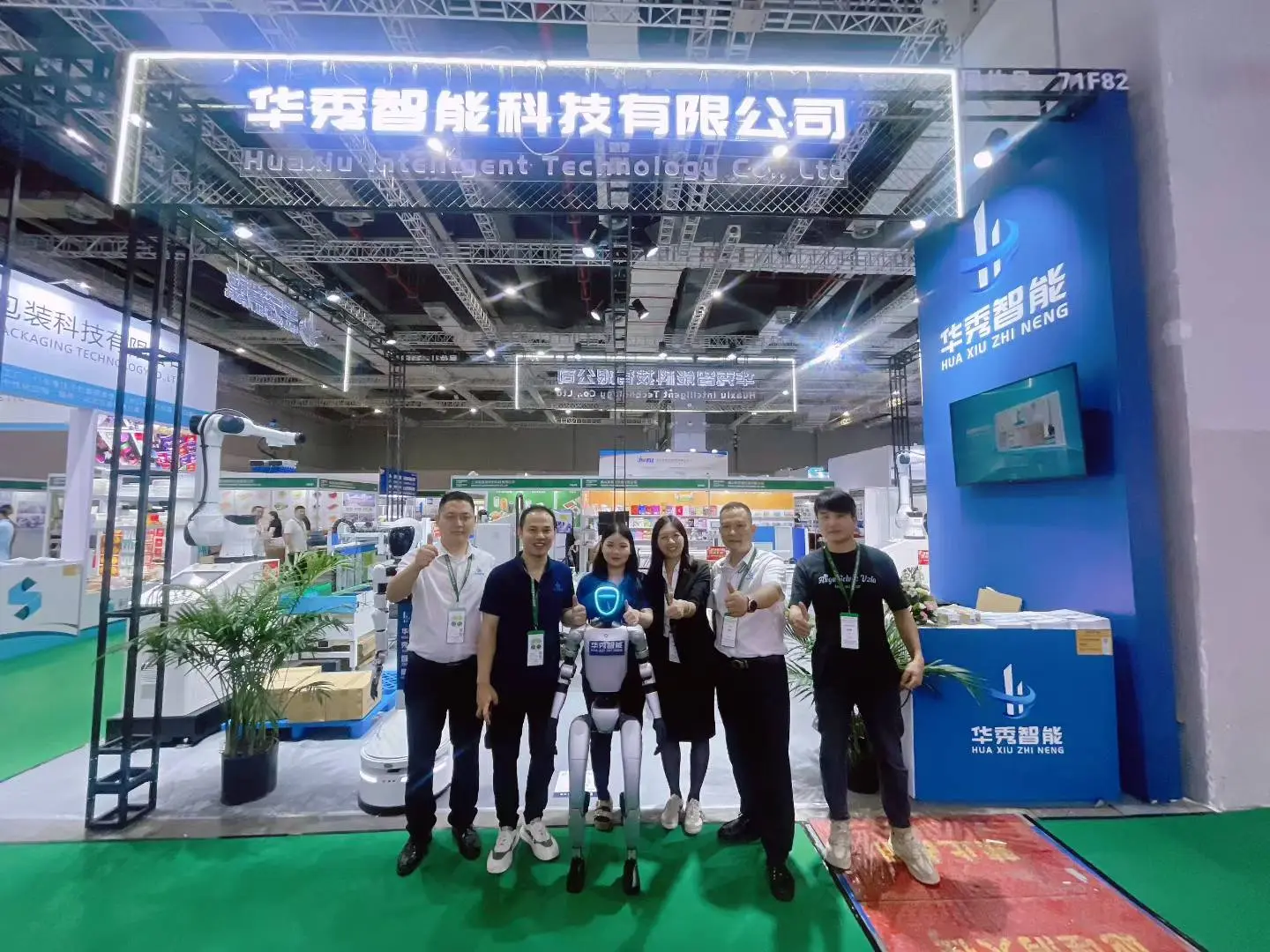
Introduction: The Rise of Automation in Material Handling
As global industries race toward efficiency, China has emerged as a powerhouse in robotics innovation, particularly in material handling and logistics. Among the pioneers leading this charge is Huaxiu Robot, a company redefining how industries handle palletizing with its cutting-edge robotic solutions. From collaborative palletizers to fully automated stretch film packaging systems, their technology streamlines operations while addressing labor shortages, safety concerns, and precision demands. This article explores the groundbreaking innovations behind China’s robotic bag palletizers and why they’re transforming warehouses and production lines worldwide.
The Evolution of Palletizing: From Manual Labor to Intelligent Robotics
Palletizing — the stacking of goods onto pallets for storage or transport — has traditionally been labor-intensive, error-prone, and physically demanding. Human workers face risks like repetitive strain injuries, inconsistencies in stacking patterns, and fatigue-driven errors. Robotic palletizers eliminate these issues while boosting speed and accuracy.
Chinese manufacturers like Huaxiu Robot have accelerated this shift by developing systems tailored to diverse industry needs. Their designs prioritize flexibility, scalability, and integration, making them adaptable to everything from food and beverage to pharmaceuticals and chemicals. Let’s break down the key innovations driving this revolution.
Huaxiu Robot’s Game-Changing Product Portfolio
1. Collaborative Palletizing Robots
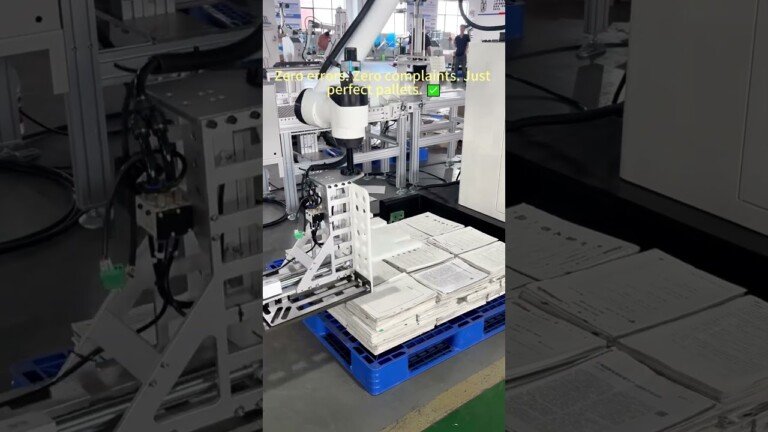
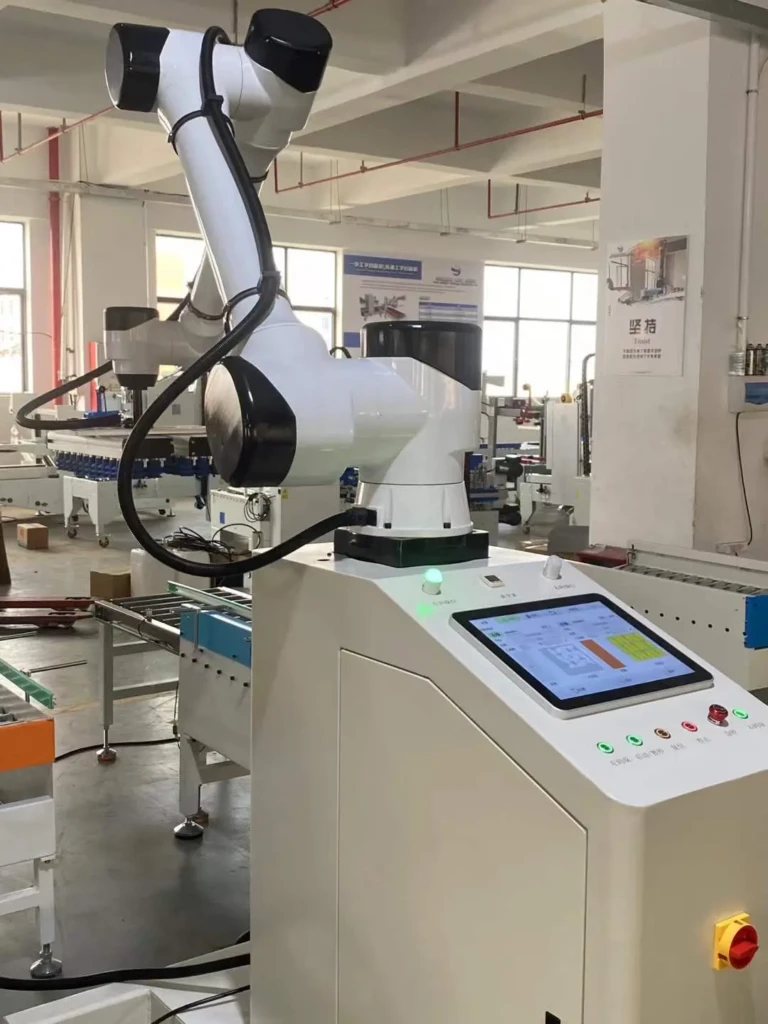
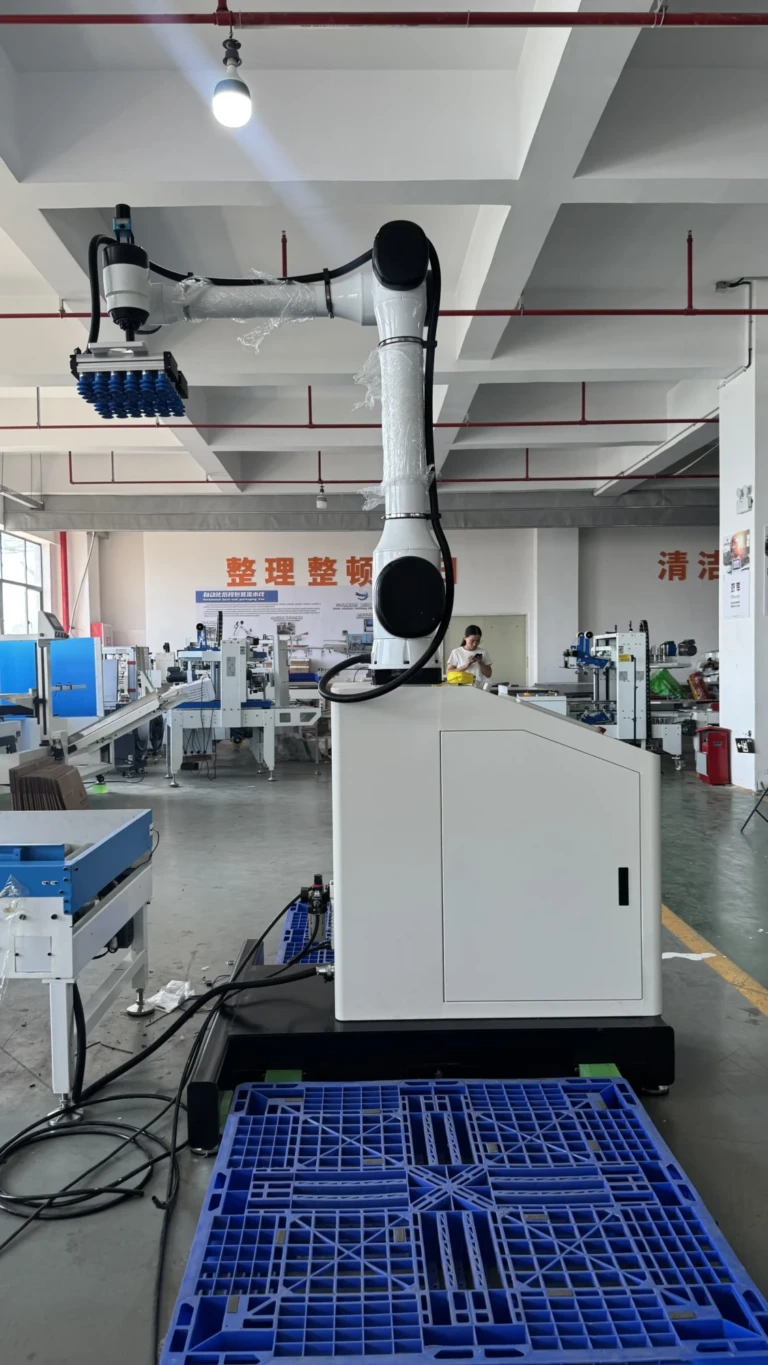
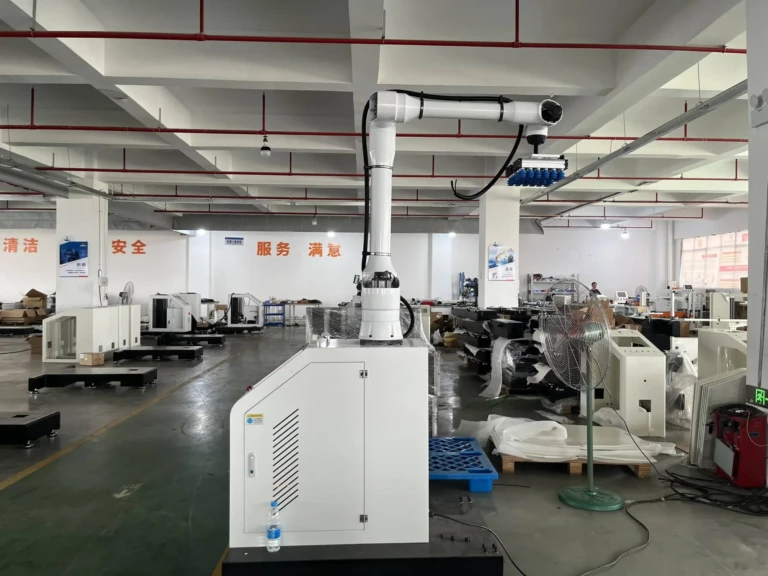
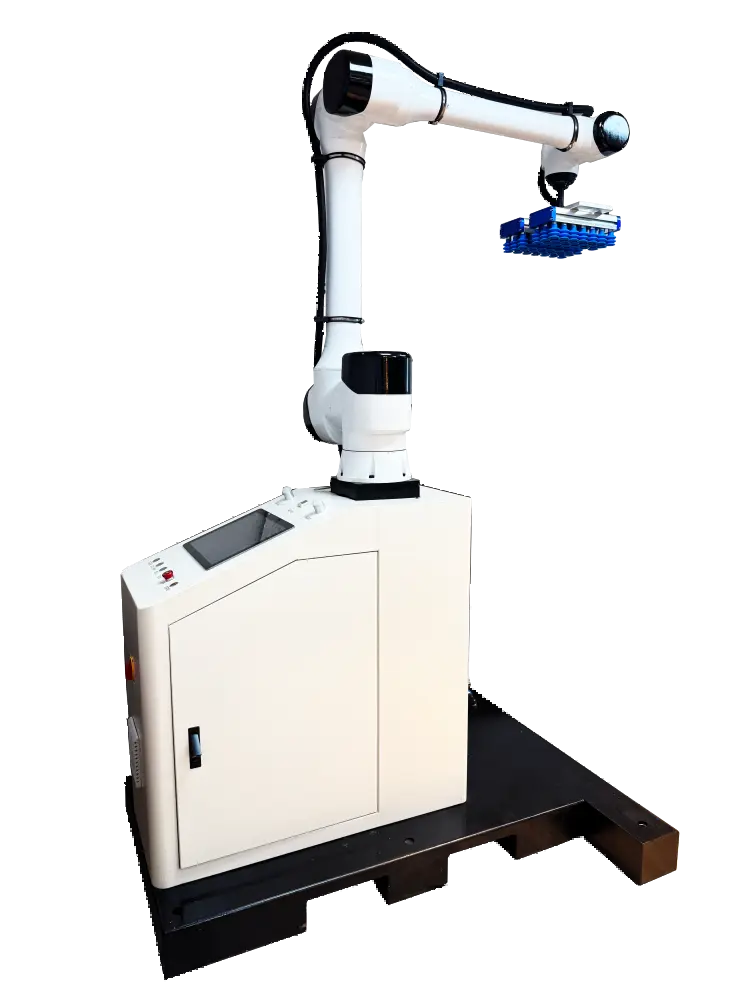
Unlike traditional industrial robots confined to safety cages, Huaxiu’s collaborative palletizers (cobots) work safely alongside humans. Equipped with vision systems and force-sensing technology, these robots can:
- Adapt to varying bag sizes and weights without manual reprogramming.
- Detect human presence and slow or stop movements to prevent accidents.
- Learn stacking patterns via intuitive interfaces, reducing setup time.
This versatility makes them ideal for small-batch production or facilities with space constraints.
2. Integrated Packaging Workflows
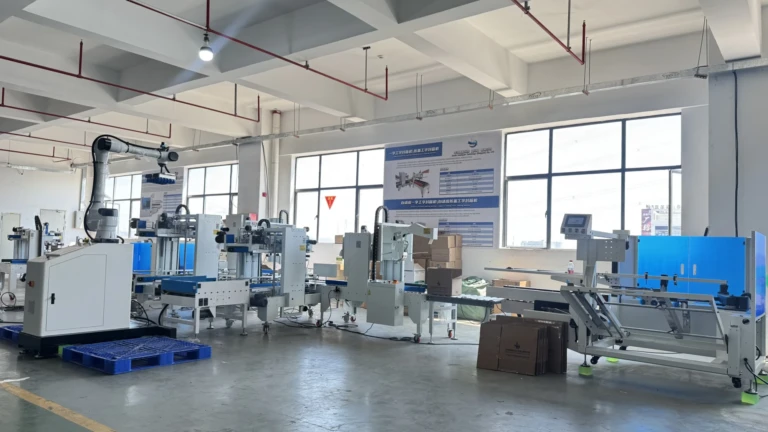
Huaxiu’s expertise extends beyond palletizing to create end-to-end solutions:
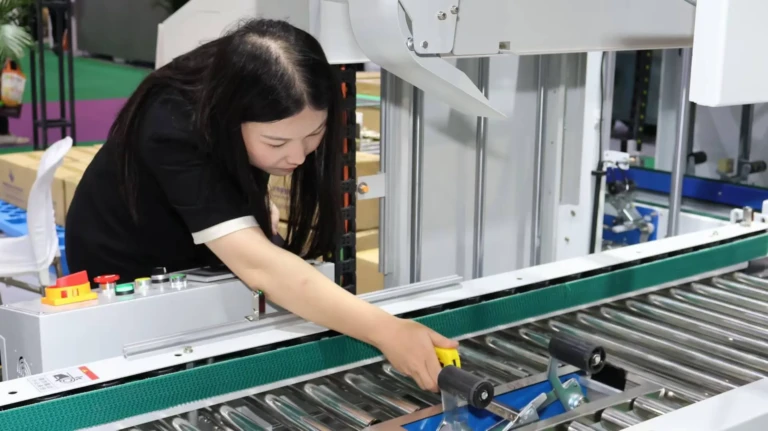
- Automatic Unpacking/Sealing Robots: Streamline the loading and sealing of boxes, reducing dependency on manual labor.
- Shrink/Semi-Automatic Sealing Robots: Ensure consistent package integrity for humidity-sensitive goods (e.g., fertilizers, chemicals).
- Strapping Robots: Automate bundle reinforcement, which is critical for heavy or irregularly shaped loads.
These systems integrate seamlessly via IoT-enabled controllers, allowing real-time monitoring and adjustments.
3. Fully Automatic Stretch Film & Pallet-Forming Robots
Huaxiu’s stretch film packaging robots wrap pallets with precision, minimizing film waste while maximizing load stability. Combined with their pallet-forming robots — which assemble custom-sized pallets on demand — these systems provide a turnkey solution for warehouses dealing with diverse SKUs.
4. Hybrid Systems for Complex Environments
For industries like agriculture or construction, where bags vary in material (e.g., woven polypropylene, paper), Huaxiu offers hybrid palletizers with:
- Multi-axis arms capable of handling delicate or abrasive surfaces.
- AI-driven defect detection to flag damaged bags before stacking.
- Environmental adaptability to operate in dusty or refrigerated settings.
Why China’s Robotic Palletizers Are Leading the Market
Chinese innovators like Huaxiu dominate for three key reasons:
- Cost-Effectiveness: By leveraging local supply chains and modular designs, they deliver advanced automation at 20–40% lower costs than European or American counterparts.
- Customization: Unlike rigid one-size-fits-all systems, Huaxiu tailors solutions to client workflows, whether integrating with legacy machinery or accommodating unique bag geometries.
- R&D Velocity: Heavy investment in AI, machine vision, and sensor tech has enabled rapid iteration. For example, their latest models use digital twins for virtual testing, slashing deployment time by 70%.
Real-World Impact: Case Studies
- A Chemical Manufacturer in Jiangsu reduced palletizing errors by 98% after deploying Huaxiu’s cobots, while throughput increased by 25%.
- A Philippine Rice Exporter eliminated film waste by 30% using Huaxiu’s stretch film robots, saving $50K annually.
- A Canadian Food Processor integrated Huaxiu’s sealing and palletizing systems to comply with FDA sanitization standards, cutting labor costs by 40%.
Conclusion: The Future of Smart Palletizing
China’s robotic palletizer innovations aren’t just automating tasks — they’re redefining operational paradigms. Companies like Huaxiu Robot demonstrate how intelligent systems enhance efficiency, safety, and scalability while remaining accessible to SMEs and giants alike. As AI and 5G enable even smarter predictive maintenance and swarm robotics, we’ll see these systems evolve from standalone machines to interconnected, self-optimizing networks. For businesses navigating labor shortages or seeking leaner logistics, investing in these technologies isn’t optional—it’s essential to stay competitive.
FAQs: Demystifying Robotic Palletizers
Q1: How long does it take to deploy a robotic palletizer?
Deployment ranges from 2 weeks (for plug-and-play cobots) to 3 months (for fully customized systems). Huaxiu’s digital twin software often accelerates integration by simulating workflows upfront.
Q2: Can robotic palletizers handle fragile or irregularly shaped bags?
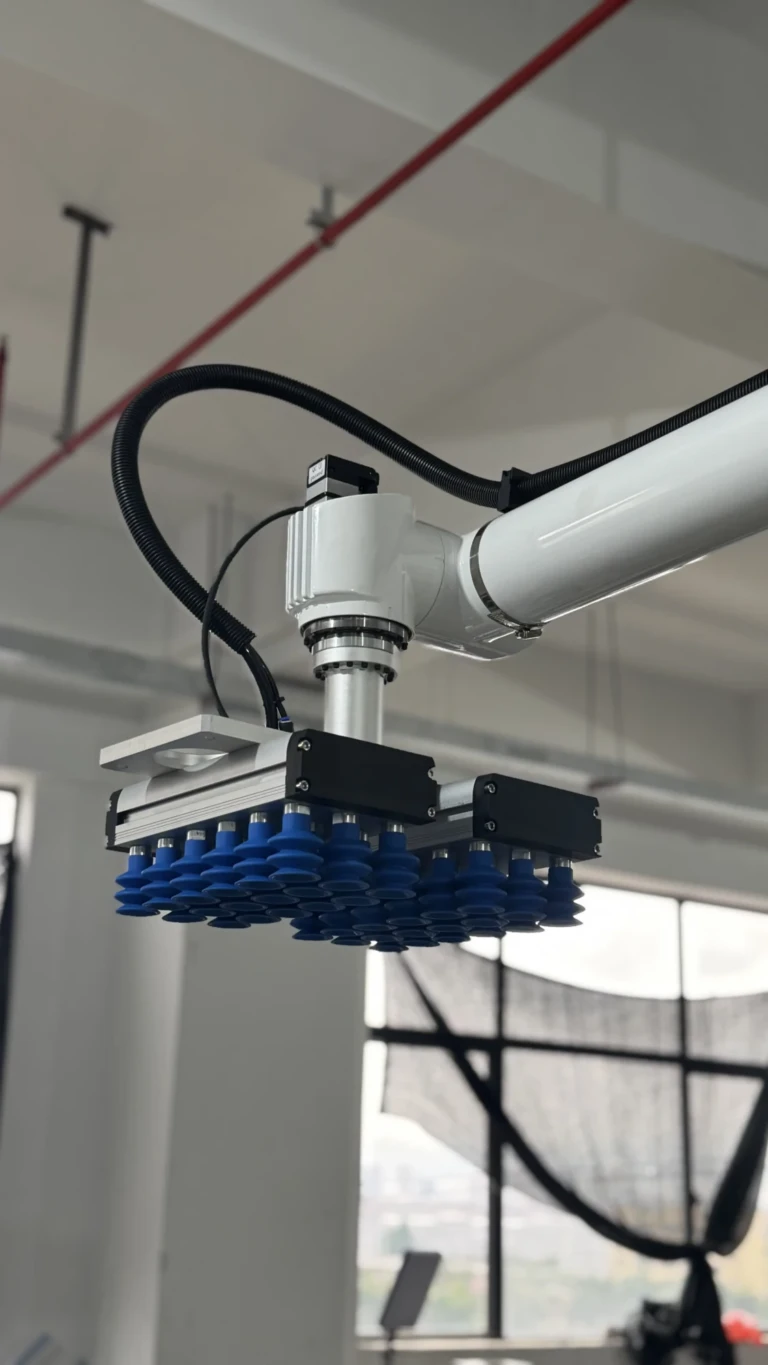
Yes. Advanced grippers with pressure feedback and 3D vision can adjust grip strength and orientation dynamically, even for bags with uneven weight distribution.
Q3: What’s the ROI timeline for these systems?
Most clients break even within 12–18 months via labor savings, reduced product damage, and higher throughput. Energy-efficient designs also lower operational costs.
Q4: Are these robots compatible with existing warehouse management systems (WMS)?
Huaxiu’s robots support API integrations with major WMS like SAP or Oracle, enabling real-time data exchange for inventory tracking and predictive maintenance.
Q5: How do they perform in extreme temperatures?
Options include hardened components for freezer warehouses (-30°C) or dust/waterproof models for outdoor use, certified to IP65 standards.