Understanding the True Cost of Robotic Palletizers: A Comprehensive Breakdown
The shift toward automation in warehousing and logistics is accelerating, with robotic palletizers emerging as a cornerstone of efficient material handling. But for businesses evaluating this investment, the critical question remains: What does a robotic palletizer actually cost? Beyond the sticker price lies a nuanced financial landscape involving upfront investments, operational savings, and long-term strategic advantages. Let’s dissect the cost variables, technological options, and hidden ROI drivers shaping this pivotal decision—with insights tailored to businesses at varying stages of automation maturity.
1. Upfront Costs: Decoding the Price Tags
Robotic palletizer systems vary dramatically in complexity and capability, directly impacting initial expenditure. Three primary tiers dominate the market:
A. Collaborative Palletizing Robots (Entry-Level)
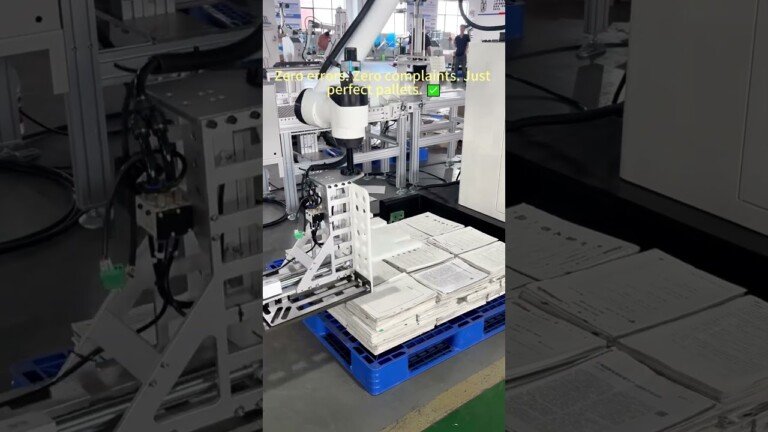
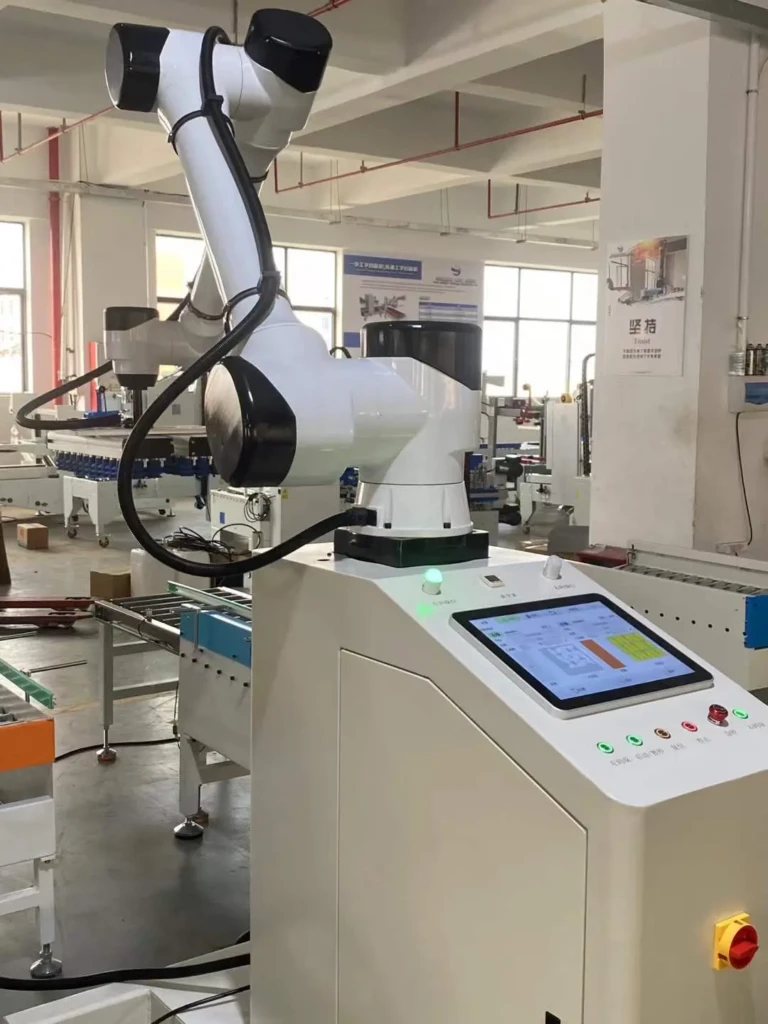
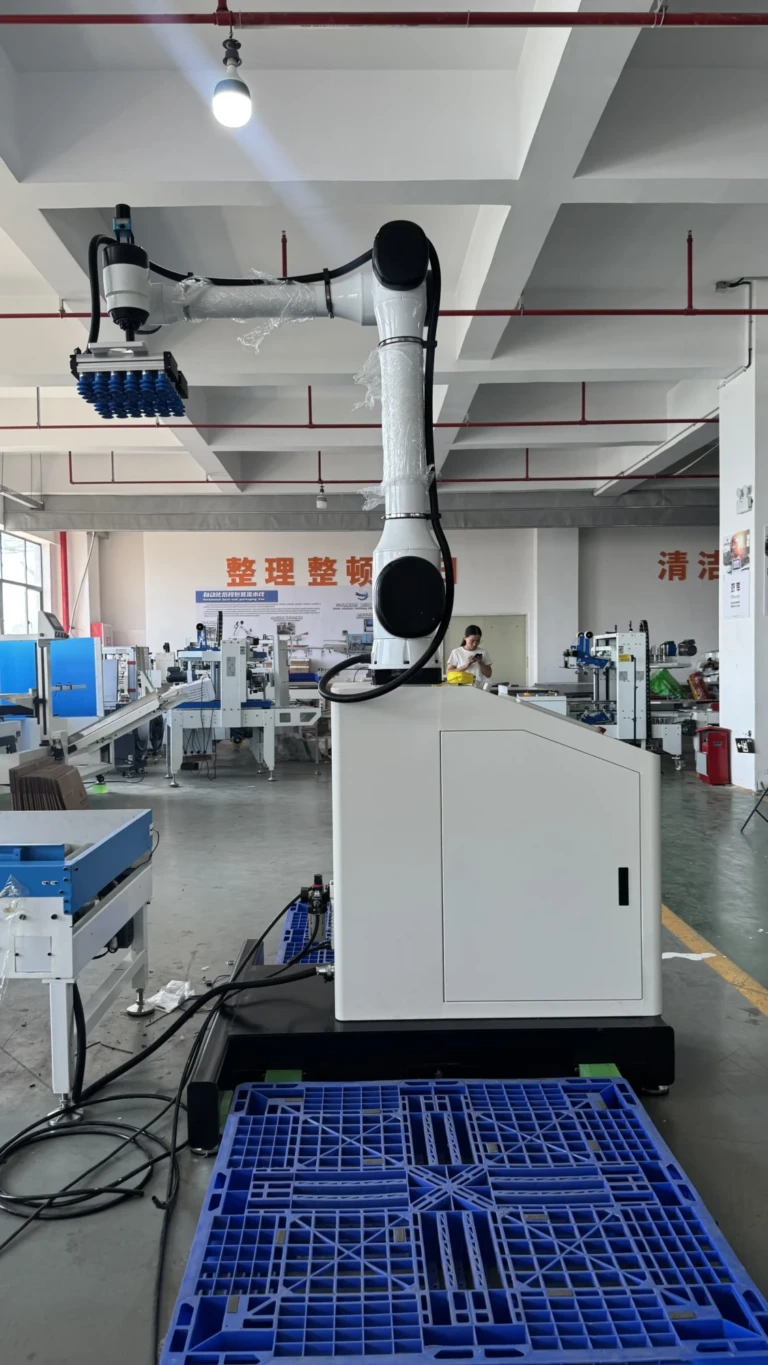
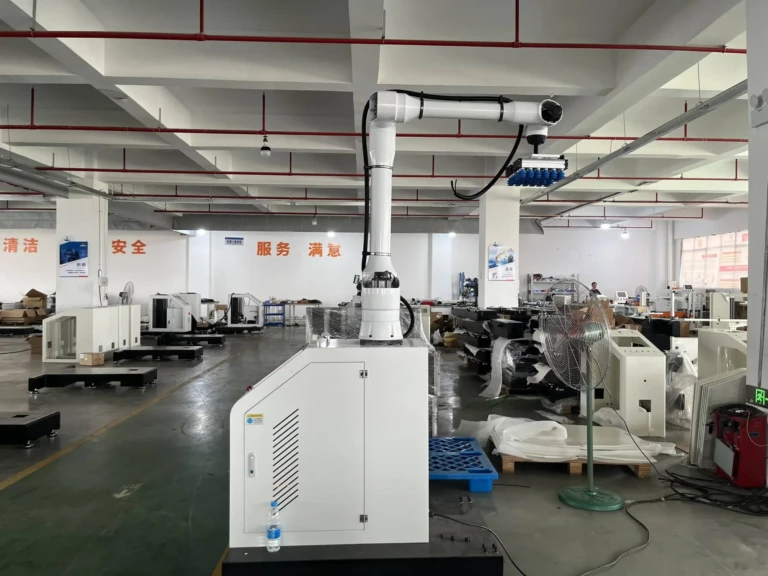
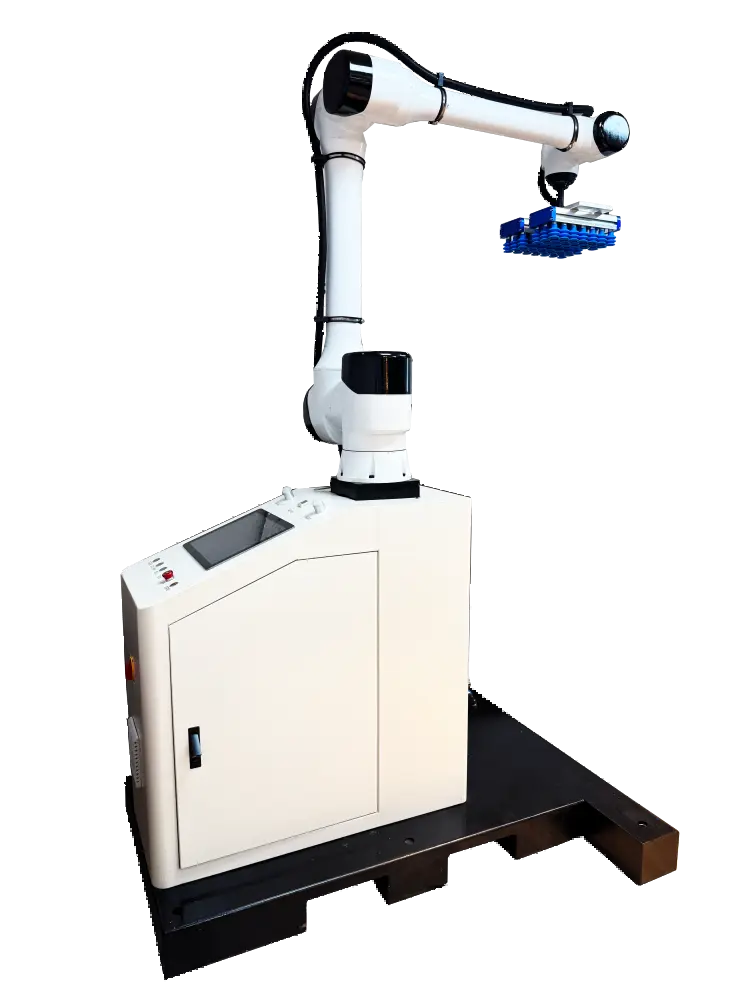
Example: Huaxiu Robot’s collaborative (cobot) palletizers
- Price Range: $50,000–$120,000
- Best For: SMEs, low-volume mixed-SKU facilities, retrofitting manual lines
- Key Features:
- Minimal safety fencing (built-in sensors)
- Plug-and-play integration
- Payloads ≤ 30 kg, speeds ~6–10 cycles/minute
B. Mid-Range Cartesian/Gantry Systems
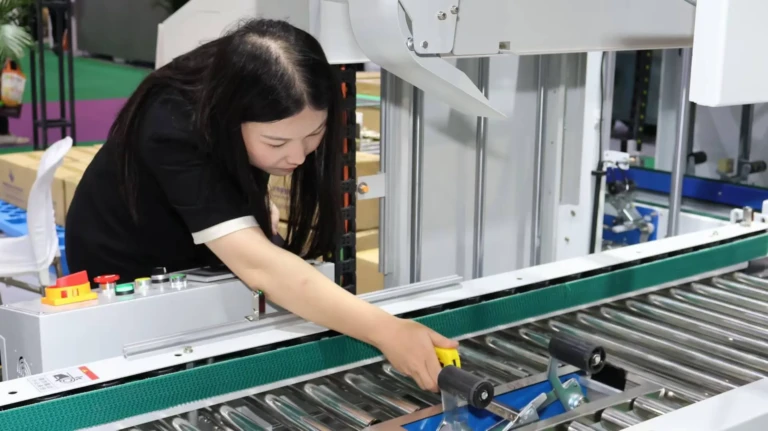
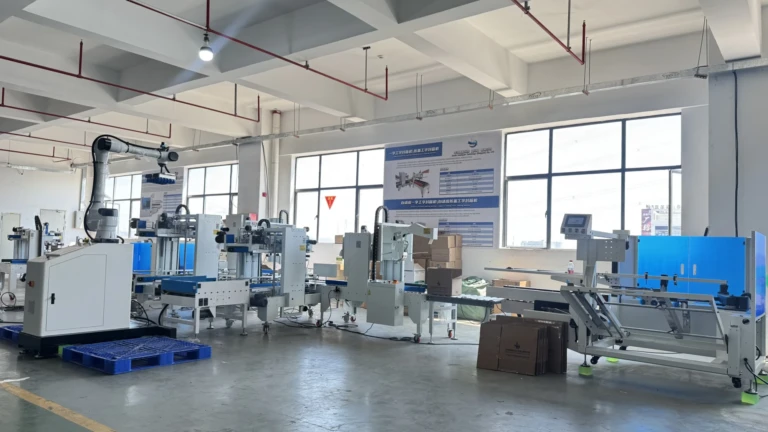
Example: Huaxiu’s semi-automatic sealing/pallet-forming robots
- Price Range: $150,000–$300,000
- Best For: Mid-volume production, standardized carton sizes
- Key Features:
- Higher speed (12–20 cycles/minute)
- Integrated end-of-line tasks (sealing, labeling)
- Customizable grippers for box/tote handling
C. High-Speed Delta or Robotic Arm Palletizers
Example: Huaxiu’s fully automatic stretch film/stretch wrapping robots
- Price Range: $300,000–$600,000+
- Best For: High-volume facilities (e.g., beverages, pharmaceuticals)
- Key Features:
- Speeds exceeding 30 cycles/minute
- Multi-robot synchronization
- Advanced vision-guided depalletizing
Hidden Upfront Costs:
- Integration Fees (10–20% of robot cost): PLC/SCADA connectivity, conveyor retrofits
- Software Licensing: $5,000–$15,000/year for fleet management suites
- Site Prep: Electrical upgrades, flooring reinforcement, safety fencing
2. Operational Costs: The Silent Budget Eaters
While the capital outlay grabs attention, ongoing costs determine long-term viability:
- Energy Consumption: Collaborative bots consume ~0.5–2 kWh vs. 3–8 kWh for industrial arms (saving $1,200–$5,000/year).
- Maintenance Contracts: Annual fees average 10–15% of the robot’s cost—critical for minimizing downtime.
- Tooling Changes: Swap grippers for $3,000–$20,000 if product dimensions shift.
Smart Design Tip: Huaxiu’s modular grippers reduce changeover costs by 40% versus custom builds.
3. ROI Drivers: Where Automation Pays Off
Justifying palletizer costs hinges on quantifying indirect savings:
- Labor Reduction: A single robot replaces 2–3 shifts of manual palletizing, saving $80,000–$150,000/year (including benefits/attrition costs).
- Injury Mitigation: Automated heavy lifting cuts workers’ compensation claims—packaging facilities report 22–35% drops in back/shoulder injuries.
- Space Optimization: Robotic arms achieve 30% denser pallet patterns, freeing 15–25% floor space for storage/production.
- Error Reduction: Vision-guided systems eliminate misaligned pallets (~$500/incident in restacking/reshipping).
Case Study: A Huaxiu client in food manufacturing automated end-of-line sealing and palletizing for $370,000. The system paid for itself in 13 months through:
→ 60% labor reduction ($142,000/year saved)
→ 28% higher throughput (enabling new contracts)
→ Zero product damage claims post-deployment
4. Cost vs. Flexibility: The Huaxiu Advantage
Unlike rigid turnkey systems, Huaxiu’s modular architecture future-proofs investments:
- Scalability: Start with one cobot palletizer, expand to integrated strapping/stretch wrapping later.
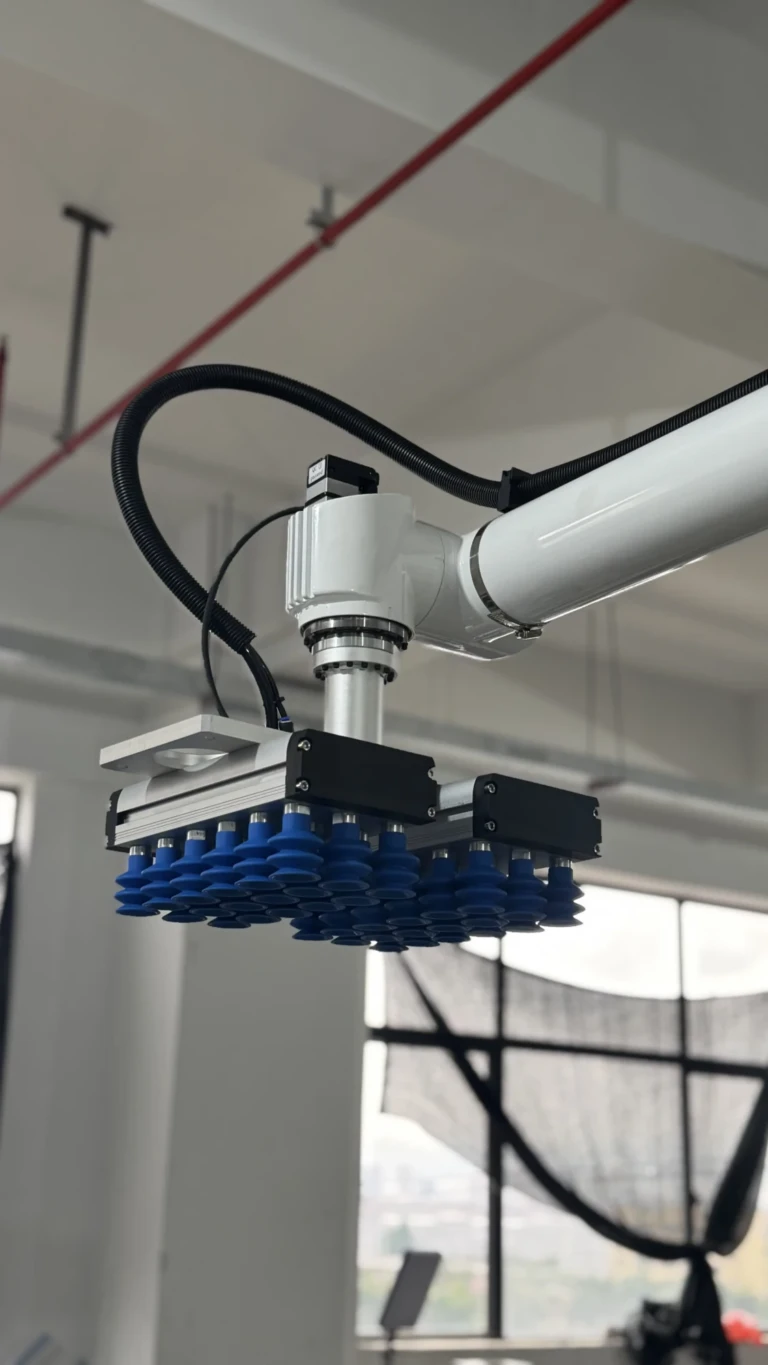
- Adaptive Grippers: AI-driven suction/gripper tooling handles irregular items (bags, bottles, unstable loads).
- Legacy Integration: APIs compatible with SAP, Oracle, and legacy WMS—avoid $20,000+ middleware fees.
Conclusion: Cost Efficiency Meets Strategic Growth
Robotic palletizers transcend mere labor substitution. When analyzed holistically—factoring in productivity surges, risk reduction, and scalability—they transition from a capital expense to a growth accelerator. For SMEs, collaborative robots lower entry barriers without sacrificing agility. For enterprises, high-speed systems unlock capacity to dominate competitive markets.
The true cost of not automating? Stagnant throughput, rising injury liabilities, and erosion from faster-moving competitors.
As logistics embrace Industry 4.0, Huaxiu’s robotic suite offers a pragmatic pathway: balance upfront budgets with backend resilience, transforming palletizing from a cost center into a profit multiplier.
FAQs: Robotic Palletizer Cost Questions Answered
Q1: What’s the typical payback period for a palletizer robot?
A: Most businesses achieve ROI within 14–24 months. High-volume operations (e.g., bottling plants) often see sub-12-month returns due to labor and speed gains.
Q2: Do I need to hire robotics engineers to operate the system?
A: No. Modern cobots feature intuitive interfaces—Huaxiu’s systems embed voice-guided programming requiring minimal training.
Q3: How much does maintenance cost annually?
A: Expect 8–12% of the initial robot cost/year for parts/service contracts. Collaborative robots average lower maintenance fees than industrial arms.
Q4: Can robotic palletizers handle fragile or irregular items?
A: Yes. Advanced force-sensing grippers (e.g., Huaxiu’s vacuum/Magnetic-based tools) adaptively control pressure, preventing damage to delicate goods like glass or produce.
Q5: What’s the lifespan of a robotic palletizer?
A: With proper maintenance, 8–12 years for the robot body. Components like grippers or conveyors may need replacement sooner (4–7 years).
Q6: Are there financing options available?
A: Many suppliers (including Huaxiu) offer leasing models at $1,500–$6,000/month—preserving cash flow while automating.
Q7: How do energy costs compare to manual palletizing?
A: Robots consume 50–80% less energy than equivalent manual workflows (e.g., forklift transport, manual stacking), especially regenerative-drive models.
Strategic automation isn’t about cheap solutions—it’s about investing upfront to eliminate recurring costs 3X larger over a decade. In palletizing, robotics isn’t the future; it’s the present’s most reliable path to resilience.