Introduction: Why Palletizing Robot Costs Matter More Than You Think
When manufacturers consider automating their palletizing processes, the first question is invariably: “How much will this cost?” For decades, Fanuc robots have been synonymous with industrial automation, celebrated for their precision, durability, and reliability. But with price tags ranging from $50,000 to $250,000+ per unit, understanding the true cost of a Fanuc palletizing robot—and whether it’s the right fit for your operation—requires a deep dive beyond the initial sticker price.
In this guide, we’ll demystify Fanuc palletizing robot costs, explore hidden expenses, compare alternatives (including cost-effective solutions from brands like Huaxiu Robot), and equip you with the insights to make an ROI-driven decision.
Breaking Down Fanuc Palletizing Robot Costs
Fanuc’s palletizing robots span multiple series—such as the M-410iC and M-2000 series—each designed for specific payloads, speeds, and layouts. Here’s what influences their pricing:
-
Robot Arm Specifications
- Payload Capacity: Light-duty robots (e.g., 20–150 kg payloads) start at ~$50,000–$90,000. Heavy-duty models (handling 700–2,500 kg) can exceed $200,000.
- Reach and Speed: Longer reach (e.g., 3,100 mm vs. 4,200 mm) and higher speed (cycles/hour) add 15–30% to the base price.
-
Controller & Software
Fanuc’s proprietary controllers (R-30iB Plus) and palletizing-specific software (e.g., PalletPRO) add $15,000–$25,000. Advanced vision integration or AI-driven path optimization can push this higher. -
End-of-Arm Tooling (EOAT)
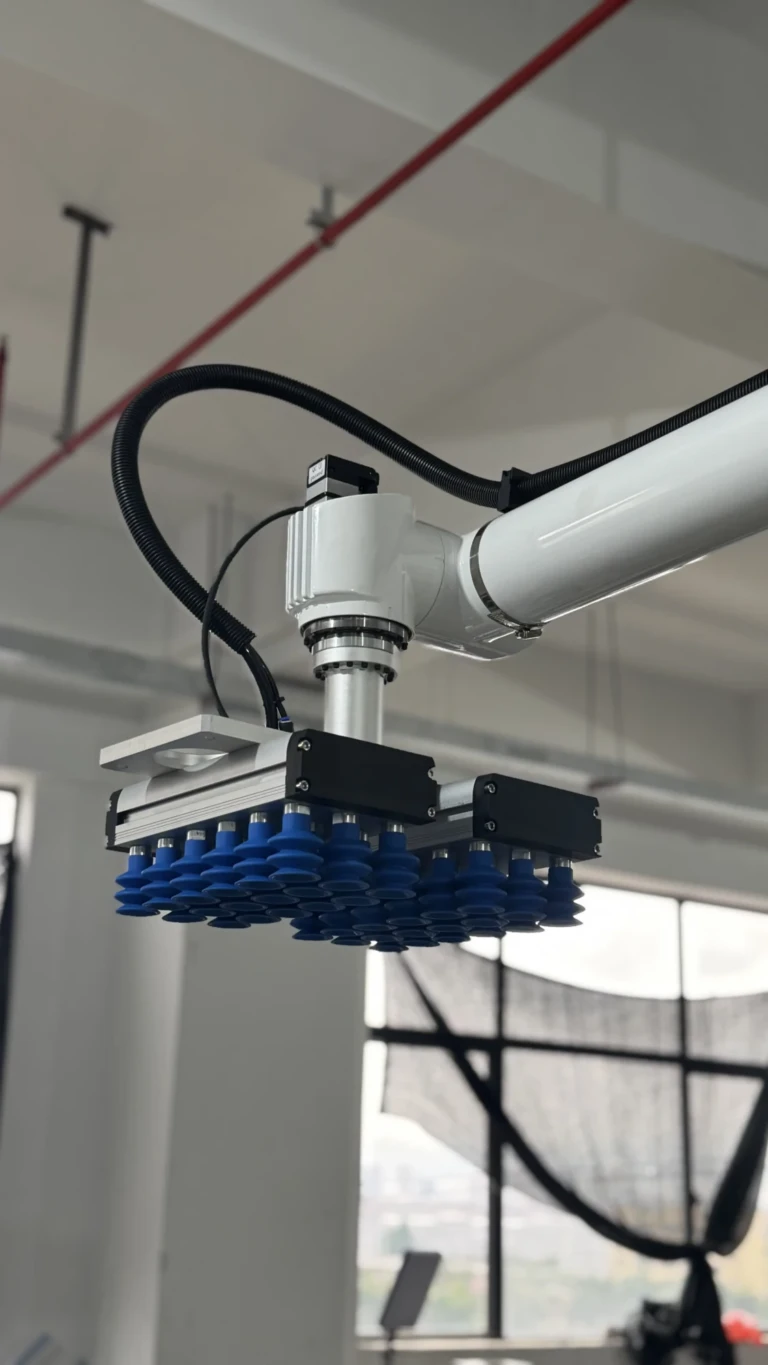
Grippers, vacuum lifters, or custom EOAT solutions range from $5,000 to $40,000. High-speed suction systems for fragile items (like glass bottles) sit at the premium end. -
Integration & Installation
- Electrical/Mechanical Integration: $20,000–$50,000+.
- Safety Systems: Light curtains, fencing, and interlocks add $10,000–$30,000.
- Conveyors or Infeed/Outfeed Systems: $15,000–$80,000 (depending on complexity).
- Long-Term Costs
- Maintenance: Annual servicing (5–10% of the robot’s cost).
- Training: Fanuc-certified operator courses cost $2,000–$4,000 per person.
- Downtime: Unplanned outages can cost $500–$2,000+/hour in lost production.
Case Study: Fanuc vs. Budget-Friendly Alternatives
Consider a mid-sized beverage manufacturer needing to palletize 1,200 cases/hour. A Fanuc M-410iC/300H (300 kg payload, 1,600 mm reach) might cost:
- Robot + Controller: $125,000
- EOAT (Vacuum Lifter): $22,000
- Safety + Integration: $65,000
Total Upfront Cost: ~$212,000
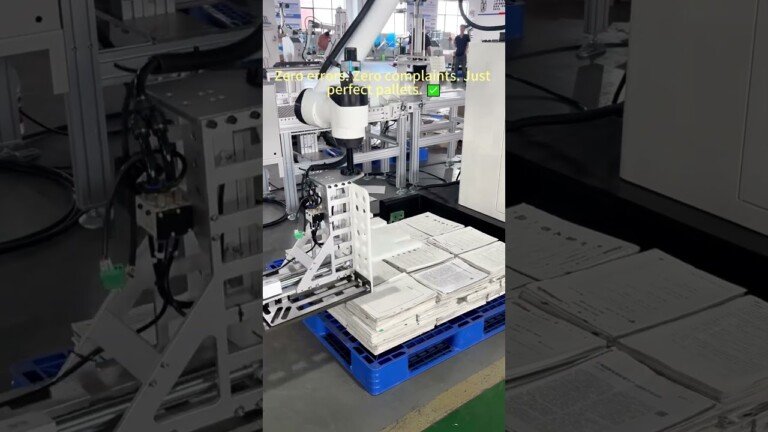
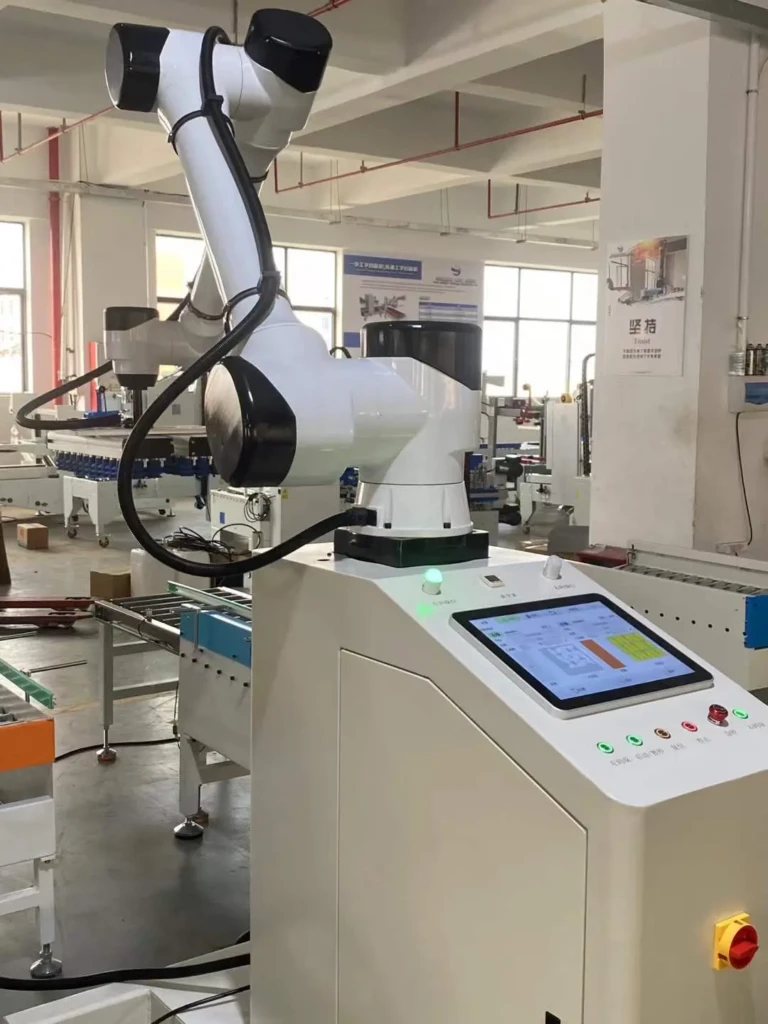
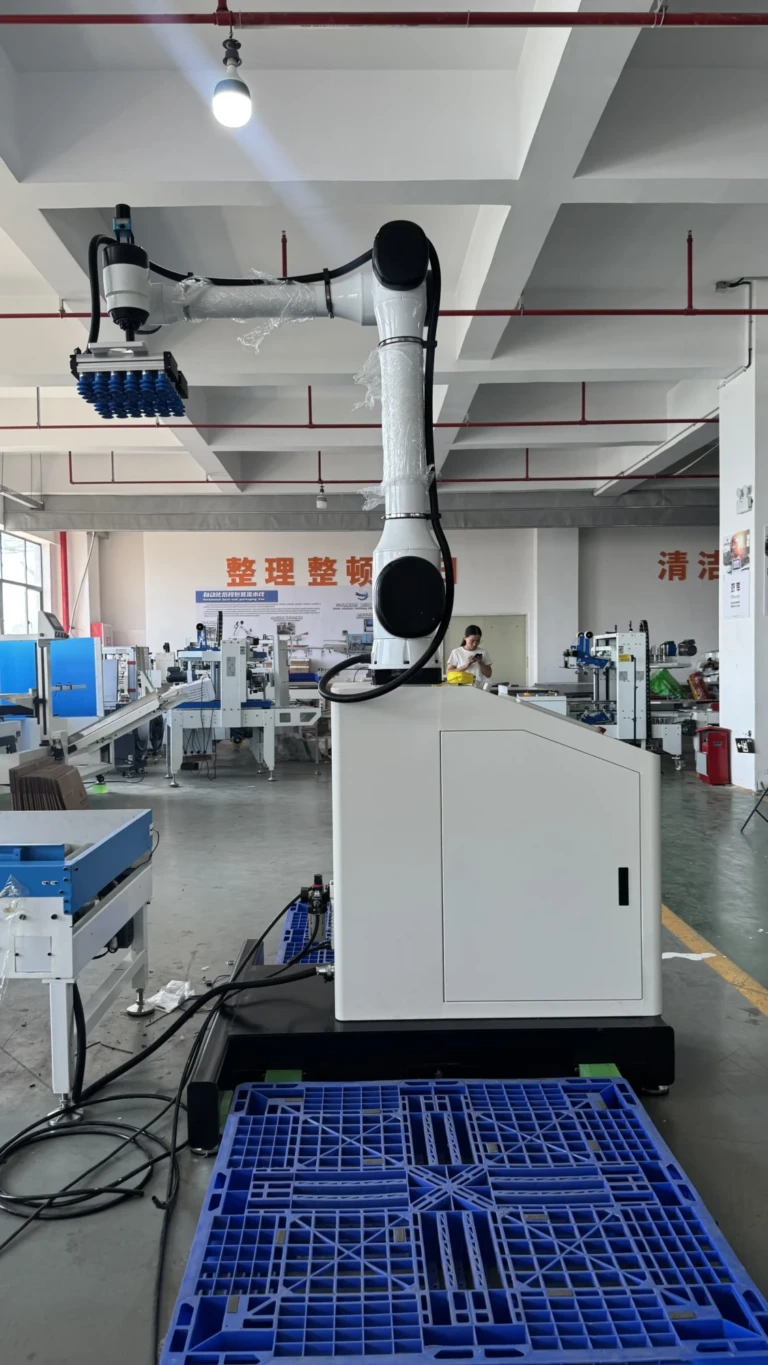
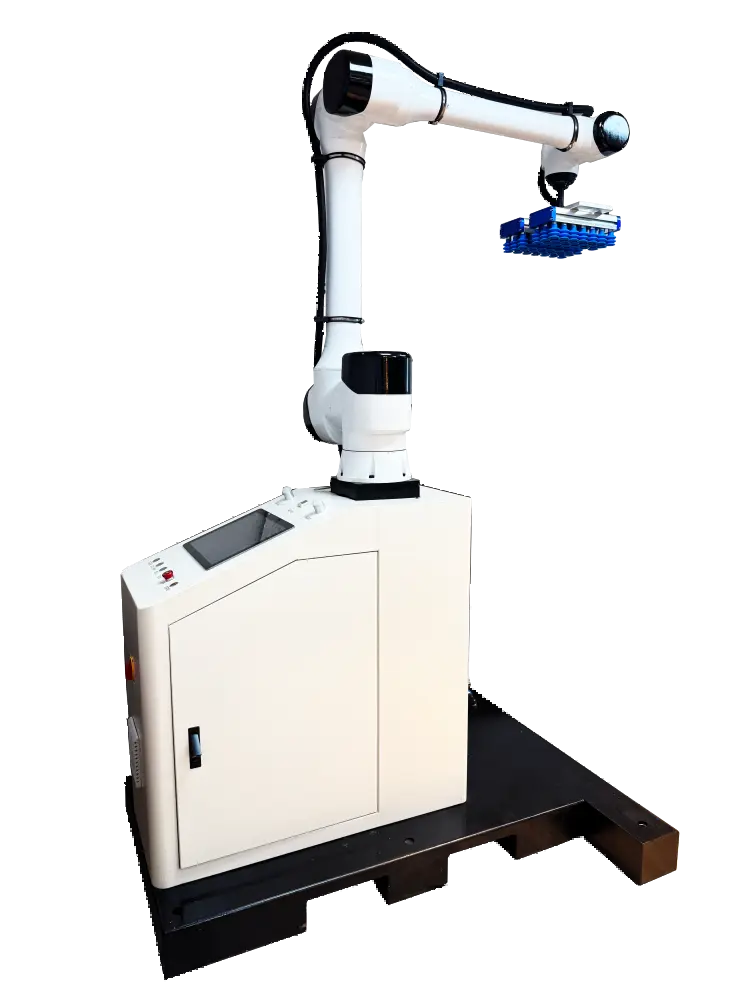
By contrast, a Huaxiu Robot HX-P800 Collaborative Palletizer (max payload 800 kg, 2,200 mm reach) offers:
- All-in-one cell with built-in safety sensors: $85,000–$110,000
- Lower integration costs (plug-and-play design): $15,000–$20,000
Total Upfront Cost: $95,000–$130,000
Key Insight: While Fanuc excels in high-speed, heavy-duty applications, brands like Huaxiu have closed the gap in performance for many use cases—at 40-60% lower costs.
When Fanuc Justifies the Investment
Fanuc’s premium pricing delivers ROI for operations requiring:
- Extreme Durability: 100,000+ hour lifespans in 24/7 environments.
- High-Speed Precision: <0.5mm repeatability for medical/pharma applications.
- Scalability: Seamless integration with Fanuc’s ecosystem (CNCs, PLCs, IoT).
For example, automotive plants producing 10,000+ pallets daily benefit from Fanuc’s speed and minimal downtime. However, SMEs in food processing or e-commerce might find equivalent ROI with alternative brands.
Beyond Fanuc: Huaxiu’s Palletizing Innovations
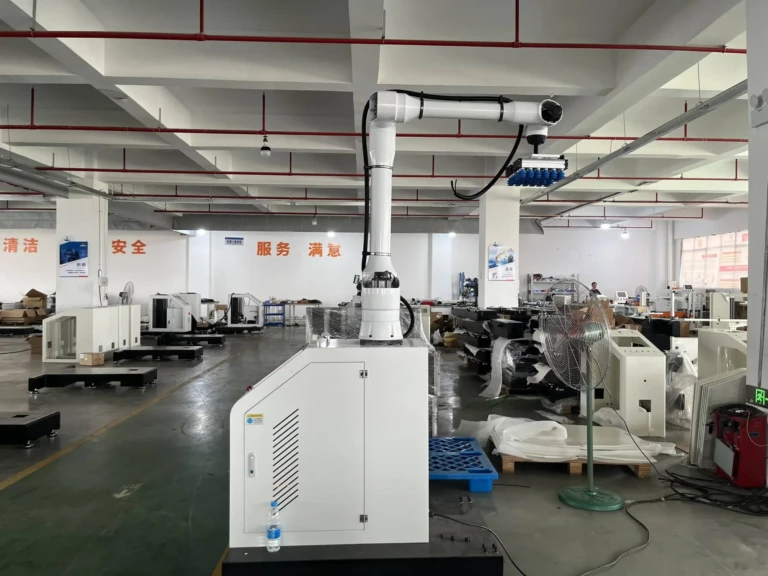
Huaxiu Robot (a rising force in Asian and global markets) offers a suite of flexible, modular solutions:
- Collaborative Palletizers: Safe interaction with human workers without fencing (HX-Cobot Series).
- Compact Automated Cells: Integrated stretch wrapping/strapping (saving $25K+ in downstream equipment).
- Retrofit Kits: Adapt legacy systems for partial automation at ~30% of Fanuc’s integration cost.
For businesses prioritizing total cost of ownership over brand legacy, Huaxiu presents a compelling alternative—especially for mixed-SKU palletizing or space-constrained facilities.
Conclusion: Balancing Cost, Performance, and Future-Proofing
Fanuc palletizing robots remain a gold standard for large-scale, heavy-industry applications where speed and reliability outweigh upfront costs. However, the automation market has evolved. Brands like Huaxiu Robot now offer comparable (or superior) value in flexibility, ease of use, and TCO for small-to-mid-range operations.
Before investing, ask:
- What’s your actual payload/cycle requirement?
- Does the robot need to adapt to future SKUs or layouts?
- What’s your ROI horizon? (Huaxiu systems often pay back in <18 months vs. Fanuc’s 2–3 years.)
Automation isn’t one-size-fits-all—and neither are costs.
FAQs: Fanuc Palletizing Robot Costs Demystified
Q1: Why are Fanuc robots more expensive than competitors?
Fanuc invests heavily in R&D, global service networks, and ultra-robust components rated for 10+ years in harsh conditions. You’re paying for reputation and longevity.
Q2: Can I reduce integration costs for a Fanuc robot?
Yes. Pre-integrated cells (e.g., Fanuc’s PalleBot) simplify deployment, while third-party integrators may undercut Fanuc’s rates by 20–30%.
Q3: What’s the cheapest Fanuc palletizing robot?
The compact M-10iD/12 (12 kg payload) starts at ~$50,000, excluding EOAT and integration.
Q4: How do Huaxiu’s robots compare to Fanuc in performance?
Huaxiu matches Fanuc in payload and reach for many models (e.g., HX-P800 vs. M-410iC) but may lack Fanuc’s top-tier waterproofing or <0.1mm precision.
Q5: Are used Fanuc robots a smart cost-saving option?
Potentially—if refurbished by authorized dealers. However, warranty coverage and software updates may be limited.
Q6: Do Chinese brands like Huaxiu compromise on safety?
No. Huaxiu’s collaborative robots (CR-series) meet ISO 10218 and ISO/TS 15066 standards, featuring built-in force limiting and emergency braking.
Q7: What hidden costs do buyers overlook?
- Software Licensing: Annual fees for Fanuc’s IoT platforms.
- Energy Consumption: Heavy-duty robots consume 15–30% more power.
- Spare Parts: Fanuc components often cost 2–3x more than generics.
Q8: When is Fanuc truly irreplaceable?
For FDA-regulated sectors (e.g., pharmaceuticals) or automotive Tier-1 suppliers requiring documented, aerospace-grade precision.
Final Thought: The “best” palletizing robot isn’t about brand prestige—it’s about matching technical capabilities and TCO to your workflow. Whether investing in Fanuc, Huaxiu, or another OEM, prioritize total lifecycle value over upfront savings alone.