
The Future of Warehouse Efficiency: A Step-by-Step Guide to Implementing Robotic Palletizing Systems
In today’s fast-paced manufacturing and logistics sectors, optimizing warehouse operations isn’t just a luxury—it’s a necessity. Robotic palletizing systems have emerged as game-changers, offering unmatched speed, precision, and scalability. Whether you’re handling delicate consumer goods, bulk industrial materials, or e-commerce orders, automating palletizing workflows can slash labor costs, reduce injury risks, and accelerate throughput.
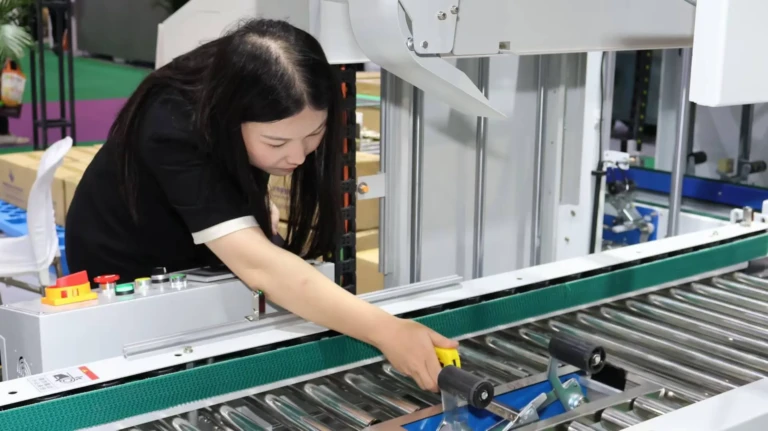
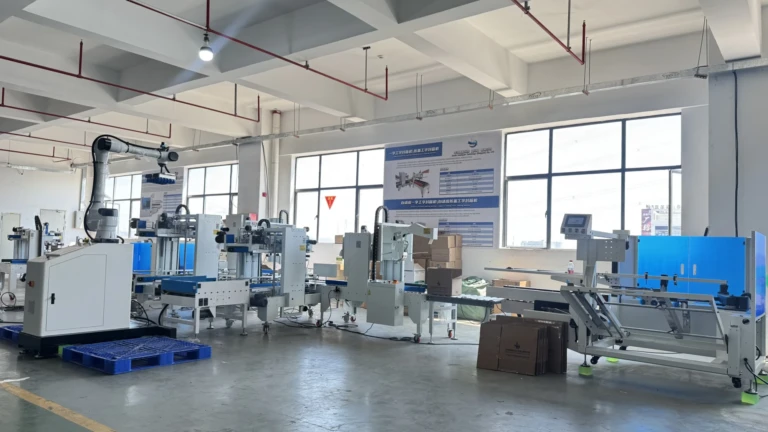
But how do you transition from manual or semi-automated processes to a fully robotic system? Below, we break down the implementation process, drawing on industry best practices and cutting-edge solutions like those offered by Huaxiu Robot—a leader in palletizing, packaging, and end-of-line automation.
1. Assessing Your Needs & Planning
Before investing in hardware, conduct a thorough analysis of:
- Product Variability: Do you handle uniform box sizes or irregular-shaped items?
- Throughput Requirements: What’s your current palletizing rate (e.g., units/hour)? What’s your target?
- Footprint Constraints: How much floor space is available?
- Integration Challenges: Will the robot need to interface with existing conveyors, wrappers, or ERP systems?
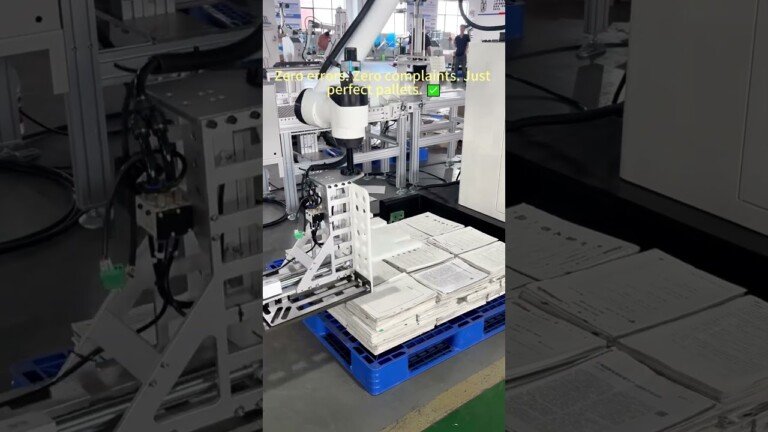
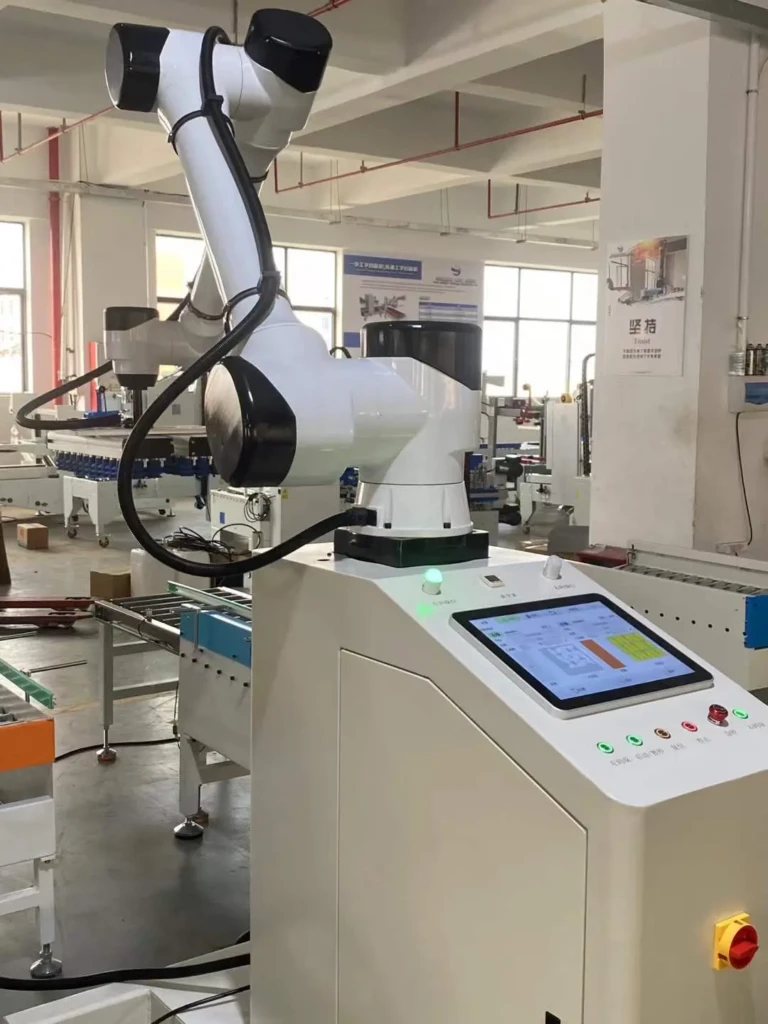
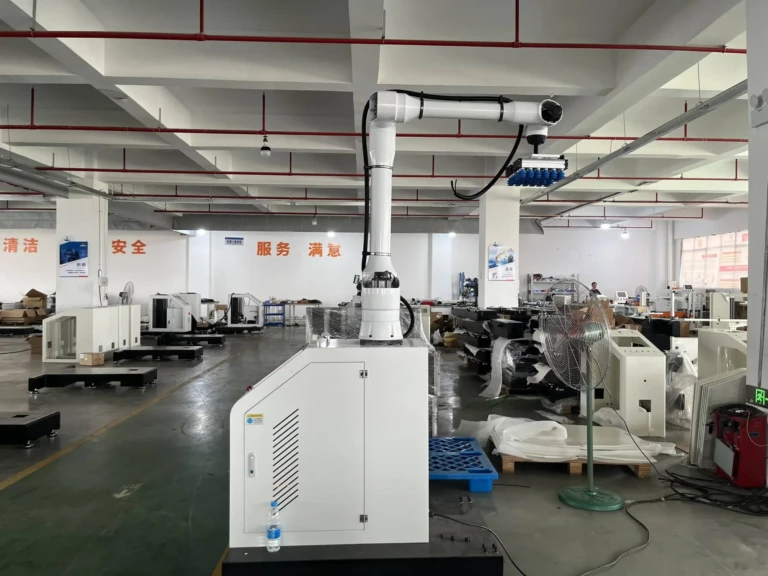
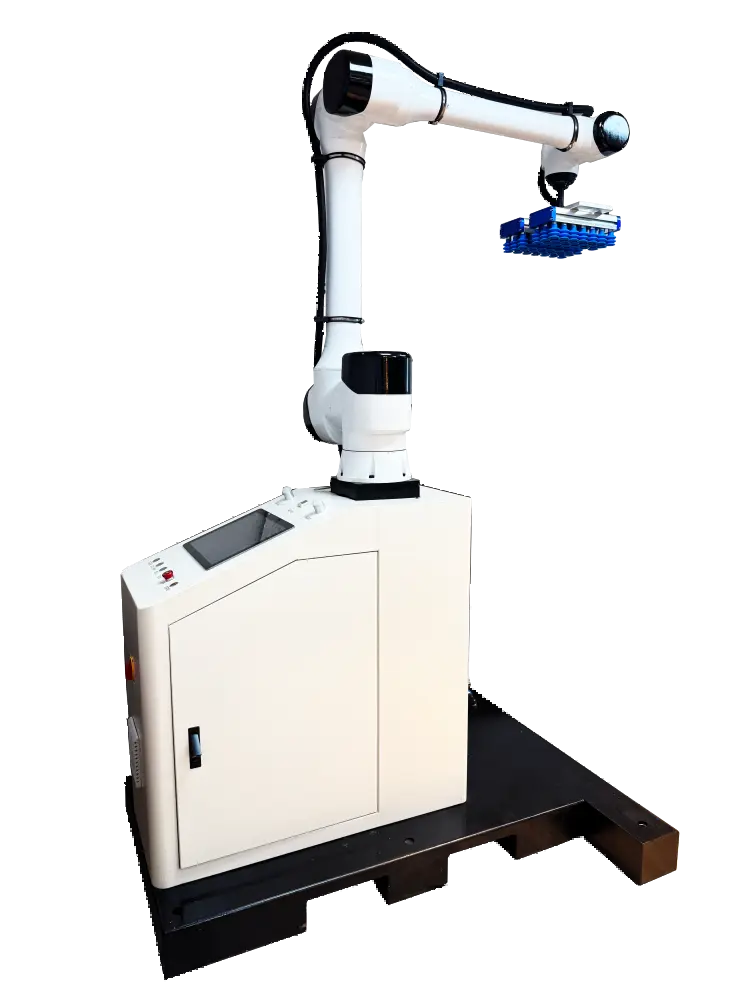
Key Takeaway: Use this data to define your automation goals. For example, Huaxiu’s collaborative palletizing robots excel in flexible, space-constrained environments, while high-speed fully automatic stretch film packaging robots suit high-volume facilities.
2. Choosing the Right Robotic System
Not all palletizing systems are created equal. Options include:
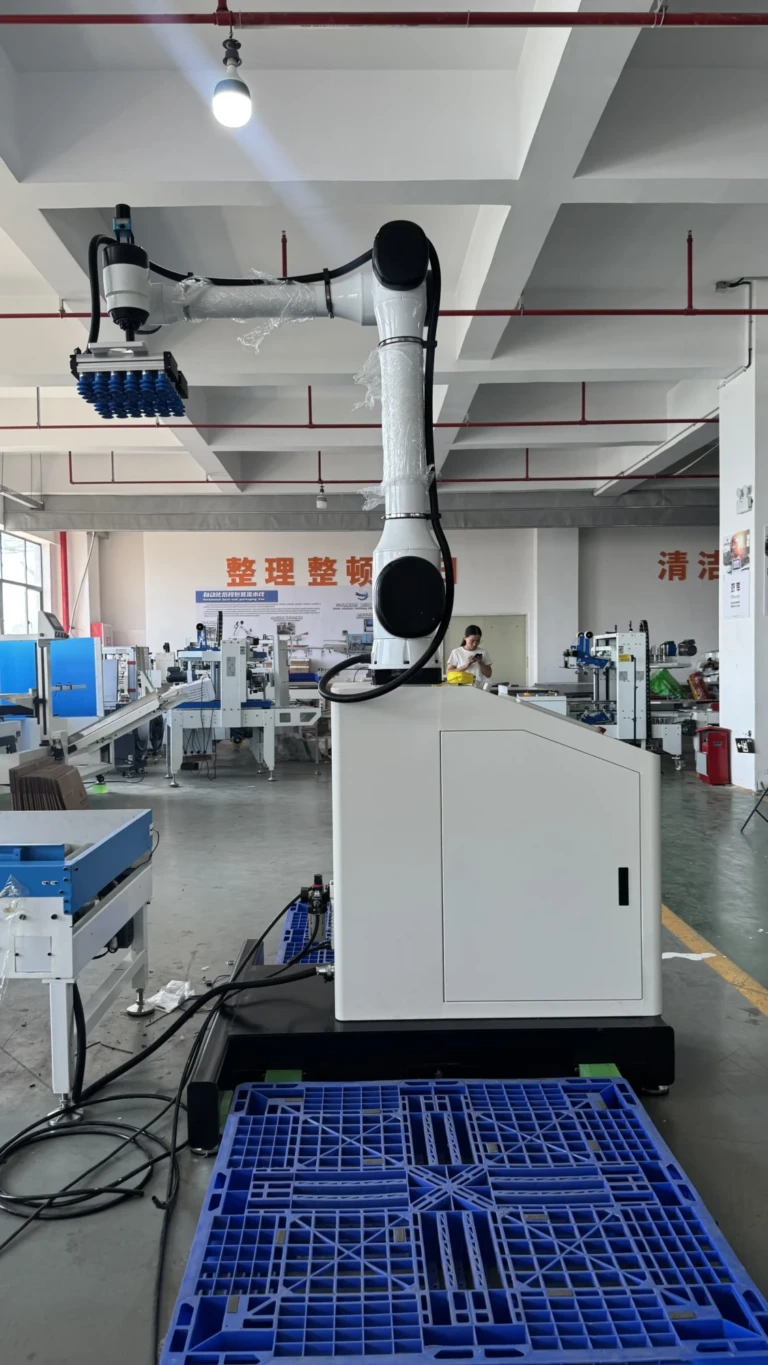
- Collaborative Robots (Cobots): Safe to work alongside humans, ideal for mixed-SKU environments.
- High-Payload Cartesian/Gantry Robots: Best for heavy loads (e.g., bags of cement).
- Delta Robots: Ultra-fast for lightweight items like beverage cans.
- Integrated Solutions: Combining palletizing with upstream/downstream processes (e.g., Huaxiu’s automatic unpacking robots + strapping robots).
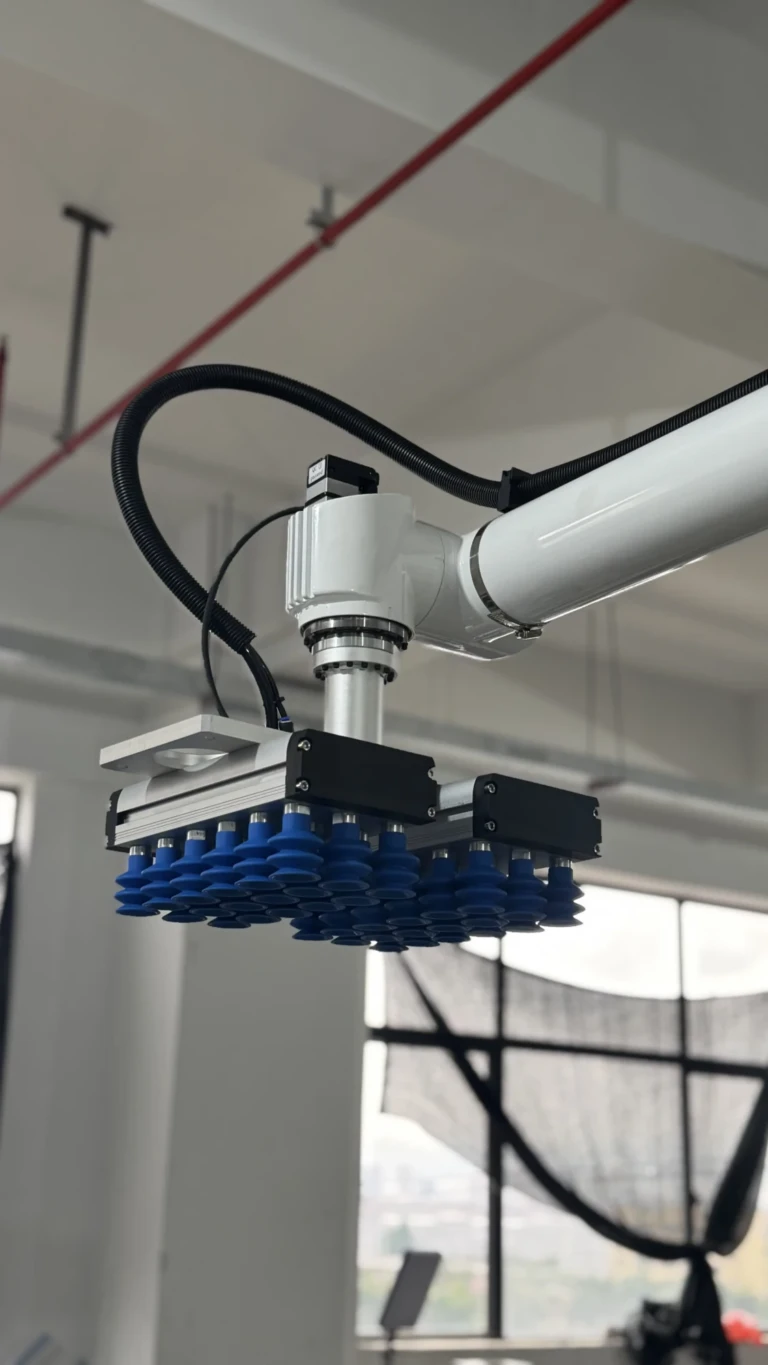
Pro Tip: Look for systems with adaptive grippers (vacuum, claw, or hybrid) to handle diverse packaging without downtime for tool changes.
3. Integration & Installation
A seamless rollout hinges on three pillars:
- Mechanical Integration: Aligning conveyors, sensors, and the robot’s reach envelope. Modular systems like Huaxiu’s semi-automatic sealing robots simplify retrofitting.
- Software Synchronization: Ensuring the robot communicates with WMS/MES via APIs or IoT platforms.
- Safety Compliance: Installing light curtains, emergency stops, and (if needed) protective fencing.
Common Pitfall: Underestimating utility requirements. Robotic arms may need compressed air, 480V power, or reinforced flooring.
4. Programming & Training
Modern palletizing robots use intuitive teach pendants or drag-and-drop software, but customization is key:
- Pattern Libraries: Pre-configured pallet patterns for common load types.
- Vision Systems: 2D/3D cameras for identifying box orientation or mixed palletizing.
- Operator Training: Focus on troubleshooting, error recovery, and basic reprogramming.
Case Study: A beverage manufacturer using Huaxiu’s shrink packaging robots reduced reprogramming time by 70% thanks to user-friendly AI vision interfaces.
5. Testing & Optimization
Run rigorous simulations before full deployment:
- Cycle Time Analysis: Ensure the robot meets throughput targets without bottlenecks.
- Stress Testing: Evaluate performance under peak loads (e.g., holiday surges).
- Quality Checks: Confirm layer alignment and load stability.
Optimization Hack: Use data analytics from the robot’s PLC to fine-tuning acceleration/deceleration settings, reducing wear and tear.
6. Maintenance & Scalability
Robotic systems thrive on proactive care:
- Daily/Weekly Checks: Inspect grippers, lubricate joints, clean sensors.
- Predictive Maintenance: Leverage IoT sensors to forecast motor or gearbox failures.
- Future-Proofing: Choose modular systems (like Huaxiu’s pallet forming robots) that allow adding wrappers or conveyors as needs evolve.
Conclusion
Implementing robotic palletizing isn’t just about buying hardware—it’s a strategic transformation. By aligning technology with operational goals, businesses can achieve 30–50% faster cycle times, near-zero product damage, and ROI periods as short as 12–18 months. Brands like Huaxiu Robot are pushing boundaries with innovations such as collaborative robots that adapt in real-time and end-to-end packaging lines that automate from unpacking to stretch-wrapping.
Ready to eliminate palletizing bottlenecks? Start by auditing your workflow, then partner with experts who understand your industry’s unique demands.
FAQs About Robotic Palletizing Systems
Q1: How much does a robotic palletizing system cost?
Prices range from $50,000 for basic cobot setups to $500,000+ for high-speed, integrated cells. Huaxiu’s semi-automatic sealing robots offer budget-friendly entry points.
Q2: Can these systems handle fragile or irregular items?
Yes! Advanced grippers and vision-guided robots can palletize everything from egg cartons to tires.
Q3: What’s the typical ROI timeline?
Most facilities recover costs in 1–3 years via labor savings, reduced waste, and higher output.
Q4: Are robotic palletizers safe to use near workers?
Collaborative robots (ISO 10218 compliant) feature force-limiting joints and sensors for safe co-working.
Q5: How do I integrate a robot with my existing packaging line?
Look for vendors offering strapping robots or stretch film wrappers with plug-and-play connectivity to industry-standard PLCs.
Q6: Do I need a large facility to deploy palletizing robots?
No—compact cobots like Huaxiu’s models operate in spaces as small as 1.5m x 1.5m.
By embracing robotic palletizing, you’re not just automating a task—you’re building a smarter, safer, and more competitive supply chain.