The Future of Warehousing is Modular: How Robotic Palletizing Systems Revolutionize Efficiency
In today’s hyper-competitive logistics landscape, manufacturers and distributors face relentless pressure to move goods faster, safer, and cheaper. Traditional manual palletizing – physically stacking boxes onto pallets – is no longer sustainable. It’s labor-intensive, inconsistent, and limits scalability. Enter modular palletizing systems, where robotics, adaptability, and intelligent design converge to create unprecedented operational efficiency. Let’s explore how this technology isn’t just changing the game—it’s rewriting the rulebook.
The Problem with Traditional Palletizing
Manual palletizing relies on human labor for repetitive, physically demanding tasks. Workers face fatigue, leading to inconsistent stacking patterns, product damage, and workplace injuries. Fixed automation systems, while faster, lack flexibility. Reconfiguring them for new product SKUs or pallet patterns often requires costly downtime and engineering support. In an era where e-commerce demands rapid SKU changes and mixed-load pallets, rigidity is a liability.
Modular Palletizing: The Robotic Solution
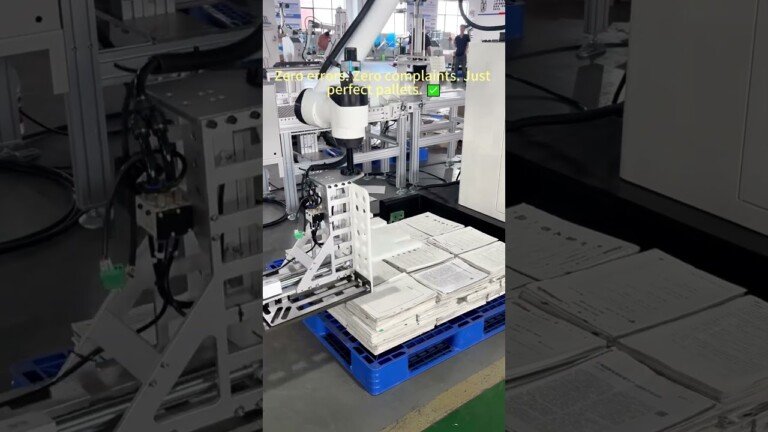
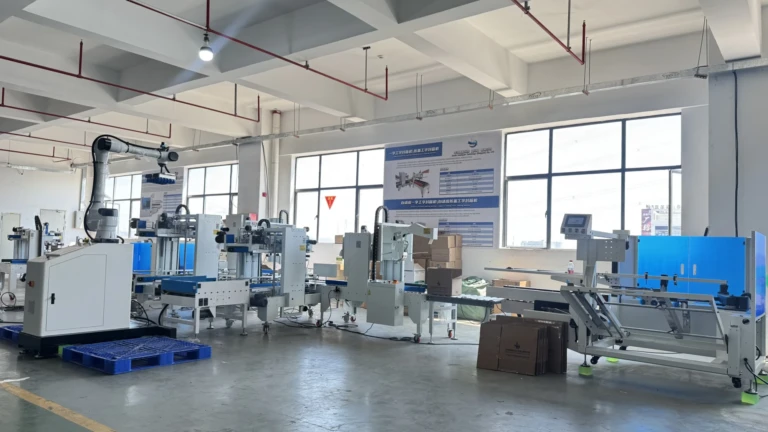
Modular palletizing leverages smart robotic systems designed with interchangeable components and software-driven adaptability. Think of it as "Lego blocks for automation," where each module—whether a collaborative robot arm, an automatic stretch wrapper, or a vision-guided depalletizer—integrates seamlessly into a unified workflow.
Companies like Huaxiu Robot epitomize this approach, offering a comprehensive ecosystem:
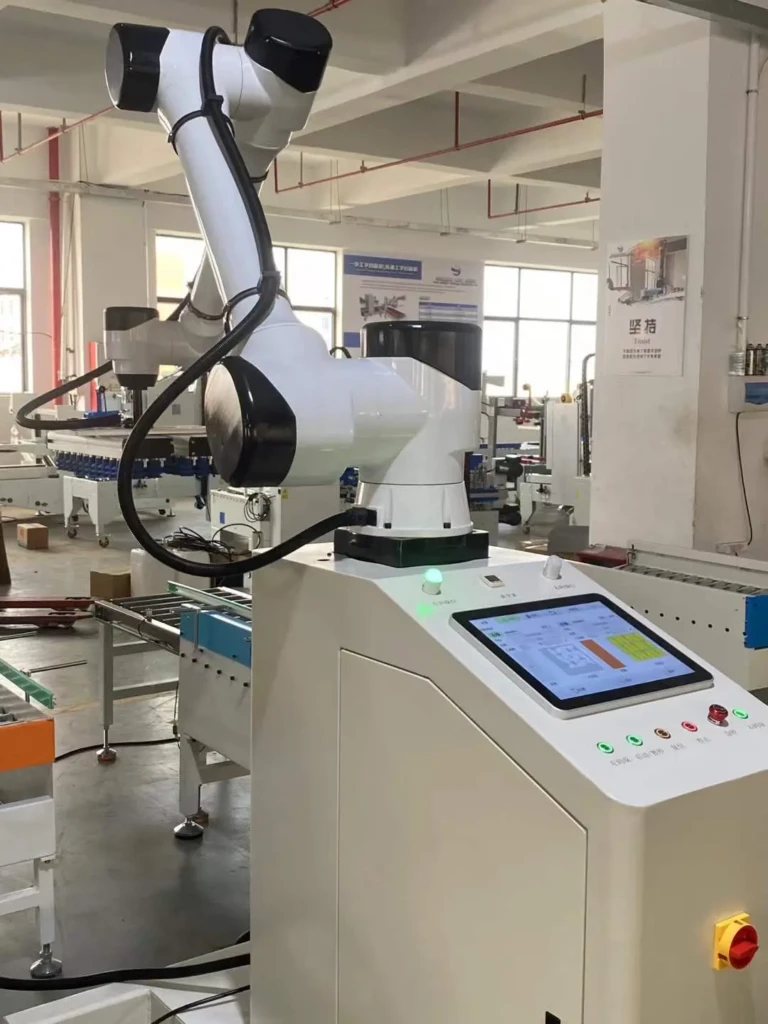
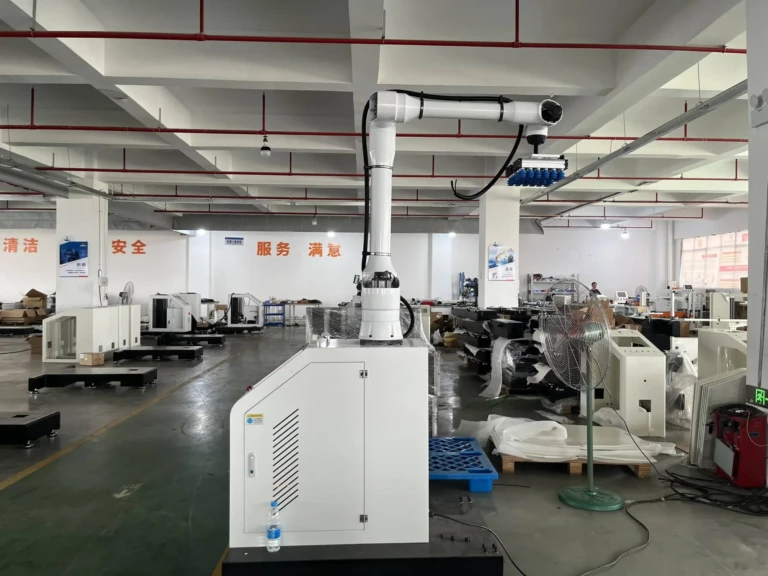
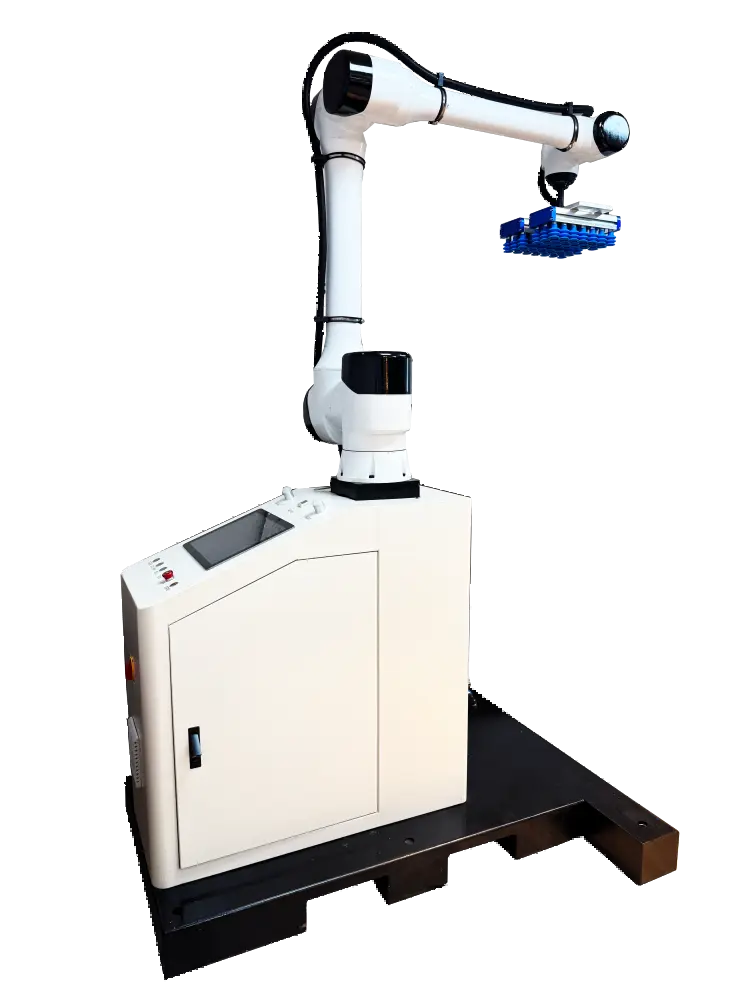
- Collaborative Palletizing Robots (Cobots): Safe to operate alongside humans, adapting to varying payloads and box sizes without safety cages.
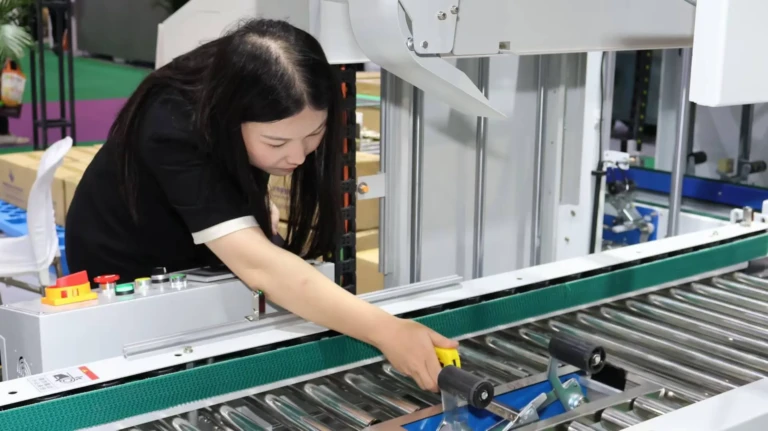
- Integrated End-of-Line Solutions: From automatic unpacking/sealing robots to strapping machines and shrink-wrap systems, all controlled via centralized software.
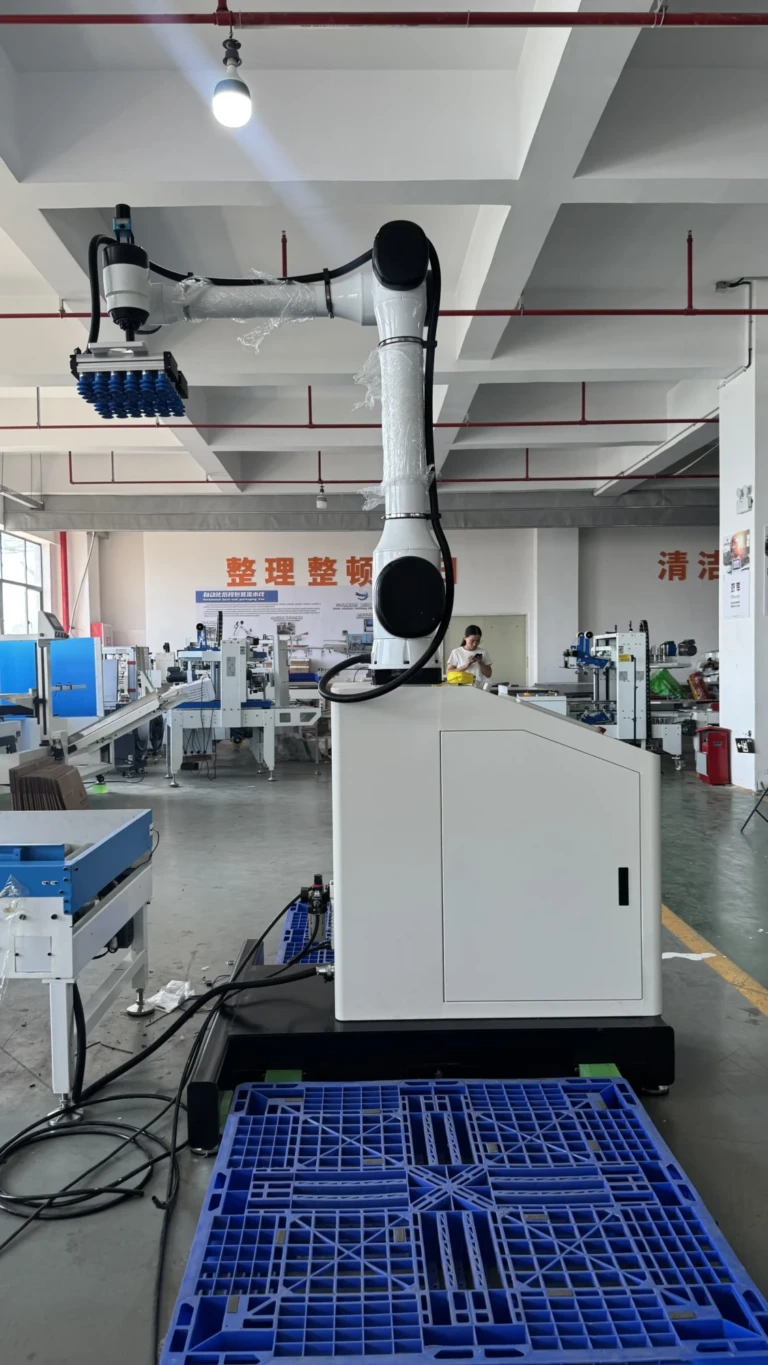
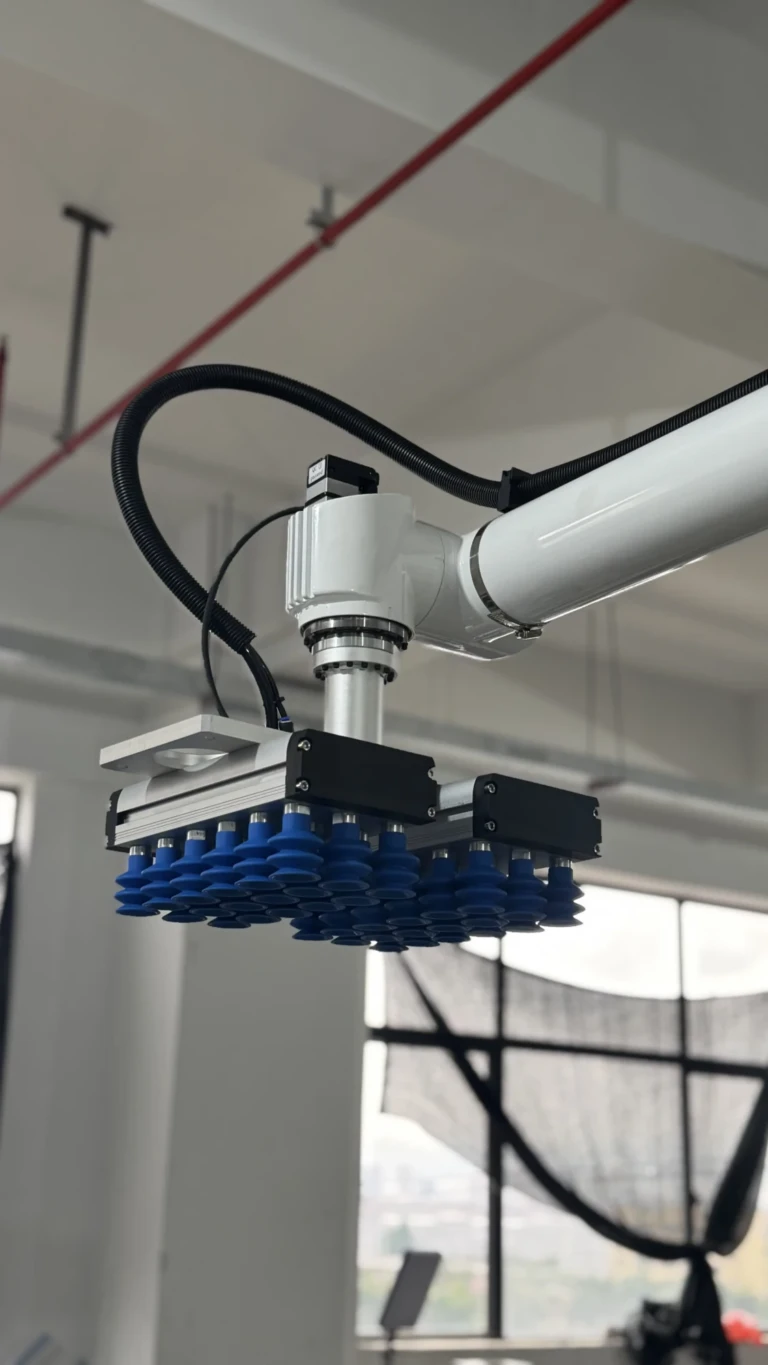
- Adaptive Grippers & Vision Systems: Cameras and AI identify product dimensions, weights, and optimal grip points for damage-free handling.
This modularity allows facilities to:
- Scale Incrementally: Start with one robot for low-volume lines and expand as demand grows.
- Reconfigure Rapidly: Switch from stacking beverage cans to fragile electronics in minutes via software presets.
- Integrate with Legacy Systems: Connect with existing conveyors, PLCs, or warehouse management systems (WMS).
5 Efficiency Wins You Can’t Ignore
-
70–80% Labor Reduction
One cobot palletizer replaces 2–3 workers per shift, reallocating human talent to higher-value tasks like quality control. Huaxiu’s systems reportedly achieve 10–15 cycles/minute with millimeter precision. -
Zero Downtime Changeovers
A beverage company switching from cans to bottles can update pallet patterns via a touchscreen interface—no mechanical adjustments needed. This agility is critical for manufacturers handling seasonal or promotional SKUs. -
Space Optimization
Compact robotic cells occupy 30–40% less floor space than traditional automated lines. Ceiling-mounted robots (like Huaxiu’s fully automatic stretch film models) free up valuable real estate. -
Energy & Material Savings
Smart stretch-wrapping robots calculate optimal film tension, reducing material waste by 25%. Pallet-forming robots optimize load distribution, minimizing transport damage and fuel costs. - Data-Driven Optimization
IoT-enabled systems provide real-time metrics: pallets/hour, error rates, maintenance alerts. This data helps identify bottlenecks and forecast maintenance needs—proactively.
Industries Leading the Adoption Curve
- Food & Beverage: Hygienic cobots handle variable package sizes (e.g., cans, cartons, bags) while meeting FDA compliance.
- Pharmaceuticals: Precision stacking ensures tamper-proof pallets with audit trails.
- E-commerce Fulfillment: Mixed-SKU pallets built faster, with AI optimizing weight distribution.
Why Huaxiu Robot Stands Out
While dozens of robotics vendors exist, Huaxiu’s end-to-end modular architecture eliminates integration headaches. Their sealing robots synchronize with palletizing arms, while semi-automatic options allow hybrid workflows for budget-conscious buyers. Crucially, their systems comply with international safety standards (ISO 10218, ISO/TS 15066), ensuring smooth deployment in global supply chains.
Conclusion: The Path to Warehouse 4.0
Modular palletizing isn’t just automation—it’s adaptive intelligence. By embracing robotics that learn, scale, and evolve, businesses future-proof their operations against fluctuating demands. The ROI extends beyond labor savings: fewer injuries, reduced waste, and faster customer turnarounds. As Huaxiu’s innovations in collaborative robotics and shrink-wrapping show, the next leap in efficiency isn’t about replacing humans—it’s about empowering them with tools that redefine what’s possible.
FAQs About Modular Palletizing Robots
Q: Can modular systems handle irregularly shaped items (e.g., bags, pouches)?
A: Absolutely. Advanced vision systems and adaptive grippers (suction, mechanical, or hybrid) adjust to unstable shapes. Huaxiu’s cobots, for example, can switch tools autonomously for different products.
Q: How long does deployment take?
A: Basic cobot systems can be operational in under a week. Larger integrated lines may require 2–4 weeks, depending on site readiness.
Q: What’s the ROI timeline?
A: Most customers see payback within 12–18 months via labor savings and productivity gains. High-throughput facilities report ROI in under 10 months.
Q: Are these systems safe around workers?
A: Yes. Collaborative robots feature force-limiting sensors and emergency stops. Huaxiu’s models comply with global safety standards, allowing human-robot collaboration without cages (in approved applications).
Q: Can I retrofit modular robots into an existing production line?
A: Yes. Most systems integrate via standard PLCs or Ethernet/IP. Huaxiu provides custom conveyor interfaces and software APIs for seamless retrofits.
Q: What maintenance is required?
A: Daily visual checks and quarterly professional servicing. Huaxiu’s predictive maintenance software alerts teams to potential issues before failures occur.
Ready to transform your palletizing workflow? Explore solutions tailored to your throughput, space, and budget needs.