Introduction
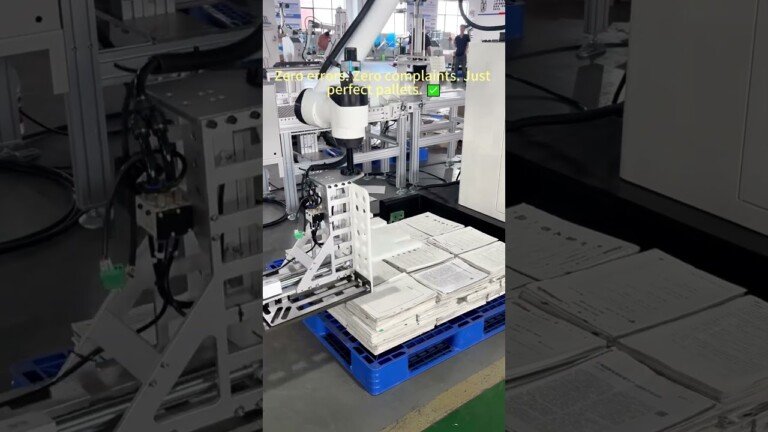
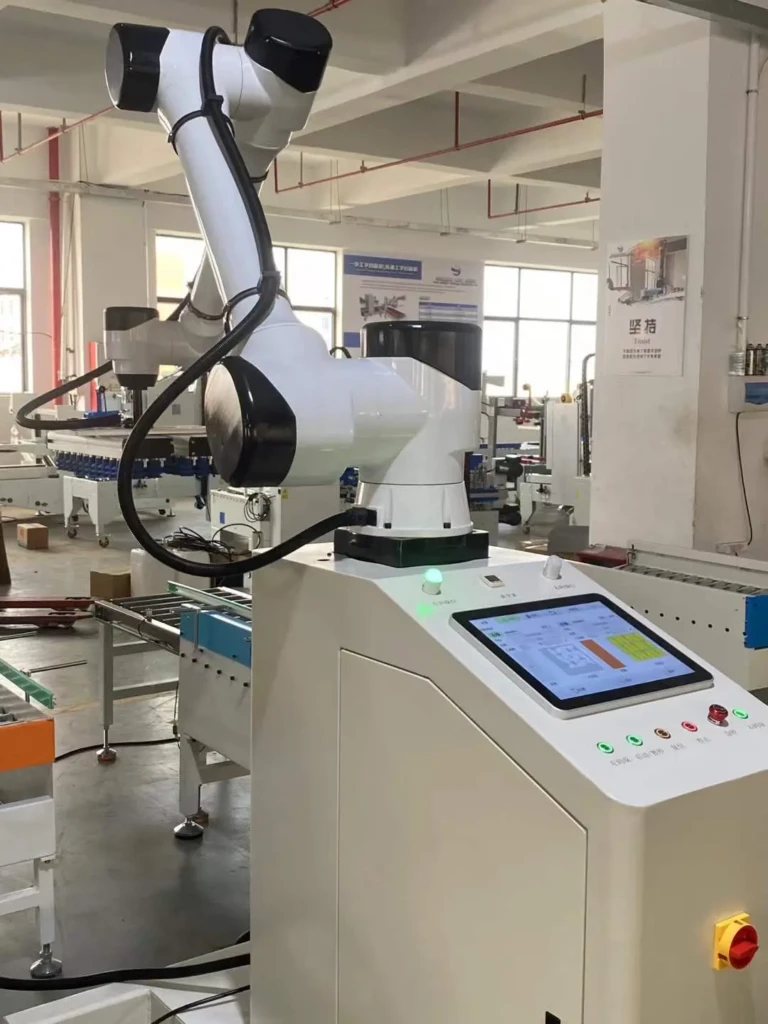
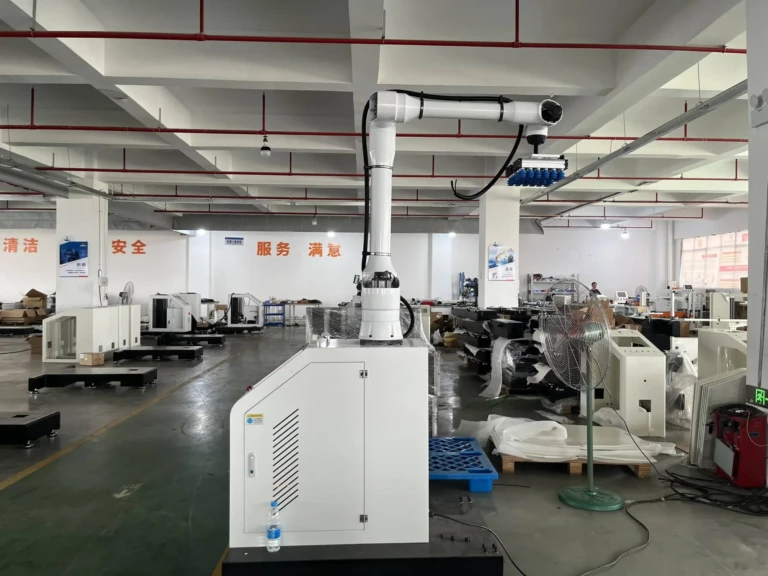
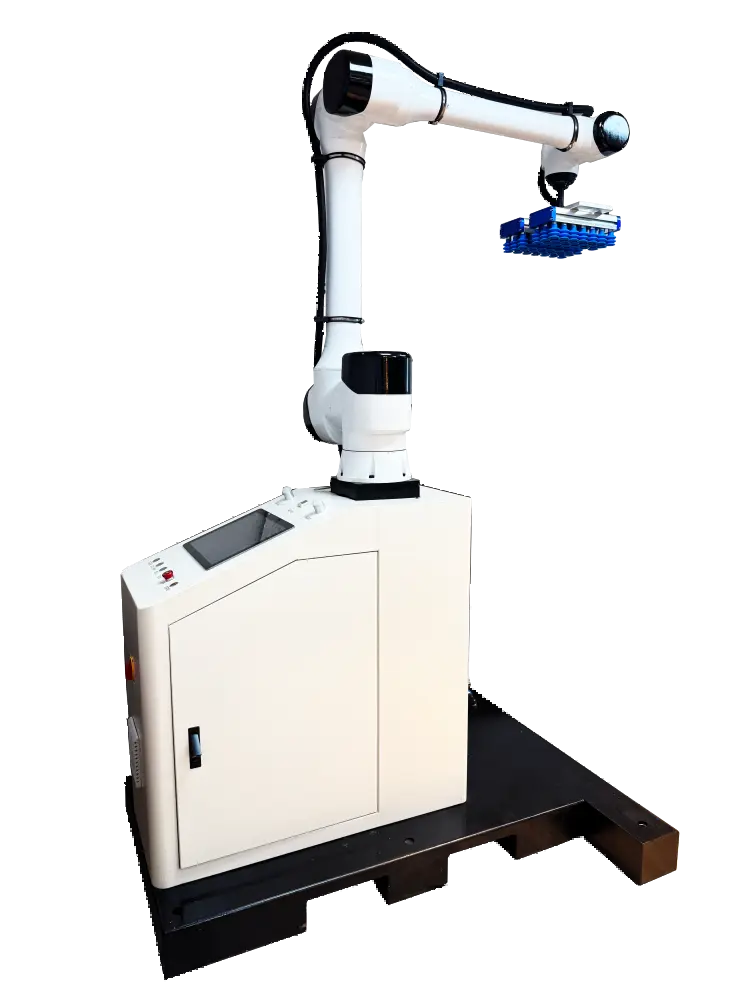
In today’s fast-moving logistics and manufacturing sectors, robotic palletizers like the Fuji Ace series are indispensable for optimizing workflow and reducing labor costs. One of the most critical performance metrics for these systems is operating speed, which directly impacts throughput, ROI, and overall efficiency. As leaders in automation technology, Huaxiu Robot leverages cutting-edge engineering to deliver solutions that redefine productivity. In this analysis, we dissect the Fuji Ace Robotic Palletizer’s speed capabilities, explore the variables affecting performance, and explain why it stands out in a competitive landscape.
Breaking Down the Fuji Ace Operating Speed
The Fuji Ace series boasts an impressive average cycle speed of 1,000–1,500 cycles per hour (CPH), depending on the model and configuration. However, raw speed numbers only tell part of the story. Let’s dive into the engineering factors that enable this efficiency:
1. High-Speed Motion Control
- Servo-Driven Joints: Fuji Ace robots utilize precision servo motors to achieve rapid yet smooth acceleration/deceleration. This minimizes wasted motion and ensures consistent speed even during complex pallet patterns.
- Advanced Kinematics: Optimized arm trajectories allow the robot to move payloads along the shortest path, shaving seconds off each cycle.
2. Payload-Speed Tradeoff
The Fuji Ace operates under a dynamic payload-speed relationship:
- Light Loads (≤30 kg): Speeds can reach up to 1,800 CPH for small, lightweight items like beverage cans or snack bags.
- Heavy Loads (≥150 kg): Speed reduces to ~800–1,000 CPH but maintains stability for bulky items (e.g., chemical drums).
3. End-of-Arm Tooling (EOAT) Flexibility
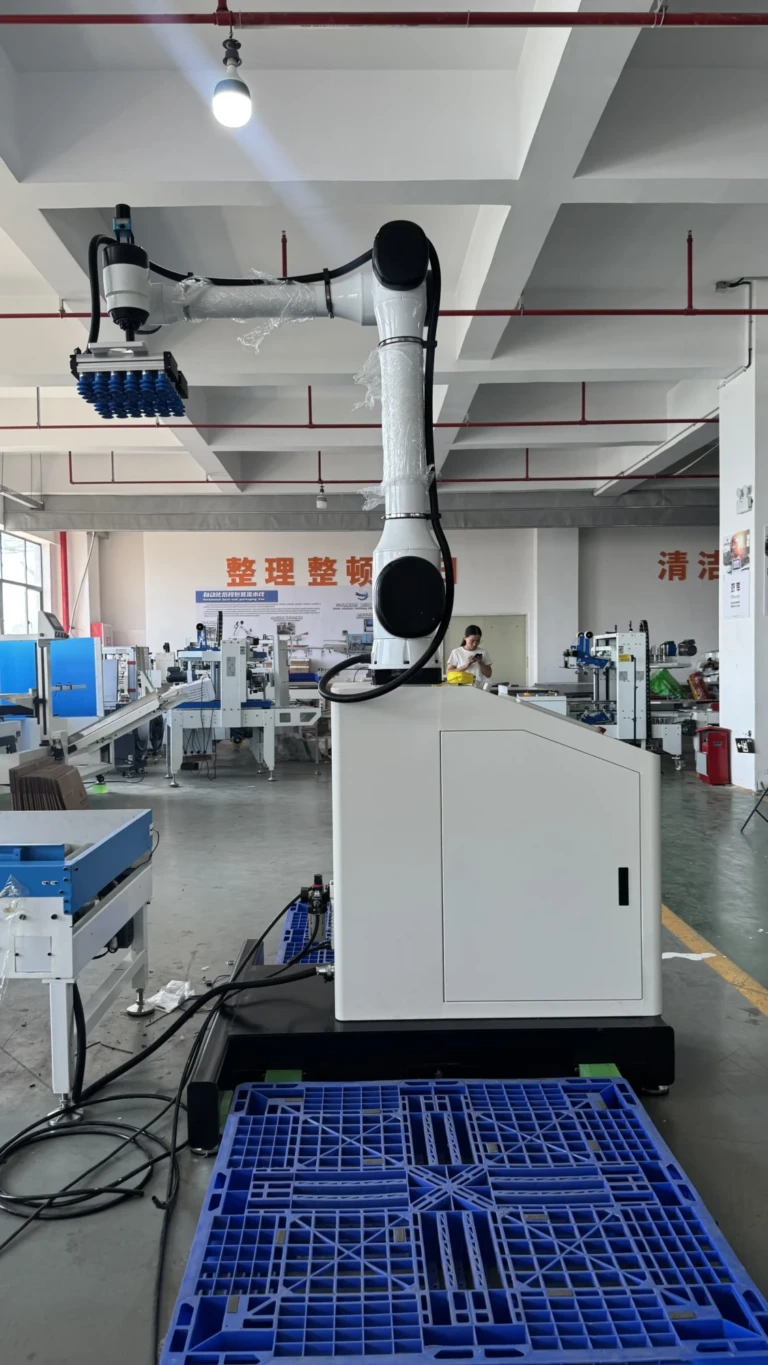
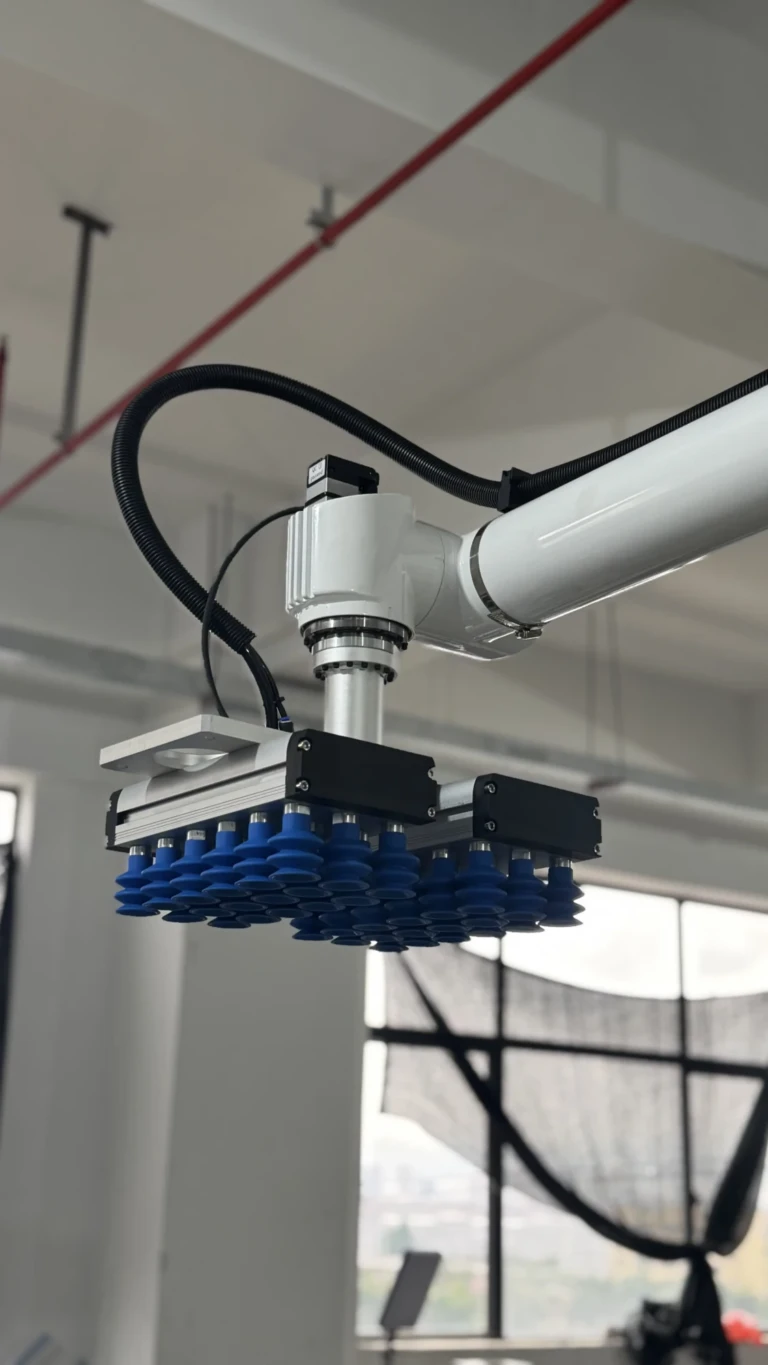
- Vacuum Grippers: Ideal for boxes/bags, enabling quick pick-release cycles.
- Mechanical Clamps: Slower but essential for irregularly shaped items.
- Hybrid Systems: Customizable EOATs can combine tools for mixed-product palletizing, with minimal speed loss.
4. Software Intelligence
- Pre-Built Pallet Patterns: Pre-programmed templates for common configurations (e.g., column vs. interlocked stacking) reduce programming downtime.
- Collision Avoidance Algorithms: Sensors adjust speed in real-time to avoid bottlenecks in congested workspaces.
Real-World Speed vs. Theoretical Maximums
While Fuji Ace’s technical specs are impressive, real-world efficiency hinges on external variables:
- Product Consistency: Variations in box dimensions or weight force slowdowns for recalibration.
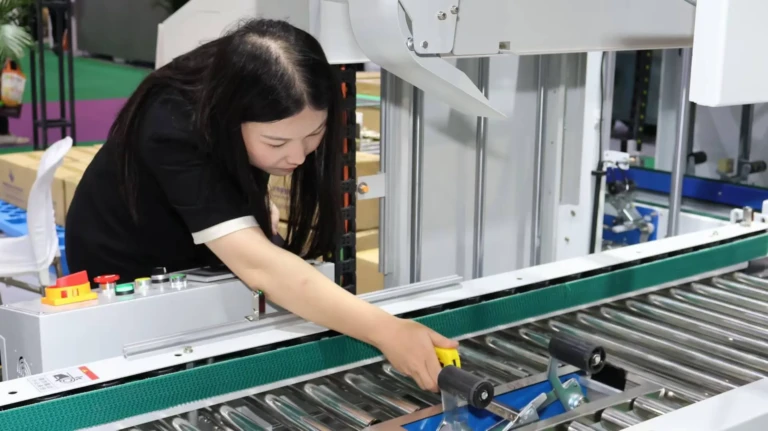
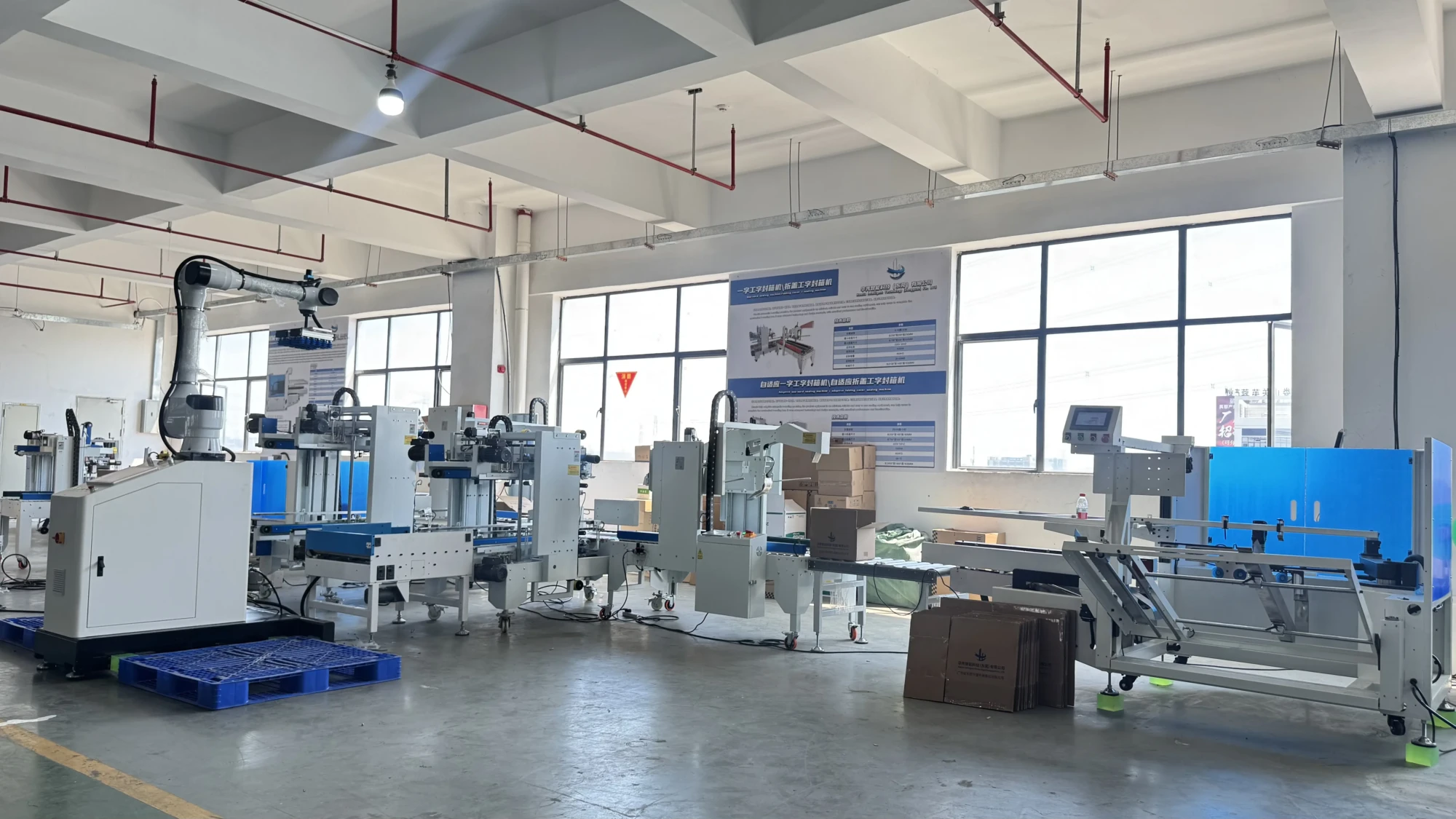
- Conveyor Synchronization: Mismatched feed rates create idle periods. Synchronizing with Huaxiu’s automatic sealing robots or strapping robots mitigates this.
- Pallet Availability: Integration with a pallet-forming robot ensures a steady supply of empty pallets, preventing robotic arm downtime.
Comparative Speed Analysis
How does the Fuji Ace stack up against alternatives?
| System Type | Avg. Speed (CPH) | Payload Capacity | Flexibility |
|---|---|---|---|
| Fuji Ace Robotic Palletizer | 1,000–1,500 | Up to 180 kg | High |
| Manual Palletizing | 200–400 | Limited | Low |
| Layer Palletizer (Semi-Auto) | 600–800 | Fixed | Low |
| Competing Collaborative Robot | 700–900 | ≤30 kg | Medium |
Note: Speeds vary based on gripper type, payload, and environmental conditions.
Case Study: Integrating Fuji Ace with Huaxiu’s Ecosystem
A beverage manufacturer combining the Fuji Ace with Huaxiu’s fully automatic stretch film packaging robot and shrink packaging robots achieved:
- 25% Faster Line Speed: Reduced pallet transfer delays between stages.
- 50% Labor Savings: Enabled a single operator to oversee 3 lines.
- 99.2% Uptime: Predictive maintenance alerts prevented unscheduled stops.
Conclusion
The Fuji Ace Robotic Palletizer isn’t just fast—it’s intelligently fast. By balancing payload capacity, motion dynamics, and adaptability, it delivers ROI within 12–18 months for high-volume facilities. Pairing it with complementary systems like Huaxiu’s automatic unpacking robots or collaborative palletizing robots creates a seamless automation ecosystem. In the race to optimize logistics, speed isn’t just a metric; it’s the cornerstone of competitive advantage.
FAQs: Fuji Ace Operating Speed
Q1: Can the Fuji Ace maintain peak speed for 24/7 operation?
Yes. Huaxiu equips it with thermal management and duty-cycle optimization algorithms to prevent overheating, even in 3-shift facilities.
Q2: Does humidity or temperature affect speed?
Extreme conditions (below 5°C or above 40°C) may reduce speed by 10–15%. Industrial-grade components ensure reliable operation regardless.
Q3: How does speed impact product damage risk?
Controlled acceleration and adaptive force sensing ensure fragile items (e.g., glass bottles) are handled safely at high speeds.
Q4: Are aftermarket upgrades available to boost speed further?
Software optimizations (e.g., updated path-planning firmware) can improve efficiency by up to 8%. Hardware upgrades (e.g., vacuum pumps) are also supported.
Q5: Can it be retrofitted into existing lines with older machines?
Absolutely. The Fuji Ace supports PLC, Modbus, and Ethernet/IP protocols for seamless integration with legacy equipment.
Q6: What safety protocols apply at high speeds?
Laser scanners and 3D vision systems automatically trigger slowdowns or stops if personnel enter the work envelope (certified to ISO 10218 standards).
Final Thought
Investing in the Fuji Ace isn’t just about buying a robot—it’s about investing in a future-proof production philosophy. For industries where every second counts, speed isn’t optional; it’s existential.
Huaxiu Robot—Engineering Tomorrow’s Efficiency Today