The Rising Demand for Automation & Your Path to Affordable Palletizing Robots
The logistics, manufacturing, and warehousing sectors are under relentless pressure to optimize operations. Labor shortages, rising wage costs, and demand for faster throughput make automation no longer a luxury—it’s a necessity. Among the most impactful solutions are palletizing robots, which automate the repetitive task of stacking products onto pallets. But for SMEs and cost-conscious buyers, the big question remains: Can palletizing robots truly be affordable?
In this guide, we break down realistic pricing ranges, factors influencing costs, and how brands like Huaxiu Robot are democratizing access to automation with innovative, budget-friendly solutions.
Understanding Palletizing Robot Costs: Key Price Determinants
Palletizing robot prices vary dramatically based on specs, capabilities, and integration complexity. Here’s what shapes the investment:
-
Payload Capacity
- Low-Capacity Robots (5-20 kg): Ideal for lightweight items (e.g., boxes of electronics, pharmaceuticals). Cobot-style arms often dominate this segment, priced between $25,000–$50,000.
- Medium-Heavy Capacity (50-200 kg): Suited for beverages, bags of cement, or automotive parts. Traditional articulated robots in this range cost $50,000–$120,000.
- High-Capacity (300+ kg): For heavy industrial loads (steel coils, bulk materials). Prices climb to $150,000+, including heavy-duty end effectors.
-
Speed & Cycle Time
High-speed robots (e.g., 1,500 cycles/hour) command premiums but dramatically boost throughput. Slower, modular systems offer entry points under $40,000. -
Collaborative vs. Traditional Robots
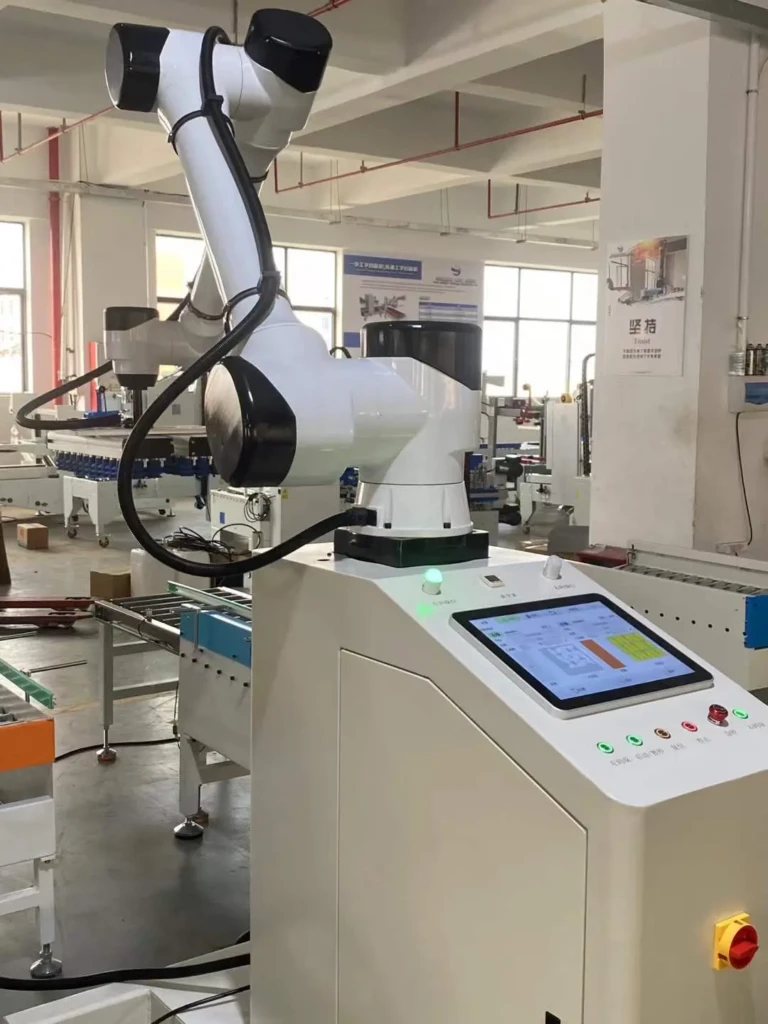
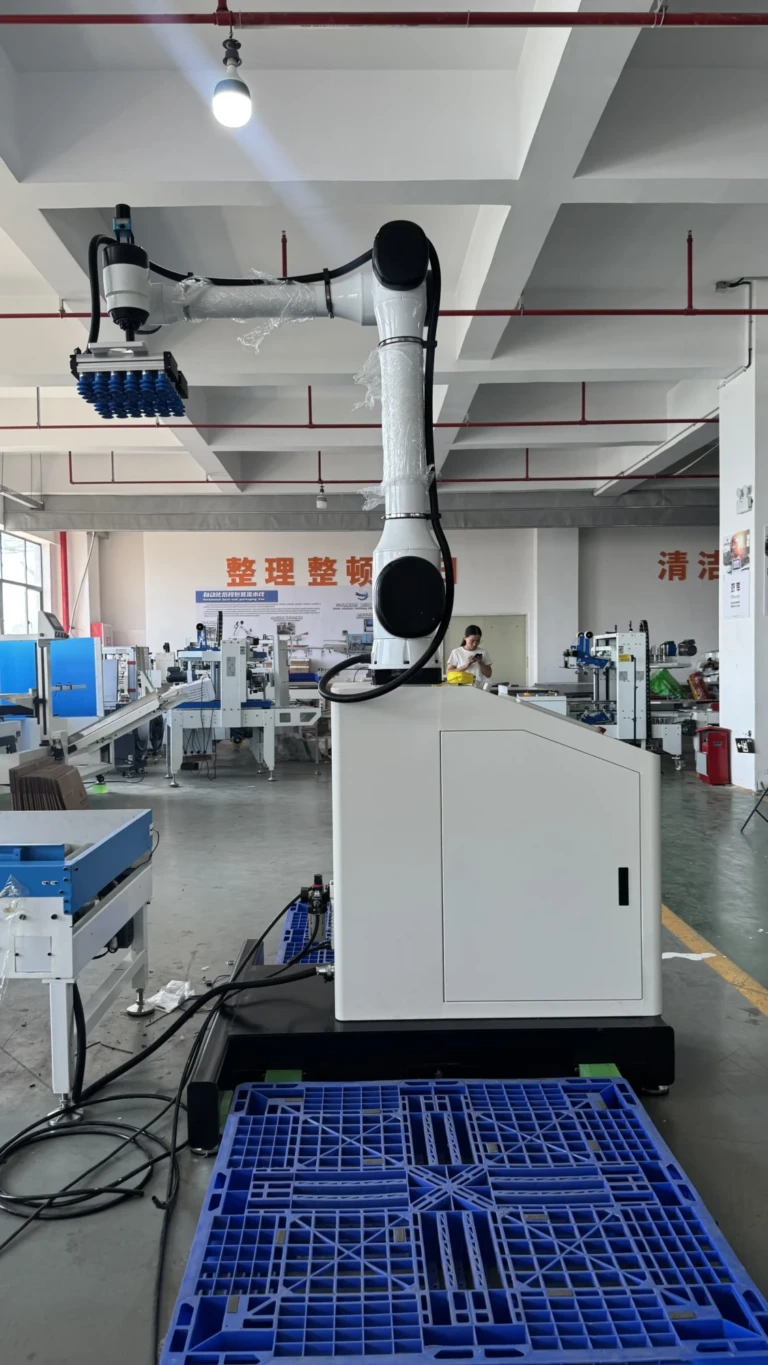
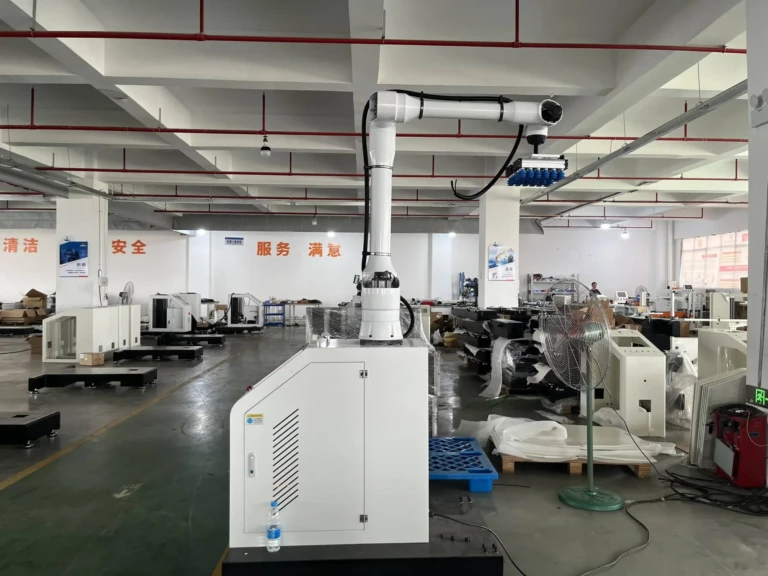
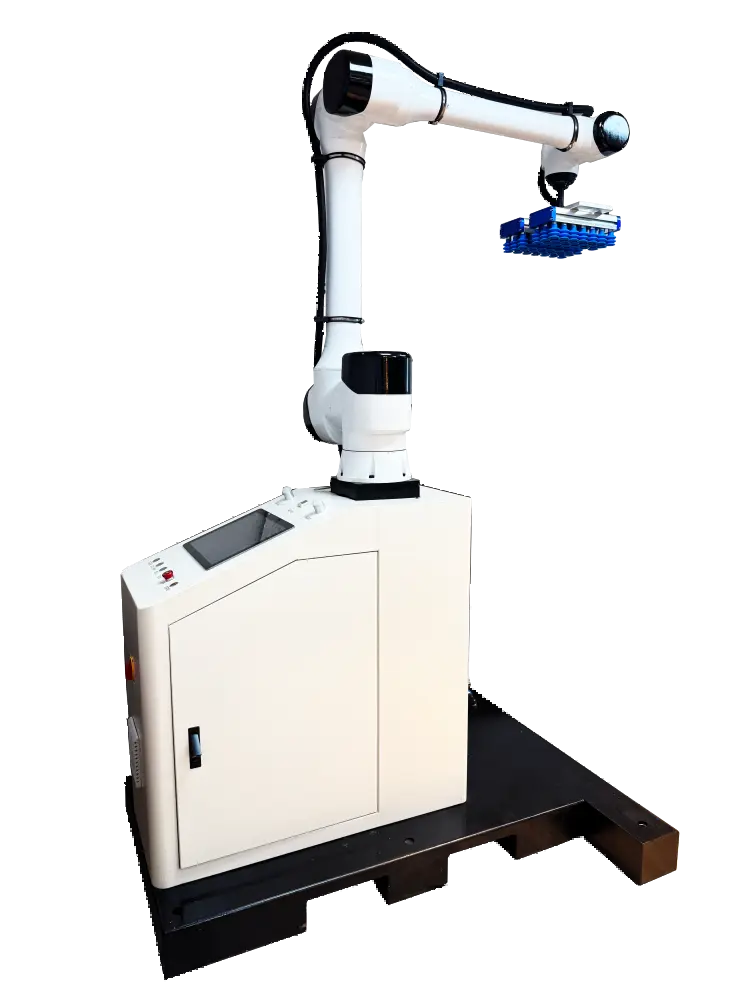
Collaborative robots (cobots): Designed to work alongside humans, require minimal safety fencing. Huaxiu’s collaborative palletizing robots start at ~$30,000, with plug-and-play installation reducing setup costs.
Traditional industrial robots: Faster but often need safety cages and complex integration, pushing total costs toward $75,000+. -
End-of-Arm Tooling (EOAT)
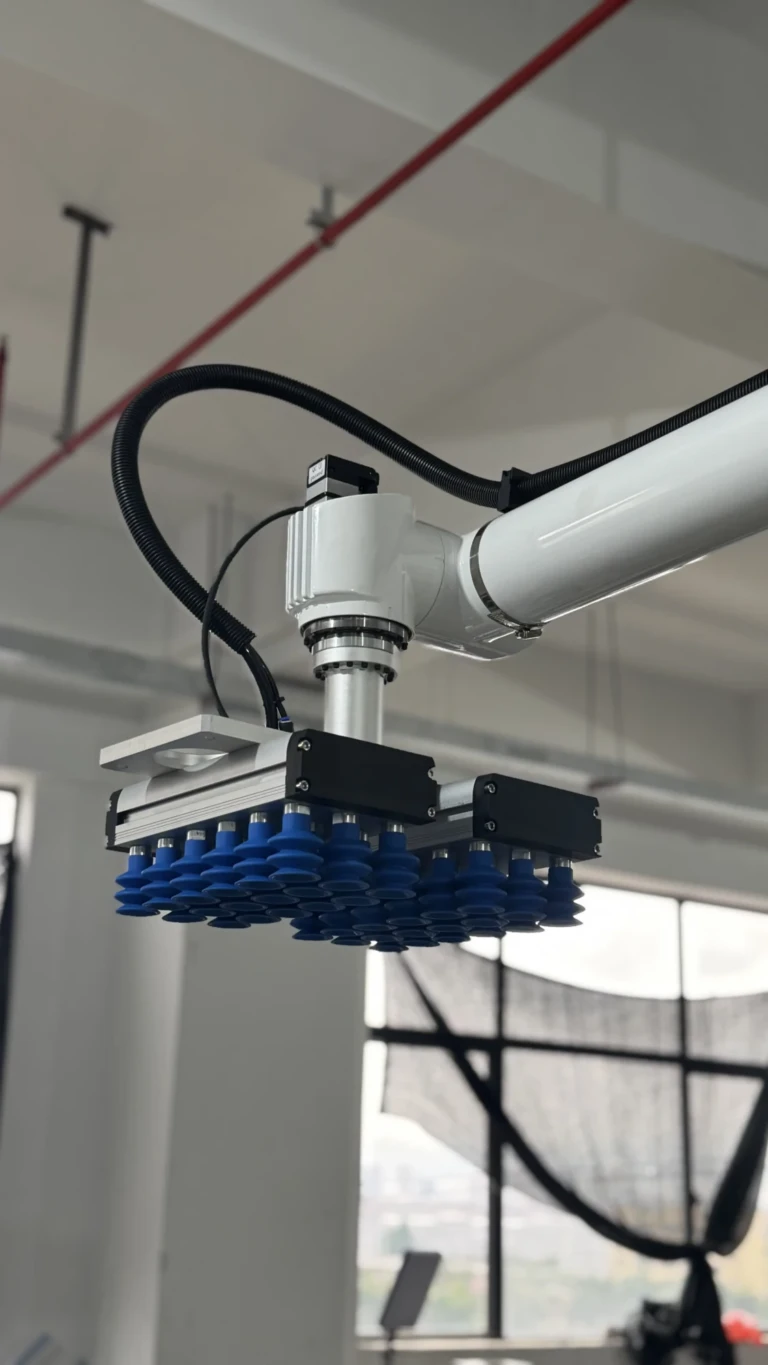
Grippers, suction cups, or custom attachments add $5,000–$20,000. Vacuum-based systems are cheaper; mechanical grippers for irregular items cost more. -
Integration & Software
Factory retrofitting, conveyor synchronization, and programming can add $10,000–$50,000. Huaxiu’s systems emphasize user-friendly interfaces to slash these expenses. - Brand Premium
European/Japanese brands (ABB, FANUC) charge 20–40% more than Asian manufacturers like Huaxiu Robot, which offers comparable quality at lower prices due to streamlined supply chains.
Price Ranges: What to Expect in 2024
| Robot Type | Typical Price Range | Best For |
|---|---|---|
| Entry-Level Cobot Palletizers | $25,000 – $45,000 | SMEs, low-volume, mixed-SKU environments |
| Mid-Range Articulated Robots | $50,000 – $90,000 | Food & beverage, mid-speed production lines |
| High-Speed Delta Robots | $70,000 – $130,000 | Pharmaceuticals, high-volume e-commerce |
| Fully Integrated Palletizing Systems | $90,000 – $200,000 | Large factories with end-to-end automation needs |
How Huaxiu Robot Delivers Affordability Without Compromise
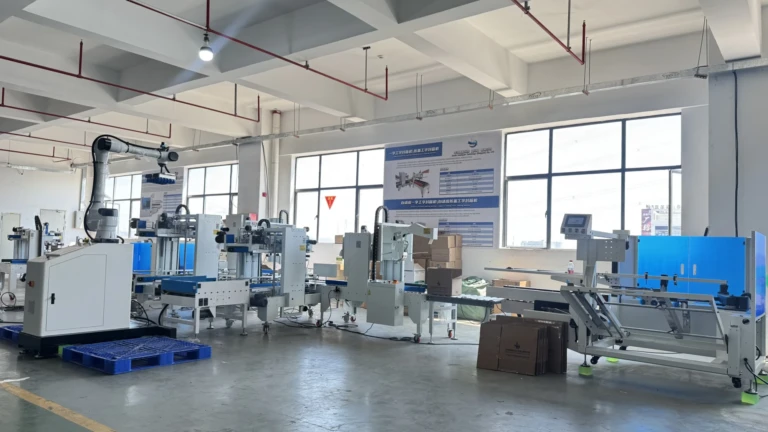
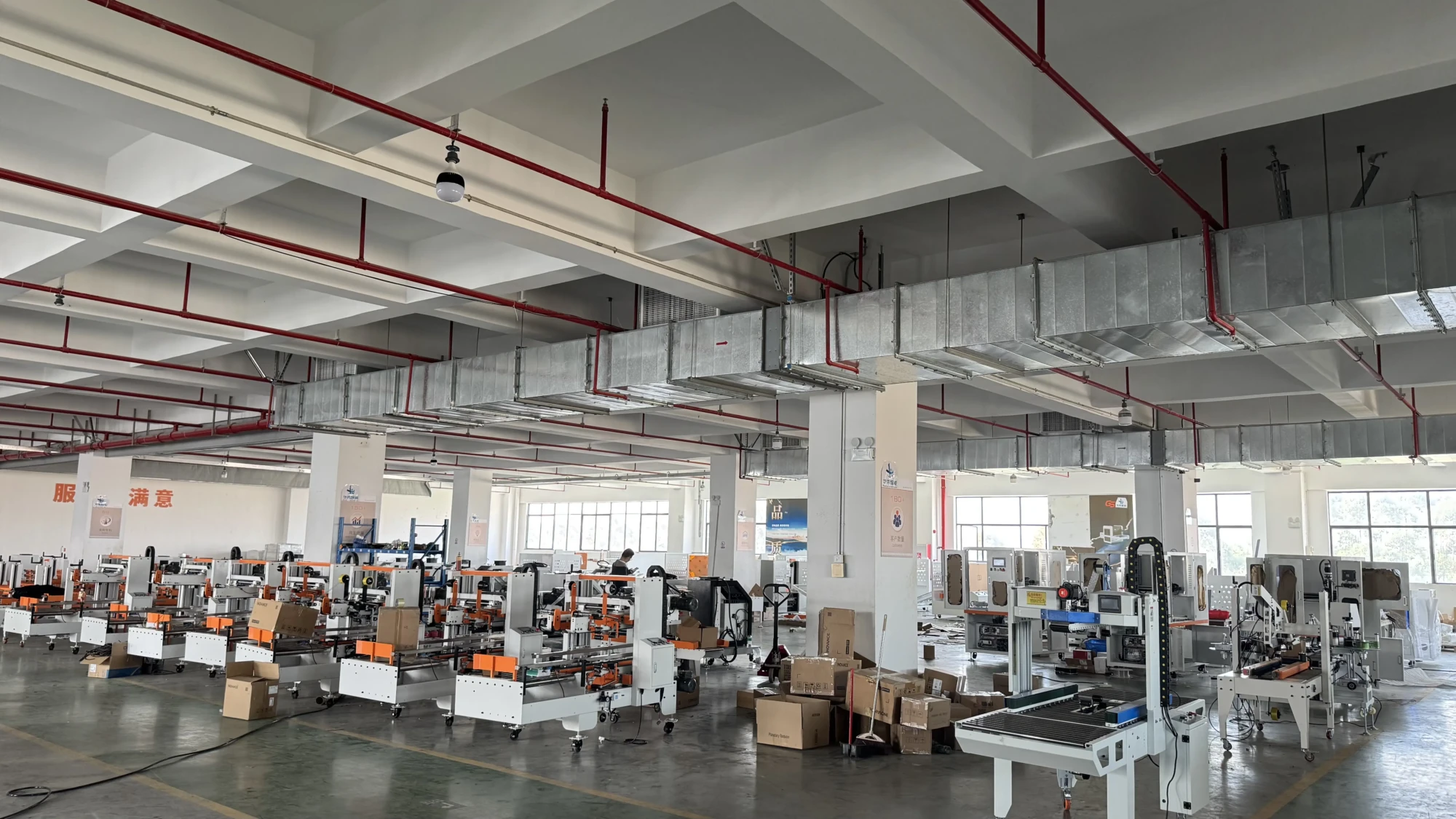
As a leader in accessible automation, Huaxiu Robot leverages modular design and vertical integration to reduce costs:
- Collaborative Palletizing Robots: Start below $35,000 with payloads up to 25 kg—ideal for small factories.
- Semi-Automatic Solutions: Products like semi-automatic sealing robots ($8,000–$15,000) complement palletizers for partial automation at low entry costs.
- All-in-One Systems: Bundle palletizing with strapping, stretch film wrapping, or shrink packaging for 15–30% savings vs. piecing together separate machines.
Unlike rigid competitors, Huaxiu’s robots feature adaptive programming—workers can teach paths via hand-guiding, avoiding costly external integrators.
Beyond Sticker Price: Calculating True ROI
A $50,000 robotic palletizer may seem steep, but consider:
- Labor Savings: Replaces 2–3 shifts/day, saving $40,000–$80,000/year in wages/benefits.
- Productivity Gains: 24/7 operation at consistent speeds reduces bottlenecks.
- Injury Reduction: Eliminates strains from heavy lifting, lowering insurance costs.
Most businesses achieve ROI in 12–24 months, with systems lasting 10+ years.
Financing & Alternatives
- Leasing: Payments as low as $800/month preserve capital.
- Used/Refurbished Robots: Save 30–50% with certified refurbished units.
- Modular Upgrades: Start with Huaxiu’s semi-automatic sealing robot ($9,500) and scale up as needs grow.
Conclusion: Affordability is Now a Reality
Gone are the days when only Fortune 500 companies could afford robotic palletizing. With brands like Huaxiu Robot innovating in the collaborative and modular space, SMEs can now deploy automation at prices that promise rapid returns. Whether you’re palletizing boxes, bags, or tubes, solutions exist at nearly every budget—without sacrificing reliability. The key is to prioritize flexibility, ease of integration, and lifecycle value over upfront cost alone.
By investing wisely, businesses can turn palletizing from a labor-intensive chore into a seamless, scalable asset—freeing teams to focus on growth, not just grunt work.
FAQs: Affordable Palletizing Robots
Q1: Can a palletizing robot handle different box sizes?
Yes! Most modern robots (including Huaxiu’s) use vision systems or pre-programmed recipes to switch between SKUs instantly.
Q2: What’s the payback period for a $40,000 robot?
Typically 12–20 months, depending on labor costs and shift volumes.
Q3: Are there hidden maintenance costs?
Annual maintenance averages 3–5% of the robot’s cost. Huaxiu’s models require minimal servicing due to sealed joints and modular components.
Q4: Do I need to rearrange my factory floor?
Collaborative robots work in tight spaces. For traditional systems, allow ~20 sq. meters for fencing and peripherals.
Q5: Can I integrate a palletizer with other packaging machines?
Absolutely. Huaxiu’s ecosystem (strapping robots, stretch wrappers) shares control software for unified operation.
Q6: How long does installation take?
Cobot palletizers can deploy in <1 week. Complex lines may need 2–4 weeks for full integration.
Ready to explore affordable palletizing? Assess your payload, cycle time, and SKU variability—then align with a supplier prioritizing scalability and simplicity. The automation revolution is within reach.