The New Era of Logistics: How Layer Palletizer Robots Transform Warehousing Operations
In today’s high-speed industrial landscape, efficiency is no longer a luxury—it’s a necessity. One innovation driving this shift is the layer palletizer robot, a cutting-edge automation solution revolutionizing how warehouses and factories handle stacking, organizing, and shipping goods. These robots eliminate bottlenecks, reduce labor costs, and streamline operations with surgical precision. Let’s unpack how they work, their advantages, and why companies like Huaxiu Robot are leading this transformative charge.
What Is a Layer Palletizer Robot?
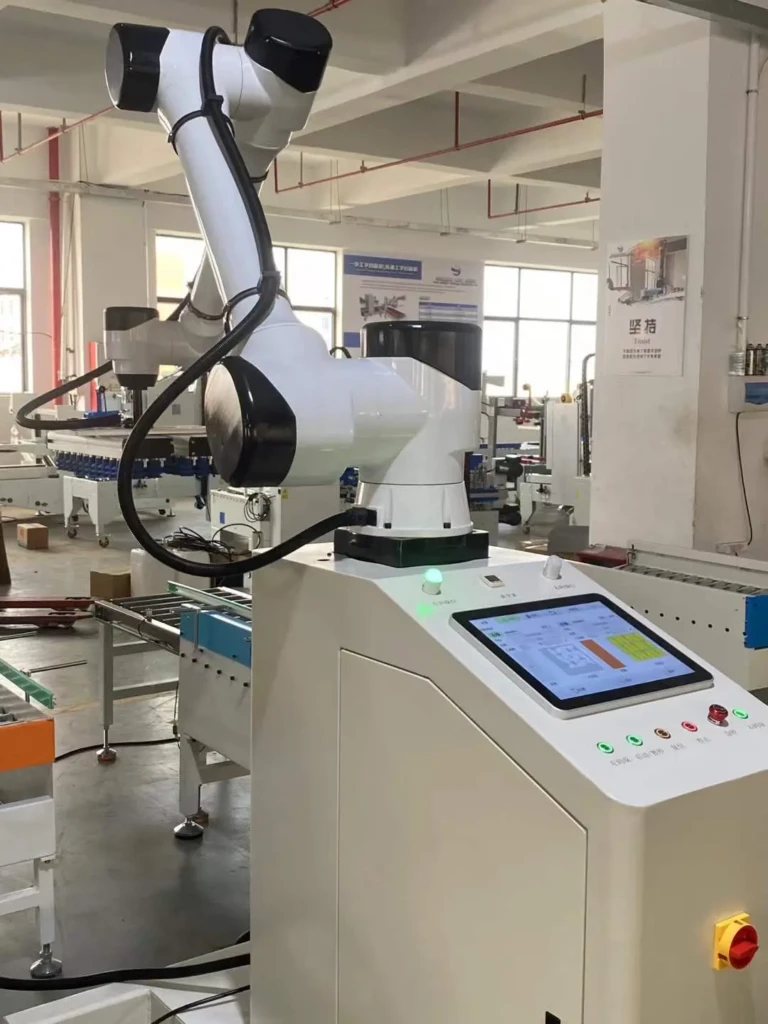
A layer palletizer robot automates the process of stacking products into uniform layers on pallets for storage or transport. Unlike traditional palletizers that handle individual items sequentially, layer palletizers manipulate entire layers of products (e.g., cases, bags, or boxes) simultaneously. This is achieved through advanced gripper systems, computer vision, and AI-driven algorithms that optimize arrangement patterns for stability and space efficiency.
Key Components of a Layer Palletizing System:
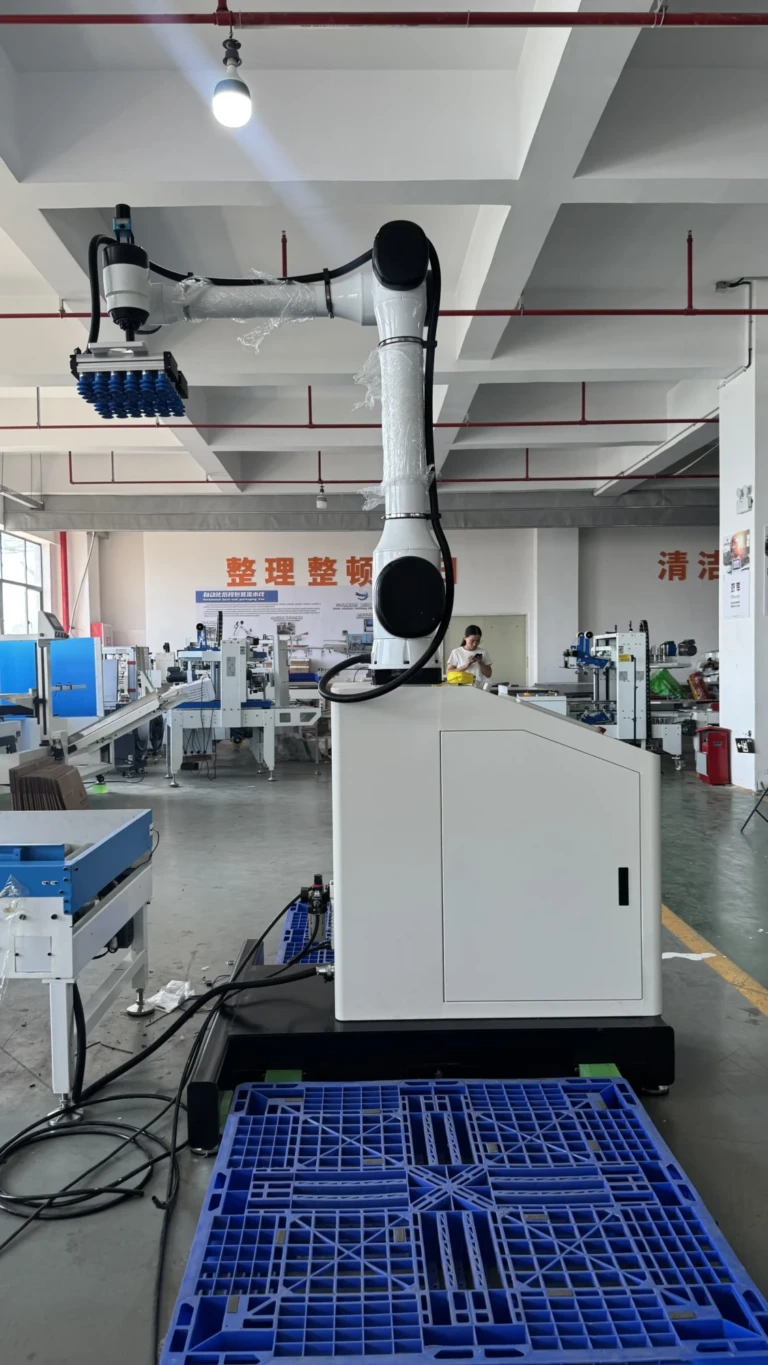
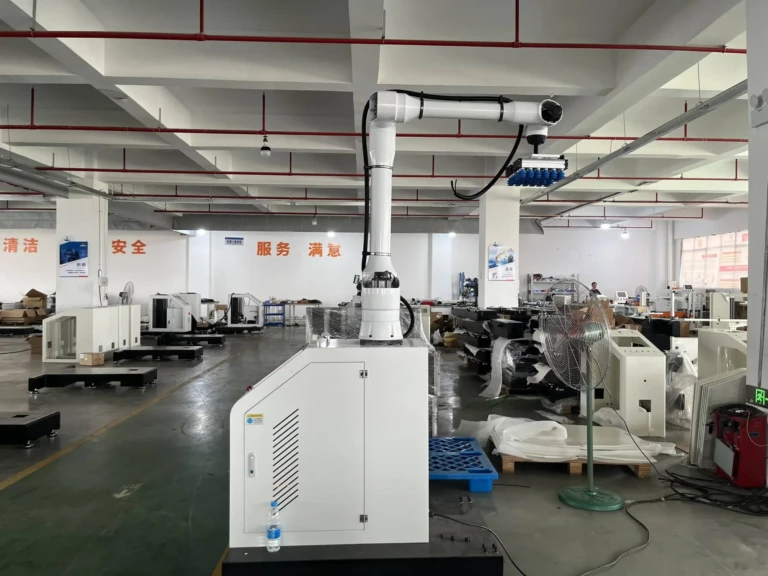
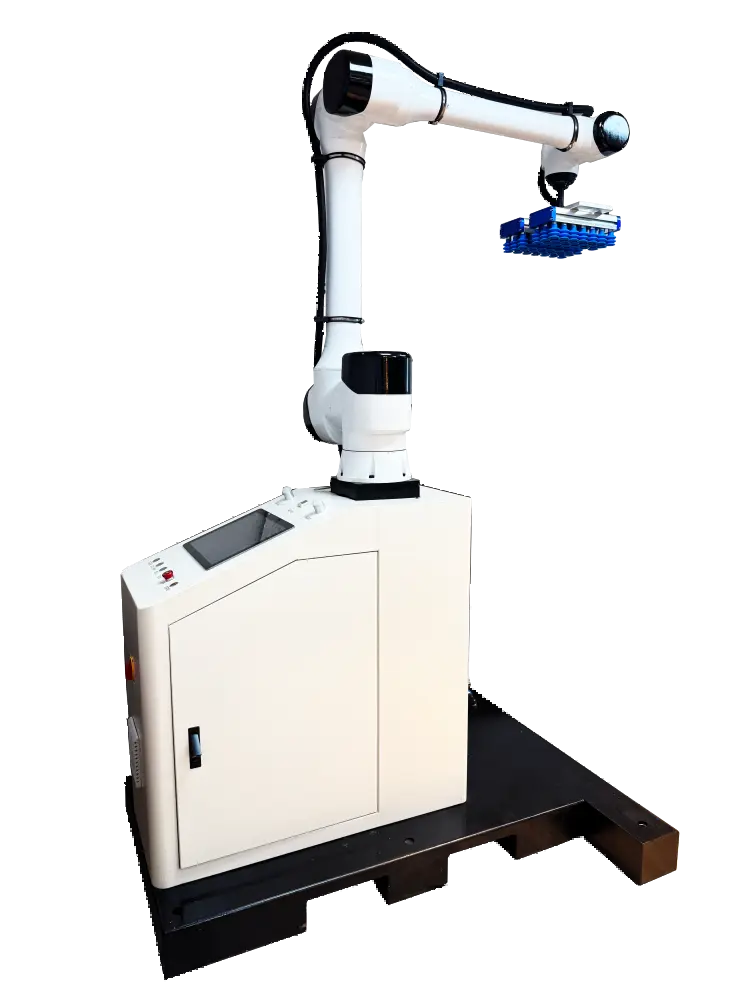
- Robotic Arm: Often an articulated or gantry-style arm with high payload capacities.
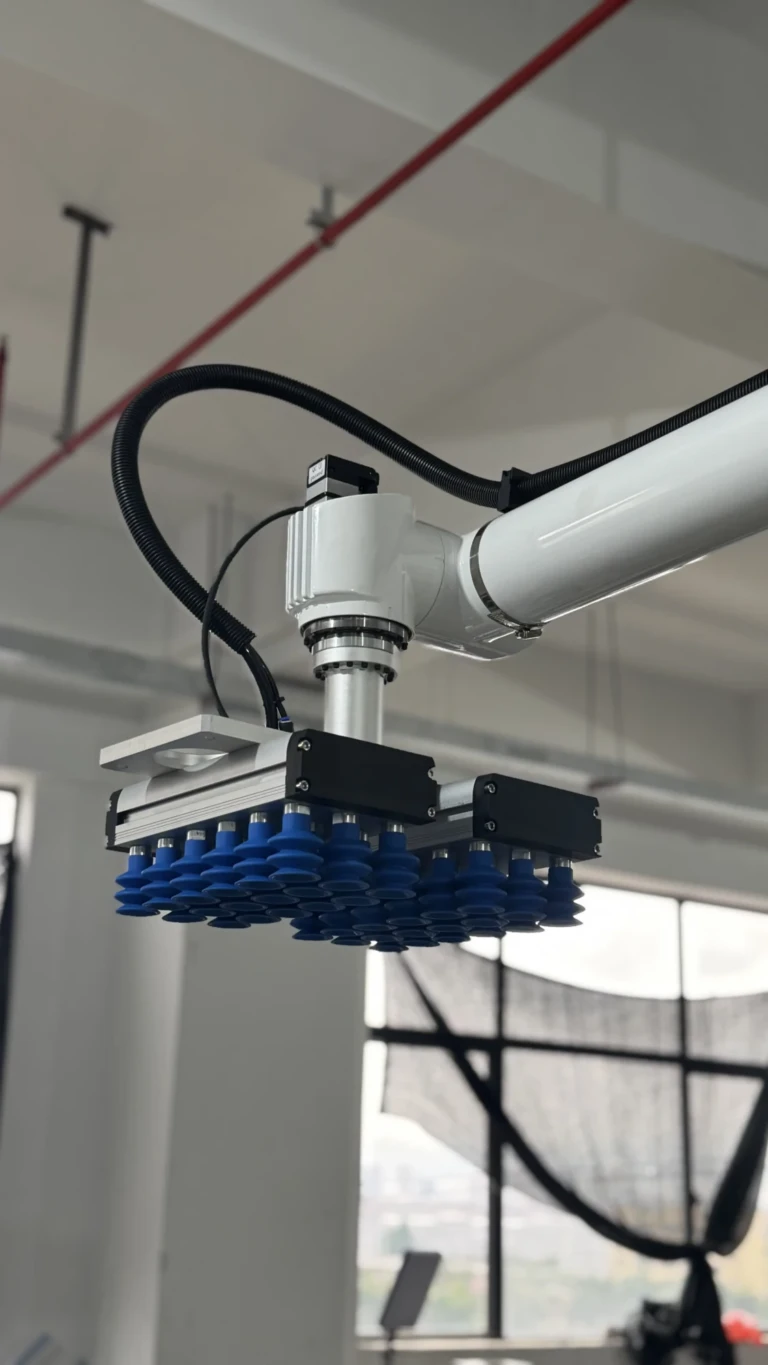
- End Effectors: Custom grippers, suction cups, or claw mechanisms to handle products without damage.
- Vision Systems: Cameras and sensors scan products to detect orientation, size, and defects.
- Software: Programmable logic controllers (PLCs) and machine learning algorithms automate pattern optimization.
- Conveyor Integration: Syncs with upstream/downstream equipment for seamless material flow.
Why Manual Stacking Can’t Compete
Human-centric palletizing struggles with speed, consistency, and scalability. Workers face physical strain from repetitive lifting, increasing injury risks and labor turnover. Human error also leads to unstable loads, product damage, or non-compliance with shipping regulations. In contrast, layer palletizer robots deliver:
- Speed: Up to 1,500 cases per hour vs. 200–300 manually.
- Precision: Perfectly aligned layers every time, complying with weight distribution standards.
- 24/7 Operation: No downtime shifts, breaks, or fatigue.
- Adaptability: Handle diverse products—from fragile glass bottles to bulky sacks—within the same system.
Huaxiu Robot’s Solutions: Beyond Basic Palletizing
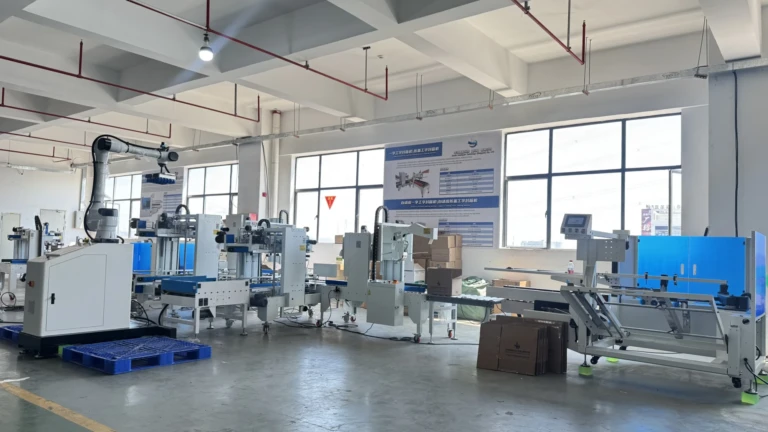
Companies like Huaxiu Robot have pushed automation further by offering integrated end-to-end packaging ecosystems. Their flagship solutions include:
- Collaborative Palletizing Robots: Safe to work alongside humans without safety cages.
- Automatic Unpacking/Sealing Robots: Streamline box handling before and after stacking.
- Shrink & Stretch Film Wrappers: Secure pallets for transit automatically.
- Pallet Forming & Strapping Robots: Build and reinforce pallets for heavy-duty logistics.
These modular systems can be retrofitted into existing lines or deployed as custom turnkey solutions, making automation accessible to SMEs and global enterprises alike.
Applications Across Industries
Layer palletizing isn’t limited to traditional manufacturing. Its versatility spans:
- Food & Beverage: Stacking canned goods, bottled drinks, or frozen products in hygienic environments.
- Pharmaceuticals: Precise handling of sensitive medical supplies under sterile conditions.
- E-Commerce Fulfillment: Rapidly sorting mixed-SKU orders into stable pallets.
- Chemicals & Construction: Managing heavy bags of cement, fertilizer, or granules safely.
Overcoming Implementation Challenges
While ROI is compelling, integrating palletizing robots requires strategic planning:
- Product Variability: Irregular shapes? Huaxiu’s vision systems adapt grippers and stacking patterns on the fly.
- Initial Investment: Modular systems allow phased adoption—start with semi-automated sealing or stretch wrapping.
- Maintenance: Predictive AI analytics in Huaxiu’s software flags issues before downtime occurs.
The Future: Smarter, Faster, Greener
Next-gen palletizers will leverage IoT for real-time data sharing across supply chains, while energy-efficient designs reduce carbon footprints. Collaborative robots (cobots) will handle hybrid tasks—stacking while quality-checking labels—using Huaxiu’s multi-functional end effectors.
Conclusion
Layer palletizer robots are not just about replacing labor—they redefine efficiency, safety, and scalability in logistics. By automating repetitive tasks, companies unlock resources for innovation and growth. Brands like Huaxiu Robot exemplify this shift, offering scalable solutions that cater to niche and industrial-scale needs alike. In a world where delivery speed and precision are competitive differentiators, automation is no longer optional—it’s imperative.
FAQs About Layer Palletizer Robots
Q: How long does it take to install a robotic palletizing system?
A: Turnkey solutions typically require 2–6 weeks, depending on line complexity. Huaxiu’s modular designs speed up integration.
Q: Can these robots handle mixed-SKU pallets?
A: Yes. Advanced vision systems and AI software enable dynamic pattern adjustments for heterogeneous loads.
Q: What’s the ROI timeframe?
A: Most clients recoup costs in 8–18 months via labor savings, reduced product damage, and throughput gains.
Q: Are they safe to operate near workers?
A: Collaborative robots (cobots) include force-limiting sensors and 360° LiDAR to ensure human-robot safety.
Q: Do I need to overhaul my existing packaging line?
A: No. Huaxiu’s robots integrate with conveyors, sealers, and wrappers from most OEMs.
By embracing layer palletizing automation, businesses future-proof operations while meeting escalating consumer demands for faster, flawless deliveries. The question isn’t if to automate—it’s how soon.