
Intro: The Unseen Workforce Revolutionizing Warehouses
Walk into any modern distribution center, and you’ll witness a silent ballet of efficiency: boxes glide across belts, robotic arms stack products with millimetric precision, and self-driving machines ferry goods across vast floors. At the heart of this choreography lies a critical but often overlooked task—pallet movement. Enter automatic pallet pulling robots, the unsung heroes transforming logistical operations from labor-intensive workflows into seamlessly automated processes. These robots are no longer futuristic concepts but essential tools for companies racing to meet soaring demand for faster, safer, and smarter supply chains.
What Are Automatic Pallet Pulling Robots?
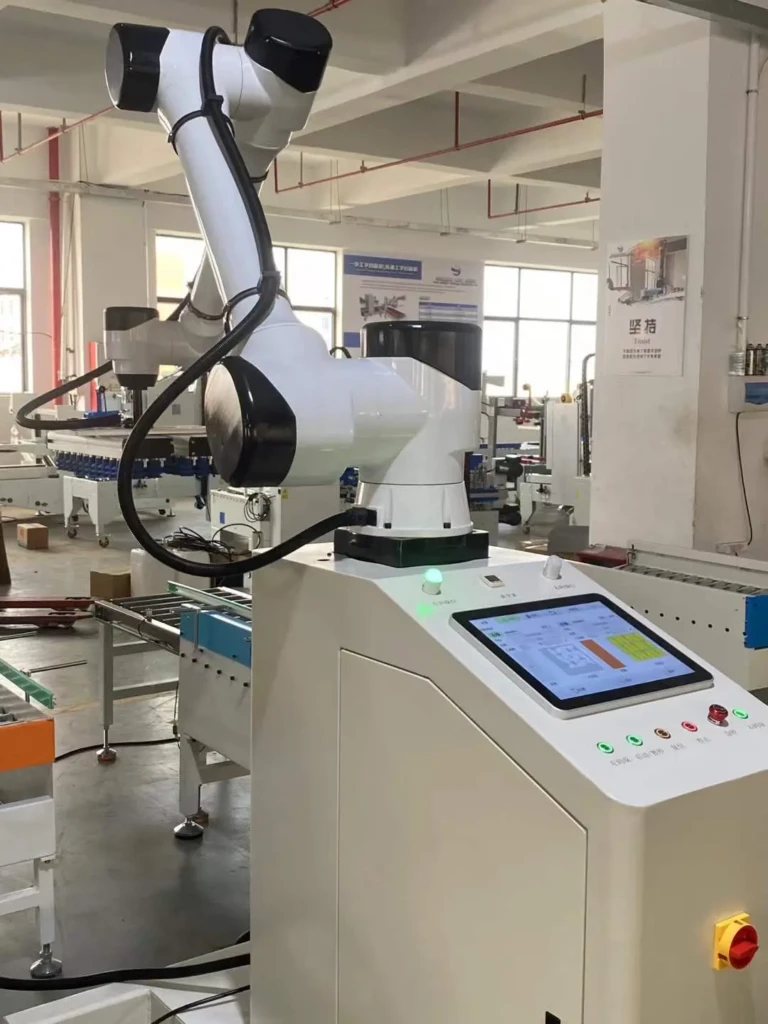
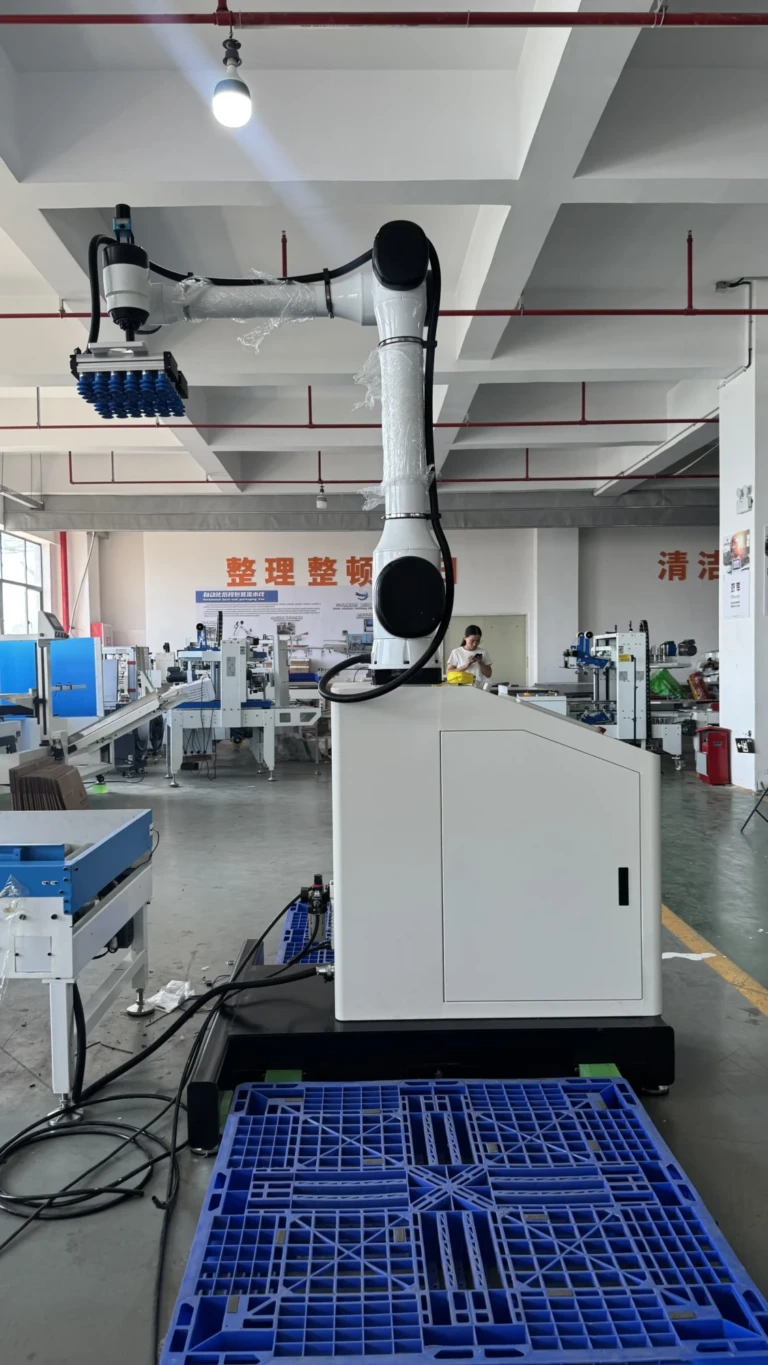
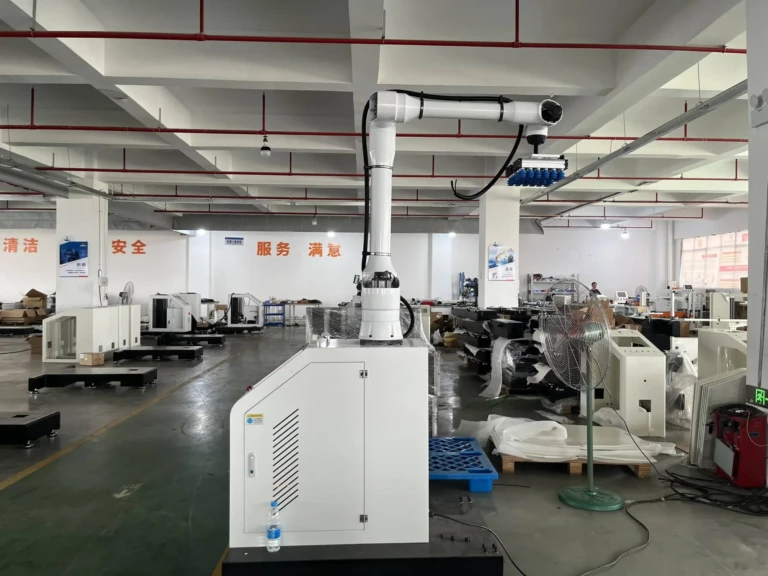
Automatic pallet pulling robots (APPRs) are autonomous mobile robots (AMRs) or guided vehicles (AGVs) designed to locate, secure, and transport loaded pallets without human intervention. Equipped with advanced sensors, machine vision, and intelligent navigation systems, they replace manual forklifts and traditional pallet jacks, offering a safer, more adaptable solution for warehouses, manufacturing plants, and cold storage facilities.
How They Work:
- Detection & Localization: Using LiDAR, cameras, or RFID scanners, the robot identifies target pallets—even in cluttered environments.
- Precision Alignment: Algorithms adjust the robot’s position to align gripping mechanisms (forks, claws, or rollers) with the pallet’s base.
- Lifting & Securing: Hydraulic or electric lifts raise pallets, while stabilization tech prevents load shifts during transit.
- Autonomous Navigation: Pre-mapped routes or real-time pathfinding algorithms allow robots to avoid obstacles and optimize travel time.
- Integration: Seamless handoffs occur at docking stations, conveyors, or palletizing robots, often synchronized via Warehouse Management Systems (WMS).
Why Your Operation Needs Pallet Pulling Robots
- 24/7 Efficiency: Unlike human workers, robots don’t require breaks, shifts, or overtime pay. They can operate in dark, refrigerated, or hazardous environments, boosting uptime.
- Reduced Labor Costs & Injuries: Forklift accidents cost U.S. businesses $135 million annually (OSHA). APPRs eliminate risks like collisions, pallet drops, and musculoskeletal injuries.
- Space Optimization: Compact designs and precision maneuvering let robots navigate narrow aisles, maximizing storage density.
- Scalability: Fleets can be expanded or reconfigured in hours—no lengthy training or hiring cycles.
- Data-Driven Insights: Robots collect metrics on cycle times, route efficiency, and pallet handling errors, enabling continuous process refinement.
Industries Driving Adoption
- E-Commerce & Retail: For rapid SKU sorting and cross-docking during peak seasons.
- Pharmaceuticals: Ensuring temperature-controlled pallet transfers in compliant environments.
- Automotive: Just-in-sequence delivery of parts to assembly lines with zero errors.
- Food & Beverage: Hygienic handling of perishables in chilled warehouses.
Huaxiu Robot’s Pioneering Solutions
As a leader in end-to-end logistics automation, Huaxiu Robot has engineered APPRs as part of an integrated ecosystem that includes:
- Intelligent Fleet Coordination: AI-driven traffic management for multi-robot collaboration.
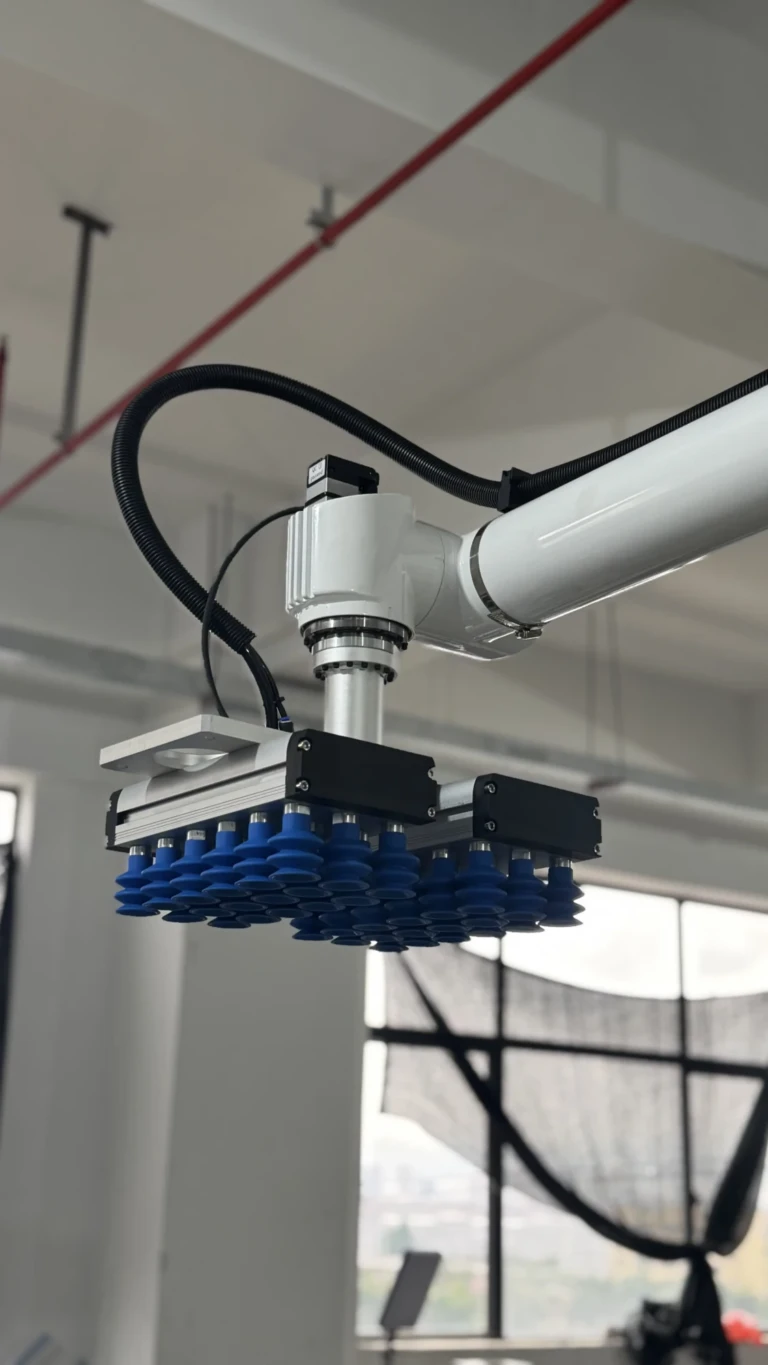
- Multi-Functional Attachments: Swap forks for clamps or lifts to handle non-standard pallets.
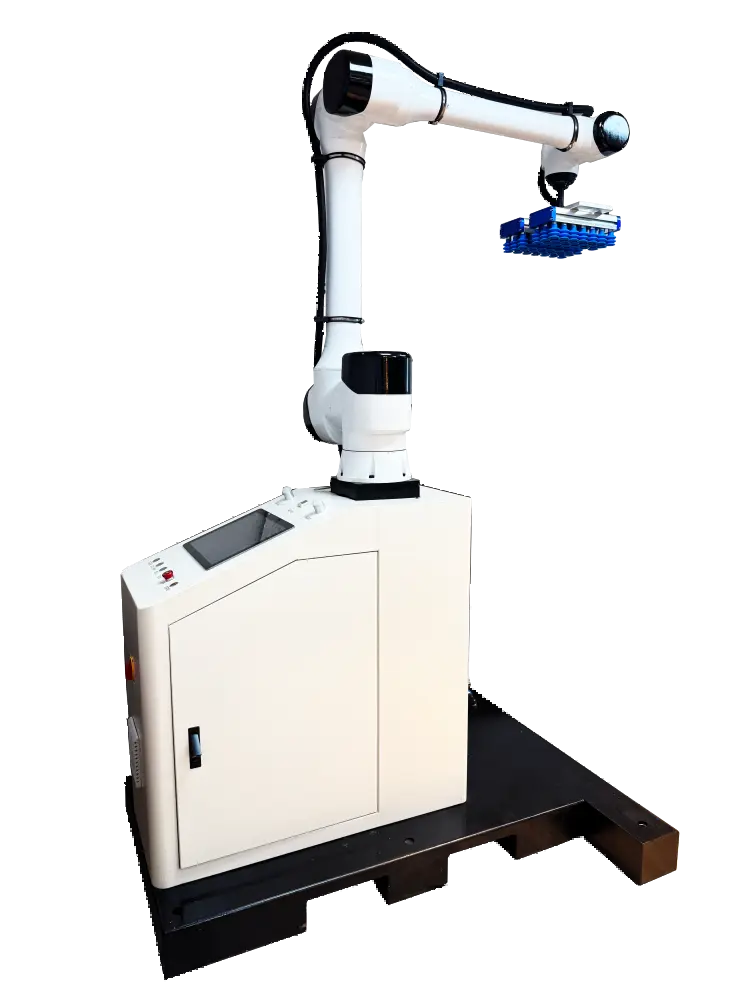
- Plug-and-Play Integration: Compatibility with Huaxiu’s palletizing, strapping, and stretch-wrapping robots for turnkey automation.
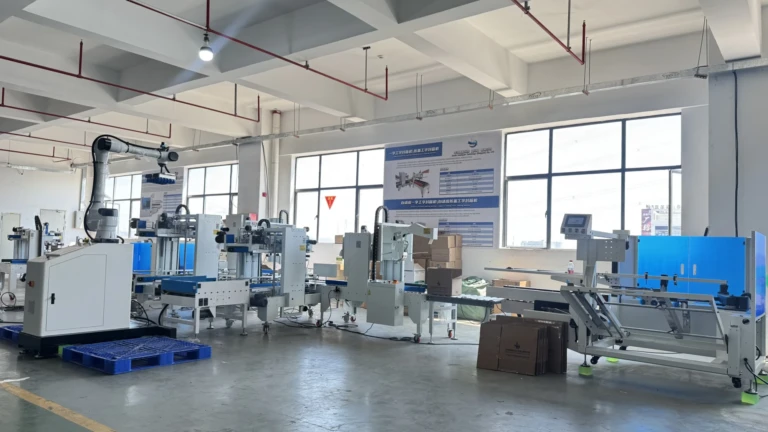
For example, Huaxiu’s APPRs can retrieve pallets formed by their pallet-forming robots, secure them via strapping robots, and deliver them to fully automatic stretch film packaging robots—all without human touchpoints. This end-to-end automation slashes process time by up to 70%.
The Future: Where Pallet Pulling Robots Are Headed
- AI-Powered Adaptability: Machine learning will enable robots to handle irregular pallets (damaged, shifted loads) autonomously.
- 5G-Enabled Swarms: Ultra-low latency networks will allow larger fleets to coordinate in real time.
- Sustainability Focus: Electric APPRs reduce carbon footprints compared to diesel forklifts—critical for ESG compliance.
Conclusion
Automatic pallet pulling robots aren’t just replacing forklifts—they’re redefining material handling itself. By eliminating bottlenecks, enhancing safety, and unlocking data-driven optimization, they empower businesses to thrive in an era where speed and flexibility dictate market leadership. As pioneers like Huaxiu Robot expand capabilities—from collaborative palletizing to shrink-wrapping—the gap between early adopters and competitors will widen exponentially. The question isn’t whether to automate pallet transport, but how swiftly you can integrate this transformative technology.
FAQs
Q1: How long does it take to deploy pallet pulling robots?
Most systems go live in 2–6 weeks, depending on facility complexity. Huaxiu’s modular robots require minimal IT overhead.
Q2: Can they handle uneven or damaged pallets?
Advanced models use 3D vision and force sensing to adjust grip and navigation, tolerating minor pallet deformities.
Q3: What’s the ROI timeframe?
Businesses typically recoup costs in 8–18 months via labor savings, reduced damage, and throughput gains.
Q4: Are these robots safe around human workers?
Yes. Huaxiu’s robots comply with ISO 3691-4 safety standards, featuring emergency stop buttons, obstacle detection, and speed reduction in shared zones.
Q5: Can APPRs integrate with our existing WMS?
Absolutely. Huaxiu’s robots support APIs for SAP, Oracle, and custom warehouse systems.
Explore Huaxiu Robot’s full portfolio—from collaborative palletizing to end-of-line packaging—to engineer your future-ready supply chain.