The Future is Stacked: How Automation is Revolutionizing Food Palletizing in Wholesale Warehouses
The food wholesale industry operates on razor-thin margins, demanding relentless efficiency, uncompromising food safety, and the ability to scale rapidly. At the heart of this logistical symphony lies palletizing—the critical process of stacking boxes, crates, or bags onto pallets for storage and shipment. For decades, this task relied on manual labor, but with rising labor shortages, ergonomic concerns, and stringent hygiene regulations, forward-thinking wholesalers are turning to robotics for a competitive edge.
Why Automated Palletizing is No Longer Optional
The traditional approach to palletizing—heavy lifting, repetitive motions, and high injury rates—is unsustainable. Consider these industry shifts:
- Labor Challenges: Recruitment struggles, turnover rates exceeding 30% in warehousing, and rising wage demands.
- Food Safety Compliance: FSMA (Food Safety Modernization Act) and HACCP standards require minimized human contact with consumables.
- E-commerce Pressure: Direct-to-consumer fulfillment requires smaller, mixed-SKU pallet configurations that overwhelm manual workflows.
- Throughput Demands: Orders must ship faster than ever—robots don’t fatigue during double shifts.
This is where specialized robotics providers like Huaxiu Robot deliver transformative solutions.
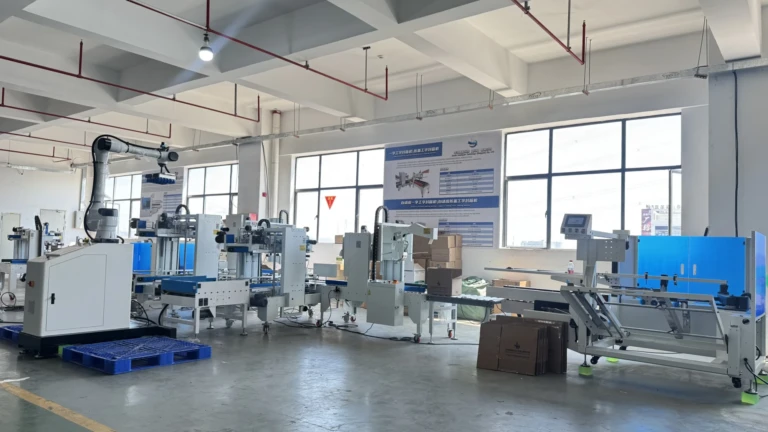
Huaxiu Robot’s Automation Arsenal for Wholesale Food Logistics
Unlike generic robotic arms, Huaxiu’s systems are engineered for the unique demands of food handling: speed, precision, sanitation, and adaptability. Here’s how their integrated ecosystem solves industry-specific pain points:
1. Collaborative Palletizing Robots (Cobots)
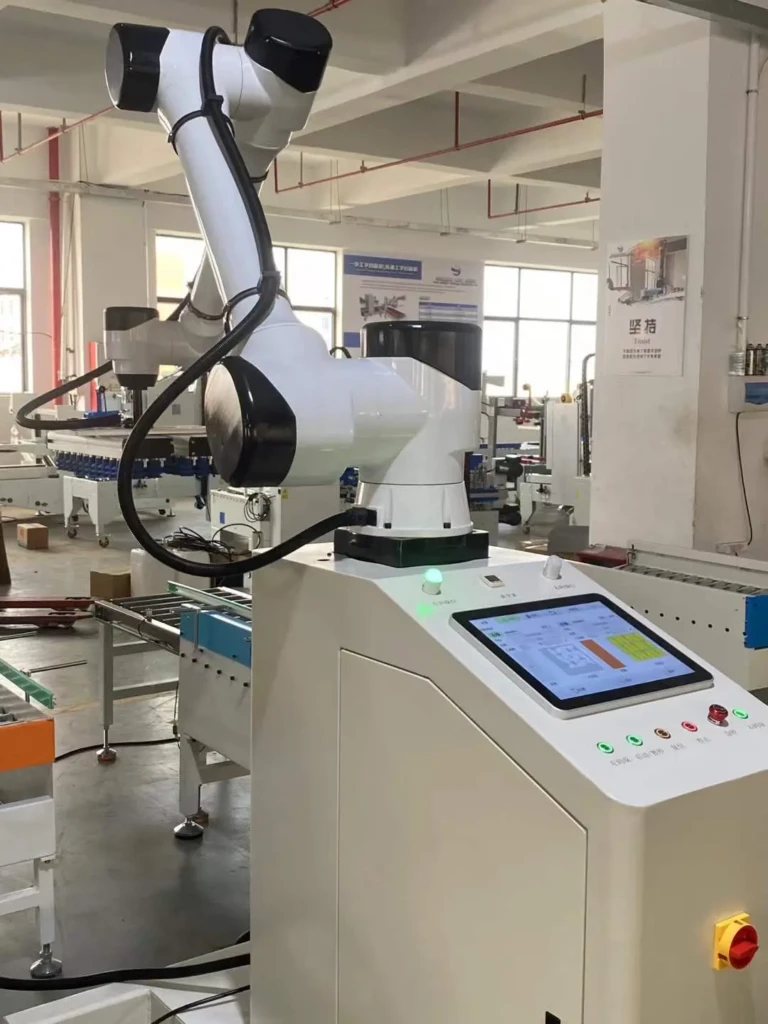
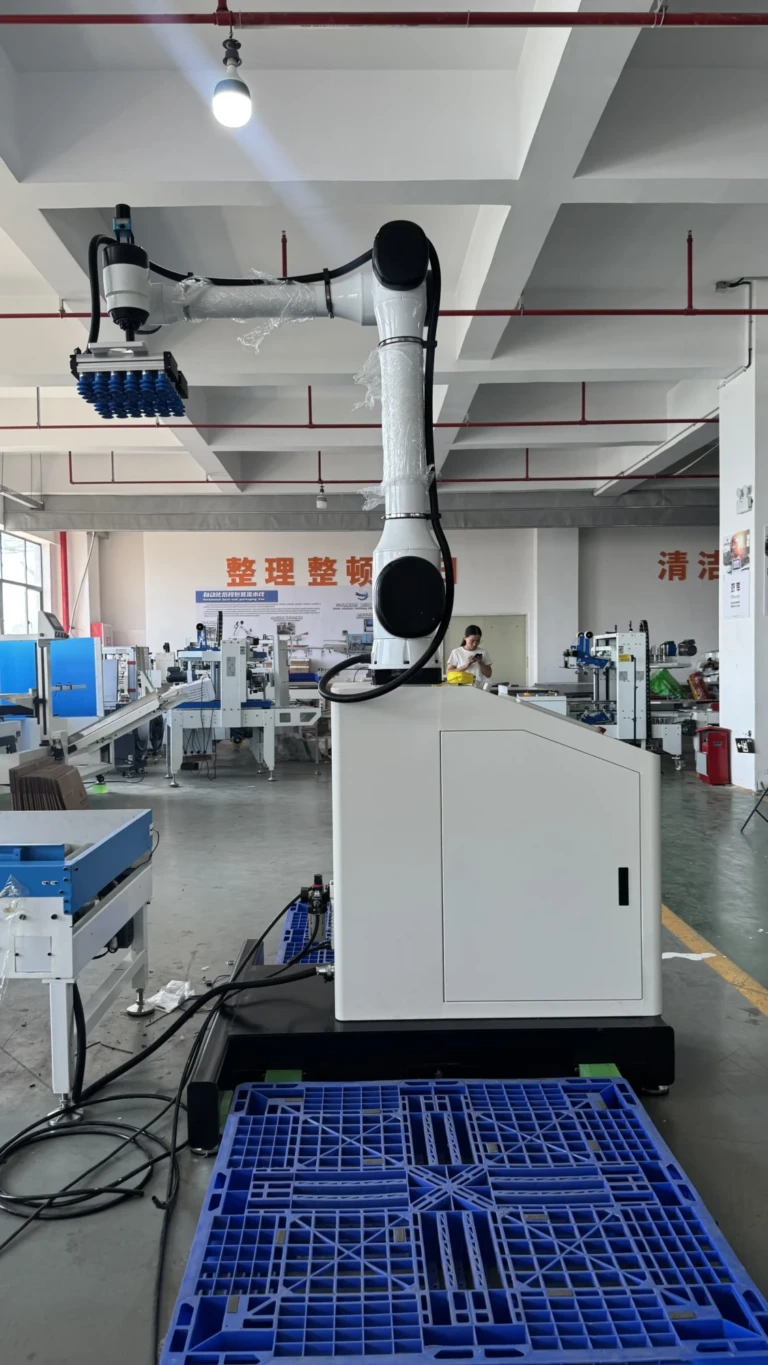
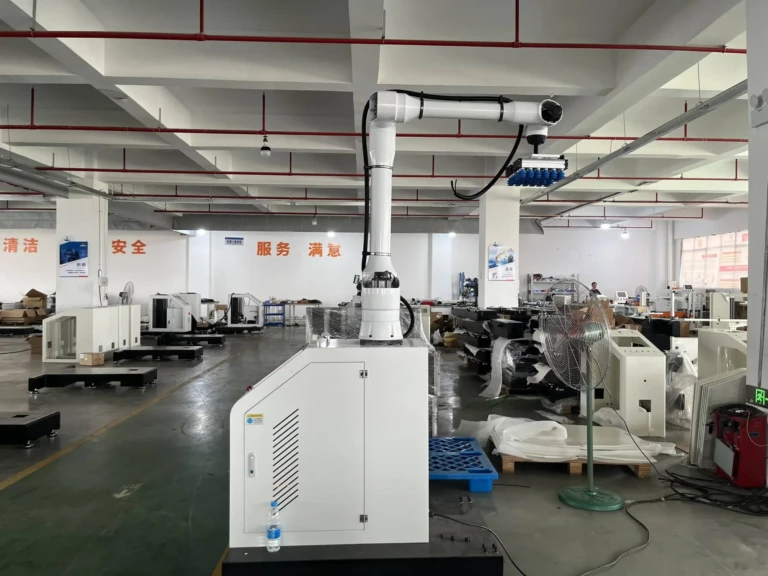
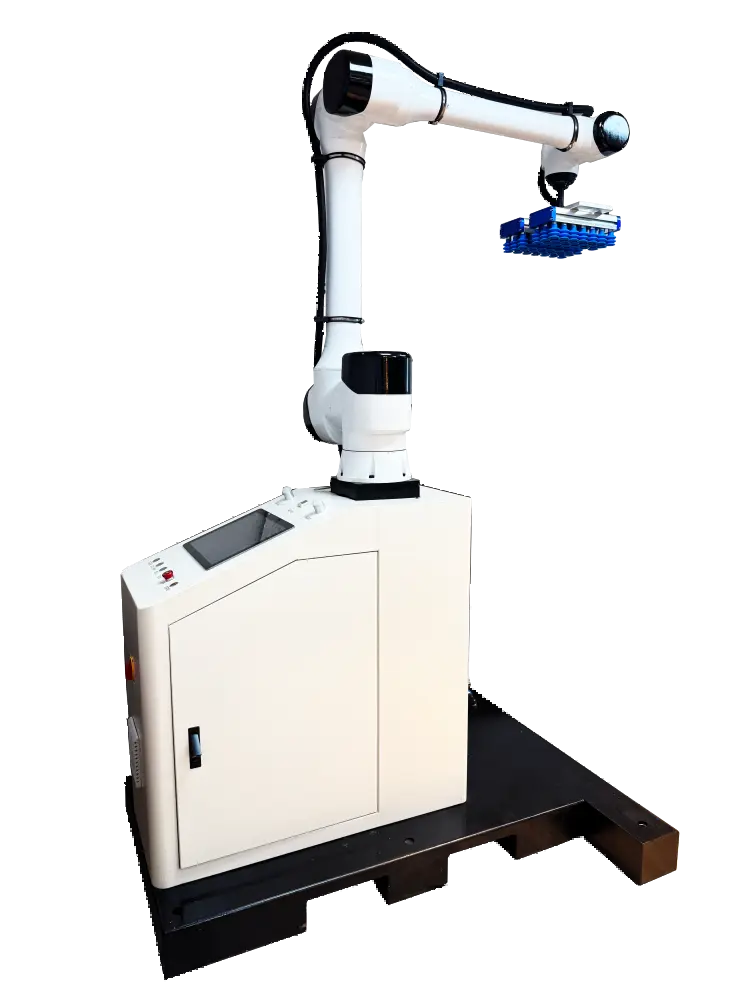
These user-friendly robots work alongside humans without safety cages, ideal for warehouses with space constraints. Equipped with vision systems, they handle irregularly shaped packages (e.g., produce boxes, frozen protein bags) and dynamically adjust stacking patterns. With payloads up to 150kg, they can layer heavy flour sacks or fragile egg cartons without product damage.
2. End-to-End Case Handling Systems
- Automatic Unpacking Robots: Unload inbound shipments, remove packaging, and sort products onto conveyors.
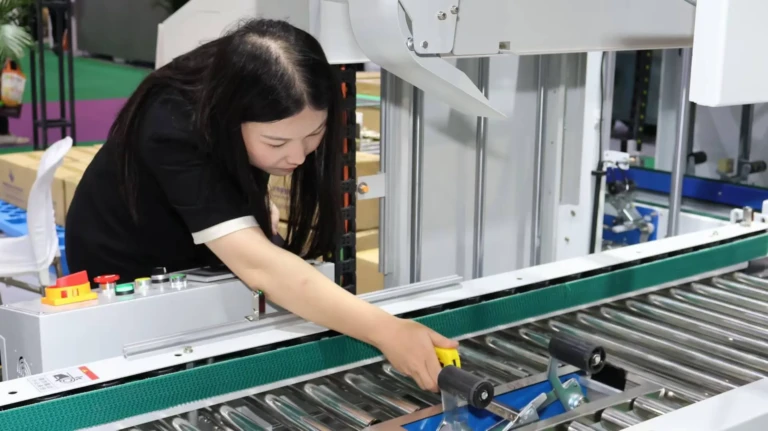
- Sealing & Strapping Robots: Automatically seal filled boxes, apply tamper-proof tape, or secure pallets with steel/plastic strapping—critical for audit compliance.
3. Advanced Pallet Packaging & Stabilization
- Shrink Packaging Robots: Apply FDA-compliant shrink wrap to pallets, ensuring moisture resistance for refrigerated goods.
- Stretch Film Robots: Precisely wrap pallets with tension-optimized film, reducing material waste by 20% compared to manual methods.
- Pallet Forming Robots: Automatically assemble/disassemble plastic or wooden pallets, slashing handling times.
4. Cold Chain Optimization
Huaxiu’s food-grade robots feature IP67-rated components (protection against water/dust) and can operate in -30°C freezer environments—vital for frozen food and dairy wholesalers.
The Tangible ROI of Automation
- Labor Savings: One cobot palletizer replaces 2–3 manual workers, achieving payback in under 18 months.
- Zero Contamination Risk: Eliminate human contact with allergens or pathogens using closed systems.
- Product Integrity: AI-driven pressure control prevents crushing delicate items like bakery goods.
- Space Efficiency: Compact mobile units can be redeployed across shifts as demand fluctuates.
Beyond the Warehouse: The Evolving Role of Robotics
Modern systems like Huaxiu’s offer predictive analytics functionality—tracking cycle times, slip rates, and throughput bottlenecks. Integration with WMS (Warehouse Management Systems) enables real-time adjustments based on order prioritization or machine learning-driven optimization.
Conclusion: Palletizing as a Strategic Advantage
Automating palletizing isn’t just about replacing labor; it’s about reimagining scalability, traceability, and resilience. For food wholesalers navigating supply chain volatility and consumer expectations, robotics ensures consistent, audit-ready operations. Huaxiu Robot’s specialized focus on food-grade automation positions them as a partner in compliance and competitiveness—moving beyond "cost-cutting" to "revenue-enabling" logistics.
FAQs: Automating Food Palletizing
Q: How long does it take to integrate a palletizing robot into an existing warehouse line?
A: Most Huaxiu systems deploy in 4–6 weeks, including conveyor retrofitting, safety zoning, and staff training.
Q: Can robots handle mixed-SKU palletizing (e.g., subscription boxes)?
A: Yes. Vision-guided cobots dynamically adjust grip and stacking based on package dimensions, weights, and load balancing requirements.
Q: Are robotic palletizers safe near human workers?
A: Collaborative robots (cobots) feature force-limited joints, collision detection, and emergency braking per ISO 10218 standards, enabling shared workspaces.
Q: How do I sanitize robots in food environments?
A: Huaxiu’s stainless-steel robots with smooth surfaces are designed for washdown (IP67). No porous materials or crevices where pathogens could accumulate.
Q: What’s the ROI timeline for a typical palletizer installation?
A: Most clients report full ROI within 12–24 months via labor savings, reduced product damage, and increased throughput capacity.
Q: Can automation handle irregularly shaped items like bags of rice or fresh produce?
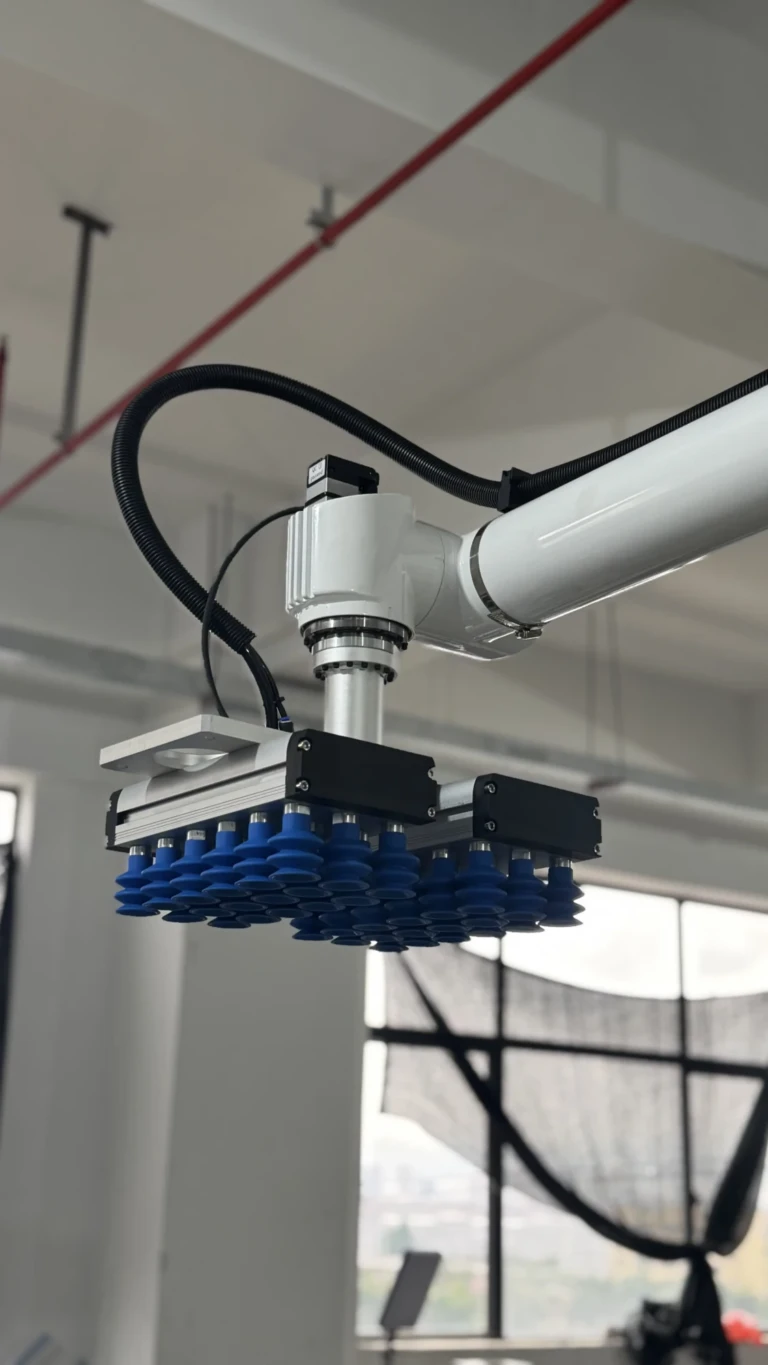
A: Advanced EOAT (end-of-arm tooling) options include vacuum grippers, gentle claws, and conveyor-fed bag placers for non-rigid items.
Q: Do I need coding expertise to operate these robots?
A: No. Huaxiu’s intuitive HMI (Human-Machine Interface) allows operators to program pallet patterns via drag-and-drop templates.
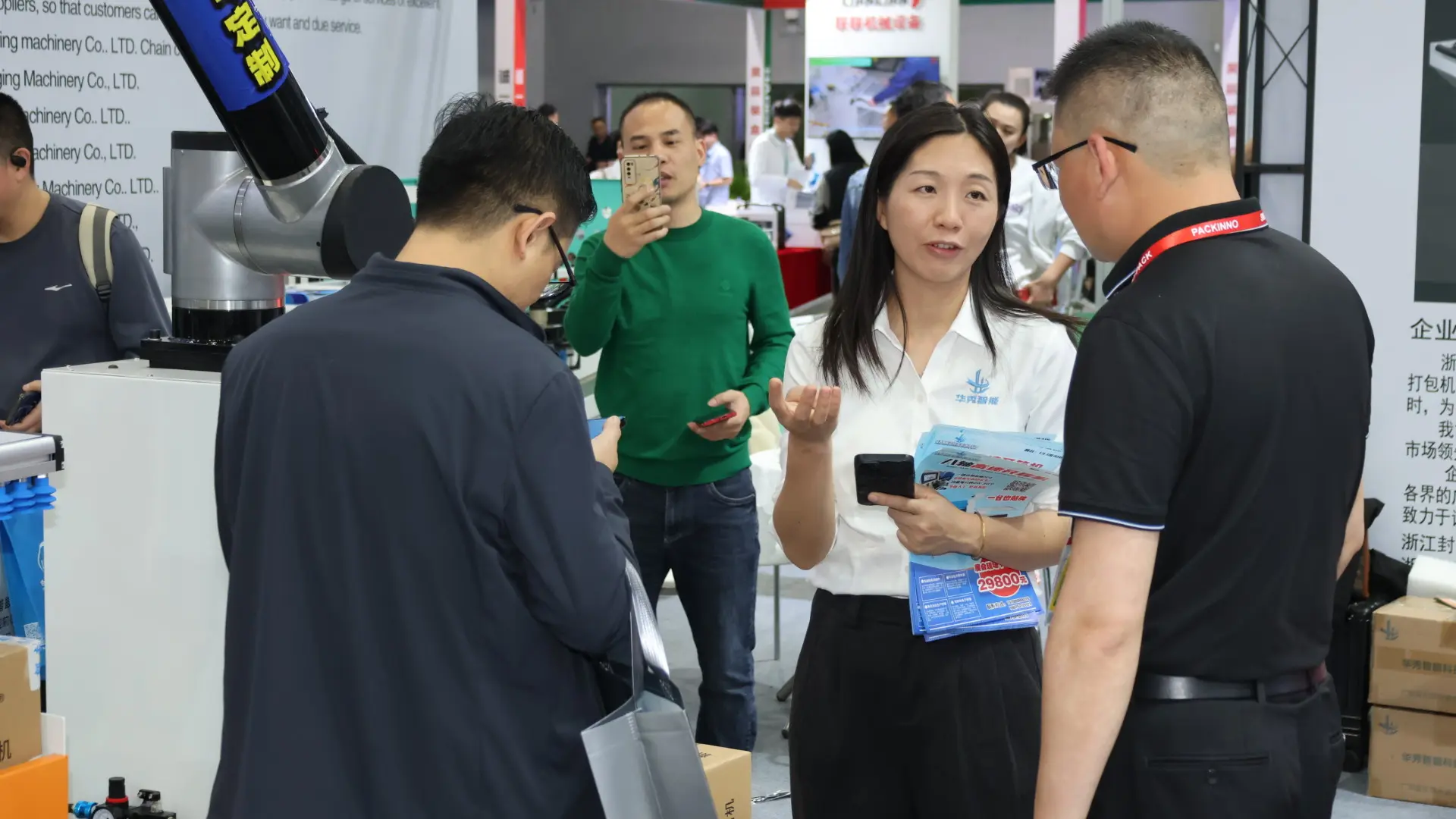
Ready to explore how automated palletizing can future-proof your food wholesale operations? Contact Huaxiu Robot’s engineering team for a facility-specific productivity analysis.