The Silent Revolution in Warehousing: How Robotic Bag Palletizing is Transforming Industrial Operations
Walk into any modern manufacturing plant or distribution center handling bagged goods – whether it’s 25kg fertilizer sacks, 50lb flour bags, or retail-sized pet food packaging – and you’ll witness a ballet of precision. Stacked pallets materialize with geometric perfection, layer after identical layer, without human hands touching a single bag. Welcome to the era of robotic bag palletizing – no longer a futuristic concept, but a tangible reality driving operational metamorphosis across industries.
Why Palletizing Automation is No Longer Optional
Bag palletizing represents one of the most physically demanding and injury-prone tasks in material handling. Manual palletizing of heavy bags leads to:
- Chronic musculoskeletal disorders among workers
- Inconsistent pallet patterns causing stability risks
- Throughput limitations (200-400 bags/hour maximum for human crews)
- High turnover rates in strenuous roles
Legacy automated solutions like traditional palletizers brought partial relief but introduced new challenges: excessive floor space requirements, inflexible programming, and difficulty handling variable bag sizes. Enter the next-generation robotic systems – compact, intelligent, and astonishingly adaptable.
The Neuro-Mechanical Precision of Modern Palletizing Robots
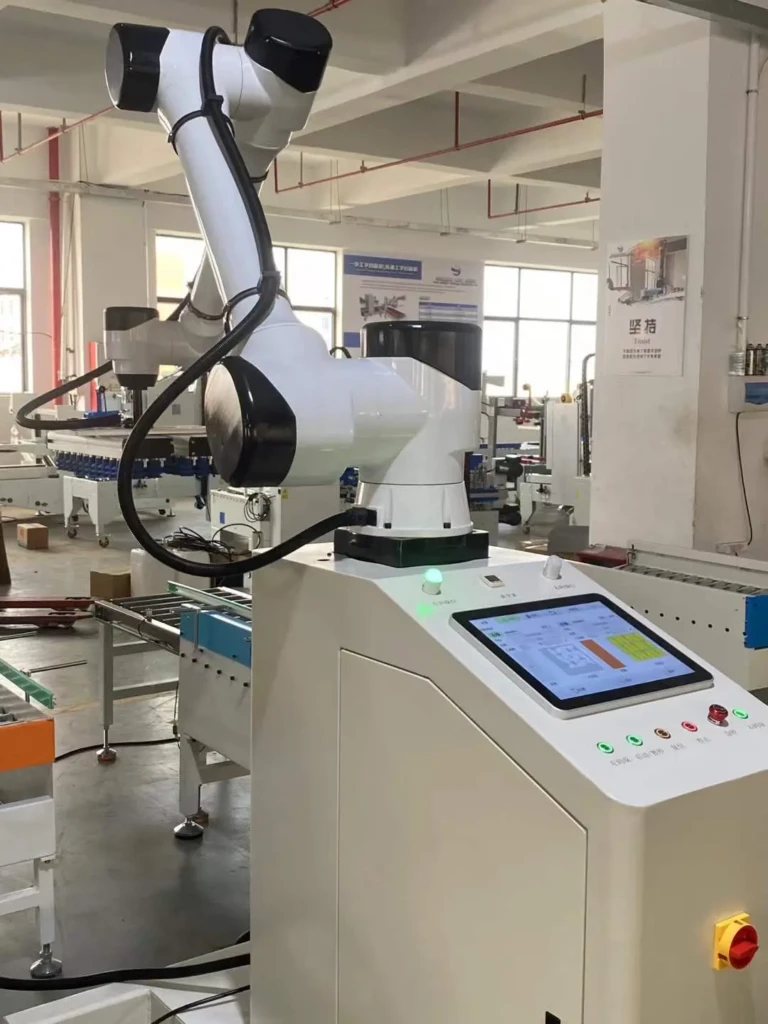
Leading manufacturers like Huaxiu Robot have engineered systems that blend industrial robustness with sophisticated AI-driven capabilities:
1. Vision-Guided Adaptive Handling
Advanced 3D vision systems scan incoming bags in real-time, detecting:
- Orientation variations (+/- 45° compensation capability)
- Deformed or inconsistently filled bags
- Optimal grip points based on surface texture
This enables reliable handling of polywoven sacks, laminated bags, and even defectively sealed packages that would jam conventional systems.
2. Kinematic Optimization Algorithms
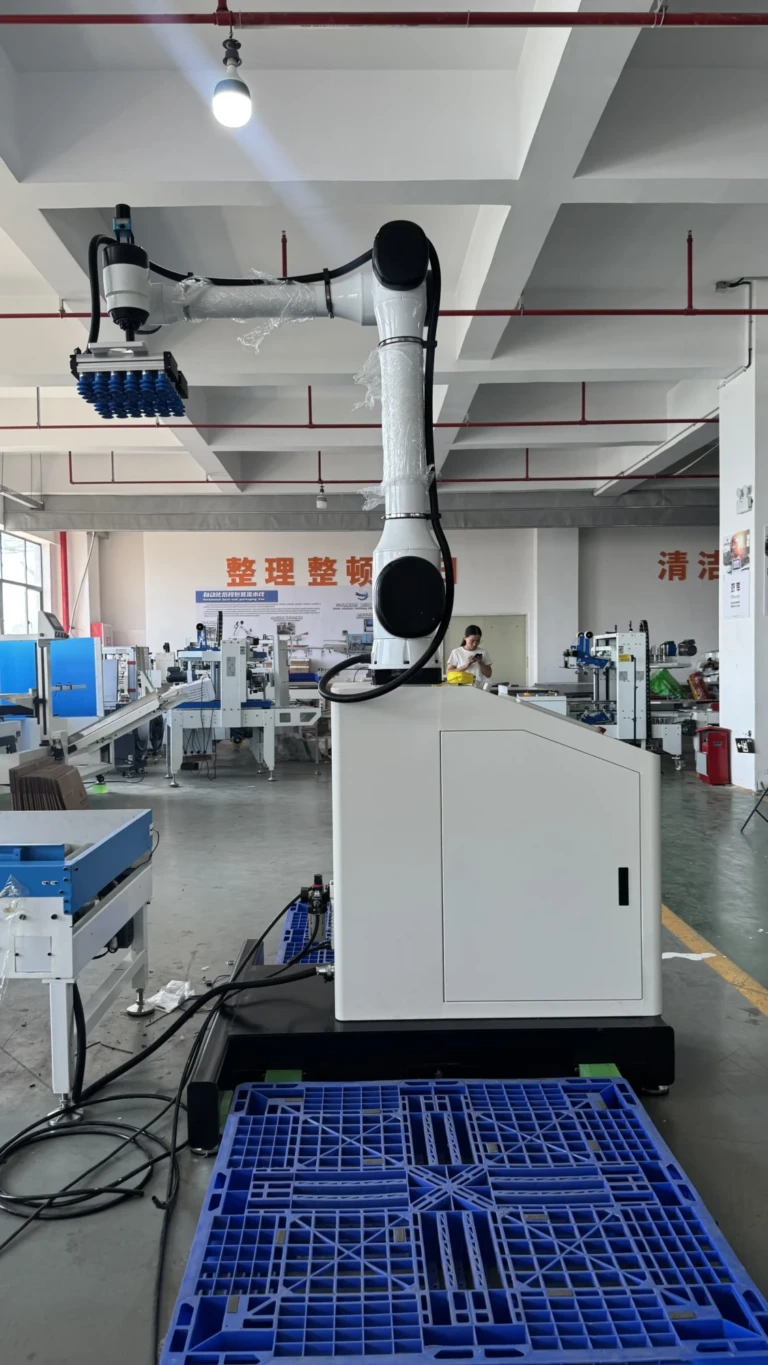
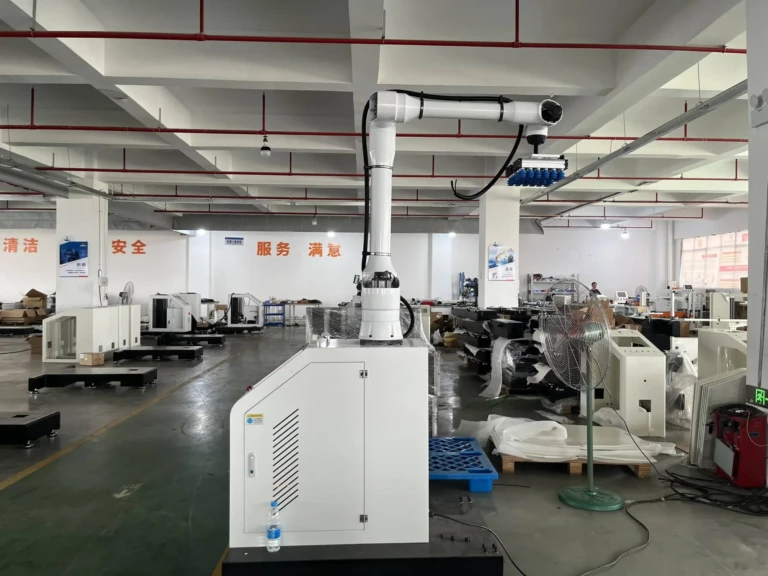
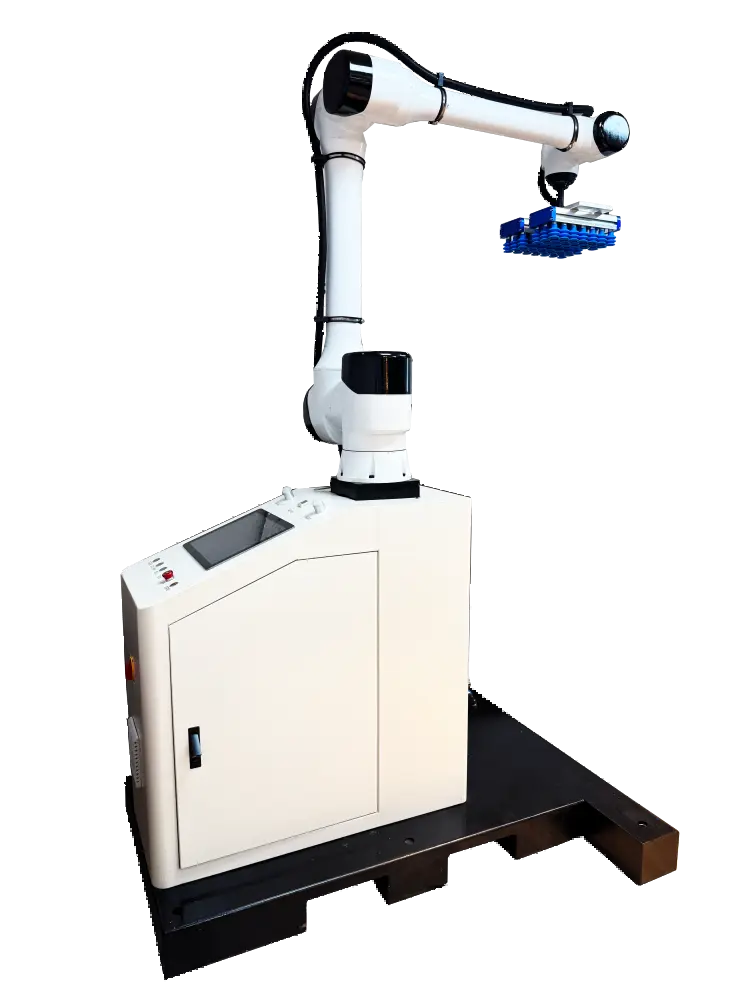
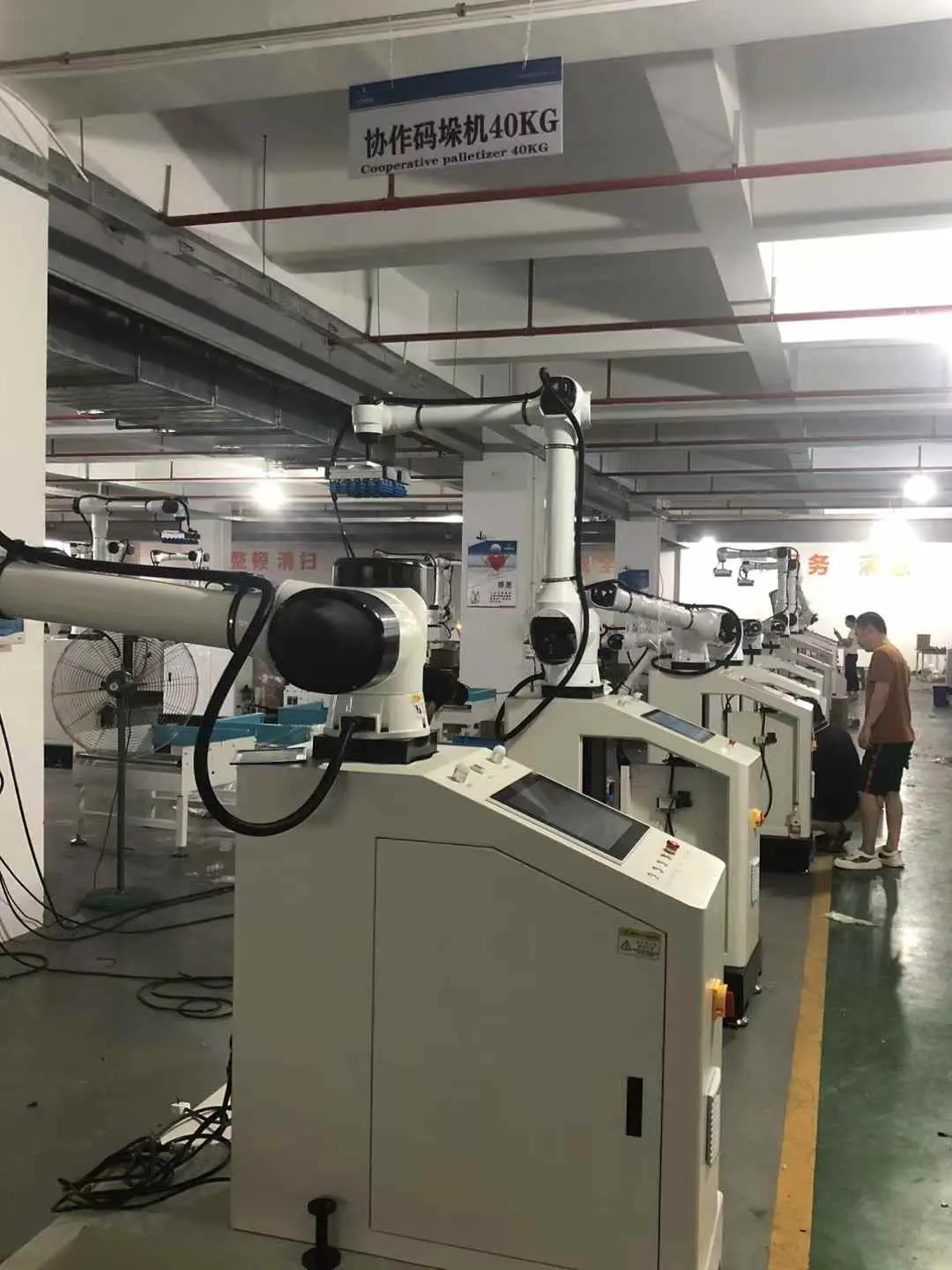
Unlike rigid linear palletizers, articulated robots like Huaxiu’s 6-axis collaborative models calculate:
- Most energy-efficient joint movements
- Collision-free trajectories in congested workcells
- Automatic weight distribution analysis for mixed-load pallets
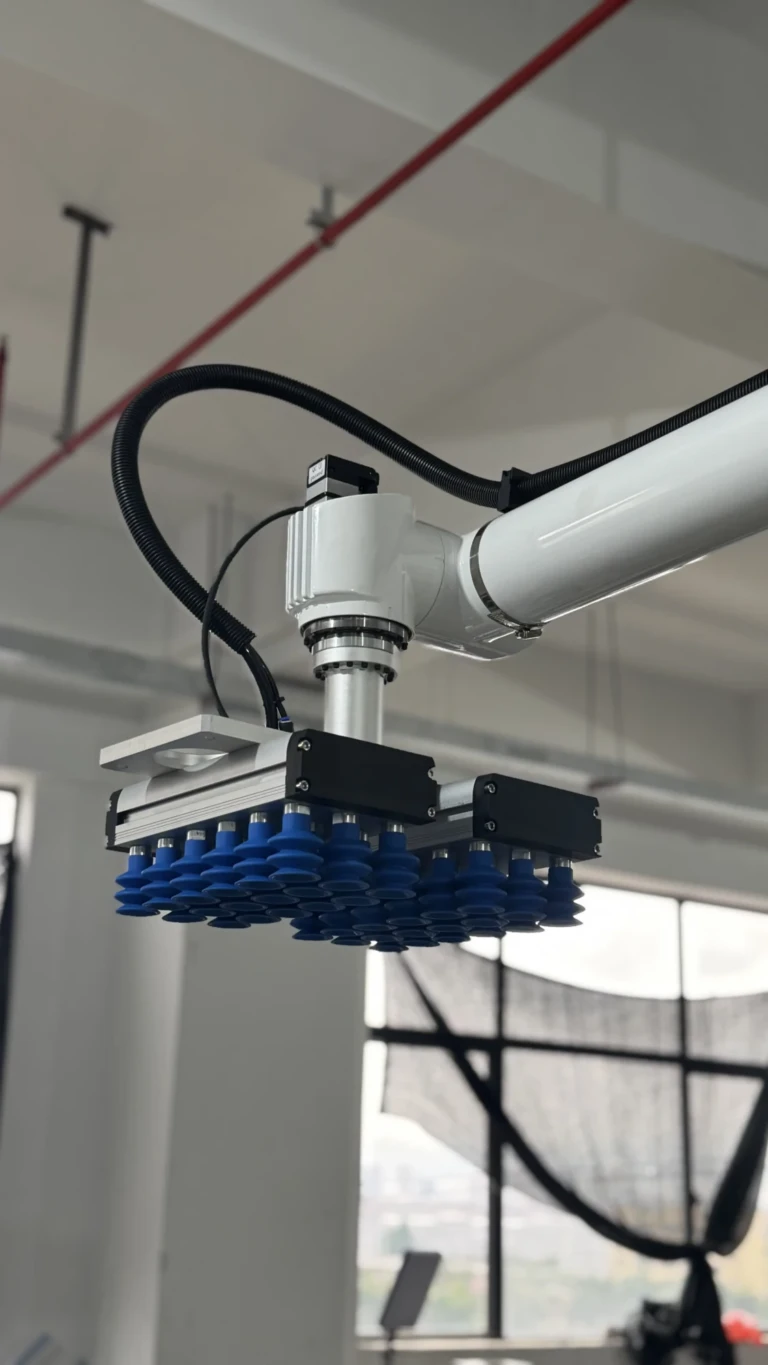
3. End-of-Arm Tooling (EOAT) Innovation
Specialized gripper designs overcome traditional challenges:
- Vacuum-based systems with surface conforming bellows for porous bags
- Hybrid mechanical/vacuum grippers for secure handling of 100lb+ cement bags
- Quick-change adapters allowing single-robot multi-format operation
The Huaxiu Ecosystem: Beyond Standalone Palletizing
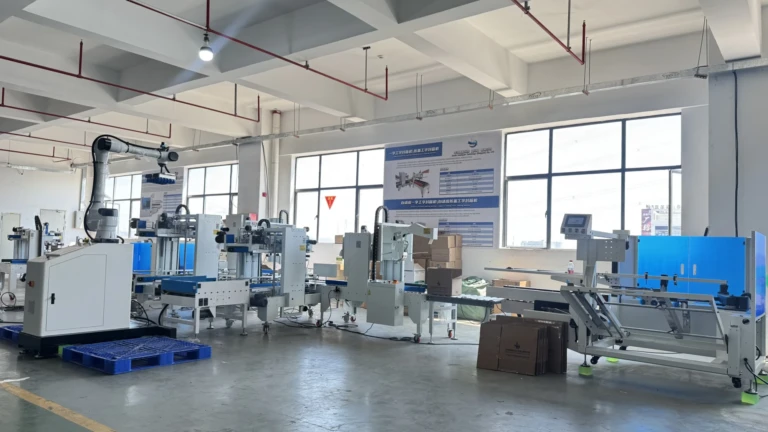
What sets forward-thinking providers apart is system integration intelligence. Huaxiu’s robotic palletizers don’t operate in isolation but form a continuum with:
- Automatic Unpacking Robots: Streamline upstream material flow
- In-Line Sealing/Re-Sealing Systems: Handle defective packaging in real-time
- Pallet Forming & Stretch Wrapping Integration: Create turnkey pallet build-to-ship solutions
This orchestration achieves unprecedented density – a 10m x 10m cell can handle unpacking, inspection, palletizing, and wrapping at 1,200+ bags/hour.
Quantifiable Impact: What Facilities Actually Gain
Implementation data across 37 Huaxiu installations reveals consistent outcomes:
| Metric | Average Improvement |
|---|---|
| Palletizing Cycle Time | 50-70% Reduction |
| Labor Cost/Unit | 82% Decrease |
| Product Damage | <0.2% Incidence |
| ROI Period | 14-18 Months |
| Floor Space Utilization | 40% Optimization |
Notably, facilities report 90%+ reduction in pallet-related workers’ compensation claims within the first year.
Industry-Specific Engineering Considerations
Food & Pharma Applications:
- USDA/FDA-compliant stainless steel construction
- IP69K washdown-rated components
- Antimicrobial grip surfaces
Harsh Environments (e.g., Cement, Chemicals):
- Explosion-proof (ATEX) configurations
- Reinforced filtration for dusty conditions
- Abrasion-resistant EOAT coatings
Implementation Roadmap: Avoiding Critical Pitfalls
Successful deployment hinges on:
- Pre-Installation Simulation: Digital twin modeling of your specific bag profiles and pallet patterns
- Dynamic Testing: Running 500+ sample bags with intentional defects to calibrate vision systems
- Phased Transition: Maintaining parallel manual lines during commissioning
- Counterintuitive Staffing: Upskilling palletizing teams as robot operators/maintenance techs
Tomorrow’s Palletizing Landscape: Emerging Innovations
- Self-Optimizing Pattern Generation: AI that redesigns stacking patterns based on real-time pallet instability detection
- Predictive Bag Handling: Machine learning anticipating jams by analyzing subtle conveyor vibration patterns
- Blockchain-Integrated Pallet Tracking: Each robotically handled bag encoded with pallet position data for supreme traceability
Conclusion: The Stacked Advantage
Robotic bag palletizing has transcended its cost-saving origins to become a strategic enabler – transforming warehouses from cost centers into precision-logistics hubs. As Huaxiu’s deployments across six continents demonstrate, the technology isn’t about replacing humans, but about amplifying human potential. Forklift operators become automation managers. Line supervisors evolve into data analysts. And palletizing? It becomes not a job, but a seamlessly orchestrated symphony of efficiency.
The question for industrial leaders is no longer if to automate palletizing, but how rapidly they can implement solutions that integrate with tomorrow’s smart factories. With ROI windows shrinking below 18 months and modular solutions eliminating traditional barriers, the age of robotic stacking isn’t coming—it’s already stacking bags in the facility next door.
Palletizing Automation: Your Questions Answered
Q1: Can robotic systems handle our mix of 5kg, 10kg, and 25kg bags on the same line?
Absolutely. Modern systems like Huaxiu’s collaborative palletizing robots automatically detect bag sizes through integrated vision scanners and adjust grip pressure, placement force, and stacking patterns in real-time. Changeovers between formats require zero mechanical adjustments.
Q2: How do these robots handle torn or leaking bags without contaminating equipment?
*Advanced systems employ multiple safeguards:
- Pre-palletizing inspection via hyperspectral imaging
- Dedicated reject arms for compromised bags
- Easy-clean surfaces with residual product drainage channels
- Automated washdown modes for food-grade applications*
Q3: Our facility has 48" and 60" pallets – does this require separate systems?
Not with contemporary solutions. Programmable pallet position tracking allows single robots to service multiple pallet dimensions simultaneously. Automatic pallet dispensers can alternate sizes based on production schedules.
Q4: What maintenance expertise do we need onsite?
*Huaxiu designs for minimal maintenance:
- <2 hours/month typical service needs
- Modular component replacement (95% parts swap <15min)
- Augmented Reality (AR) guided troubleshooting
- Remote diagnostics via embedded IoT sensors*
Q5: How does ROI calculation account for indirect benefits like reduced product damage?
*Our implementation teams conduct pre-install audits quantifying:
- Current shrinkage rates (average 3-7% in manual handling)
- Workers’ comp claim costs
- Inventory carrying costs from pallet restacking
These often reveal 30-40% of total savings come from "invisible" factors beyond direct labor reduction.*
Q6: Can your robots integrate with our existing stretch wrappers and conveyors?
Yes – Huaxiu systems communicate via standard industrial protocols (EtherCAT, PROFINET, Ethernet/IP). Our engineers create custom interfaces for legacy equipment, often utilizing universal adapter plates that eliminate the need for conveyor modifications.
Q7: What cybersecurity measures protect networked palletizing systems?
*We implement defense-in-depth protocols:
- Hardware-enforced network segmentation
- TLS 1.3 encrypted communication
- Zero-trust access controls
- Discrete air-gapped backup controllers
Regular penetration testing ensures compliance with NIST CSF guidelines.*
The evolution continues – with Huaxiu currently piloting quantum computing-optimized path planning algorithms that promise another 30% cycle time reduction. The future of palletizing isn’t just automated; it’s cognitively optimized.