
The Hidden Powerhouse in Modern Warehousing: How Robotic Palletizing Transforms Throughput
In today’s hypercompetitive logistics landscape, warehouses and manufacturing facilities face relentless pressure: move more product, faster, with fewer errors – all while controlling costs. At the heart of this challenge lies one critical bottleneck: the palletizing process. Traditional manual methods struggle to keep pace, creating production logjams and forcing costly overtime. Enter robotic palletizing – the silent revolution transforming end-of-line operations from a constraint into a competitive advantage.
Why Palletizing Automation is No Longer Optional
Manual palletizing presents a triple threat to operational efficiency:
- Physical Limitations: Human workers fatigue, leading to slowdowns during shifts and increased injury risks at payloads exceeding 30kg
- Inconsistency: Even experienced workers create unstable pallet patterns, risking product damage and warehouse accidents
- Scalability Issues: Seasonal spikes or sudden demand surges require costly temporary labor with extended onboarding times
Robotic solutions eliminate these constraints through continuous, precision operation. But not all automation is created equal. Next-gen systems go beyond simply replacing humans – they enhance capabilities through integrated functionality.
Beyond Basic Stacking: The Huaxiu Advantage
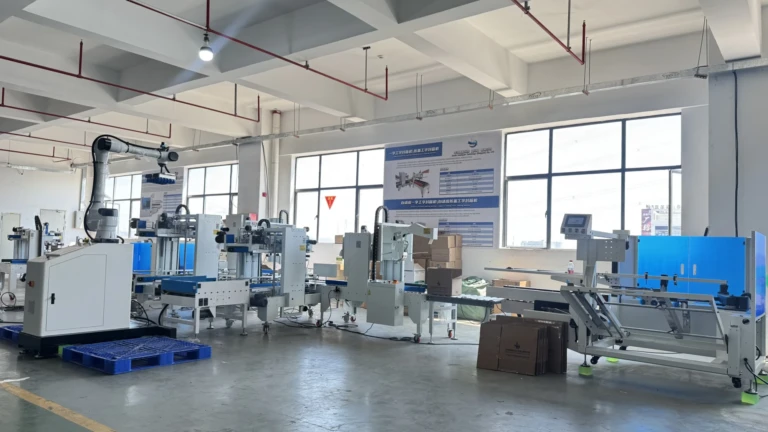
While many providers offer standalone palletizing arms, industry leaders like Huaxiu Robot deliver complete end-to-end solutions that address the entire post-production workflow:
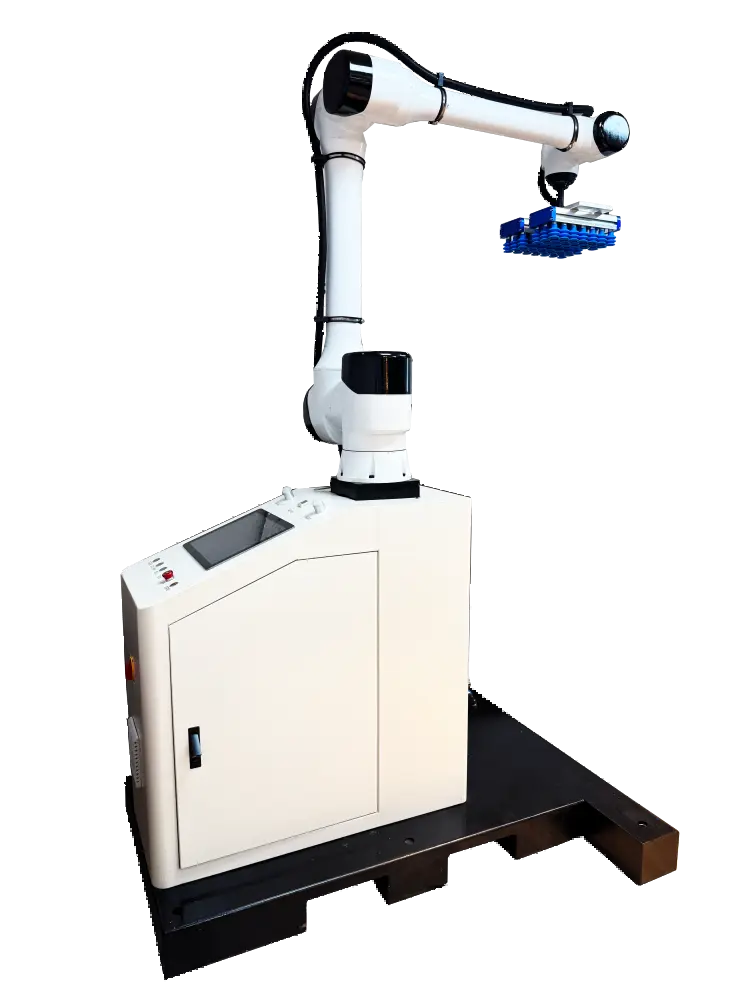
1. Intelligent Collaborative Palletizers
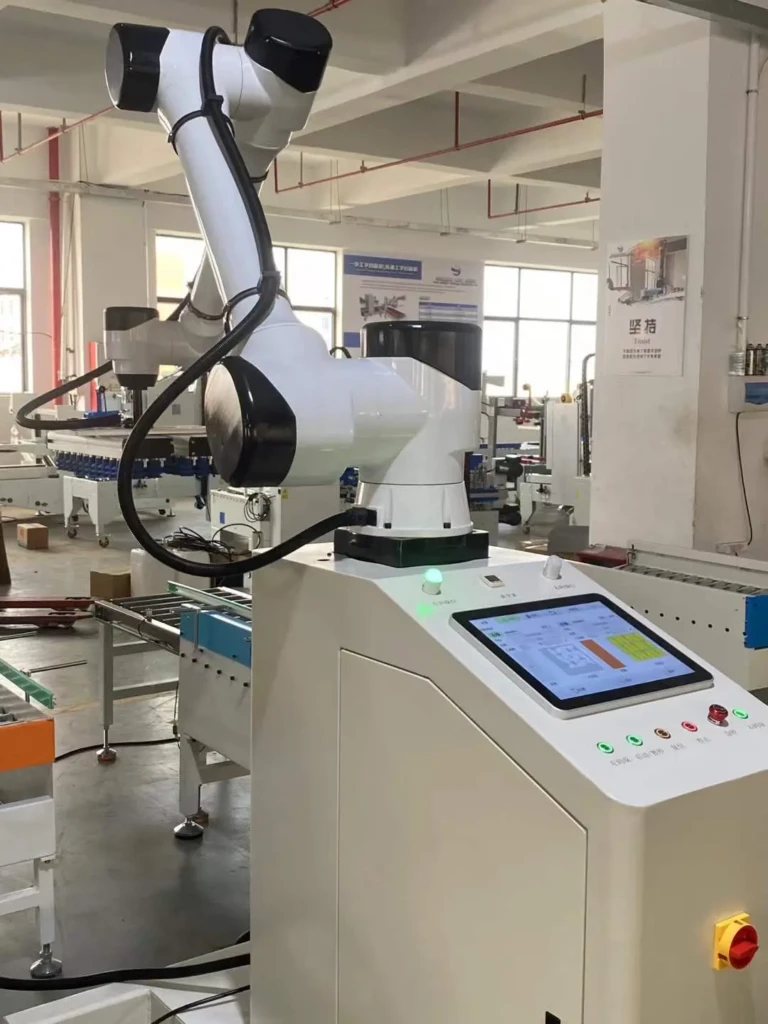
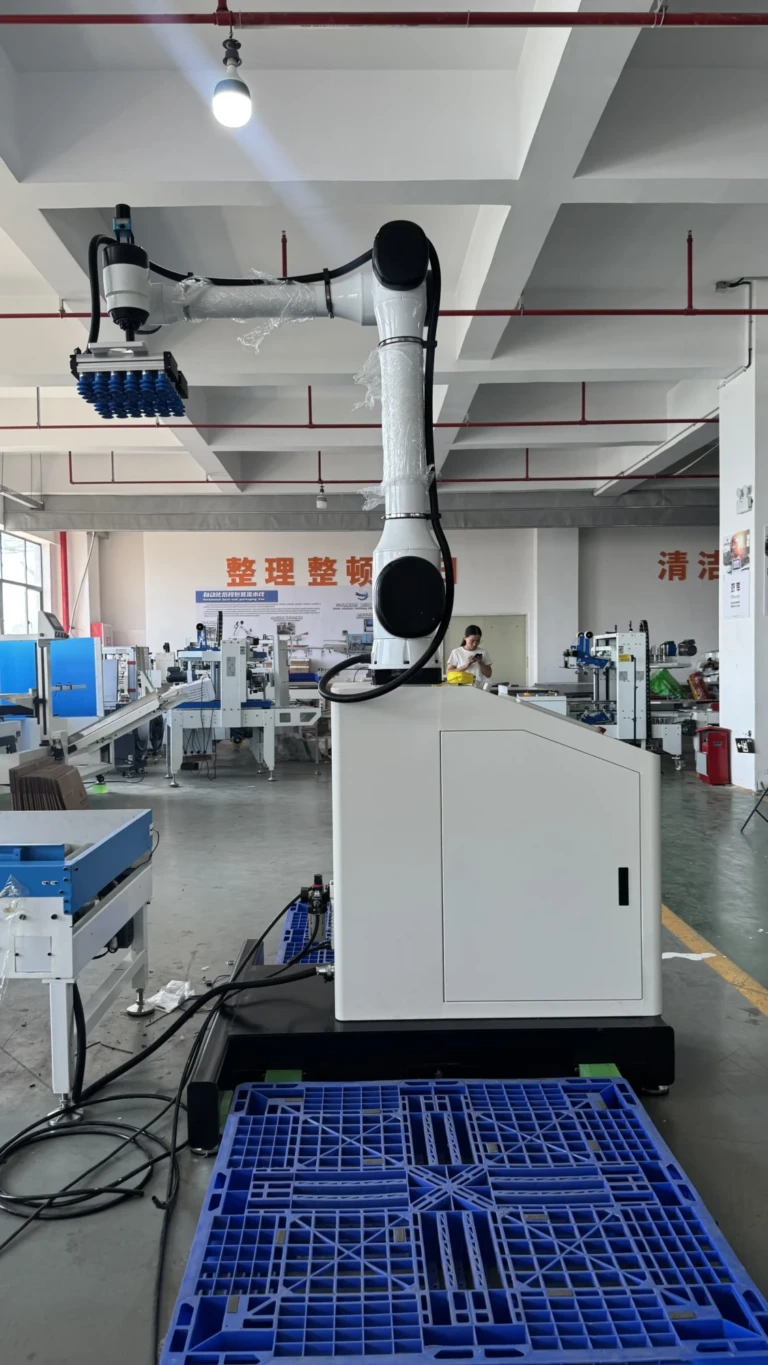
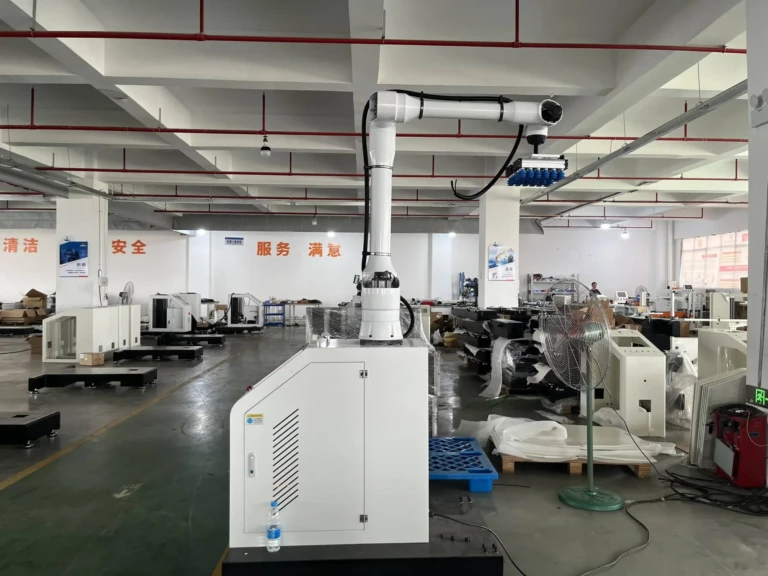
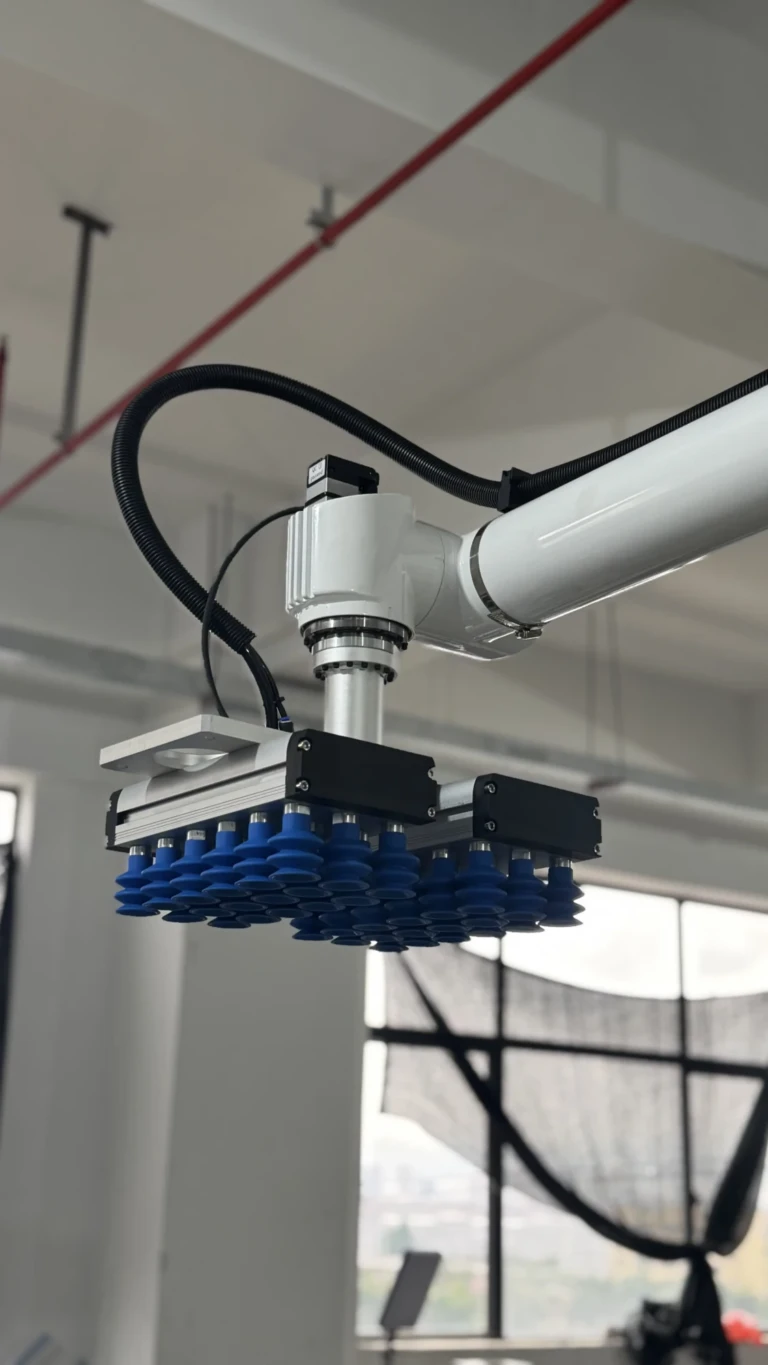
Our collaborative robots (cobots) work safely alongside humans without safety cages, adapting to mixed-SKU pallets through AI vision systems. Unlike traditional industrial robots, they redeploy in <2 hours for production line changes.
2. Integrated Packaging Ecosystem
Unique among automation providers, we solve the complete packaging puzzle:
- Automatic Unpacking Robots for inbound material handling
- Sealing & Strapping Systems with real-time tension monitoring
- Shrink Wrap & Stretch Film Robots with 30% film savings via precision wrapping algorithms
- Pallet Forming Robots that build custom pallet templates in real-time
3. Data-Driven Optimization
Our proprietary FlowLogic™ software doesn’t just control machinery – it continuously analyzes:
- Optimal weight distribution patterns
- Predictive maintenance alerts (avoiding 92% of unplanned downtime)
- Energy consumption vs. throughput ratios
The Throughput Multiplier Effect
A South American beverage manufacturer’s deployment illustrates the transformational impact:
- Pre-automation: 210 pallets/day with 12 workers across 2 shifts
- Post-deployment: 380 pallets/day with 3 workers and 6 Huaxiu robots
- Key Results:
- 14.3 second cycle time per layer (46% faster than manual)
- 0.12% damaged goods (down from 3.7%)
- ROI achieved in 6.3 months
This demonstrates the compound benefits of robotic palletizing when integrated with complementary automation technologies.
The Palletizing Pyramid: Choosing Your Optimization Level
Not every facility needs fully autonomous systems. Our tiered approach matches solutions to operational maturity:
Level 1: Semi-Automatic Sealers → 25% throughput gain
Level 2: Cobot Palletizers → 65-80% gain
Level 3: Fully Integrated EOL Systems → 130-200% gain
Conclusion
Robotic palletizing has evolved from a "nice-to-have" luxury to the backbone of modern material handling. The true competitive edge lies not in isolated robots, but in harmonized systems that handle unpacking, pallet forming, load securing, and wrapping as a single continuous flow. As labor shortages intensify and e-commerce demands accelerate, facilities embracing this holistic automation approach will dominate their verticals through unprecedented throughput consistency, scalability, and resilience.
FAQs: Robotic Palletizing Demystified
Q1: How quickly can we implement robotic palletizing?
A: Standard Huaxiu deployments take 3-6 weeks from delivery to full operation. Our modular systems require minimal civil works – most installations complete over a weekend shutdown.
Q2: Can robots handle our diverse box sizes?
A: Absolutely. Our vision-guided systems process up to 87 different box dimensions simultaneously without reprogramming. The AutoShift™ system dynamically adjusts gripper pressure and placement algorithms in real-time.
Q3: What about maintenance downtime?
A: With our ConditionGuard™ predictive maintenance ecosystem, 94% of service interventions are scheduled during planned downtime. All critical components have <2hr replacement time under warranty.
Q4: Are collaborative robots really safe around workers?
A: Our cobots exceed ISO/TS 15066 safety standards with triple-redundant force limiters (optical, current-based, and mechanical). Over 400 deployed units maintain a perfect safety record.
Q5: How do we justify the capital investment?
A: Our ROI Calculator factors in:
- Labor cost savings (direct & indirect)
- Reduced product damage
- Lower insurance premiums
- Energy consumption
- Increased storage density from optimized pallets
Typical payback periods range from 5-11 months.
Q6: Can we automate mixed pallet builds?
A: Yes. Our SmartStack™ AI engine optimally arranges varying box sizes while maintaining stability. It automatically adjusts patterns when it detects new SKUs entering the line.
Q7: What floor space requirements exist?
A: Our compact cobot systems require just 2.1m² of floor space versus 4.8m² for conventional palletizing cells. For greenfield installations, we offer vertical stacking solutions that triple density.
Q8: How do you handle product changeovers?
A: Two methods: 1) Physical change kits switch grippers in <5 minutes, 2) Our universal magnetic/vacuum combo end-effector handles 97% of box types without tool changes.
Q9: What about integration with our existing WMS?
A: Our systems feature API-first architecture with pre-built connectors for SAP, Oracle, Manhattan, and custom systems. All pallet data (weights, dimensions, barcodes) syncs automatically.
Q10: What’s the lifespan of these systems?
A: With proper maintenance, Huaxiu robots have a 12-15 year operational lifespan. All components are upgradeable – 72% of machines installed in 2012 still operate with modern software and sensors.
For operations leaders ready to transform throughput from constraint to advantage, the next evolution begins with a single pallet.