Introduction
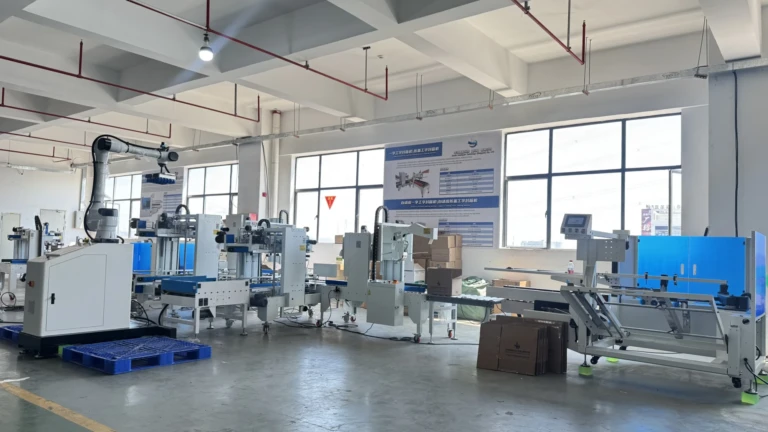
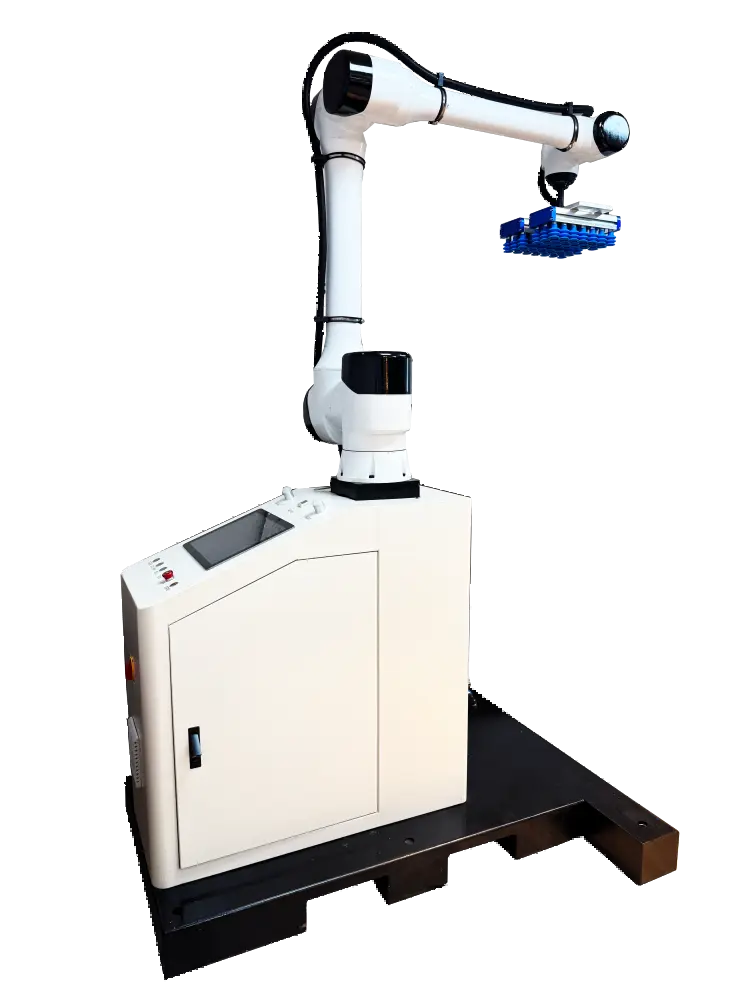
The global logistics and manufacturing sectors are undergoing a seismic shift toward automation, driven by demands for efficiency, precision, and cost reduction. At the forefront of this revolution is China’s palletizing robot industry, which has not only caught up with international competitors but is now setting new benchmarks in innovation, adaptability, and scalability. Companies like Huaxiu Robot are spearheading this transformation, offering cutting-edge solutions—from collaborative palletizing robots to fully automated stretch film packaging systems—that redefine how industries handle material handling, packaging, and palletization. This article explores the technological leaps propelling China’s palletizing robotics sector and what they mean for the future of automation.
China’s Technological Leadership in Palletizing Robotics
China’s robotics industry has evolved from being a fast follower to a global innovator, with palletizing robots embodying this progress. Several factors underpin this rise:
1. Collaborative Robotics: Human-Machine Symbiosis
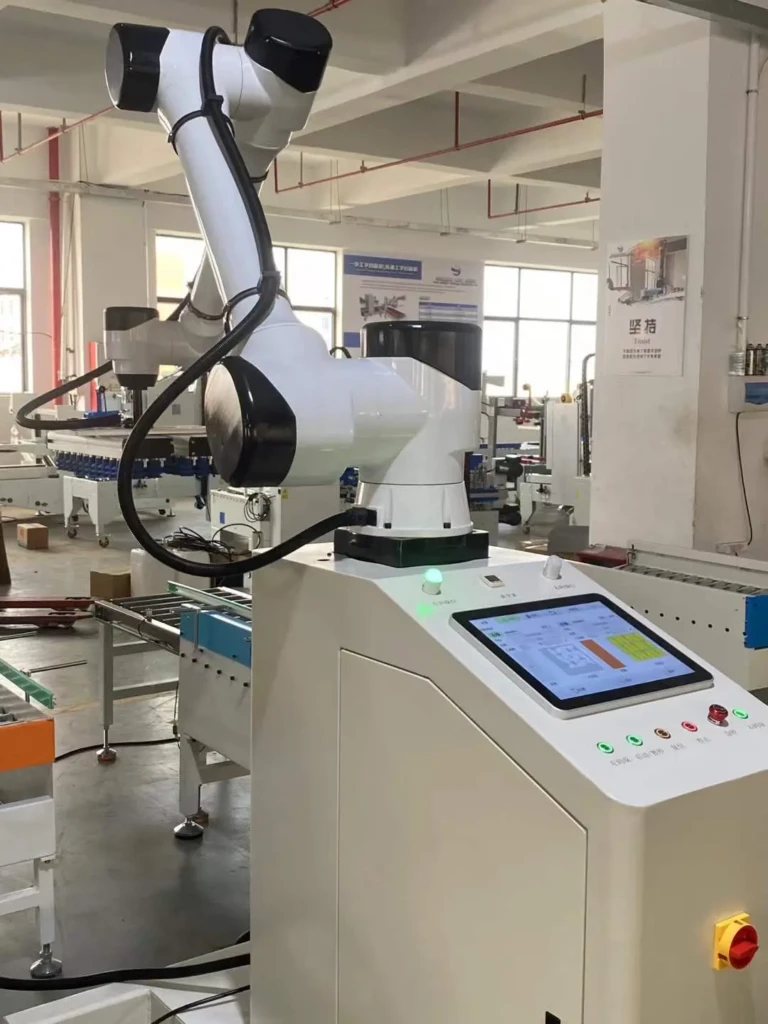
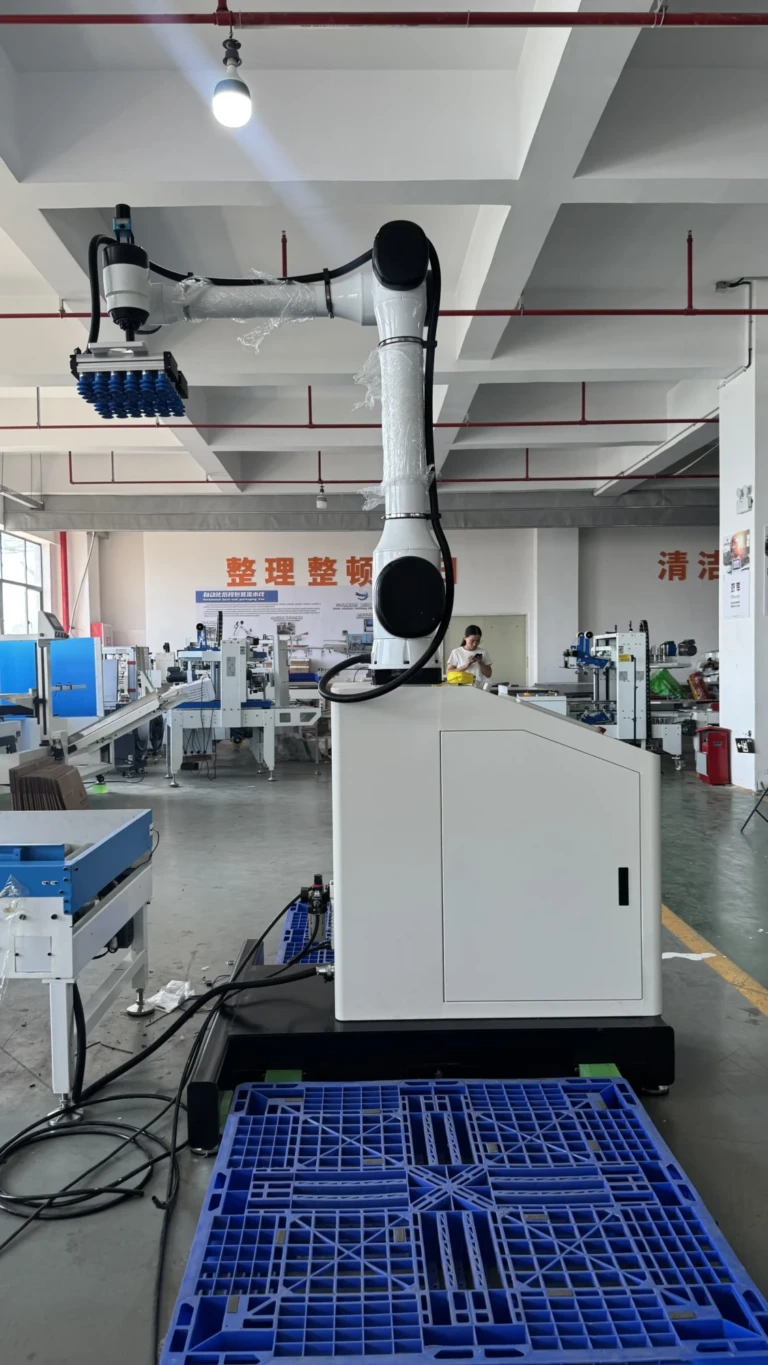
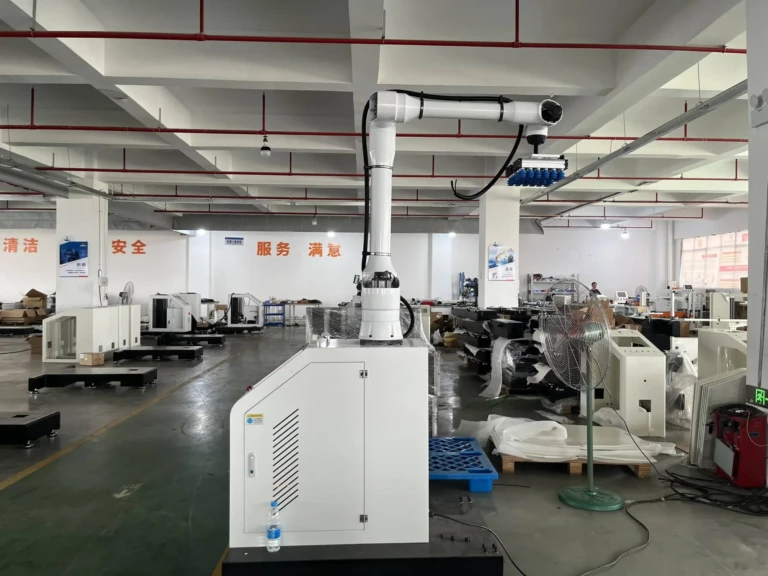
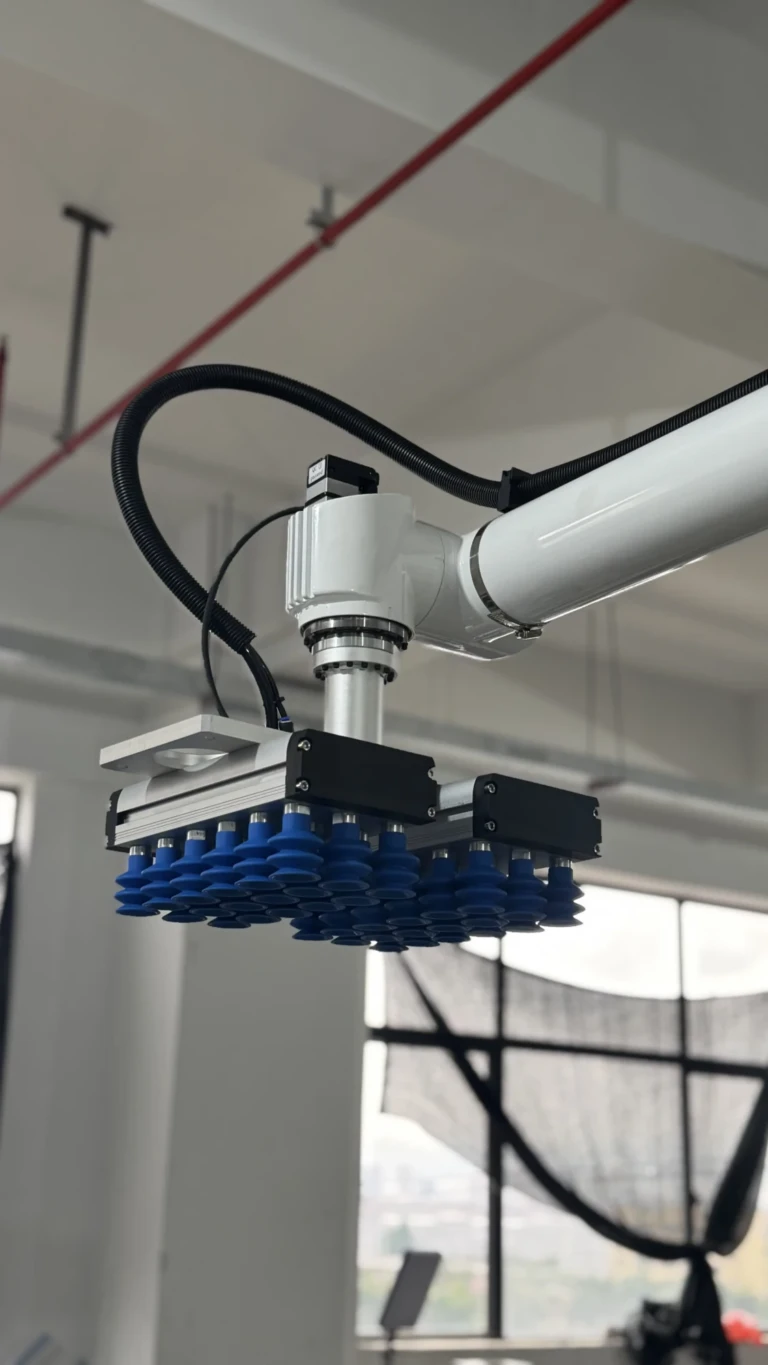
Unlike traditional industrial robots confined to safety cages, collaborative palletizing robots (cobots)—like those developed by Huaxiu Robot—integrate seamlessly into dynamic warehouse environments. Equipped with force-sensing technology and AI-driven obstacle avoidance, these cobots work alongside humans, handling repetitive tasks (e.g., box stacking, loading/unloading) while freeing workers for higher-value roles. This flexibility is critical for e-commerce and SMEs needing agile, scalable automation.
2. Vision System Integration
Advanced 2D/3D vision systems and deep learning algorithms enable robots to:
- Identify irregularly shaped items (e.g., bags, bottles, cartons).
- Adjust grip strength and stacking patterns in real time.
- Self-correct misalignments to prevent pallet collapses.
For instance, Huaxiu’s automatic unpacking robots use hyperspectral imaging to detect damaged goods, ensuring only intact products reach palletizing stations.
3. End-to-End Automation Ecosystems
Leading Chinese manufacturers now offer integrated systems beyond standalone robots. For example:
- Pallet forming robots autonomously assemble and position pallets.
- Strapping robots secure loads with precision, reducing material waste.
- Shrink packaging robots apply heat-sensitive wraps for tamper-proof shipping.
These interconnected workflows minimize human intervention, slashing processing times by up to 70%.
4. Energy Efficiency & Sustainability
China’s focus on green manufacturing extends to robotics. Huaxiu’s fully automatic stretch film packaging robots consume 30% less energy than conventional models, thanks to servo-driven motors and optimized motion paths. Such innovations help industries reduce their carbon footprint while cutting operational costs.
5. Customization for Diverse Industries
Chinese robots are no longer one-size-fits-all. Tailored solutions cater to sector-specific needs:
- Food & Beverage: Hygienic, IP69K-rated robots handle delicate items like egg cartons.
- Pharmaceuticals: Sealing robots ensure sterile, traceable packaging compliance.
- Chemicals: Explosion-proof palletizers safely manage hazardous materials.
Overcoming Industry Pain Points
China’s palletizing robots address critical challenges faced by global supply chains:
- Labor Shortages: Automation mitigates reliance on manual labor, particularly in high-turnover roles.
- Space Constraints: Compact designs like Huaxiu’s semi-automatic sealing robots fit in tight spaces.
- Scalability: Modular systems allow incremental automation adoption without disrupting workflows.
The Road Ahead: AI, 5G, and Digital Twins
Future advancements will center on interoperability and predictive intelligence. AI-powered digital twin technology will enable virtual simulations of robot deployments, optimizing layouts before installation. Meanwhile, 5G connectivity promises ultra-low latency for multi-robot coordination in warehouses.
Conclusion
China’s palletizing robotics sector exemplifies the nation’s broader ambition to dominate smart manufacturing. By blending hardware excellence with AI-driven software, companies like Huaxiu Robot are delivering solutions that transcend traditional automation—making factories safer, greener, and more resilient. As global supply chains prioritize agility and automation, China’s innovations position it as an indispensable partner in shaping Industry 4.0’s future.
FAQs: China’s Palletizing Robot Advancements
Q1: How do collaborative palletizing robots improve workplace safety?
A: Cobots feature force-limiting sensors and collision detection, enabling them to stop instantly upon contact with humans or obstacles. This eliminates risks associated with traditional bulky robots.
Q2: Can these robots handle mixed-SKU palletizing?
A: Yes. Advanced vision systems and AI algorithms allow robots to identify, sort, and stack items of varying sizes and shapes without manual reprogramming.
Q3: What industries benefit most from China’s palletizing robots?
A: E-commerce, food processing, pharmaceuticals, and consumer goods—industries requiring high-speed, high-accuracy packaging—see the fastest ROI (often <18 months).
Q4: How energy-efficient are these systems?
A: Modern models reduce energy consumption by 25–40% through regenerative braking, optimized kinematics, and idle mode activation during downtime.
Q5: Are Chinese robots compatible with existing Western automation systems?
A: Most support standard communication protocols (e.g., Modbus, Ethernet/IP), ensuring seamless integration with PLCs and warehouse management software.
Q6: What’s the average payload capacity of Huaxiu’s palletizing robots?
A: Ranges from 5 kg (for light-item cobots) to 1,500 kg (for heavy-duty models handling industrial machinery).
Q7: How does AI enhance palletizing accuracy?
A: Machine learning algorithms analyze historical data to predict optimal gripper pressure, stacking sequences, and load distribution, minimizing errors to <0.5mm deviation.
Q8: What after-sales support do Chinese manufacturers provide?
A: Leading brands offer 24/7 remote diagnostics, on-site engineers within 48 hours, and modular spare parts to minimize downtime.
By merging technical sophistication with practical usability, China’s palletizing robots are not just tools but strategic assets for future-proofing global supply chains. The fusion of hardware ingenuity and AI intelligence ensures these systems will remain at automation’s cutting edge for decades to come.