Building Your Own 4-Axis Servo Palletizing Arm: A Comprehensive DIY Guide
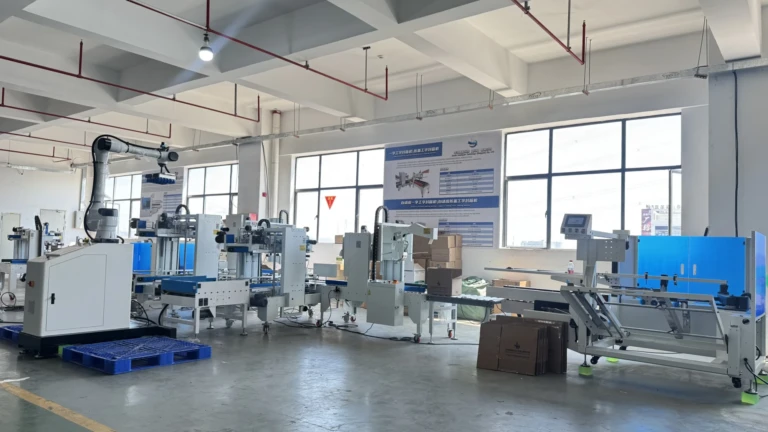
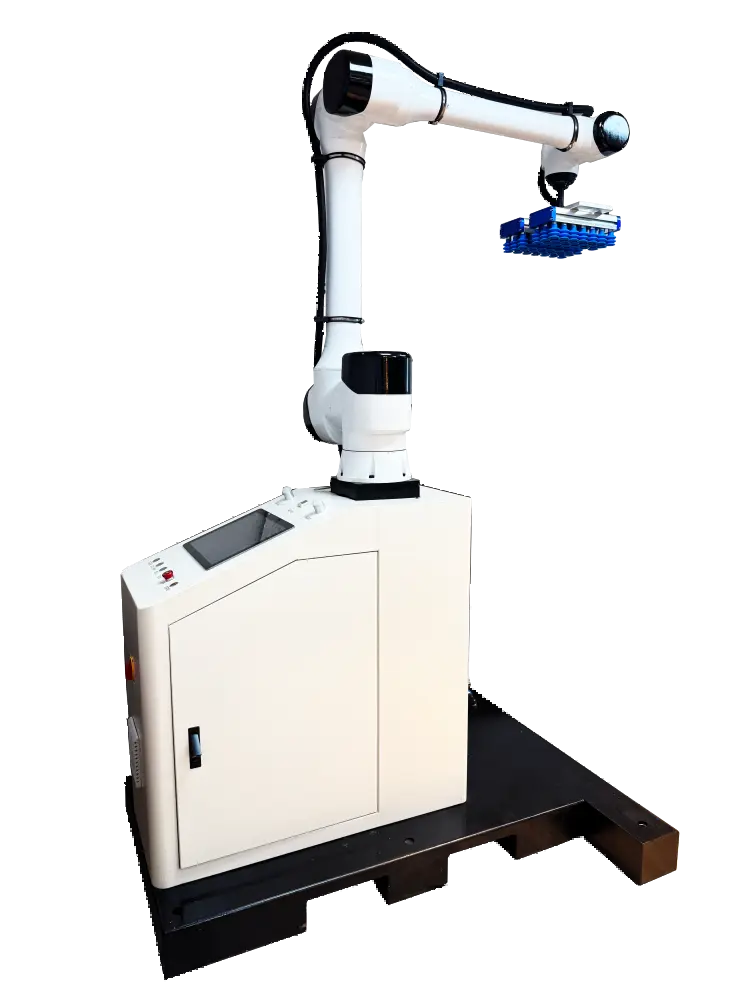
The allure of automation beckons countless small businesses and hobbyists, but commercial robotic solutions often come with eye-watering price tags. Enter the 4-axis servo palletizing arm – a customizable midpoint between full-scale industrial automation and manual labor. While companies like Huaxiu Robot offer turnkey solutions like collaborative palletizing robots and fully automatic stretch film packaging robots, a DIY servo-powered arm provides unparalleled flexibility for niche applications. Here’s how to approach this ambitious project – plus critical insights on when to opt for professional systems.
Why Build a DIY Palletizing Arm?
- Cost Efficiency: Commercial palletizers can cost $50k+; DIY builds slash budgets.
- Customization: Tailor reach, payload (5-20 kg), and programming for unique workflows.
- Educational Value: Master motion control, inverse kinematics, and PLC integration firsthand.
Anatomy of a 4-Axis Servo Arm
- Axis 1 (Base Rotation): 180°–270° rotation via high-torque servo (e.g., Teknic ClearPath SD).
- Axis 2 (Shoulder): Linear actuator or harmonic drive for vertical lift.
- Axis 3 (Elbow): Timing belts/ball screws for telescoping reach ($150–$400).
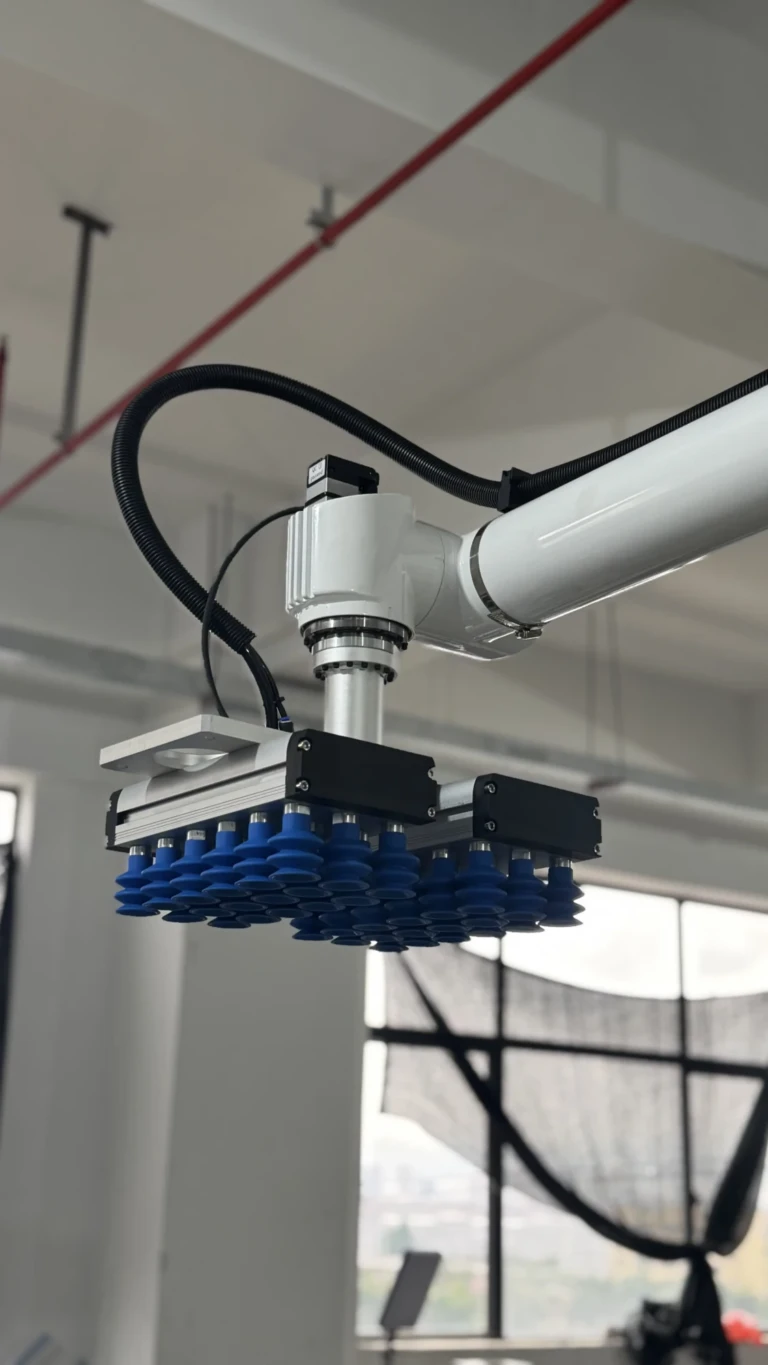
- Axis 4 (Wrist): Parallel gripper or vacuum EOAT.
- Controller: Arduino/Raspberry Pi for hobbyists; PLC (Click PLUS) for industrial duty.
Frame Fabrication: Materials & Design
- 6061-T6 Aluminum Extrusions: Lightweight, rigid, corrosion-resistant.
- 3D-Printed Joints: PETG/PA-CF for under $100 (vs. CNC-machined steel at $1k+).
- Safety Margin: Design payload capacity at 2x intended load (e.g., 10 kg arm for 5 kg bags).
Prototyping Tip: Simulate torque loads in Fusion 360’s Stress Analysis module before cutting metal.
Servo Selection: Beyond RPM Specs
High-duty cycles demand precision servos – brushed DC won’t endure industrial palletizing’s stop-start stresses. Prioritize:
- Feedback Resolution: 16-bit encoders (>65,000 steps) for smooth pathing.
- Peak Torque: 2x continuous torque rating (ex: 10 Nm peak for 5 Nm continuous).
- IP Rating: IP54+ for dust/drip resistance.
Pro Brands: Teknic, Beckhoff, or Yaskawa Sigma-7 (last-gen models cost 40% less new).
Wiring & Safety
- EMI Mitigation: Separate power (14 AWG) and signal (22 AWG shielded) cables.
- E-Stop Circuit: Hardwired relay cutting 48V DC bus during faults (non-negotiable!).
- Overcurrent Protection: Self-resetting breakers on servo drivers.
Software Stack
- Motion Planning: GRBL for Arduino, Mach4 for Windows-based PLCs.
-
Kinematics: Custom inverse kinematics script (Python/C++). Sample pseudocode:
python
def calculate_angles(target_x, target_y, target_z):return [θ₁, θ₂, θ₃, θ₄]
- HMI: Node-RED dashboard for movement jogging and path recording.
Calibration & Testing
- Encoder Homing: Use Hall effect sensors for ±0.1° repeatability.
- Payload Optimization: Test with 50%, 75%, 100% loads; adjust PID gains.
- Cycle Testing: Run 1,000+ pick/place cycles to identify joint wear points.
When to Choose a Commercial Palletizer
If your operation requires:
✔️ 300+ cycles/hour
✔️ 24/7 runtime
✔️ <0.5mm precision
→ Huaxiu’s 6-axis collaborative palletizers or automated shrink wrapping systems offer higher ROI long-term.
Conclusion: DIY vs. Enterprise Solutions
While a DIY 4-axis arm teaches invaluable skills, recognize its limitations. Hobby builds excel for lightweight, intermittent tasks like stacking 5kg boxes at 60 cph. For corrosive environments, food-grade needs, or heavy-duty pallet forming, Huaxiu’s strapping robots or stretch film wrappers deliver unmatched speed, compliance (ISO 8373), and plug-and-play logistics integration. Assess your throughput, future scalability, and maintenance bandwidth honestly before committing hammer to metal.
FAQs
Q: What’s the maximum payload for a DIY servo arm?
A: With quality servos and steel-reinforced joints, 20 kg is feasible. Beyond that, harmonic drives and structural steels become mandatory – often exceeding DIY cost savings.
Q: Can I integrate vision systems?
A: Yes – OpenCV with Raspberry Pi cameras can guide simple pick points. For bin picking, Huaxiu’s vision-enabled robots far outperform DIY rigs in calibration speed.
Q: How much does a DIY build cost?
A: Budget $2k-$6k vs. $20k+ for entry-level commercial arms. Use reclaimed servo motors from eBay to halve costs.
Q: Why does my arm jitter during acceleration?
A: PID loop mismatch or underpowered servos. Tune integral gain first; if unresolved, upgrade to servos with built-in vibration suppression (e.g., Yaskawa’s Advanced vibration control).
Q: Are safety certifications possible for DIY?
A: Unlikely. DIY arms lack CE/UL-rated components. For ISO 10218 compliance, Huaxiu’s collaborative robots include force-limiting skins and emergency braking.
Disclaimer: This guide outlines conceptual designs. Consult mechanical engineers for stress analysis and safety validation.