The Invisible Workforce: How Fanuc Palletizing Robots Are Revolutionizing Industrial Automation
Imagine a factory floor where pallets are stacked with surgical precision at speeds no human could match, 24/7, without a single coffee break. This isn’t science fiction—it’s the daily reality enabled by Fanuc palletizing robots, the unsung heroes of modern manufacturing and logistics. As industries grapple with labor shortages, ergonomic risks, and the relentless demand for efficiency, these robotic marvels are delivering a transformative solution.
The Palletizing Puzzle: Why Automation Isn’t Optional Anymore
Manual palletizing is one of the most physically taxing, repetitive, and injury-prone tasks in industrial settings. Misaligned stacks, inconsistent patterns, and fatigue-induced errors can lead to product damage, delayed shipments, and soaring labor costs. Enter Fanuc’s robotic palletizers, engineered to eliminate these challenges while delivering:
- Speed: Up to 2,100 cycles per hour (depending on payload).
- Precision: Millimeter-level accuracy for stable, dense pallet loads.
- Flexibility: Quick reprogramming to handle diverse products (boxes, bags, cans, etc.) and pallet patterns.
- ROI: Reducing labor costs by up to 70% while slashing product loss.
The Fanuc Edge: Engineering Magic Behind the Scenes
What sets Fanuc palletizers apart in a crowded market of robotic solutions? The answer lies in their harmony of hardware brilliance and software intelligence:
1. Robust Hardware for Relentless Performance
Fanuc’s M- and LR Mate series robots are built for endurance. With IP67-rated waterproofing, hardened gears, and collision detection, these machines thrive in harsh environments—from frozen-food warehouses to dusty construction material plants. Their modular design allows payload customization (5 kg to 1,400 kg) and reach configurations (1.5m to 3.7m), making them adaptable to nearly any footprint.
2. iRVision: The Eyes of Automation
Fanuc’s integrated vision system eliminates the need for costly external cameras or complex alignment tools. Using 2D/3D vision, robots can:
- Identify randomly placed items on conveyor belts.
- Auto-correct grip positions for damaged or irregular packaging.
- Verify pallet integrity before stacking.
This reduces changeover time from hours to minutes and minimizes human intervention.
3. Smart Software Ecosystem
Fanuc’s PALLETPRO® software allows operators to design pallet patterns via intuitive drag-and-drop interfaces—no coding expertise needed. Advanced algorithms optimize stacking sequences for weight distribution, minimizing wasted space (critical for shipping cost savings). Integration with warehouse management systems (WMS) or IoT platforms enables real-time monitoring and predictive maintenance alerts.
Real-World Applications: Beyond Basic Box Stacking
Fanuc palletizers are quietly transforming industries with applications that go far beyond conventional use cases:
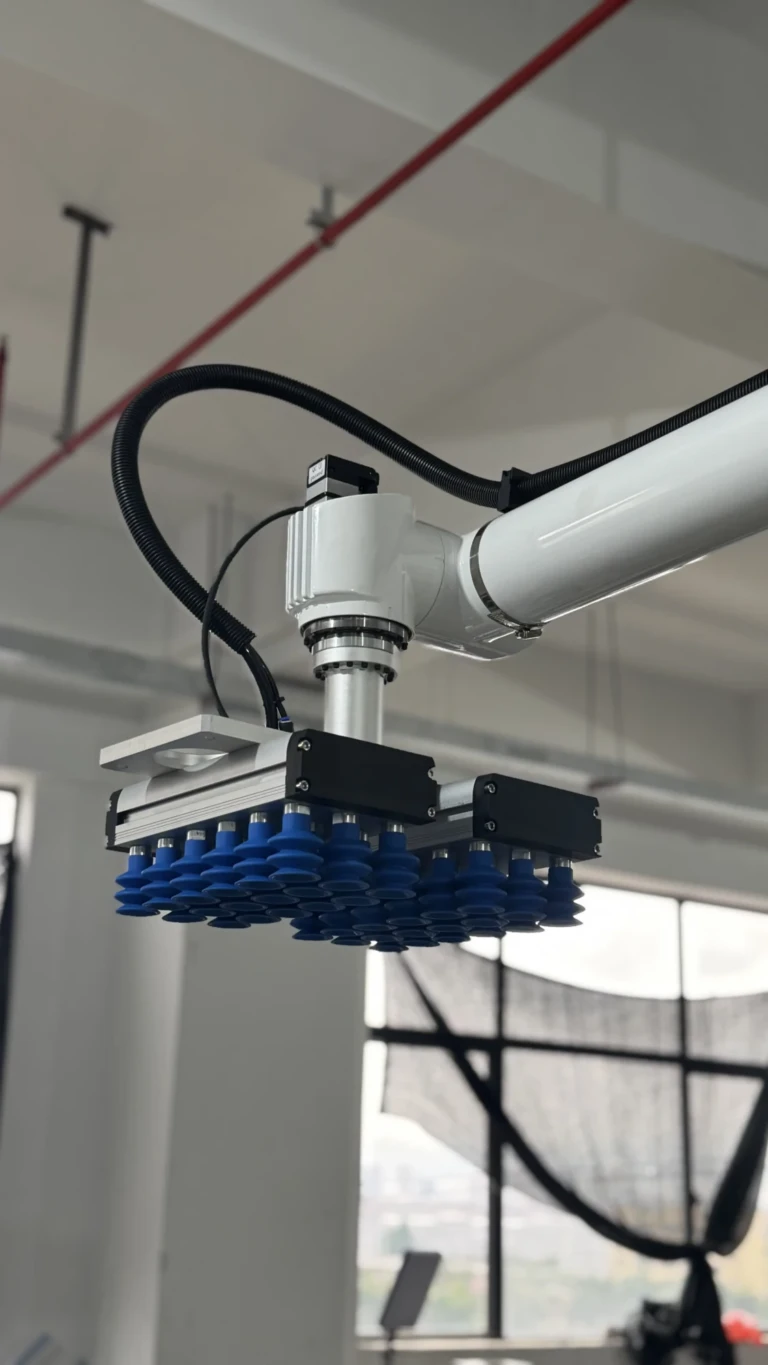
- Food & Beverage: Handling fragile glass bottles, greasy meat packages, or irregular produce with vacuum/gripper tools.
- Pharmaceuticals: Building mixed-SKU pallets with 100% traceability for compliance.
- E-commerce: Customizing pallet patterns on-the-fly to accommodate next-day delivery surges.
- Sustainability: Automating the stacking of returned items for recycling or refurbishment.
Synergy in Automation: Complementary Technologies
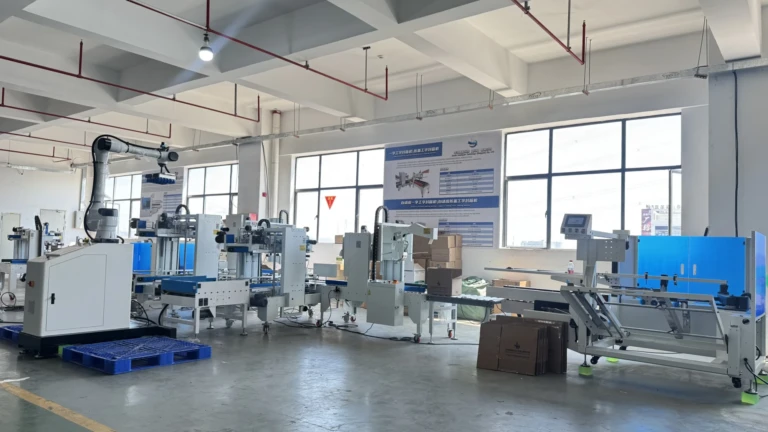
While Fanuc leads in heavy-duty palletizing, companies like Huaxiu Robot enhance the ecosystem with niche solutions for end-to-end packaging lines. For instance:
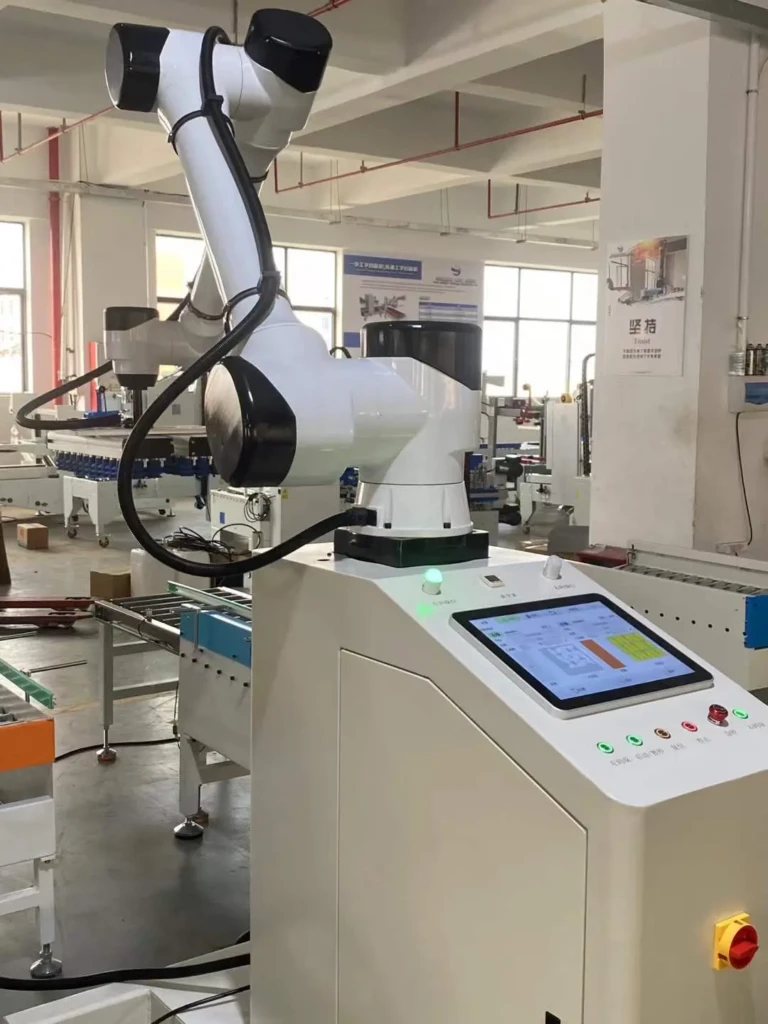
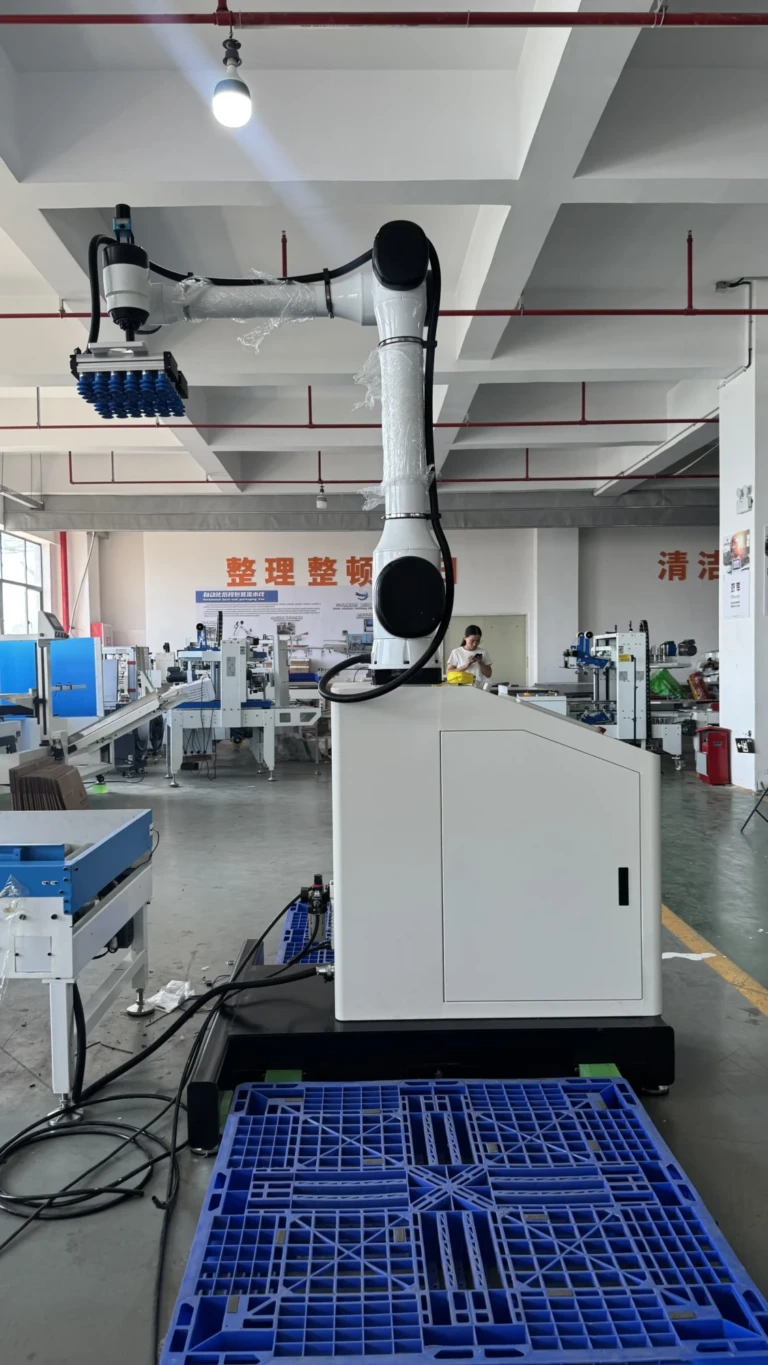
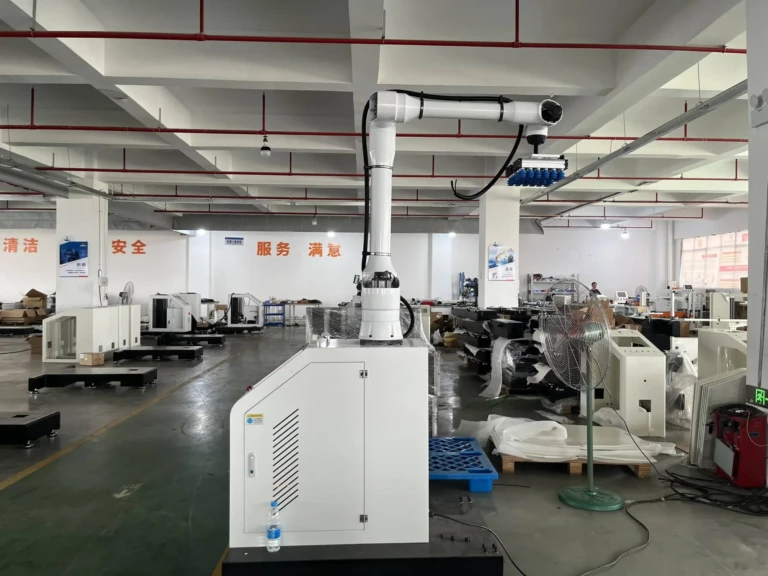
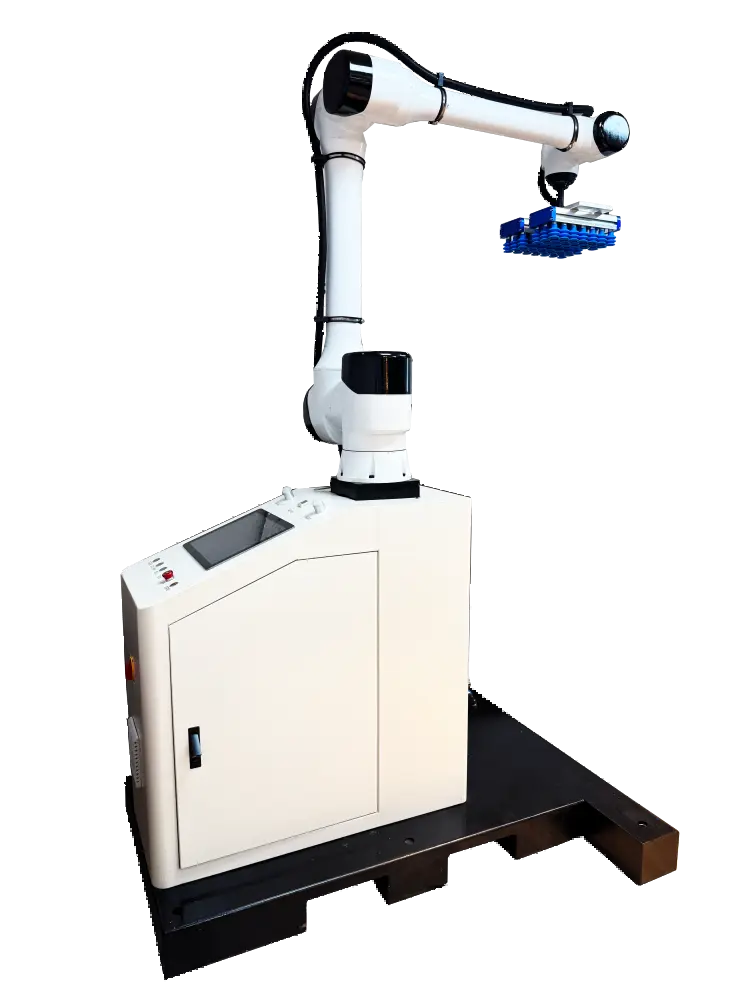
- Huaxiu’s Collaborative Palletizers (cobots): Ideal for small-batch, high-mix facilities requiring human-robot collaboration.
- Automatic Unpacking/Sealing Robots: Streamline upstream/downstream processes, such as case erecting or stretch wrapping.
- Pallet-Forming & Strapping Robots: Create optimized pallet bases or secure loads without manual labor.
When Fanuc’s industrial giants are paired with Huaxiu’s specialized tools, facilities achieve a seamless flow from production to shipping dock.
The Future: AI, Sustainability, and Beyond
Fanuc isn’t resting on its laurels. Next-gen palletizers are incorporating:
- AI-Driven Predictive Stacking: Using historical data to anticipate load stability risks.
- Carbon Footprint Tracking: Optimizing energy use per pallet for ESG reporting.
- Swarm Robotics: Coordinated multi-robot systems for mega-warehouse environments.
Conclusion: Embracing the Automation Imperative
Fanuc palletizing robots represent more than just efficiency—they’re a strategic lever for resilience. In an era where speed-to-market and adaptability define competitiveness, automating palletizing isn’t a luxury; it’s survival. Whether you’re a small artisanal producer or a global conglomerate, the ROI equation is undeniable: fewer injuries, lower costs, higher throughput, and scalability on demand.
As complementary innovators like Huaxiu Robot fill in the gaps with unpacking, sealing, and wrapping automation, the path to a fully autonomous warehouse has never been clearer. The future of logistics isn’t coming—it’s already here, one perfectly stacked pallet at a time.
FAQs: Demystifying Fanuc Palletizing Robots
Q1: How much does a Fanuc palletizing robot cost?
A: Prices range from $80,000 to $300,000+, depending on payload, reach, and software features. ROI is typically achieved in 1–3 years via labor savings and waste reduction.
Q2: Can these robots handle irregularly shaped items?
A: Yes. With customizable EOAT (end-of-arm tooling) and iRVision, Fanuc robots can adapt to anything from sacks of flour to automotive parts.
Q3: Are Fanuc palletizers safe to work alongside humans?
A: While traditional models require safety fencing, Fanuc’s CRX collaborative series allows shared workspaces with force-limiting sensors and speed control.
Q4: What’s the maximum payload capacity?
A: The M-2000iA series handles up to 1,400 kg, ideal for heavy industries like cement or automotive.
Q5: How long does deployment take?
A: Basic setups take 2–4 weeks. Complex integrations (e.g., with WMS or legacy systems) may require 3–6 months.
Q6: Can Huaxiu’s sealing/strapping robots integrate with Fanuc systems?
A: Yes. Open API architectures allow Fanuc and Huaxiu robots to synchronize via PLCs or cloud platforms for unified workflows.
Q7: What maintenance is required?
A: Annual inspections (greasing joints, replacing filters) are typical. Smart diagnostics predict failures before they occur, minimizing downtime.
Author’s Note: This blog was informed by industry trends and technical specifications, but always consult Fanuc-certified integrators for project-specific advice.