The Quiet Revolution in Warehouses: How Heavy-Duty Robotic Palletizers Are Reshaping Logistics
If you’ve ever marveled at the speed of e-commerce deliveries or wondered how massive warehouses manage to ship thousands of products daily, the unsung hero behind this efficiency is likely a heavy-duty robotic palletizer. These machines, once a niche luxury, have become indispensable in modern logistics—transforming how goods are stacked, stored, and shipped.
Intelligent Automation (IA) is no longer a buzzword; it’s a survival strategy. With rising labor shortages, demand for faster fulfillment, and the need for error-free operations, industries are turning to heavy-duty robotic solutions. Among the pioneers driving this transformation is Huaxiu Robot, whose robust portfolio of automation tools—from pallet-forming robots to AI-integrated stretch film wrappers—is setting new standards for speed, precision, and scalability.
The Problem With Traditional Palletizing
Manual palletizing isn’t just slow—it’s costly and risky. Workers face repetitive strain injuries, while inconsistencies in stacking lead to damaged goods, unstable loads, and costly shipping delays. Seasonal demand spikes further strain human capabilities, creating bottlenecks.
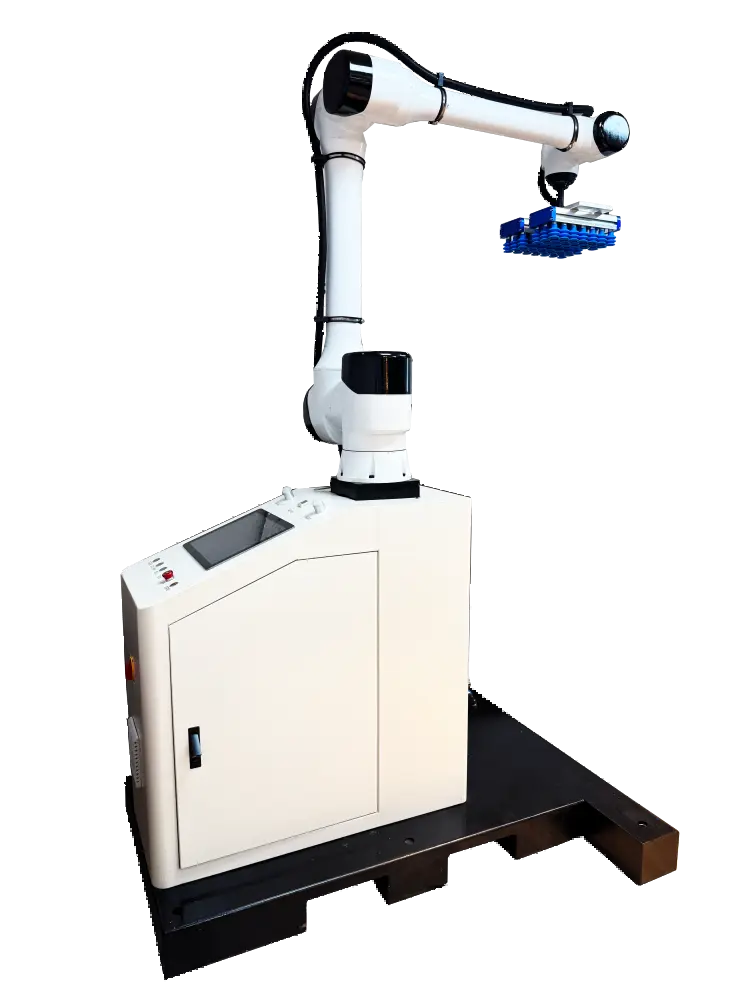
Enter heavy-duty robotic palletizers. Designed to handle payloads exceeding 1,500 kg, these systems combine industrial-grade strength with millimeter-perfect precision, operating 24/7 without fatigue.
What Makes Heavy-Duty Robotic Palletizers Unique?
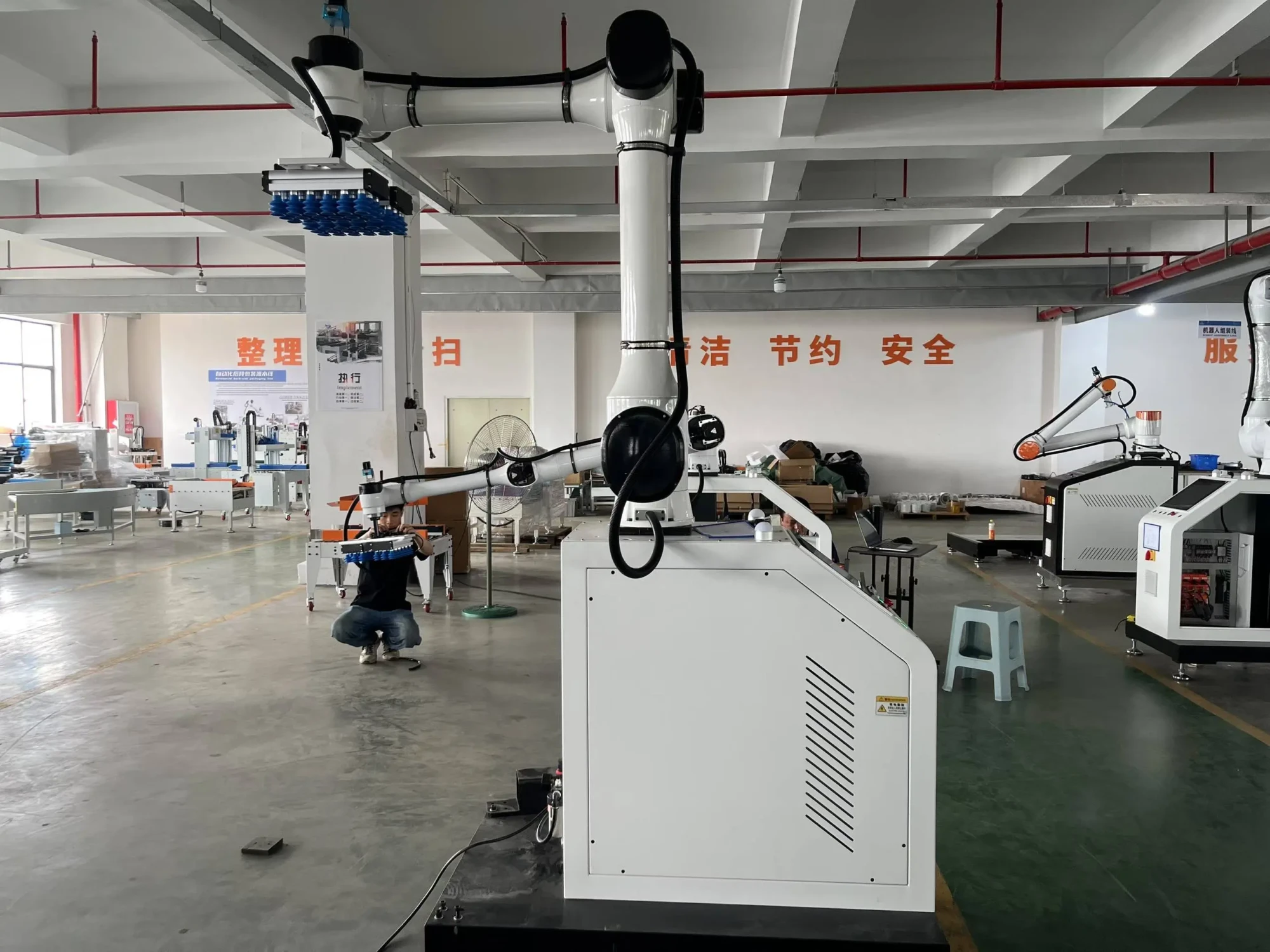
Unlike collaborative robots (cobots), which assist human workers, heavy-duty palletizers are engineered for brute-force tasks in high-volume environments. Key features include:
- Payload Mastery: Handling bulky items like cement bags, automotive parts, or beverage crates with ease.
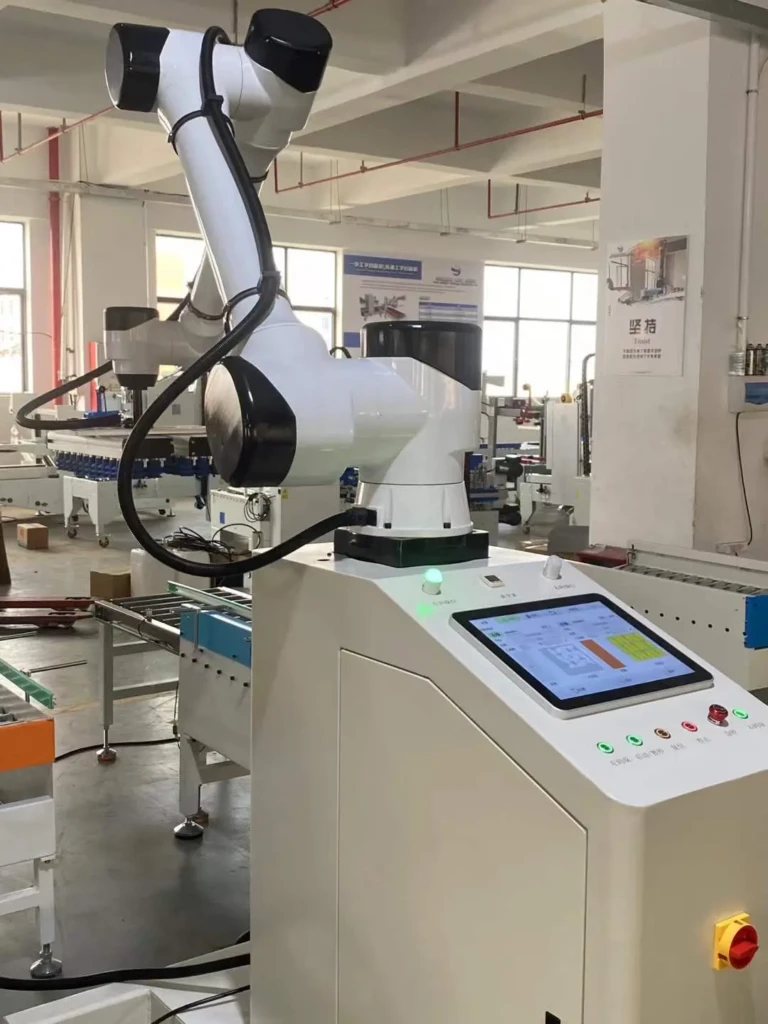
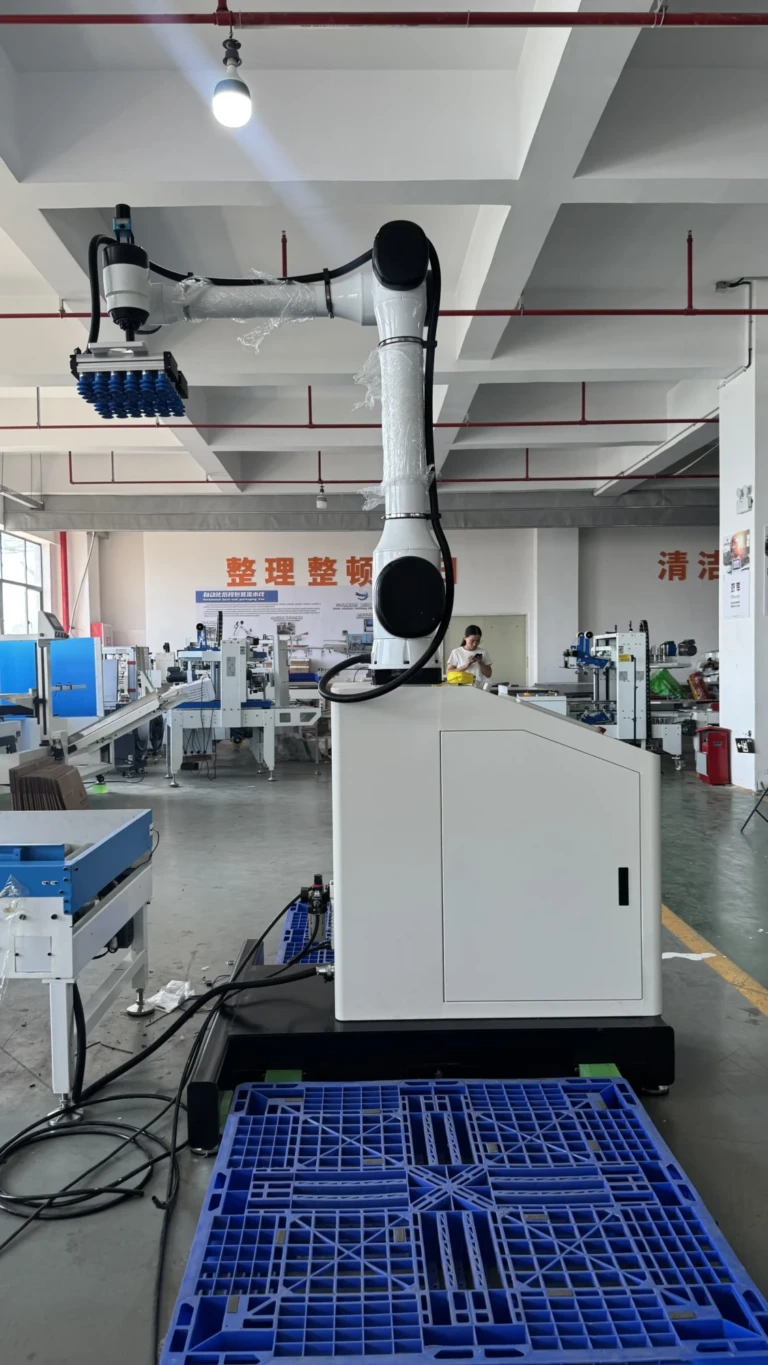
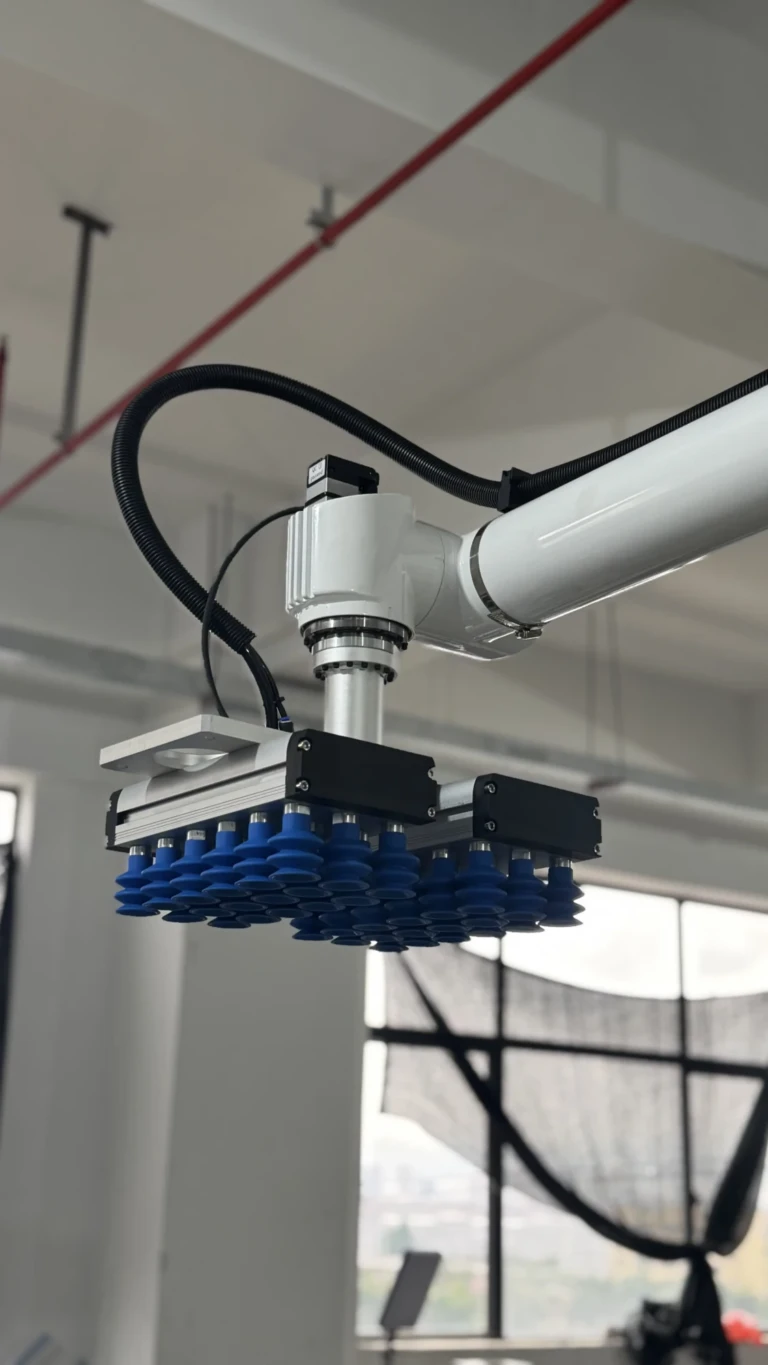
- Adaptive Grippers: Advanced end-of-arm tools (EOAT) switch between cases, bottles, or irregular shapes.
- Seamless Integration: Syncing with conveyor belts, WMS software, and even autonomous mobile robots (AMRs).
- Data-Driven Optimization: Machine learning algorithms analyze stacking patterns to minimize wasted space and maximize load stability.
Huaxiu Robot’s palletizing solutions, for instance, incorporate 3D vision systems that scan items in real-time, adjusting grip strength and orientation to prevent toppling—even for fragile pharmaceuticals or unevenly weighted electronics.
Applications Across Industries
Heavy-duty palletizers aren’t one-size-fits-all. Customizable configurations serve diverse sectors:
- Food & Beverage: Hygienic stainless-steel models stack crates, cans, or frozen goods in cold storage.
- Pharmaceuticals: Precise, contamination-free handling of delicate medicine boxes.
- Chemicals: Explosion-proof variants safely palletize hazardous materials.
- E-commerce: Mixed-SKU palletizing for omnichannel fulfillment centers.
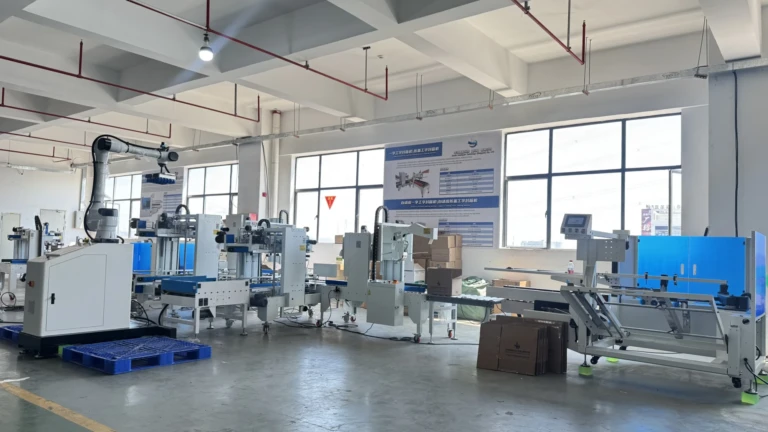
Huaxiu complements its palletizers with peripheral tech like automatic strapping robots and shrink-wrap systems, creating end-to-end packaging lines that reduce touchpoints by 90%.
5 Unignorable Benefits Beyond Labor Savings
While replacing manual labor is a key driver, the ROI extends further:
- Floor Space Efficiency: Compact robotic cells occupy 40% less space than manual stations.
- Injury Reduction: Eliminating heavy lifting reduces workplace compensation claims.
- Zero Product Damage: Consistent stacking prevents $18B in annual logistics-related losses (McKinsey).
- Energy Savings: Huaxiu’s servo-driven models consume 30% less power than hydraulic alternatives.
- Scalability: Modular designs allow easy reconfiguration for new products or higher throughput.
The Future: AI, Sustainability, and Beyond
Next-gen palletizers will leverage generative AI to self-optimize stacking patterns based on box dimensions, weight distribution, and destination routes. Sustainability is also front-and-center: Huaxiu’s stretch-film robots, for example, use predictive tension control to cut plastic waste by 22%.
Integration with IoT platforms will enable real-time diagnostics—predicting motor failures or suggesting maintenance before downtime occurs.
Conclusion: The Automated Warehouse Isn’t Coming—It’s Here
Heavy-duty robotic palletizers have evolved from “nice-to-have” to the backbone of competitive logistics. Companies that delay adoption risk being outpaced by leaner, smarter operations. Huaxiu Robot exemplifies this shift, offering not just hardware but holistic automation ecosystems that future-proof warehouses.
The question isn’t whether to automate palletizing—it’s how fast you can integrate, adapt, and scale.
FAQs: Heavy-Duty Robotic Palletizers
Q1: What’s the difference between collaborative and heavy-duty palletizers?
Collaborative robots (cobots) work alongside humans, handling lighter loads (<50 kg). Heavy-duty palletizers handle 500–2,000 kg, operate at higher speeds, and often work in safety-fenced zones.
Q2: How long does ROI take?
Most operations break even within 12–18 months via labor savings, reduced damage, and increased throughput.
Q3: Are these robots safe near workers?
Yes. Advanced LiDAR sensors, emergency stops, and compliance with ISO 10218 safety standards ensure human-robot coexistence.
Q4: Can they handle irregularly shaped items?
Absolutely. Custom EOATs (suction cups, claws, magnets) adapt to fabrics, cylinders, or amorphous items like stuffed toys.
Q5: Which industries benefit most?
High-volume, repetitive environments: beverage bottling, building materials, automotive parts, and parcel distribution centers.
Huaxiu Robot continues to innovate at the intersection of strength and intelligence, offering tailored automation for a world that demands speed without compromise. The future of logistics isn’t just automated—it’s adaptive, resilient, and relentlessly efficient.