The Hidden Workhorses of Modern Warehousing: How Robotic Bag Palletizers Are Transforming Efficiency
In the relentless pursuit of warehouse optimization, one innovation stands out for its ability to eliminate bottlenecks, reduce costs, and future-proof operations: automated bag palletizing robots. For industries handling bulk goods—from agricultural products to chemicals and food processing—the manual stacking of heavy bags onto pallets is more than just physically taxing; it’s a significant barrier to scalability. Huaxiu Robot’s cutting-edge solutions, including their collaborative palletizing robots and fully integrated packaging systems, are rewriting the rules of material handling. Here’s how these systems unlock unprecedented efficiency.
The Problem with Manual Palletizing: A Cascade of Inefficiencies
Manual palletizing isn’t just slow—it’s fraught with hidden costs. Fatigue leads to inconsistent stacking patterns, increasing the risk of product damage, workplace injuries, and unstable pallets that collapse during transit. Human workers can typically handle 200–400 bags per hour, but variability in speed, break times, and shift changes undermines throughput. Add seasonal demand spikes, and the system buckles.
How Robotic Palletizers Engineer Efficiency
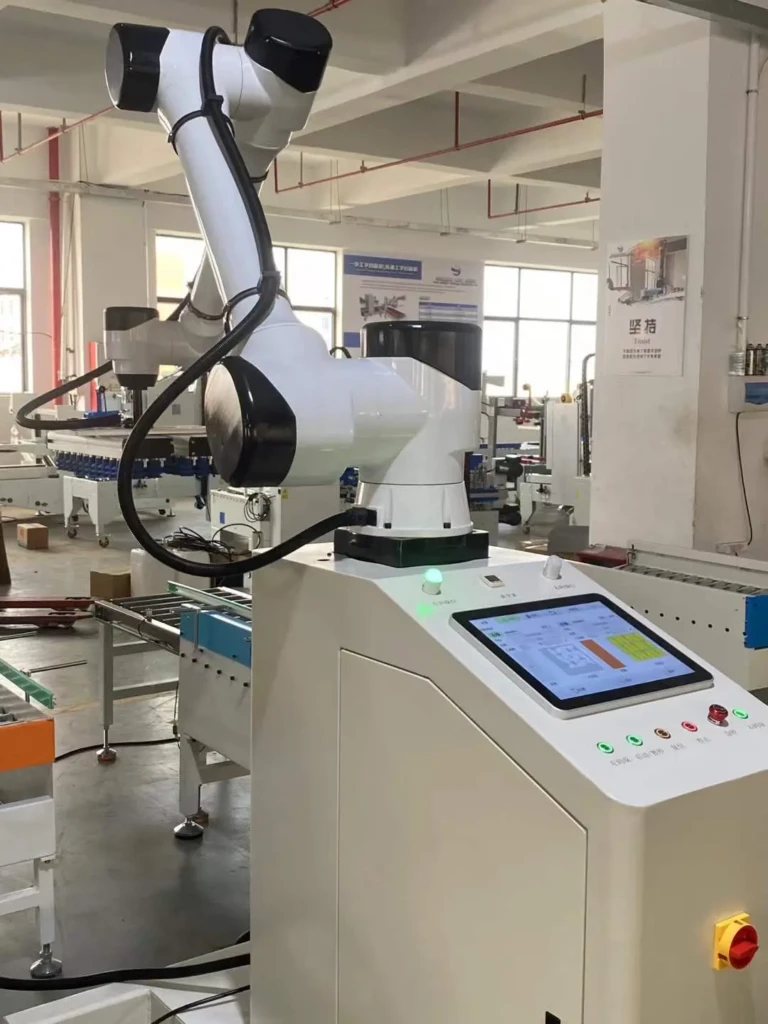
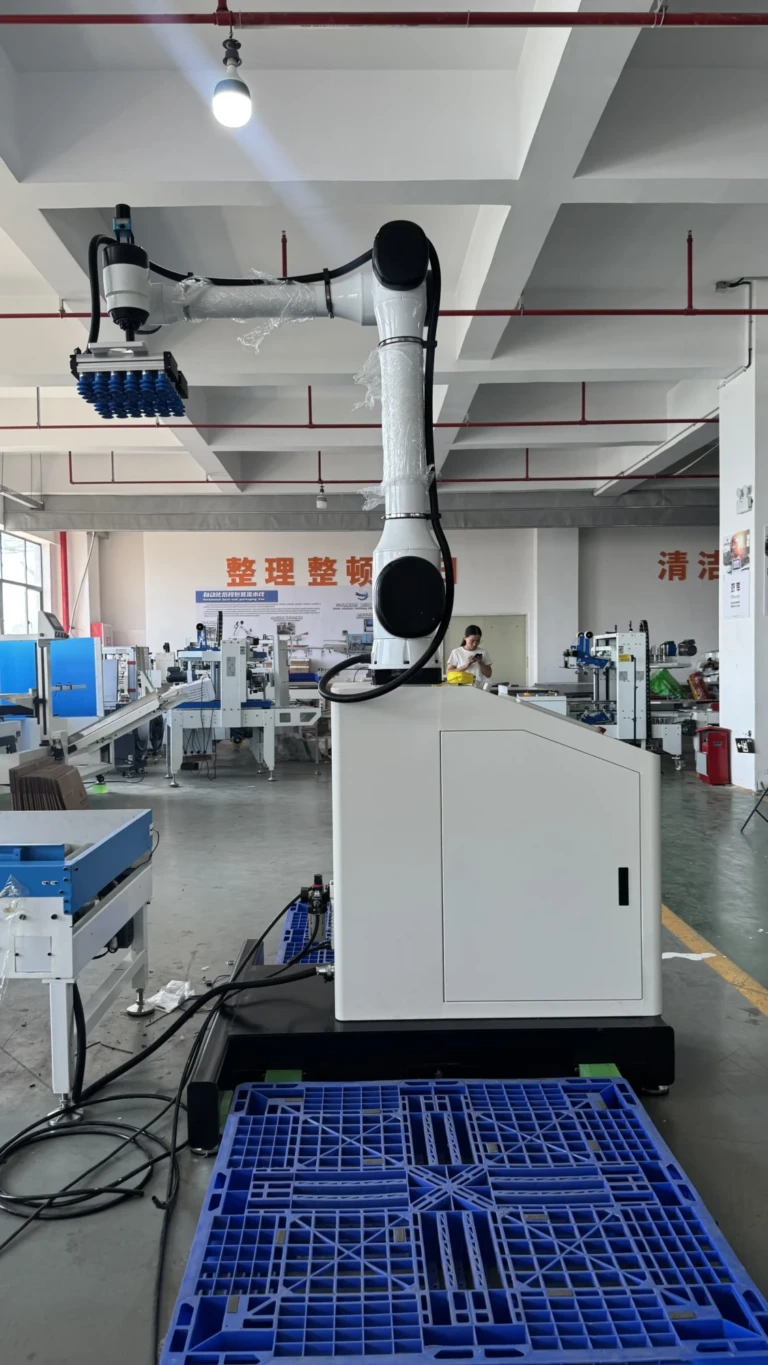
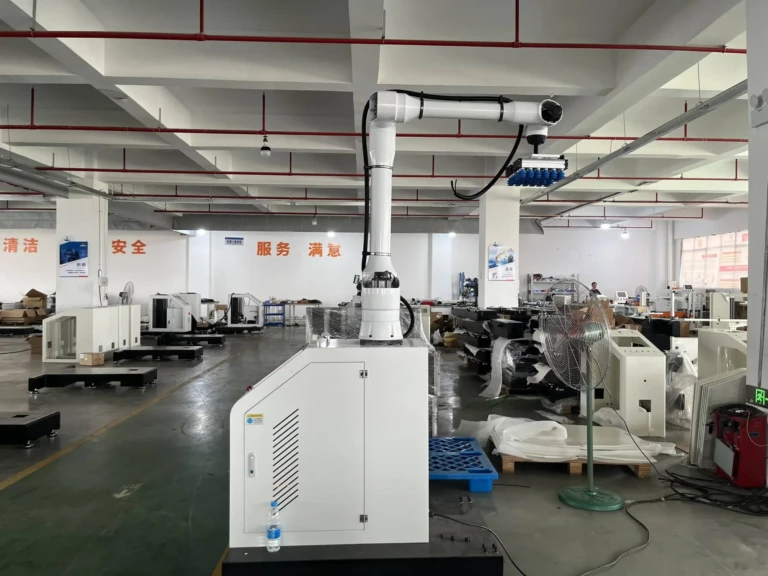
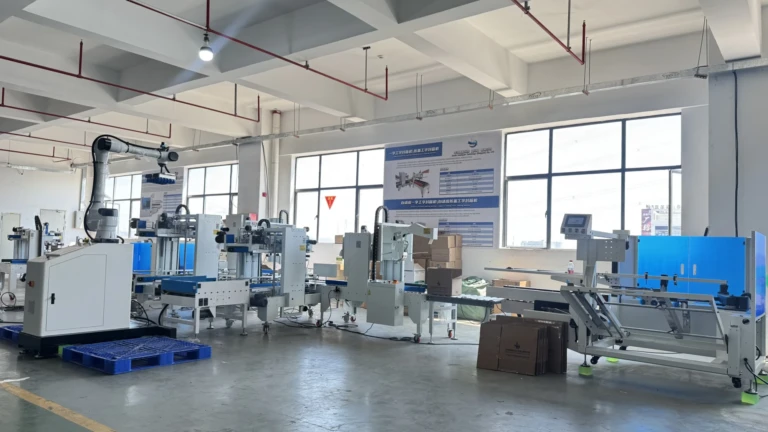
Huaxiu Robot’s palletizing systems integrate advanced robotics, AI-driven software, and modular hardware to automate the entire bag-to-pallet workflow. Here’s what sets them apart:
- Adaptive Gripping Technology:
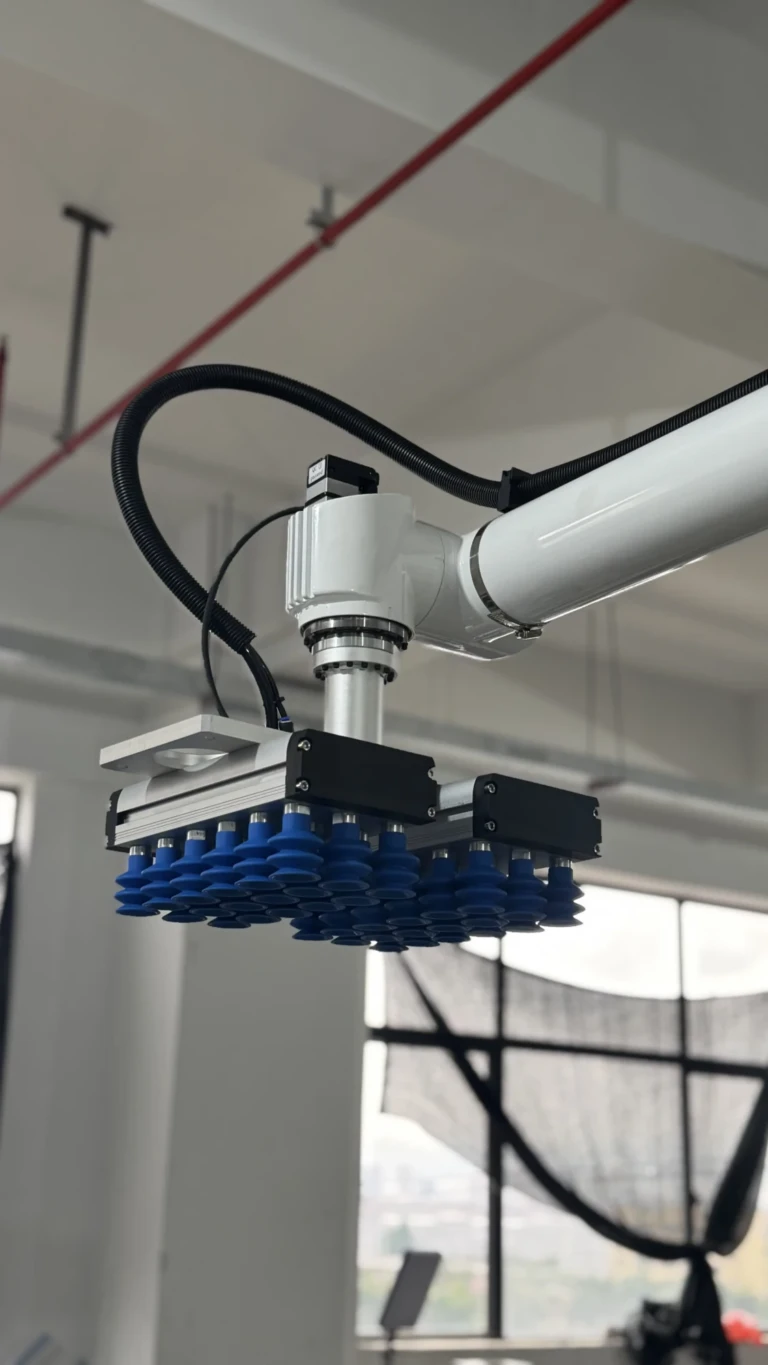
- Custom end-of-arm tools (EOATs) handle diverse bag sizes (10–50 kg) and materials (woven PP, paper, film) without slippage. 3D vision systems scan bags on conveyor belts, adjusting grip pressure dynamically to prevent leaks or tears.
- Collaborative Workflows:
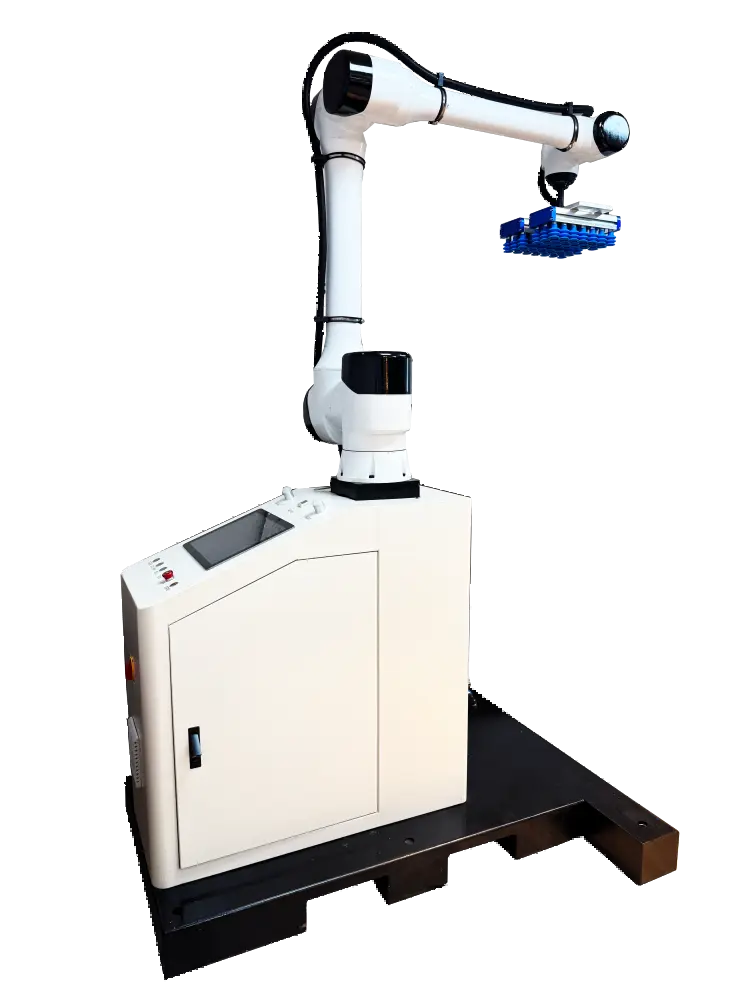
- Collaborative robots (cobots) operate safely alongside humans in hybrid environments. These cobots take over repetitive tasks like stacking 25kg flour bags while workers focus on quality checks.
- Precision Stacking Algorithms:
- AI optimizes pallet patterns in real-time, factoring in weight distribution, truck stability, and warehouse height constraints. This reduces wasted vertical space by up to 15% compared to manual stacking.
- Seamless Integration:
- Systems sync with upstream/downstream equipment like Huaxiu’s automatic strapping robots or stretch film wrappers, creating a continuous "hands-off" packaging line.
Three Efficiency Wins You Can Quantify
- Throughput Surge:
- A single robot arm palletizes 900+ bags per hour—3x faster than manual labor—with zero downtime for breaks or shift rotations. For a plant processing 50,000 bags daily, this slashes labor hours by 70%.
- Space and Resource Optimization:
- Consistent stacking allows tighter warehouse configurations and lowers transportation costs (e.g., reducing truckloads by 12% due to denser pallets).
- Cost of Ownership vs. ROI:
- While upfront investment ranges from $75k–$200k, facilities typically break even in 14–18 months through labor savings and reduced product loss.
Beyond Speed: The Strategic Advantages
- Scalability: Deploy modular units during peak seasons without hiring/training staff.
- Data-Driven Insights: IoT-enabled robots track KPIs like cycle times, bag integrity, and energy usage, feeding into predictive maintenance schedules.
- Worker Safety: Eliminating heavy lifting reduces strain injuries and Workers’ Compensation claims.
Real-World Impact: A Snapshot
A Brazilian sugar producer deployed Huaxiu’s robotic palletizers, integrating them with automatic stretch film wrapping and strapping systems. Results:
- Output: Increased from 18 to 26 pallets/hour.
- Labor: Reduced from 12 workers/shift to 3 supervisors.
- Product Damage: Fell by 90% due to precision handling.
Conclusion
Robotic palletizers aren’t just replacing manual labor—they’re enabling smarter, leaner, and safer warehousing ecosystems. Huaxiu Robot’s holistic approach (from collaborative arms to end-of-line strapping) ensures that efficiency gains compound across the entire logistics chain. As industries grapple with labor shortages and sustainability targets, automation transitions from a luxury to a non-negotiable competitive edge.
FAQs:
Q1: Are robotic palletizers safe to use around human workers?
Yes. Huaxiu’s cobots feature force-limiting sensors and emergency stop functions, complying with ISO 10218 safety standards.
Q2: What’s the typical ROI timeline?
Most facilities see full payback within 18 months via labor savings, reduced waste, and higher throughput.
Q3: Can these systems handle irregularly shaped bags?
Absolutely. Vision-guided adaptive grippers adjust to asymmetrical or loosely filled bags.
Q4: Do they integrate with existing WMS/ERP software?
Huaxiu systems support API integrations with major platforms like SAP and Oracle for real-time inventory tracking.
Q5: How much maintenance is required?
Daily visual checks and monthly lubrication. Predictive AI alerts technicians to potential motor or belt issues before failure.
Q6: What’s the maximum bag weight?
Standard models handle up to 55 kg (121 lbs), with heavy-duty variants for 80 kg+ loads.
Q7: Are they customizable for small warehouses?
Yes. Compact "micro" palletizers are designed for facilities with under 2,000 sq ft of floor space.
Huaxiu Robot continues to pioneer automation solutions that blend precision engineering with practical ROI. Explore their full range—from shrink-wrapping to pallet forming—to future-proof your supply chain.