
The Ultimate Guide to Robot Palletizing Bags: Revolutionizing Warehouse Efficiency
In today’s fast-paced industrial landscape, businesses are under constant pressure to optimize logistics, reduce costs, and meet ever-increasing consumer demands. Among the most labor-intensive and repetitive tasks in warehousing and manufacturing is palletizing bags — whether containing powders, grains, chemicals, or agricultural products. Manual palletizing is time-consuming, physically taxing, and prone to inconsistency. Enter robotic palletizing systems, a transformative solution that combines precision, speed, and reliability. This guide explores how robotic technology is reshaping bag palletizing, its benefits, implementation strategies, and answers to common questions.
Why Robot Palletizing for Bags?
Manual bag palletizing presents challenges:
- Labor shortages: Finding and retaining workers for repetitive, strenuous tasks is difficult.
- Inconsistency: Human fatigue leads to uneven pallet layers, stability issues, and product damage.
- Safety risks: Heavy lifting increases injury rates, driving up workplace compensation costs.
Robotic palletizers eliminate these pain points while delivering unmatched efficiency. They handle bags of diverse sizes (25–100 lbs), materials (woven polypropylene, burlap, paper), and contents (food-grade, hazardous chemicals) with consistent accuracy.
How Robotic Bag Palletizing Works
Modern systems integrate hardware and software to automate the entire process:
-
Bag Handling:
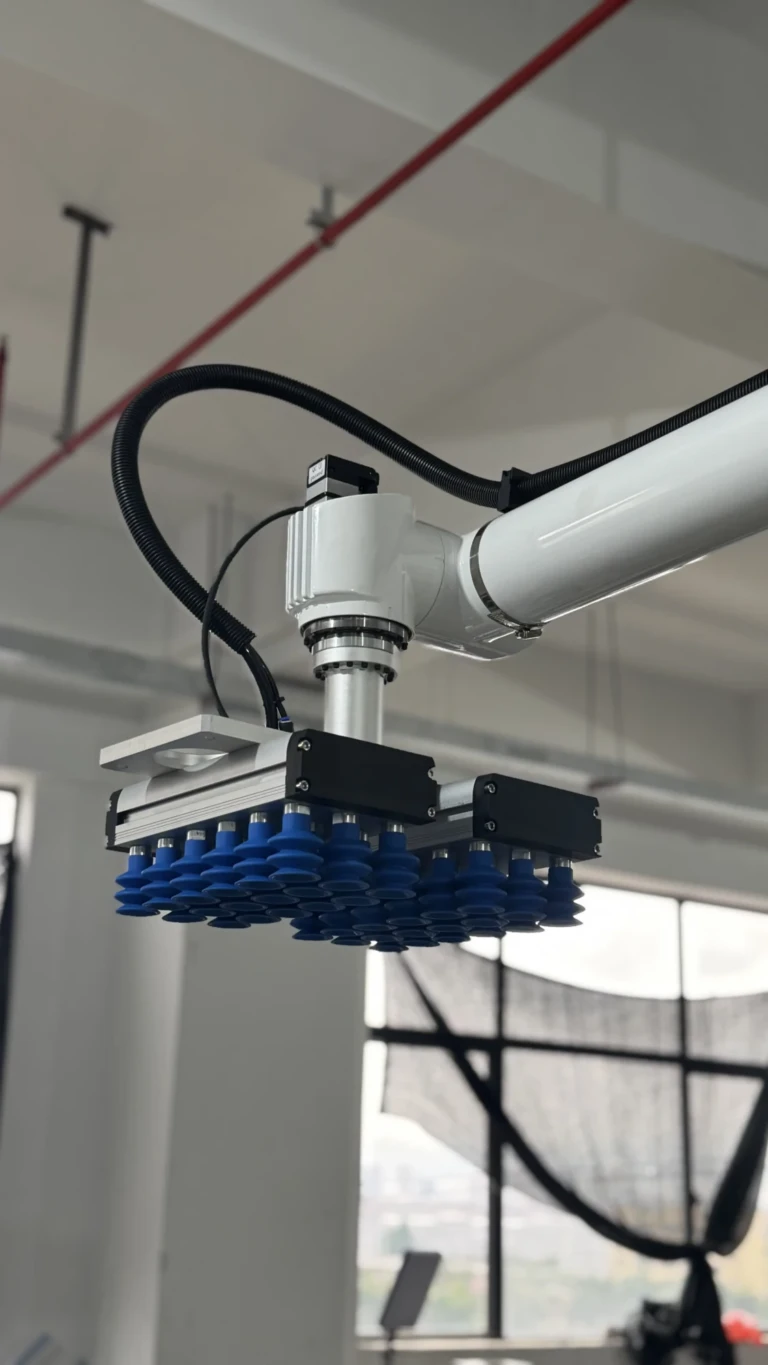
- Robots equipped with specialized grippers (vacuum, clamp, or hybrid systems) lift bags from conveyors or production lines.
- Advanced vision systems identify bag orientation, weight, and defects in real time.
-
Pattern Generation:
- Software calculates optimal stacking patterns based on bag dimensions, pallet size, and stability requirements (e.g., interlocking layers for bulk goods).
- Algorithms adjust for irregularities (e.g., overfilled bags) to prevent toppling.
-
Pallet Building:
- Robots place bags in predefined sequences, maximizing load stability and minimizing gaps.
- Systems can switch patterns dynamically for mixed-SKU pallets.
- Downstream Integration:
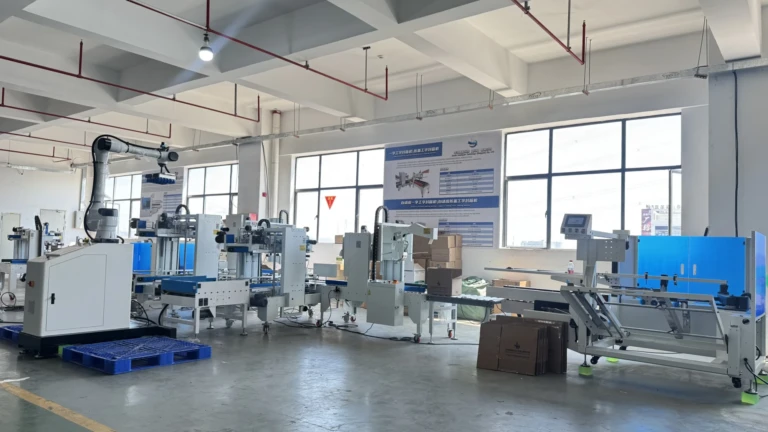
- Seamless handoff to strapping, stretch-wrapping, or shrink-packaging robots (like Huaxiu’s fully automatic systems) creates a turnkey solution.
Types of Robotic Palletizers for Bags
Several robot configurations cater to different operational scales:
-
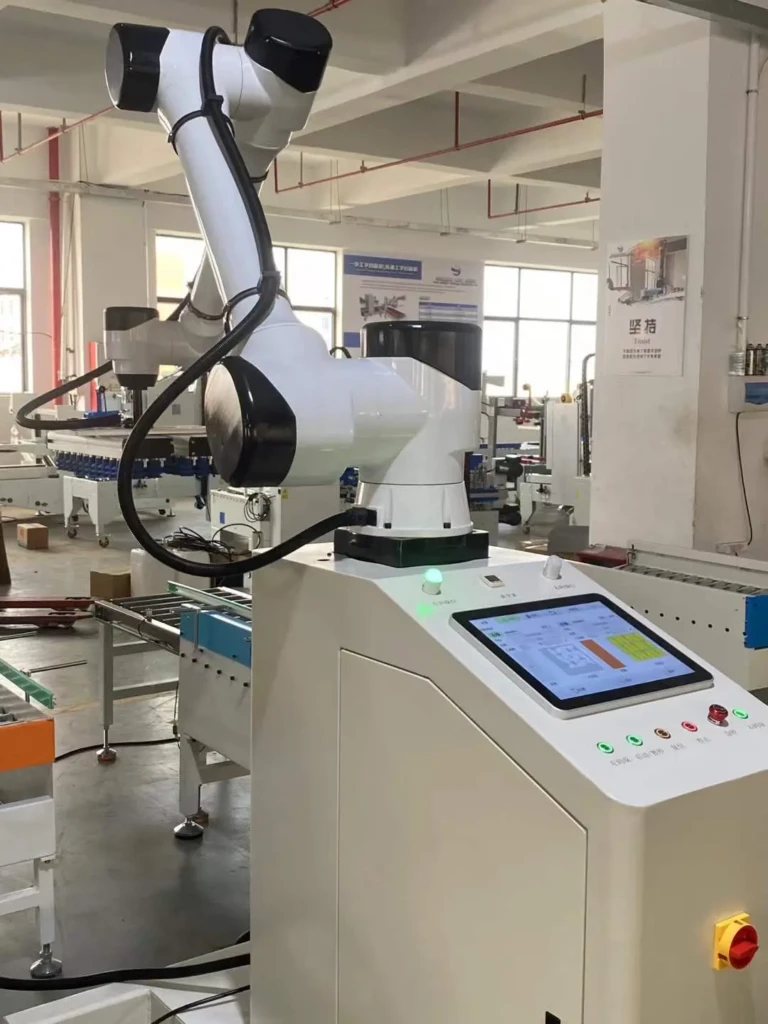
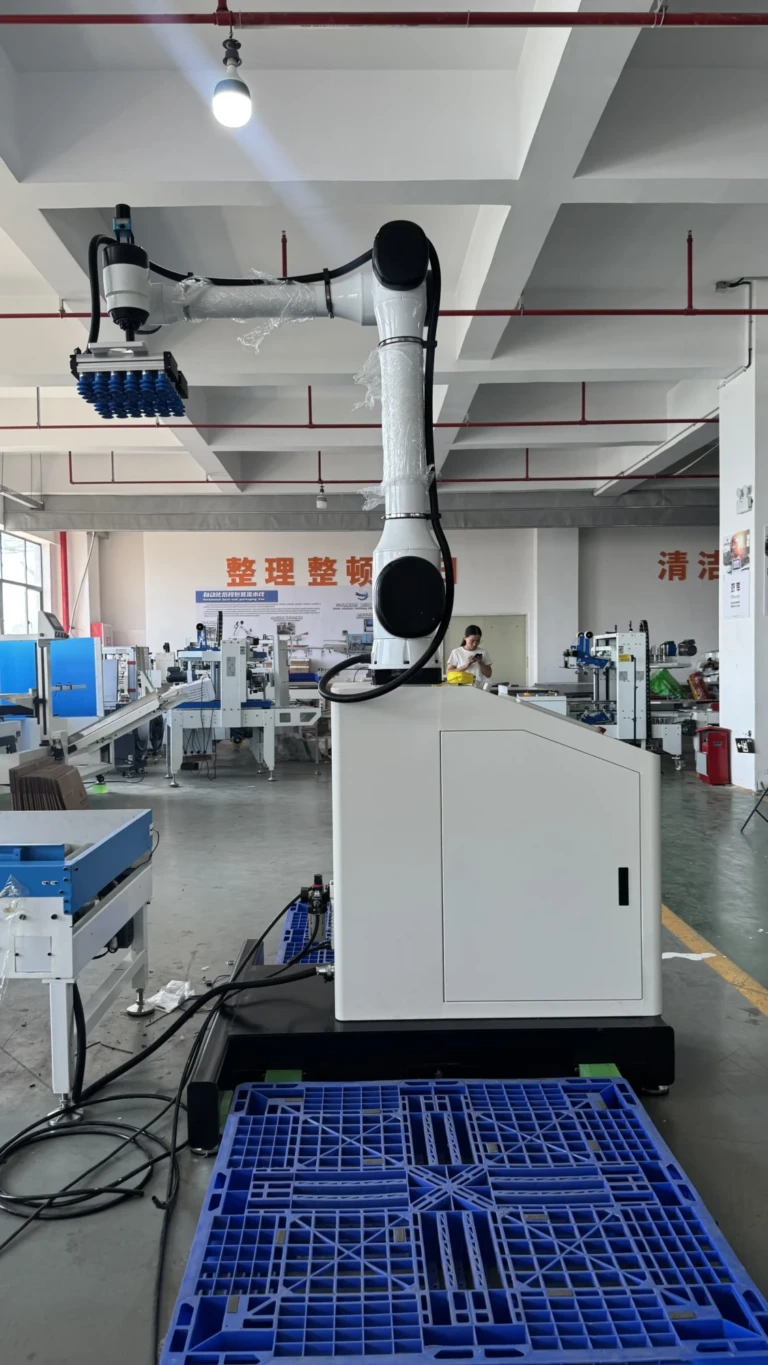
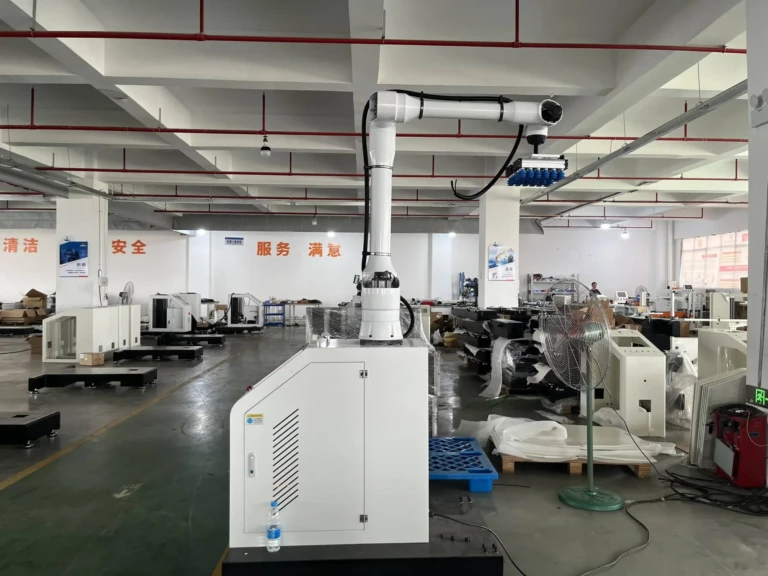
Collaborative Robots (Cobots):
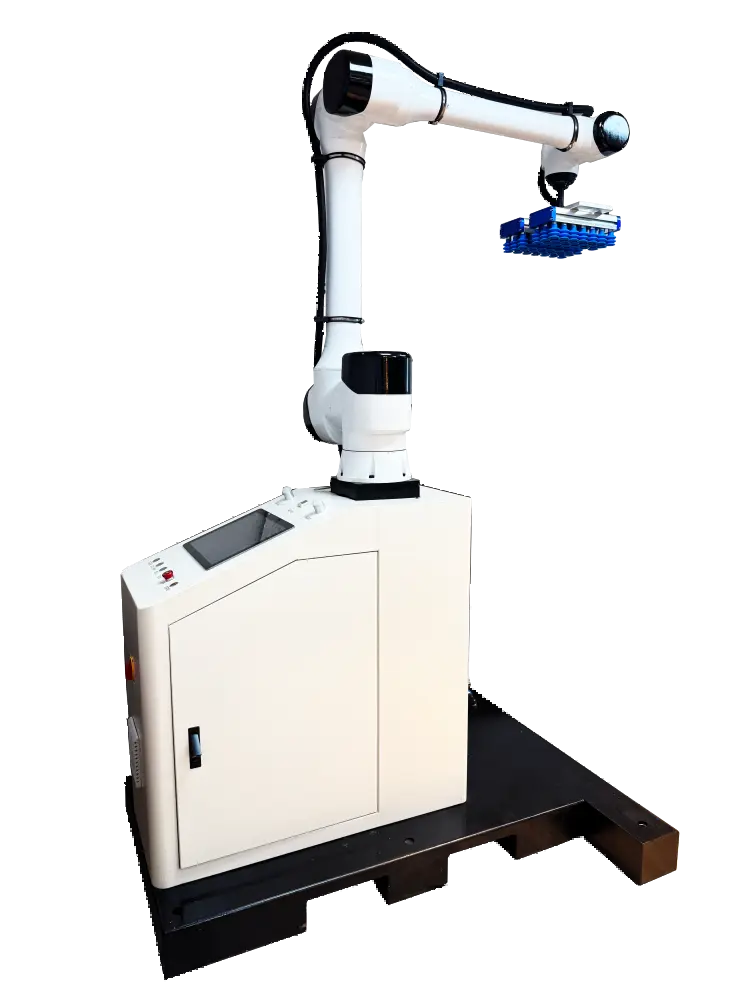
Ideal for small to mid-sized facilities, cobots work alongside humans without safety cages. Huaxiu’s collaborative palletizing robots excel in flexibility, allowing quick reprogramming for seasonal product changes. -
Articulated Robots:
High-speed 6-axis arms with large reach capacities (up to 3,000 mm) manage heavy-duty operations, such as stacking 50-lb fertilizer bags at 20+ cycles per minute. -
Gantry Robots:
Overhead systems maximize floor space, ideal for facilities with narrow footprints. Coupled with automatic pallet dispensers, they enable continuous operation. - Mobile Palletizing Units:
Compact robots on autonomous mobile robots (AMRs) can service multiple production lines, reducing idle time.
Key Benefits of Automation
- Productivity Boost:
Robots operate 24/7, achieving cycle times up to 50% faster than manual labor. - Cost Savings:
ROI is often realized in 12–24 months via reduced labor, waste, and downtime. - Enhanced Safety:
Eliminate manual lifting injuries and exposure to harsh environments (e.g., dusty grain handling). - Scalability:
Systems grow with your business—add more robots or integrate with upstream/downstream automation (e.g., Huaxiu’s strapping or shrink-wrap robots). - Data-Driven Optimization:
IoT-enabled robots provide analytics on throughput, error rates, and maintenance needs.
Implementation Guide: Steps to Success
Transitioning to robotic palletizing requires careful planning:
- Process Assessment:
Evaluate current workflows, bag types, and peak output requirements. - Cell Design:
Choose grippers suited to your bags (e.g., vacuum for smooth surfaces; clamps for textured bags). - Simulation & Testing:
Use digital twin software to simulate stacking patterns and identify bottlenecks. - Integration:
Connect robots to existing PLCs, ERP systems, and vision sensors. - Training:
Upskill staff to manage, monitor, and maintain the system.
Pro Tip: Partner with providers offering end-to-end solutions (like Huaxiu’s pallet forming and sealing robots) for smoother integration.
Future Trends in Robotic Palletizing
- AI-Powered Adaptability: Machine learning enables robots to self-optimize patterns based on real-time feedback.
- Sustainability: Lightweight grippers and energy-efficient motors reduce carbon footprints.
- Human-Robot Collaboration: Cobots with enhanced tactile sensors will handle fragile bags (e.g., seed packets) with human-like dexterity.
Conclusion
Robot palletizing for bags is no longer a luxury—it’s a strategic necessity for businesses competing in efficiency-driven markets. By automating this critical phase, companies unlock higher throughput, lower operational risks, and scalability unachievable with manual labor. With advancements in robotics and AI, systems like Huaxiu’s collaborative palletizers and shrink-wrap robots are setting new benchmarks in reliability and adaptability. Whether you’re handling food-grade flour or industrial resins, investing in robotic palletizing future-proofs your operations while driving immediate ROI.
FAQs
Q1: Can robotic systems handle irregularly shaped or damaged bags?
Yes. Advanced vision systems detect deformities and adjust grip strength or placement to prevent spills. Robots can even offload damaged bags to a reject line.
Q2: What’s the typical ROI period for a robotic palletizing system?
Most businesses see ROI in 1–2 years, factoring in labor savings, reduced product loss, and higher throughput.
Q3: Are these robots suitable for small facilities with space constraints?
Absolutely. Collaborative robots and mobile units require minimal floor space and integrate into existing layouts without major renovations.
Q4: How do grippers handle different bag materials?
Vacuum grippers work best for smooth, airtight bags (e.g., plastic-wrapped pellets). Clamp-style grippers suit porous materials like burlap. Hybrid systems combine both.
Q5: What maintenance is required?
Routine checks on grippers, pneumatics, and sensors (weekly/monthly). Most robots self-diagnose issues via onboard analytics.
Q6: Can robots switch between bag sizes without downtime?
Yes. Modern systems allow “recipe-based” programming—select a product SKU, and the robot auto-adjusts grip settings and pallet patterns.
Q7: Do robotic palletizers comply with food safety standards?
Certified models (e.g., IP67-rated) withstand washdowns and meet FDA/USDA requirements for food and pharmaceutical handling.
Q8: What if a robot malfunctions mid-shift?
Most systems include fail-safes like emergency stops and backup palletizing queues. Huaxiu’s robots offer remote diagnostics for rapid troubleshooting.
Embracing robotic palletizing isn’t just about keeping pace—it’s about redefining what’s possible in industrial automation. With tailored solutions from innovators like Huaxiu, the future of efficient, safe, and intelligent bag handling is here.