
The Silent Revolution in Warehousing: How Robotic Case Palletizers Transform Speed & Efficiency
In an era where consumers expect next-day delivery and manufacturing volumes continue to climb, traditional manual palletizing methods simply can’t keep pace. Enter robotic case palletizers – the unsung heroes of modern logistics. These intelligent machines are rewriting the rules of warehouse operations, combining blistering speed with surgical precision to reshape supply chains. But beyond the obvious labor savings, what makes this technology indispensable for future-focused businesses?
The Mechanics of Speed
Robotic palletizers operate on principles that leave human capabilities in the dust:
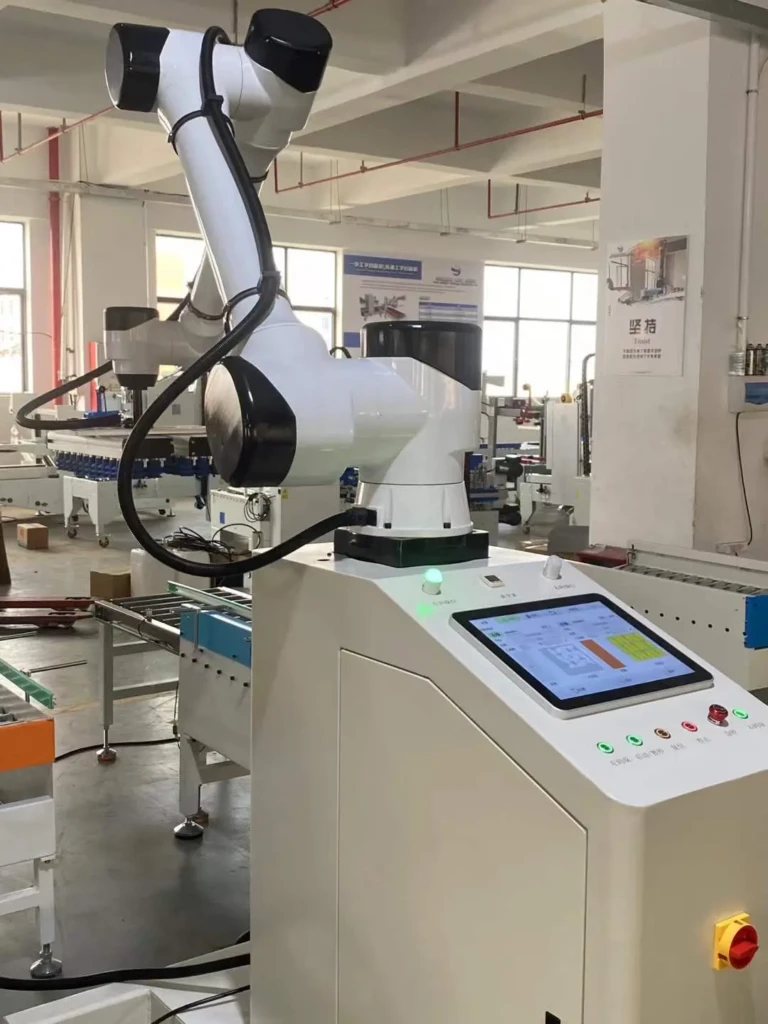
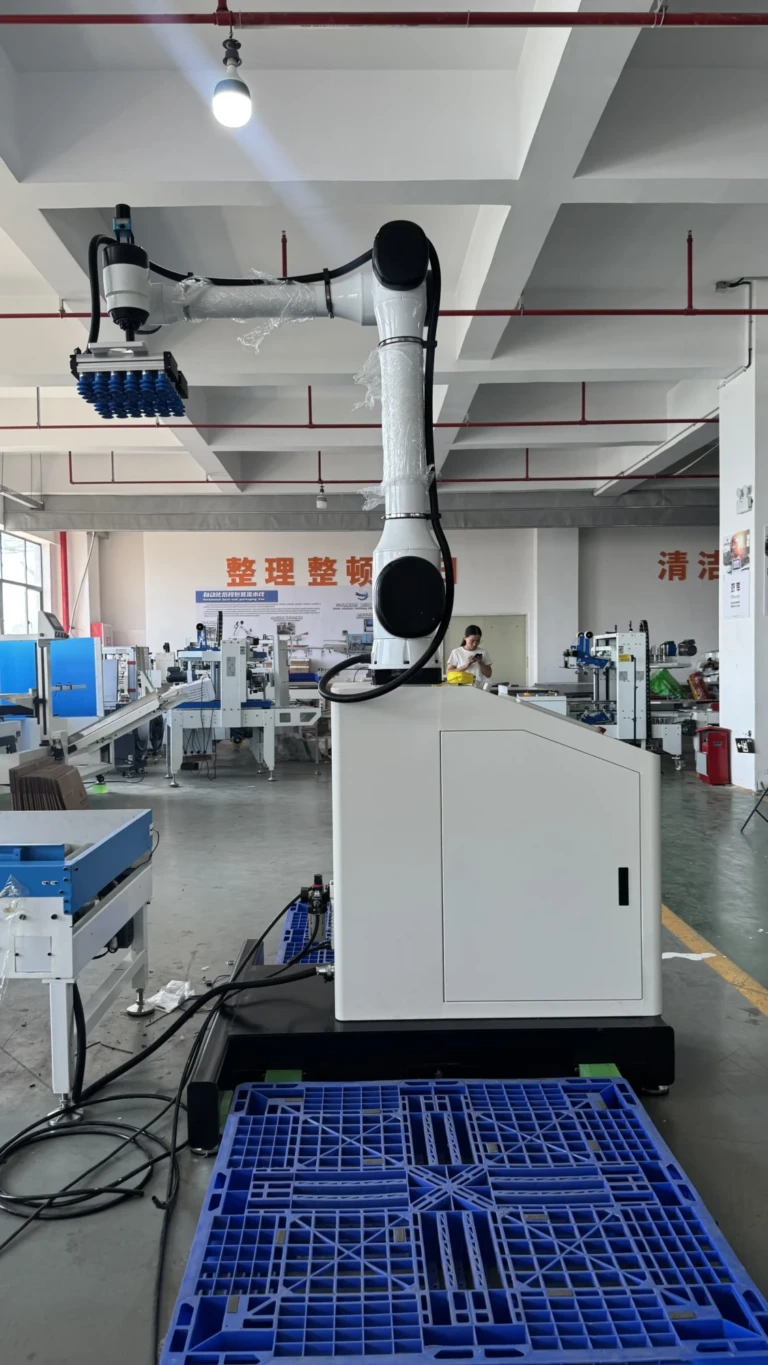
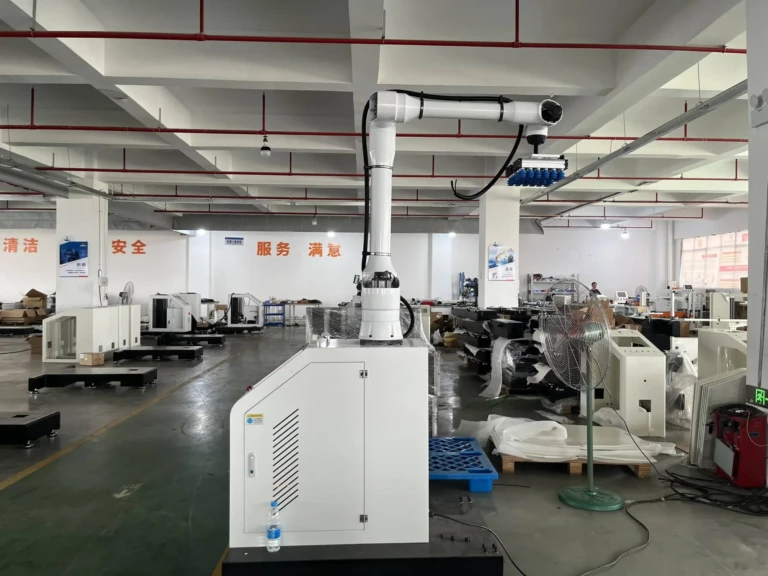
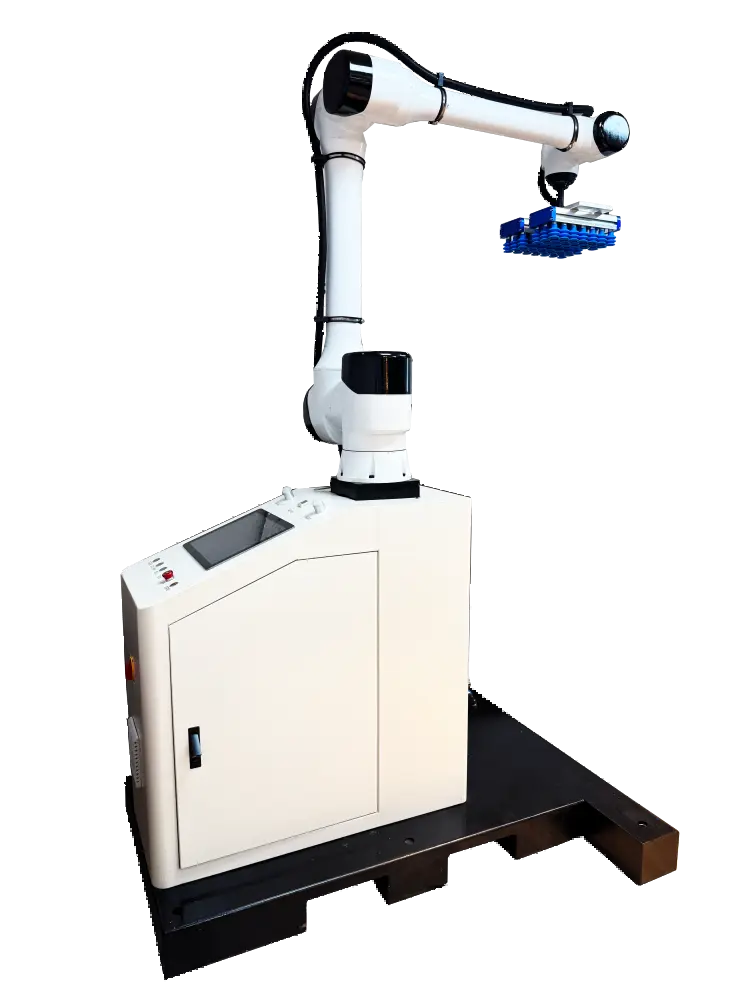
- Uninterrupted Cycle Times: A well-designed unit like Huaxiu’s HC-1800 collaborative palletizer achieves 15-20 cases per minute without smoke breaks or shift changes.
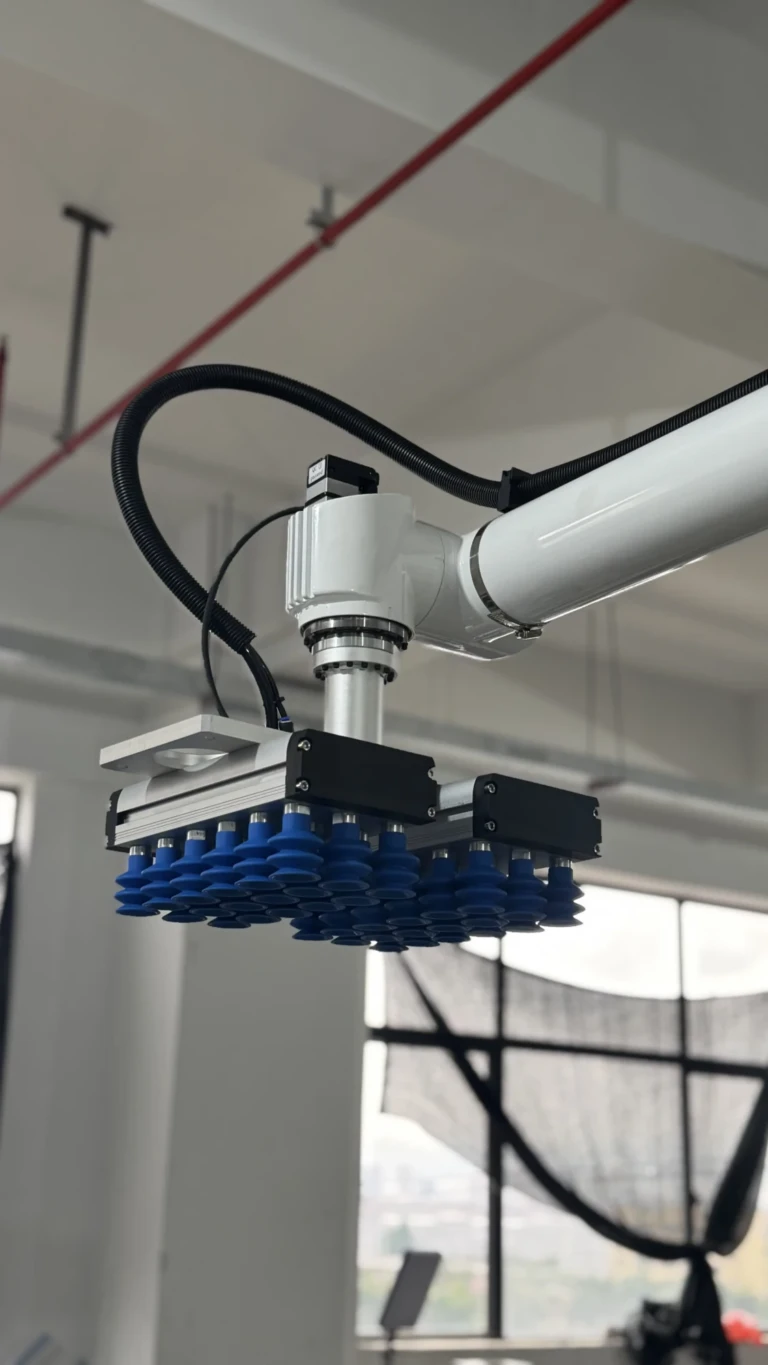
- Adaptive Gripping Systems: Vacuum, clamp, or hybrid end-effectors adjust instantaneously between box sizes from 2oz cosmetics to 50lb pet food bags.
- 3D Vision-Guided Precision: Advanced sensors map load orientation in milliseconds, correcting placement errors invisible to the human eye.
- Multi-Layer Pattern Algorithms: Software calculates stacking sequences mid-operation, preventing topples while maximizing trailer space utilization.
Real-World Impact: A beverage distributor using Huaxiu’s gantry-style palletizer reported a 220% throughput increase compared to manual crews, reducing order fulfillment windows from 48 hours to 12.
The Efficiency Multiplier Effect
Speed alone doesn’t drive ROI – it’s how robots amplify other systems:
- Energy Optimization: Regenerative drives in Huaxiu’s models recover braking energy, cutting power consumption by 35% vs. older hydraulic systems.
- Floor Space Reclamation: Compact footprints (some under 8m²) liberate warehouse real estate – a California fulfillment center repurposed 40% of palletizing space into revenue-generating cold storage.
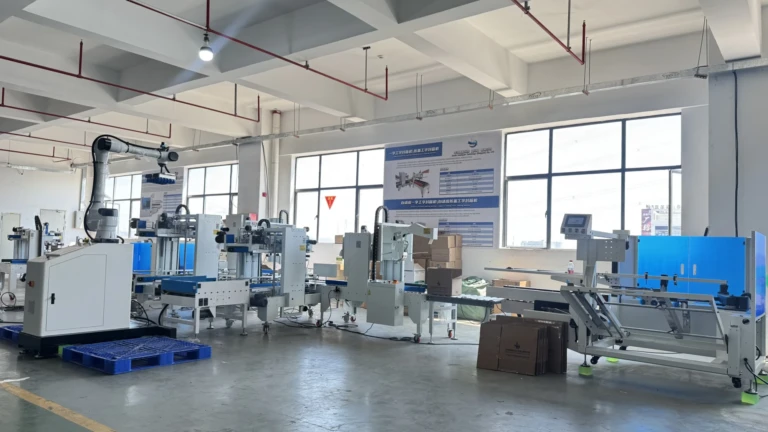
- Integrated Material Flow: When paired with Huaxiu’s automatic stretch wrappers or strapping robots, palletizing becomes a continuous hands-off process from conveyor to dock.
- Predictive Maintenance: AI-driven vibration analysis in flagship models detects belt wear or bearing fatigue 300+ hours before failure.
Beyond Productivity: The Strategic Advantages
- Ergonomic Rescue: Eliminating repetitive lift-twist motions reduced work comp claims by 92% at a Midwestern snack factory.
- Load Quality Analytics: Force sensors log compression data during stacking, creating optimization reports for packaging engineers.
- Carbon Accountability: Precise placement cuts unnecessary plastic wrap by 25% – a sustainability metric increasingly demanded by Fortune 500 partners.
Implementation Insights for Maximum ROI
Deploying palletizing robots isn’t plug-and-play; strategic integration separates leaders from followers:
- Modularity Matters: Opt for Huaxiu’s “bolt-on” conveyors that adapt as SKU profiles evolve.
- Variable SKU Buffering: Mid-tier systems handle 8-10 SKU changes hourly; high-end models juggle 25+ via RFID-triggered reprogramming.
- Failure Simulations: Stress-test systems with worst-case scenarios – mixed case weights, torn labels, irregular shapes.
Pro Tip: Integrate palletizers with Huaxiu’s automated pallet dimensioning systems. One automotive parts supplier slashed LTL freight costs 18% through optimized load building.
The Future Is Autonomous (But Not Driverless)
While lights-out palletizing exists, the next frontier is cognitive adaptability:
- Self-Healing Workflows: Robots compensating for upstream errors (e.g., upside-down cases from sealers)
- Blockchain Traceability: Each pallet stamped with encrypted load integrity data
- Swarm Intelligence: Multi-robot coordination for ultra-high-density DCs
Conclusion
Robotic case palletizers have transcended their role as mere labor replacements. They’ve become strategic assets that amplify throughput, compress operational costs, and future-proof facilities against demand volatility. As machine learning transforms these systems from automated to autonomous, early adopters are discovering competitive moats that manual operations can’t breach. Whether you’re palletizing 200 or 20,000 cases daily, the speed-efficiency equation now unequivocally favors automation.
FAQs: Robotic Case Palletizers Decoded
Q: Can these robots handle irregularly shaped items like bags or bottles?
A: Absolutely. Huaxiu’s vacuum-gripper systems manage polybags, wine bottles, and even unstable totes using adaptive pressure control. Custom end-effectors are available for specialty items.
Q: What’s the typical ROI timeframe?
A: Most clients achieve full ROI in 8-18 months. A Texas food processor recouped their $285k investment in 11 months through 24/7 operation and reduced product damage.
Q: How difficult is reprogramming for new SKUs?
A: Modern systems like Huaxiu’s HR-OS software allow drag-and-drop pattern creation. Swapping between 95% of SKUs takes under 90 seconds once profiles are saved.
Q: Are safety barriers mandatory?
A: Not always. Collaborative robots (cobots) with force-limiting tech can work alongside humans sans cages. Traditional industrial units require light curtains or fencing per risk assessment.
Q: Can old palletizers be retrofitted with new tech?
A: Yes. Huaxiu offers vision system upgrades, gripper retrofits, and even AI add-ons for units as old as 2015, typically at 30-50% of new unit cost.
Q: What’s the largest pallet size supported?
A: Industrial models handle up to 72" x 60" pallets at 5,500 lbs capacity. Custom gantry solutions exist for oversized loads like aerospace components.
Q: How do humidity/temperature extremes affect performance?
A: IP67-rated units operate in -13°F to 131°F environments. Specialized lubricants and condensation-resistant electronics are available for cold chain applications.
For niche applications or hybrid workflows, Huaxiu’s engineering team provides free process evaluations – because the most efficient solution isn’t always obvious.