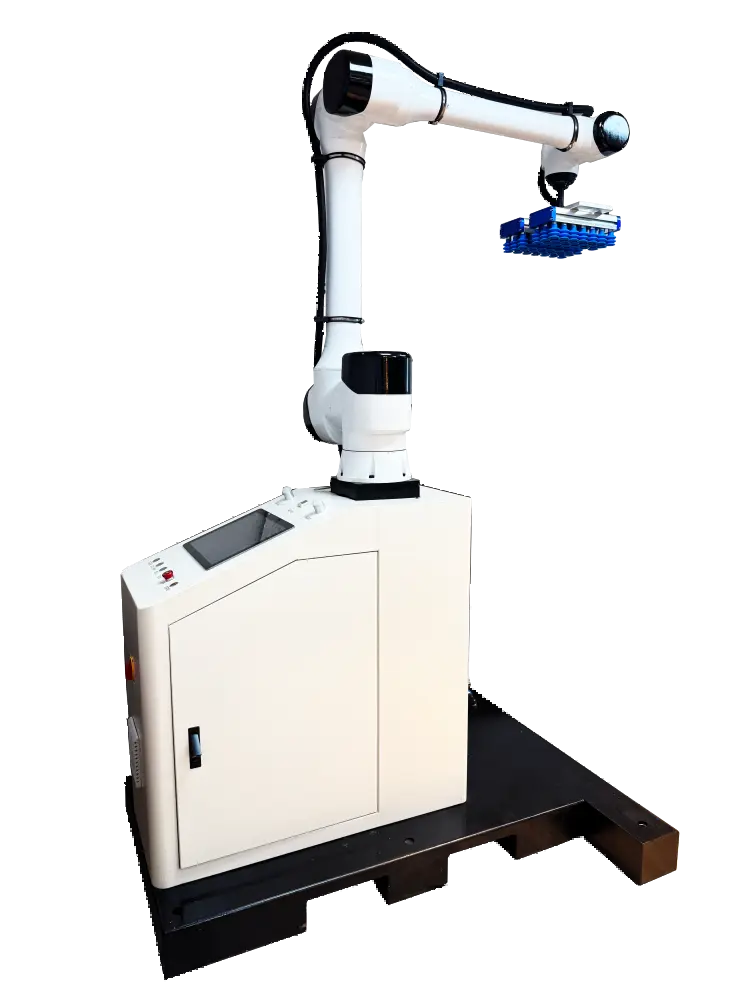

The Silent Revolution in Warehouse Efficiency: How Robotic Pail Palletizers Are Transforming Material Handling
If you’re managing a facility that handles pails—whether they’re filled with chemicals, paints, lubricants, or food ingredients—you’ve likely faced the relentless challenges of manual palletizing. Heavy lifting, inconsistent stacking patterns, worker fatigue, and the ever-present risk of injury or product damage create bottlenecks that ripple through your operations. Enter robotic pail palletizers: intelligent systems engineered to automate this demanding task with precision, speed, and unwavering reliability. In this deep dive, we explore how this technology isn’t just an upgrade—it’s a complete reimagining of warehouse efficiency.
The Efficiency Imperative: Why Palletizing Automation Matters
Manual palletizing of pails is more than just labor-intensive—it’s a hidden cost center. Workers handling 55-gallon drums or smaller pails face repetitive motion strain, while inconsistent stacking can lead to unstable pallets, shipment rejections, or even catastrophic collapses. Robotic pail palletizers eliminate these variables, delivering:
- 24/7 Operational Uptime: Unlike human workers, robots don’t need breaks, shifts, or weekends off.
- Precision Stacking Algorithms: Advanced vision systems scan pail dimensions and orientation, calculating optimal pallet patterns for stability and space utilization.
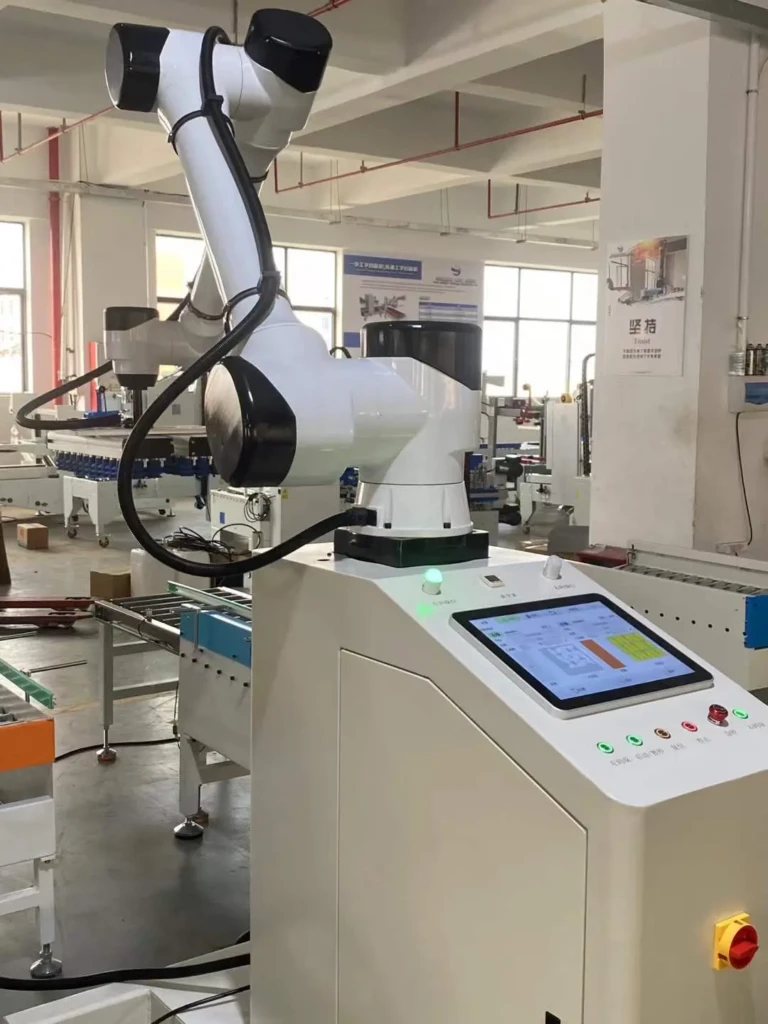
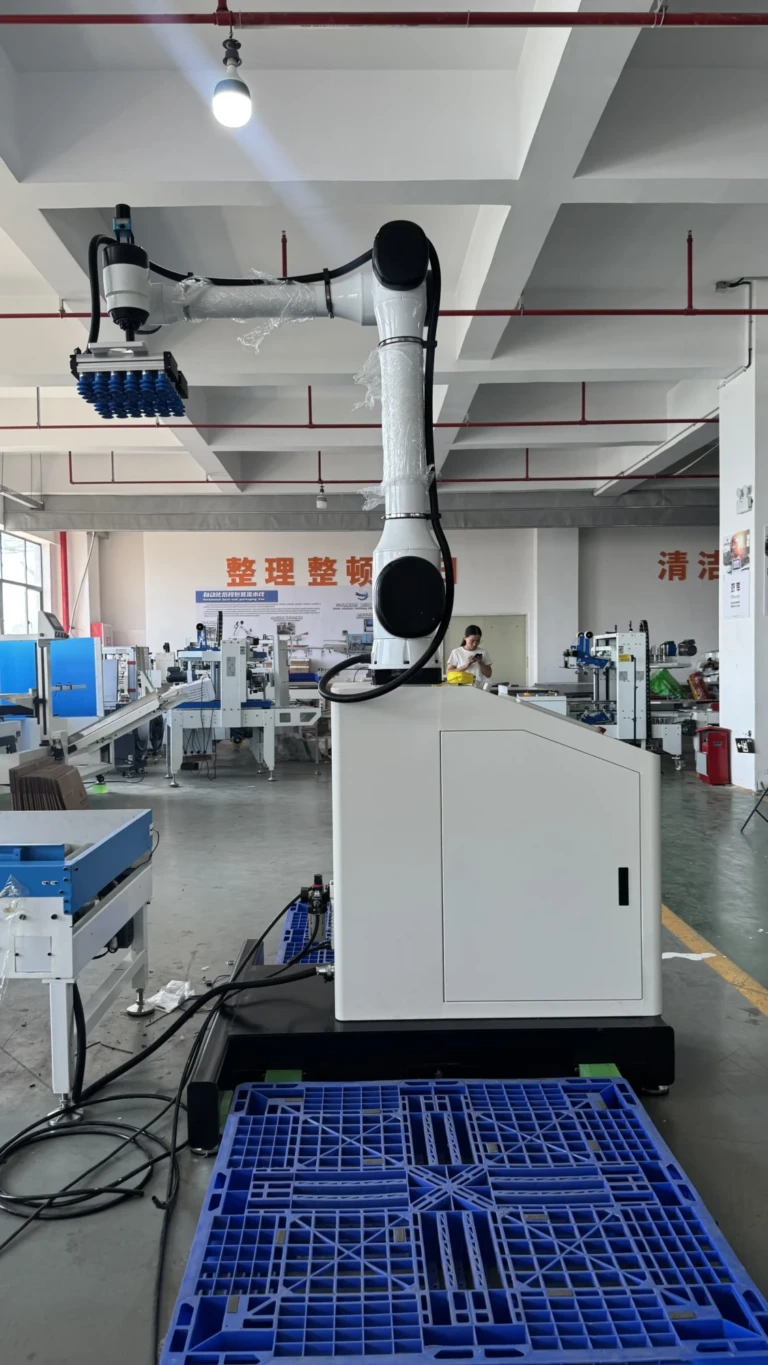
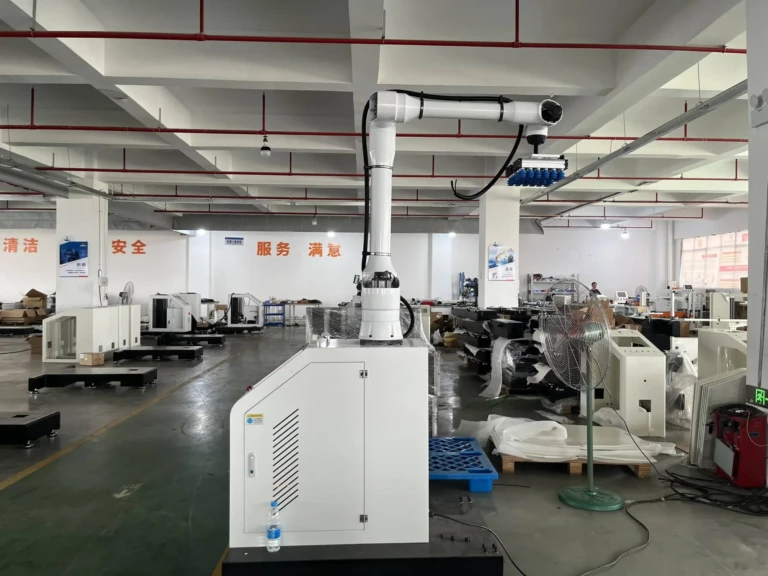
- Throughput Surges: High-speed models, like Huaxiu Robot’s CP Series Collaborative Palletizers, achieve 15+ cycles per minute—up to 3x faster than manual teams.
A beverage manufacturer in Ohio saw palletizing time per truckload drop from 45 minutes to 12 minutes after deploying robotic palletizers—freeing staff for higher-value tasks like quality control.
Beyond Speed: The Hidden Benefits Driving ROI
While speed captivates, the true value of robotic pail palletizers lies in their multiplicative impacts:
- Ergonomic Safety: Removing workers from heavy lifting reduces musculoskeletal injury risks—a critical factor as OSHA penalties for ergonomic violations soar.
- Space Optimization: Compact robotic cells occupy 40% less floor space than traditional conveyor-and-labor setups.
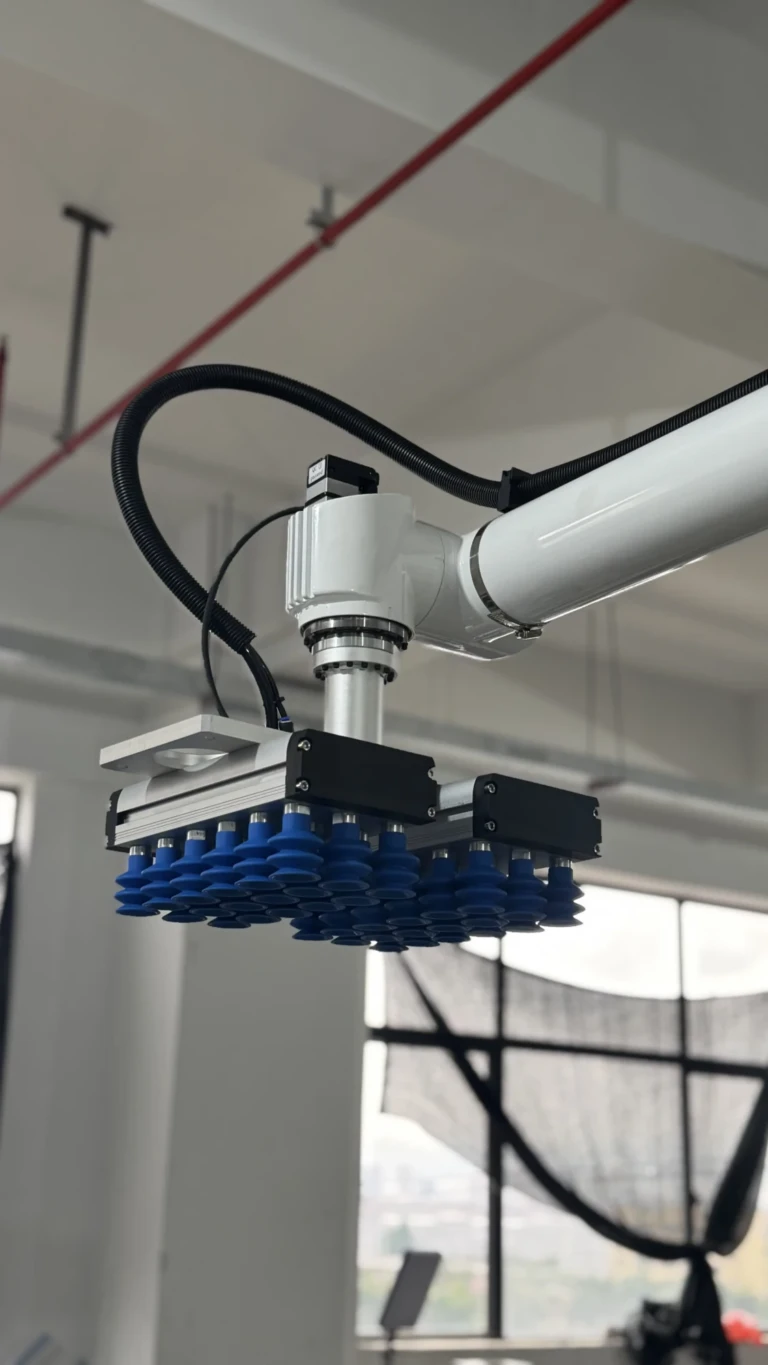
- Damage Reduction: Gentle robotic grippers (vacuum, clamp, or hybrid) handle fragile or irregularly shaped pails without dents or leaks.
- Data Integration: IoT-enabled systems provide real-time analytics—tonnage palletized, downtime causes, maintenance alerts—for continuous improvement.
For industries like agrochemicals, where pail weights exceed 80 lbs, these systems also ensure compliance with strict weight-handling regulations.
Huaxiu Robot’s Innovation Edge: Engineering for Real-World Challenges
Not all pail palletizers are created equal. Huaxiu Robot’s solutions tackle industry-specific pain points with patented technologies:
- Dynamic Payload Handling: Their GR Series withstands payloads up to 2,200 lbs—critical for dense liquids or multi-pail lifts.
- Multi-Format Flexibility: Quick-change end-of-arm tools adapt between round, square, or tapered pails in under 90 seconds.
- Hybrid Mobility: Semi-automatic models like the SA-Sealer integrate sealing and palletizing for facilities transitioning to full automation.
- Sustainability Boost: Stretch film robots apply optimal tension, reducing plastic use by 25% vs. manual wrapping.
Debunking Myths: What Operations Managers Need to Know
Myth 1: “Robots can’t handle our diverse pail sizes.”
Reality: Modern systems auto-detect pail dimensions via laser scanners. Huaxiu’s CP-800L, for example, handles diameters from 10" to 24" without reprogramming.
Myth 2: “Integration disrupts existing lines.”
Reality: Modular designs interface with legacy conveyors, sealers, or ERP systems. One automotive lubricant plant deployed a robotic palletizer in 72 hours during a scheduled maintenance shutdown.
Myth 3: “Automation kills jobs.”
Reality: In a 2023 Material Handling Institute survey, 81% of adopters redeployed workers to oversee robotics operations, maintenance, or logistics analytics—roles with 30% higher wages.
Future-Proofing Your Facility: Key Selection Criteria
When evaluating robotic pail palletizers, prioritize:
- Payload × Speed Matrix: Match specs to your heaviest common pail × required cycles/min.
- Software Intelligence: Look for AI-driven systems that "learn" optimal stacking paths over time.
- Scalability: Can the system expand to handle pallet forming, strapping, or even autonomous mobile robot (AMR) transport?
- Vendor Expertise: Huaxiu’s turnkey service—site audits, simulation testing, training—ensures frictionless adoption.
Conclusion: The Automation Tipping Point Has Arrived
Robotic pail palletizers are no longer a luxury for Fortune 500 warehouses. With ROI periods now under 18 months (thanks to falling robotics costs and rising labor expenses), they’re a strategic imperative for any facility handling 200+ pails daily. Beyond efficiency, they provide resilience: the ability to maintain throughput amid labor shortages, regulatory shifts, or demand spikes. As Huaxiu Robot’s engineers often remind clients, “The goal isn’t to replace humans—it’s to empower them with unbreakable tools.”
FAQs: Robotic Pail Palletizers Demystified
Q1: Can these robots handle leaky or damaged pails?
Yes. Advanced vision systems detect deformities and either reject faulty pails or adjust grip pressure dynamically.
Q2: What’s the typical maintenance schedule?
Daily checks (5 mins) for gripper integrity and bi-annual professional servicing. Huaxiu’s models average <1% unplanned downtime.
Q3: Are collaborative robots (cobots) safe to work alongside staff?
Absolutely. Cobots like Huaxiu’s CP Series have force-limited joints and emergency stop zones certified to ISO/TS 15066.
Q4: How do they handle mixed SKU pallets?
Via integrated WES (Warehouse Execution Software). Robots receive real-time orders (e.g., “3× Gallon Pails A, 2× Drums B”) and build compliant pallets.
Q5: What’s the energy consumption vs. manual operations?
A typical robotic cell uses 4–6 kWh—offsetting the energy-equivalent of 8–10 manual laborers.
Q6: Can I retrofit an existing pallet conveyor system?
Yes—90% of Huaxiu installations integrate with AS/RS or roller conveyors using universal PLC interfaces.
The future of warehouse productivity isn’t on the horizon—it’s already here, stacking pails with quiet, relentless precision. Is your operation ready to evolve?