The Evolving Landscape of the Robotic Palletizer Market: Trends, Innovations, and Future Outlook
The global robotic palletizer market is experiencing unprecedented growth, fueled by the relentless demand for automation across manufacturing, logistics, and e-commerce sectors. As businesses prioritize efficiency, safety, and scalability, robotic palletizing solutions are transitioning from “nice-to-have” luxuries to mission-critical investments.
Key Trends Shaping the Robotic Palletizer Market
-
Rise of Collaborative Robots (Cobots):
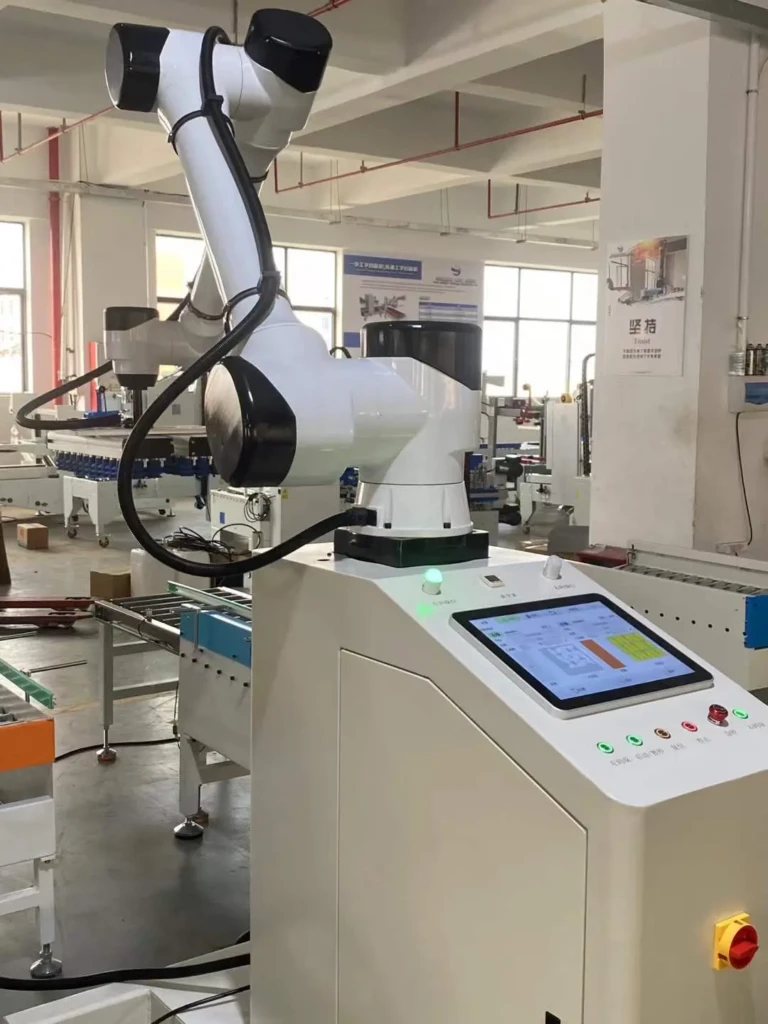
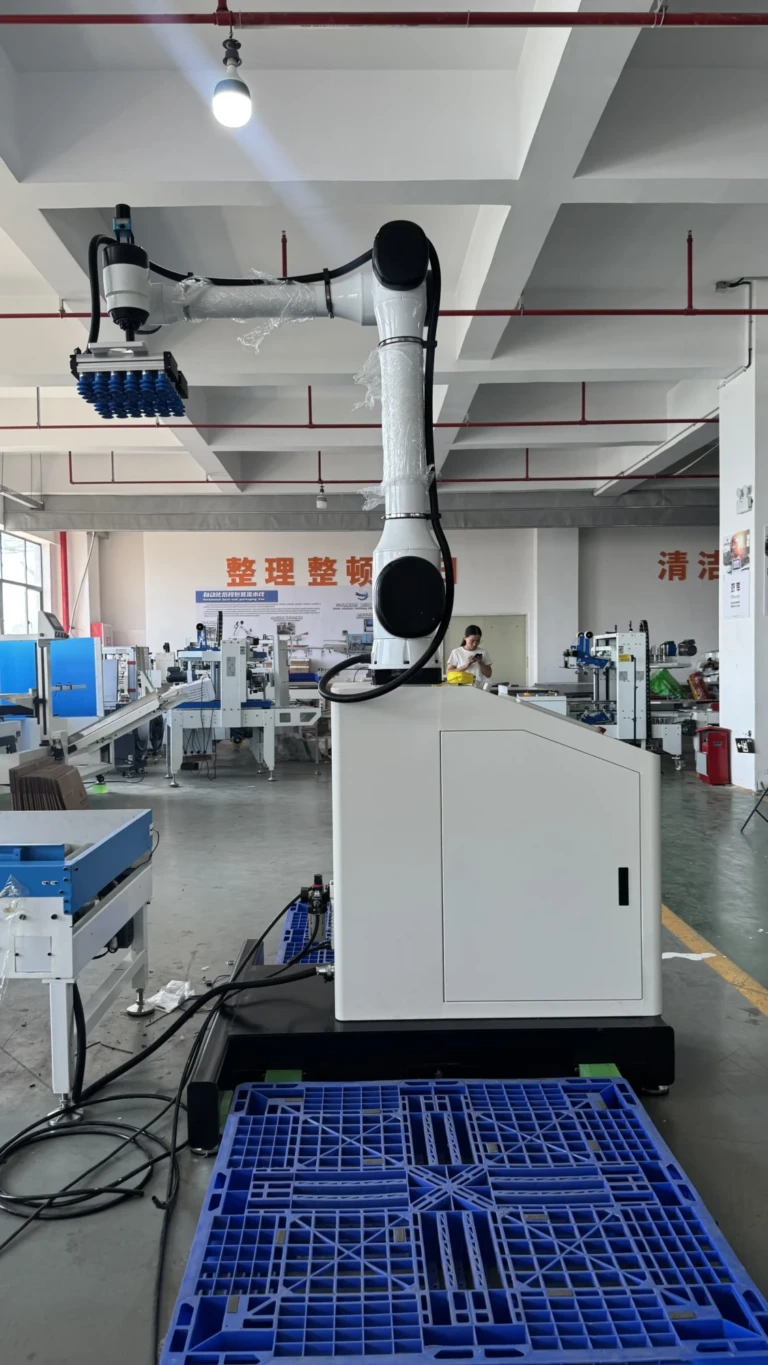
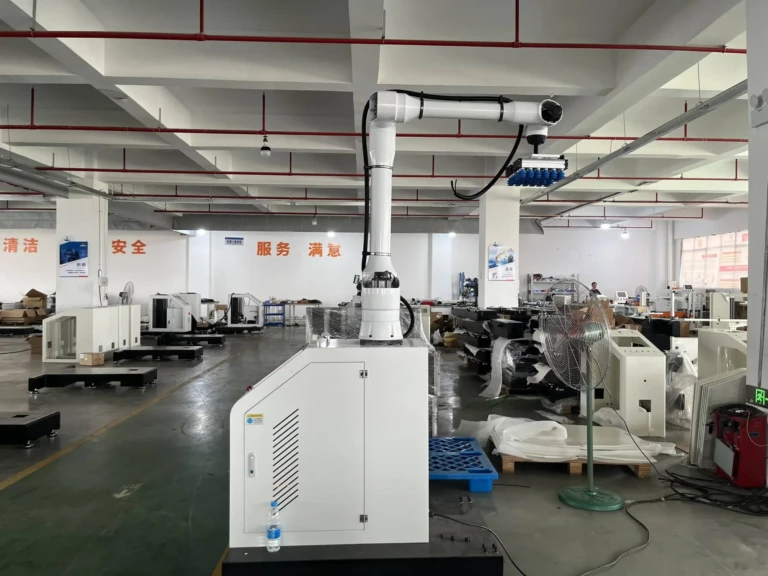
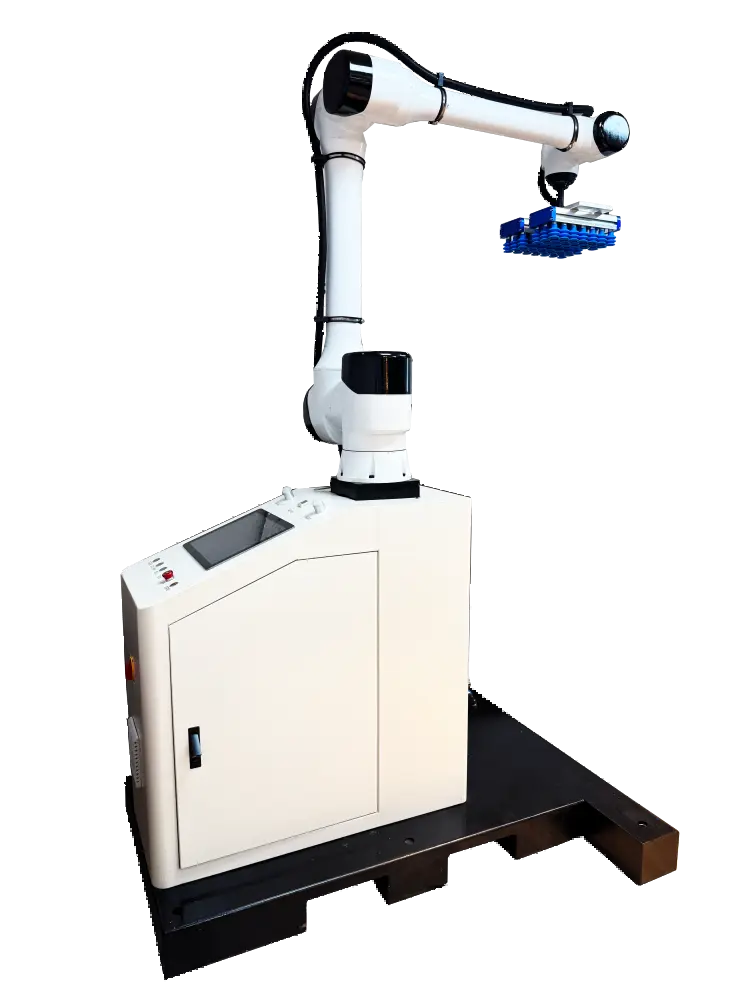
Traditional industrial robots required safety cages and extensive programming, but collaborative palletizing robots now operate safely alongside human workers. Cobots like those from Huaxiu Robot simplify deployment in SMEs with intuitive interfaces and flexible payload capacities, opening automation to industries previously constrained by cost or space. -
AI-Driven Optimization:
Modern palletizers integrate AI and machine learning to analyze patterns, optimize load stability, and self-correct errors. Vision systems enable robots to handle irregularly shaped items, mixed-SKU pallets, and dynamic workflows—critical for industries like food & beverage or pharmaceuticals. -
Modular and Hybrid Systems:
The shift toward modular palletizing cells allows businesses to scale operations incrementally. Solutions like Huaxiu’s semi-automatic sealing robots or strapping robots can be integrated into existing lines, reducing downtime and offering a “pay-as-you-grow” model. -
Sustainability Imperative:
Robotic palletizers minimize material waste—for example, stretch film robots precisely calculate wrapping tension, reducing plastic use by 15–30%. Energy-efficient motors and regenerative drives align with corporate ESG goals while cutting operational costs. - E-commerce-Driven Demand:
Explosive growth in online retail has intensified the need for highspeed, high-mix palletizing. Systems capable of 24/7 operation (like fully automatic stretch film packaging robots) are indispensable in fulfillment centers managing volatile order volumes.
Market Drivers Accelerating Adoption
- Labor Shortages & Rising Wages: Persistent gaps in manual labor availability make automation a financial imperative. Robotic palletizers offer ROI within 1–3 years by reducing reliance on hard-to-find skilled workers.
- Safety & Ergonomics: Repetitive heavy lifting leads to workplace injuries. Robotic solutions eliminate strains and accidents, ensuring compliance with occupational safety regulations.
- Customization Requirements: From automatic unpacking robots to pallet forming robots, vendors now offer tailored solutions for niche applications—like handling fragile glass bottles or temperature-sensitive pharmaceuticals.
Huaxiu Robot: Leading Innovation in Palletizing Automation
As a key player, Huaxiu Robot exemplifies market evolution with its diverse portfolio:
- Collaborative Palletizing Robots: Designed for easy integration and reprogramming.
- End-to-End Packaging Lines: Combining automatic sealing robots, shrink packaging robots, and strapping robots for turnkey solutions.
- Niche Applications: Specialized systems like pallet forming robots ensure unstable loads (e.g., bags, tires) are secured without manual intervention.
Their technology emphasizes interoperability, allowing seamless data exchange with warehouse management systems (WMS) or IoT platforms—a critical advantage in Industry 4.0 environments.
Regional Growth Hotspots
- Asia-Pacific: Dominates demand due to manufacturing hubs in China, Japan, and India. Government initiatives like “Made in China 2025” accelerate robotic adoption.
- North America & Europe: Driven by reshoring trends and strict labor laws. The EU’s EN ISO 10218 safety standards push manufacturers toward compliant automated solutions.
Future Projections
By 2030, the market is projected to exceed $4.5 billion (CAGR of ~7%). Emerging innovations include:
- Mobile Palletizing Robots: AGV-integrated systems for dynamic warehouse environments.
- Digital Twins: Virtual simulations to optimize robot performance before physical deployment.
- Blockchain Integration: Tracking palletized goods from production to delivery for enhanced traceability.
Conclusion
The robotic palletizer market is no longer just about replacing manual labor—it’s a strategic enabler of resilience, precision, and sustainability. Companies like Huaxiu Robot are at the forefront, offering scalable, intelligent solutions that adapt to evolving industry demands. As AI, cobots, and green tech converge, businesses that embrace these innovations will lead in efficiency and competitiveness.
FAQs: Robotic Palletizers
Q1: How long does it take to implement a robotic palletizer system?
Deployment can range from 2 weeks for a cobot-based system (e.g., Huaxiu’s collaborative models) to 3+ months for complex fully automated lines, depending on integration requirements.
Q2: What’s the average ROI period for robotic palletizers?
Most businesses achieve ROI within 12–36 months through labor savings, reduced product damage, and increased throughput.
Q3: Can robotic palletizers handle fragile or irregular items?
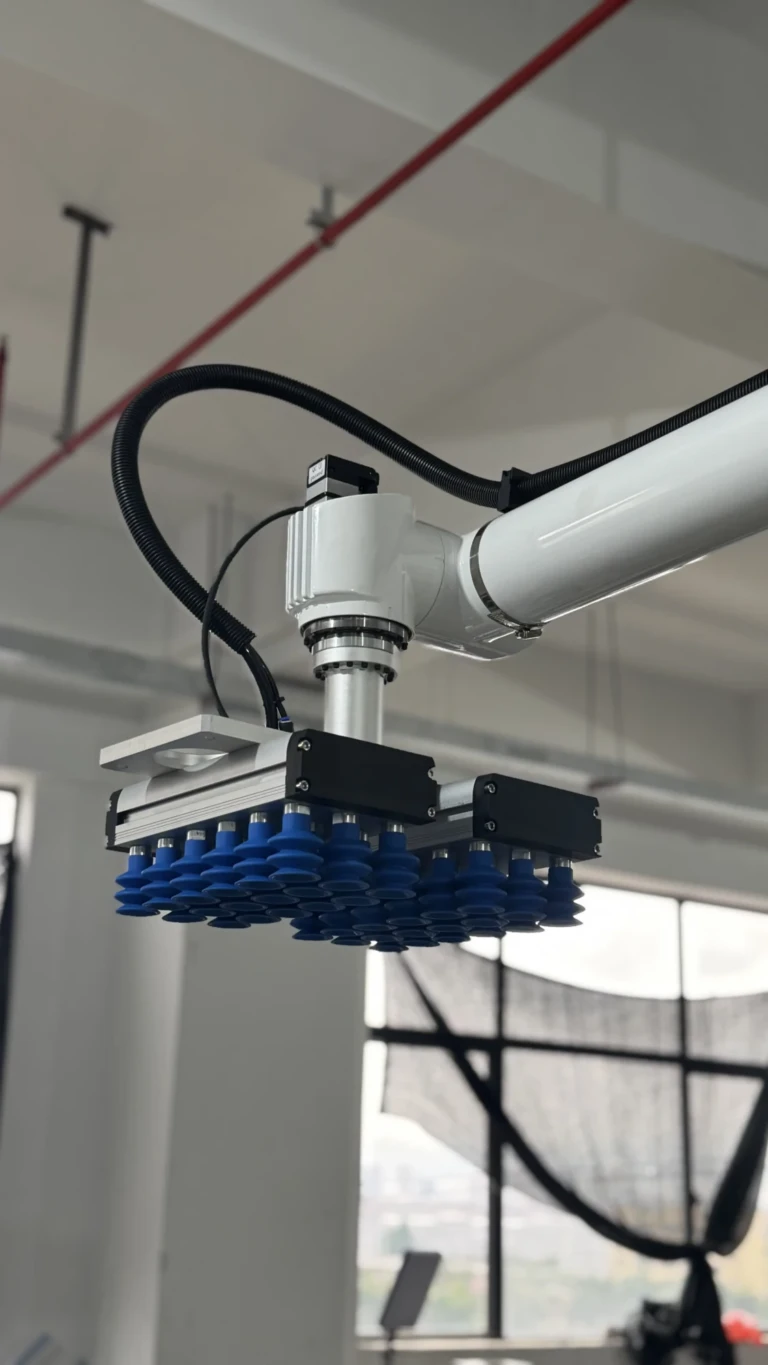
Yes. Advanced grippers (vacuum, claw, or servo-electric) and vision systems enable safe handling of items like glass bottles, bags, or unevenly shaped packages.
Q4: How do Huaxiu’s shrink packaging robots differ from traditional wrappers?
Huaxiu’s models integrate real-time heat control and tension adjustment, minimizing film usage while ensuring consistent seal quality—ideal for high-mix environments.
Q5: Are robotic palletizers compatible with existing warehouse layouts?
Most modern systems are modular and space-efficient. For instance, Huaxiu’s semi-automatic sealing robots can retrofit legacy conveyor systems without major redesigns.
Q6: What industries benefit most from robotic palletizing?
Food & beverage, pharmaceuticals, chemicals, and e-commerce are top adopters due to high-volume, repetitive tasks and stringent hygiene/safety requirements.
Q7: How does AI enhance palletizing efficiency?
AI algorithms optimize load patterns, predict maintenance needs, and adapt to new SKUs autonomously—reducing programming downtime by up to 90%.
Strategically investing in robotic palletizing isn’t just automation; it’s future-proofing your operations for the next era of industrial productivity.