
The Silent Revolution in Warehousing: How Robotic Palletizers Are Redefining Efficiency
In today’s hyper-competitive logistics landscape, warehouses are no longer just storage facilities—they’re the beating heart of supply chains. As consumer expectations for faster deliveries soar, businesses face mounting pressure to optimize operations without compromising accuracy or safety. Enter robotic palletizers, the unsung heroes transforming warehouse productivity. Let’s explore how these automated systems are revolutionizing workflows, slashing costs, and future-proofing operations.
The Pain Points of Traditional Palletizing
For decades, manual palletizing has been the norm, but its limitations are glaring:
- Labor-Intensive Processes: Workers face repetitive lifting, leading to fatigue, injuries, and high turnover.
- Inconsistency: Human error results in unstable pallets, damaged goods, or compliance risks in industries like pharmaceuticals.
- Scalability Challenges: Seasonal spikes or sudden demand surges strain human teams.
- Opportunity Costs: Valuable labor hours are wasted on manual stacking instead of value-added tasks.
These bottlenecks are driving a seismic shift toward automation—and robotic palletizers are leading the charge.
How Robotic Palletizers Unlock Efficiency
Modern palletizing robots, like those engineered by industry pioneers Huaxiu Robot, are designed to solve these pain points with precision and adaptability. Here’s how they deliver measurable ROI:
1. Blistering Speed Meets Pinpoint Accuracy
Robotic palletizers operate 24/7 at consistent speeds, handling up to 1,500 units per hour (depending on payload and pattern complexity). Advanced vision systems and AI algorithms ensure each item is placed optimally, eliminating product damage and maximizing pallet stability.
2. Flexibility Across Industries
From beverage cans to pharmaceuticals, robotic palletizers adapt seamlessly:
- Mixed-SKU Palletizing: AI-driven systems dynamically adjust patterns for assorted box sizes.
- Hygienic Environments: Stainless-steel models comply with food safety standards (e.g., FDA, NSF).
- Heavy-Duty Handling: High-payload arms manage bulky items like automotive parts or appliances.
3. Space Optimization & Layout Freedom
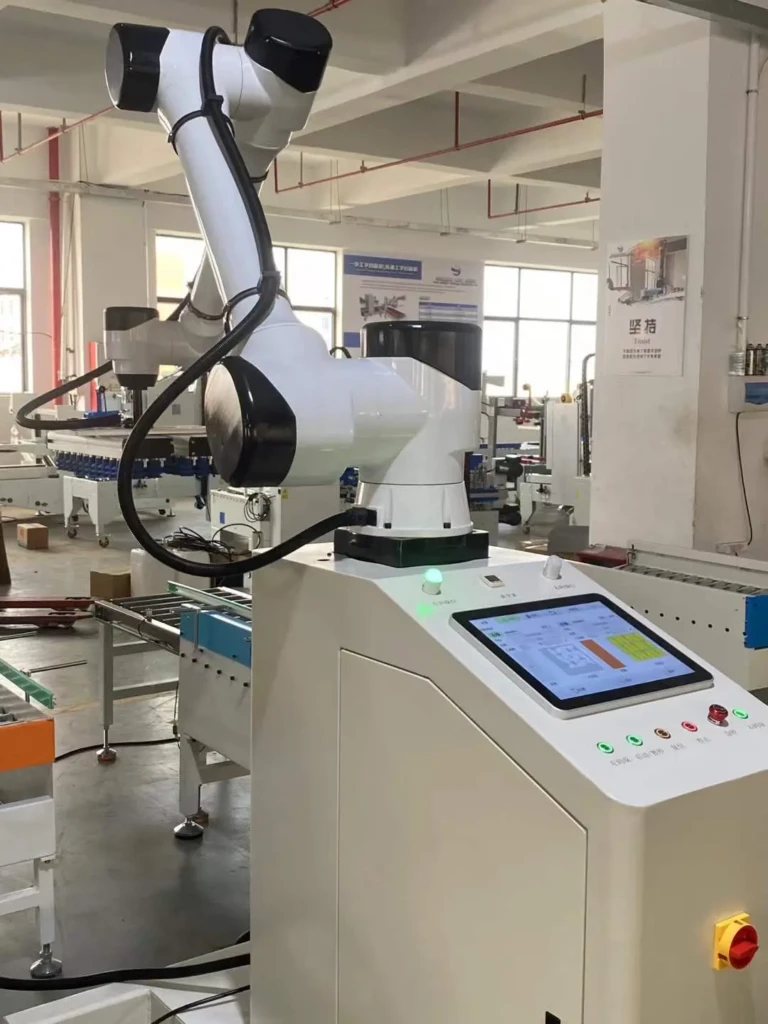
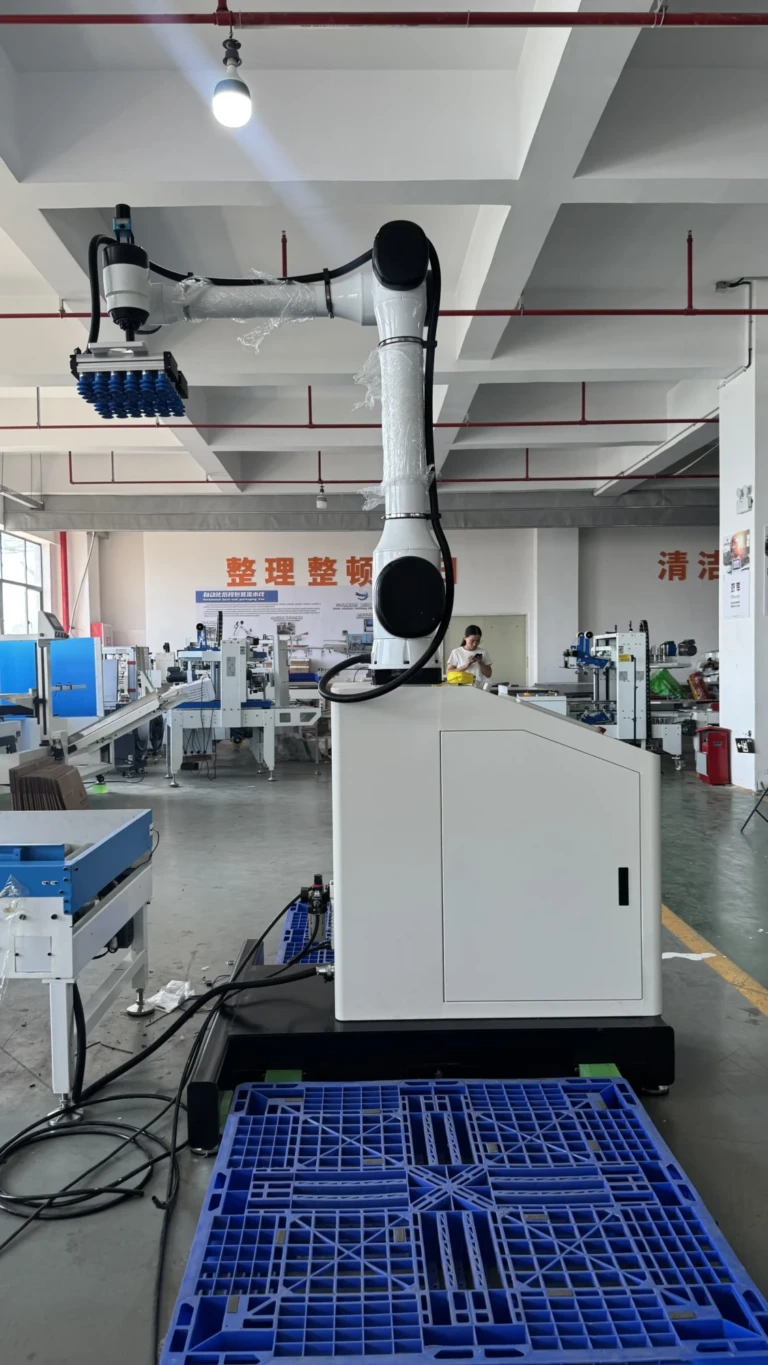
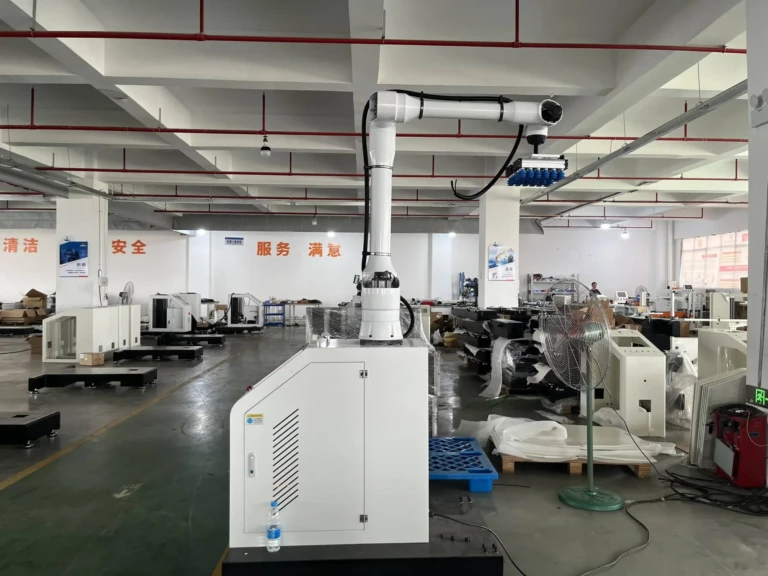
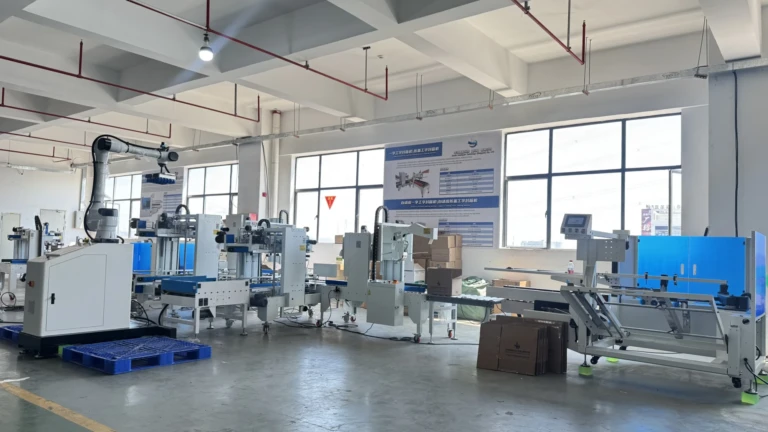
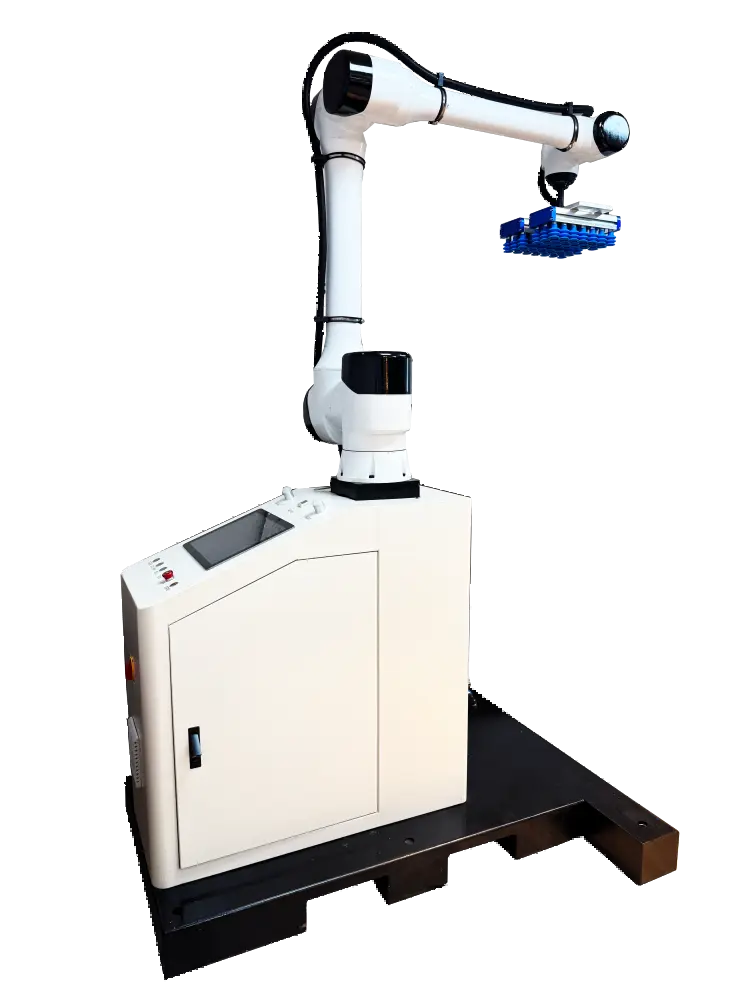
With compact footprints and multi-axis articulation, robots like Huaxiu’s collaborative palletizers integrate into tight spaces. They work alongside humans safely (thanks to force-limiting sensors) and can be ceiling-mounted to reclaim floor space.
4. End-to-End Automation Synergy
Robotic palletizers shine brightest when paired with complementary systems:
- Automatic Unpacking/Sealing Robots: Streamline inbound/outbound flows.
- Strapping & Stretch Film Packaging Robots: Secure pallets without manual intervention.
- Pallet Forming & Shrink Wrapping Systems: Create turnkey packaging lines.
This synergy reduces touchpoints and accelerates order fulfillment from end to end.
5. Data-Driven Continuous Improvement
Integrated IoT sensors collect real-time metrics—cycle times, error rates, maintenance needs—enabling predictive upkeep and process refinement.
Case in Point: Huaxiu Robot’s Palletizing Ecosystem
Huaxiu Robot stands at the forefront of this revolution, offering a suite of solutions tailored to diverse needs:
- Collaborative Palletizing Robots: Safe, user-friendly cobots for SMEs transitioning to automation.
- Fully Automatic Stretch Film & Shrink Packaging Robots: Ensure load stability in transit.
- Semi-Automatic Sealing Robots: Bridge gaps between manual and fully automated workflows.
- Modular Design Philosophy: Systems scale alongside business growth, protecting long-term investments.
These technologies not only boost efficiency but also enhance workplace safety—a critical factor given that 15% of warehouse injuries are linked to manual lifting (OSHA).
Conclusion: Automation as a Strategic Imperative
Robotic palletizers aren’t just machines—they’re strategic assets. By automating repetitive tasks, businesses unlock:
- 65–80% Labor Cost Savings
- 30–50% Throughput Gains
- Near-Zero Product Damage Rates
- SCALABILITY to handle market volatility
For warehouses eyeing long-term resilience, investing in robotic palletization is no longer optional—it’s foundational.
FAQs: Demystifying Robotic Palletizers
Q1: Are robotic palletizers viable for small warehouses?
Absolutely! Compact, collaborative models (like Huaxiu’s CP series) are cost-effective for SMEs. Their plug-and-play setup minimizes disruption, and ROI often materializes within 12–18 months.
Q2: How complex is integration with existing systems?
Leading providers design robots with open-architecture software (ROS/PLC compatibility) and offer APIs for seamless WMS/ERP integration. Huaxiu’s team typically deploys solutions in 4–8 weeks.
Q3: What about maintenance?
Modern palletizers are built for endurance. Daily checks take minutes, and AI-driven diagnostics alert teams to potential issues before they cause downtime.
Q4: Can robots handle irregularly shaped items?
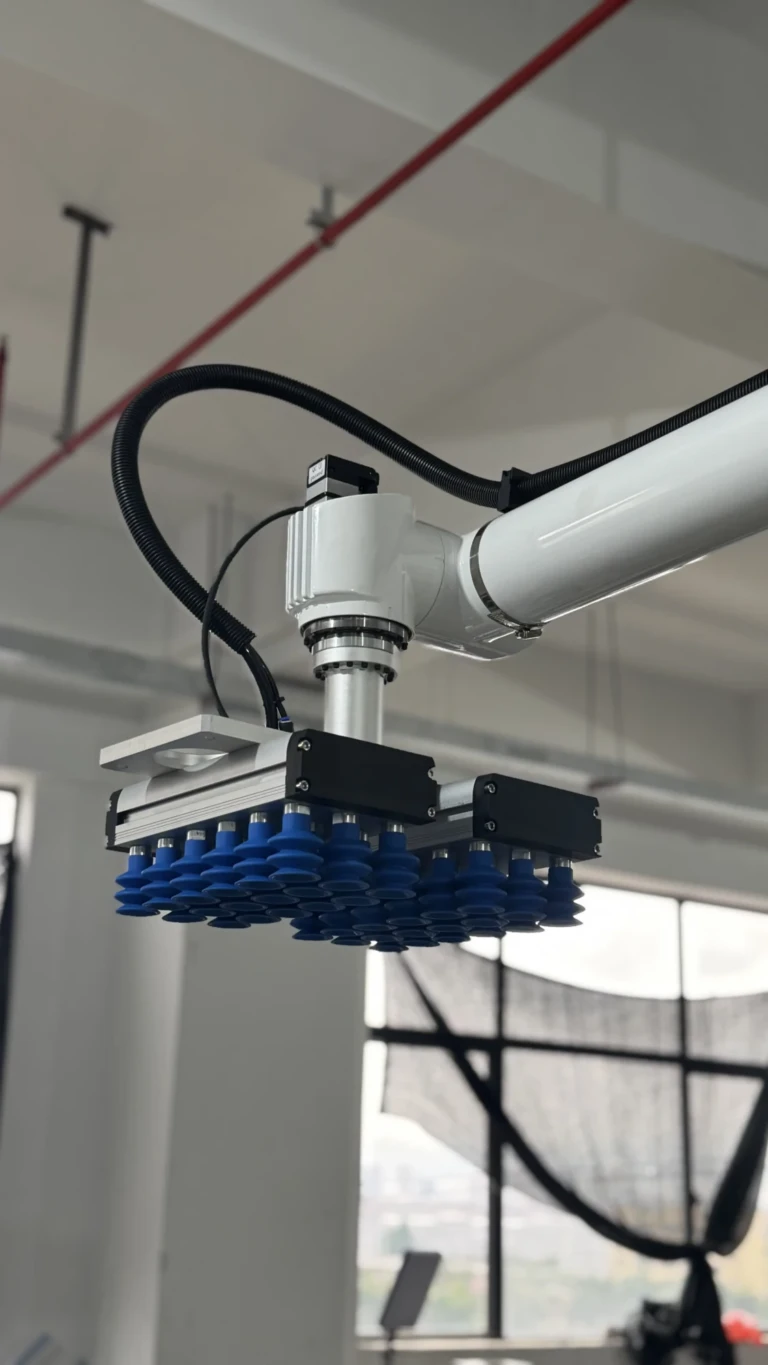
Yes! Vision-guided systems combined with vacuum grippers or adaptive claws can manipulate everything from bags to cylinders. Custom EOATs (End-Of-Arm Tools) solve most unique challenges.
Q5: Are these systems safe around workers?
Collaborative robots (cobots) adhere to ISO 10218 safety standards, featuring torque sensors, emergency stops, and protective zones. Huaxiu’s units boast SIL-3/PLe safety certifications.
Q6: What ROI timeline should we expect?
Most facilities see full ROI in 1–3 years through labor savings, reduced waste, and heightened throughput. High-volume operations often recoup costs faster.
The Future Is Automated—and It’s Here Now
As warehouses evolve from cost centers to competitive differentiators, robotic palletizers represent a critical leap forward. Companies like Huaxiu Robot aren’t just selling machines—they’re delivering operational transformation. Whether you’re automating your first palletizing station or building a lights-out warehouse, the fusion of speed, intelligence, and reliability these systems offer makes them indispensable in the modern supply chain.
Ready to optimize your workflow? The era of manual palletizing is ending. The era of robotic efficiency has begun.