
Introduction: The Shifting Landscape of Logistics Automation
The logistics industry is undergoing a seismic transformation amid rising demand for faster, safer, and more cost-effective supply chain solutions. At the heart of this evolution are robotic palletizers—sophisticated machines revolutionizing how goods are stacked, stored, and transported. Once dominated by manual labor and semi-automated systems, modern warehouses and factories are increasingly turning to fully automated palletizing solutions to meet scalability demands. Huaxiu Robot, a leader in industrial automation, stands at the forefront of this shift with an innovative suite of robotic systems designed to optimize every stage of the palletizing workflow.
The Case for Robotic Palletizers
Traditional palletizing methods are fraught with inefficiencies: labor-intensive processes, ergonomic risks, inconsistent stacking quality, and limited scalability. Robotic palletizers solve these challenges by:
- Maximizing Speed & Precision: AI-driven robots can palletize hundreds of items per hour with millimeter-level accuracy, minimizing product damage and downtime.
- Enhancing Worker Safety: By handling heavy, repetitive tasks, robots reduce workplace injuries (e.g., muscle strain, fractures) and free employees for higher-value roles.
- Optimizing Space Utilization: Advanced algorithms calculate optimal patterns for pallet stability and storage density, cutting transport costs.
- Seamless Scalability: Cloud-connected systems adapt to fluctuating demand without costly reconfiguration.
For industries like food and beverage, pharmaceuticals, and e-commerce—where hygiene, traceability, and rapid order fulfillment are critical—robotic palletizers are no longer a luxury but a necessity.
Huaxiu Robot’s End-to-End Palletizing Ecosystem
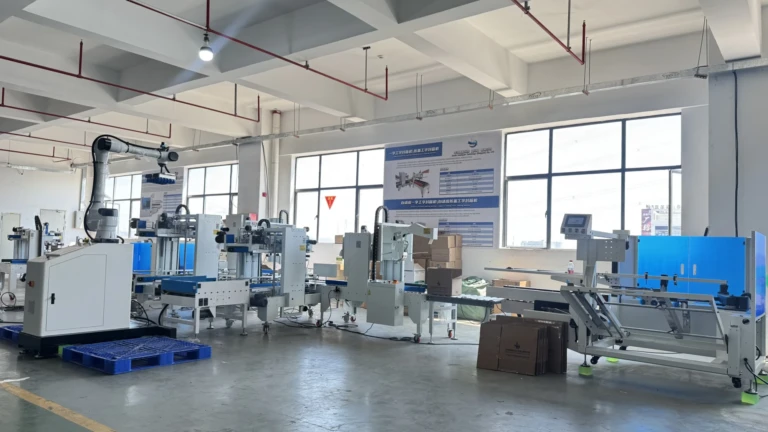
Huaxiu Robot’s holistic approach spans the entire packaging-to-shipping workflow, ensuring interoperability and minimal human intervention:
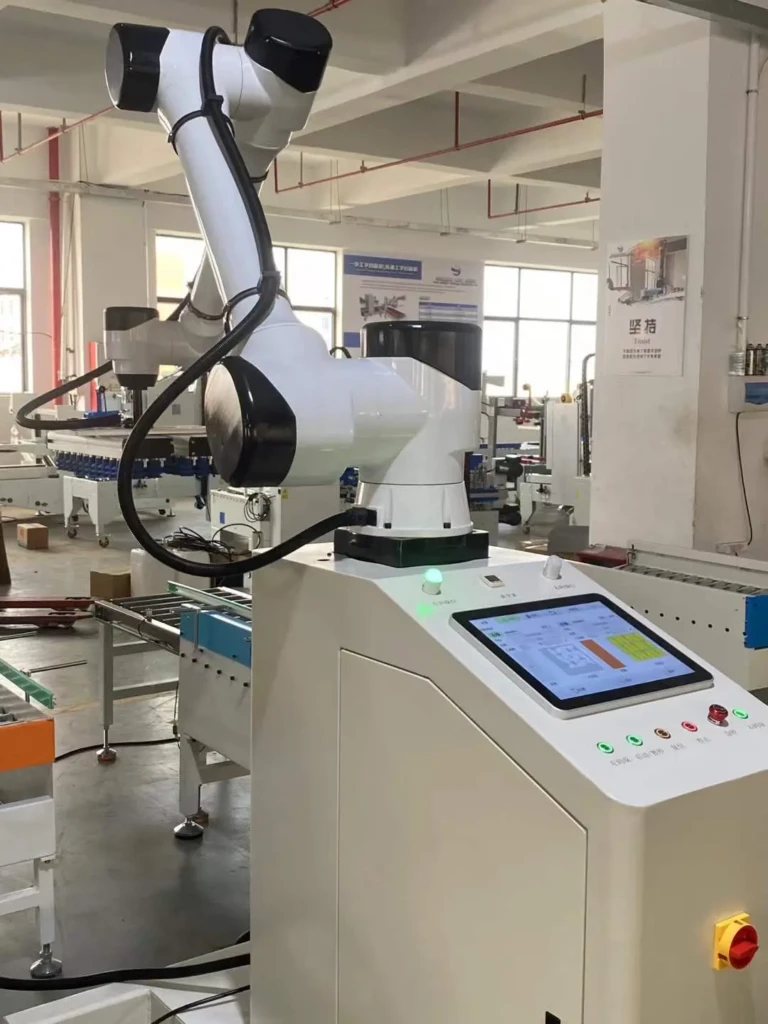
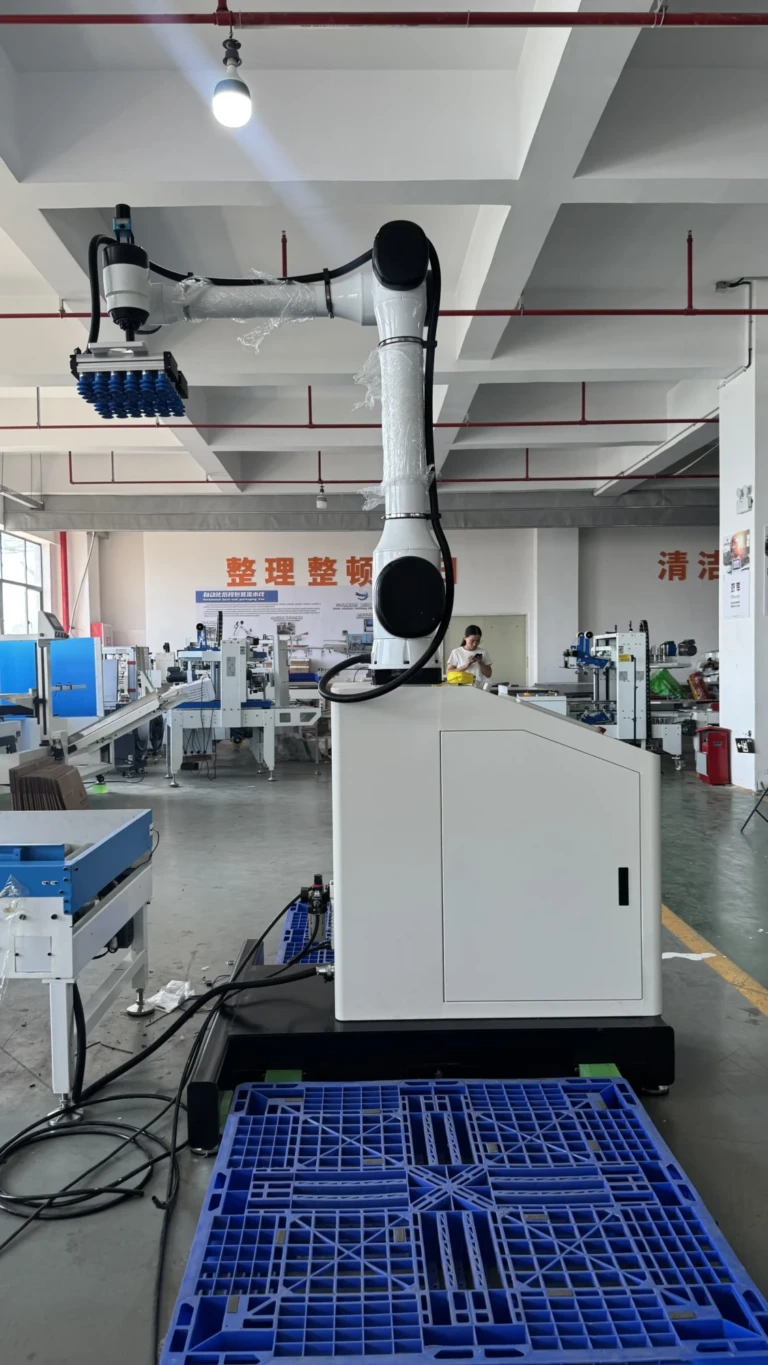
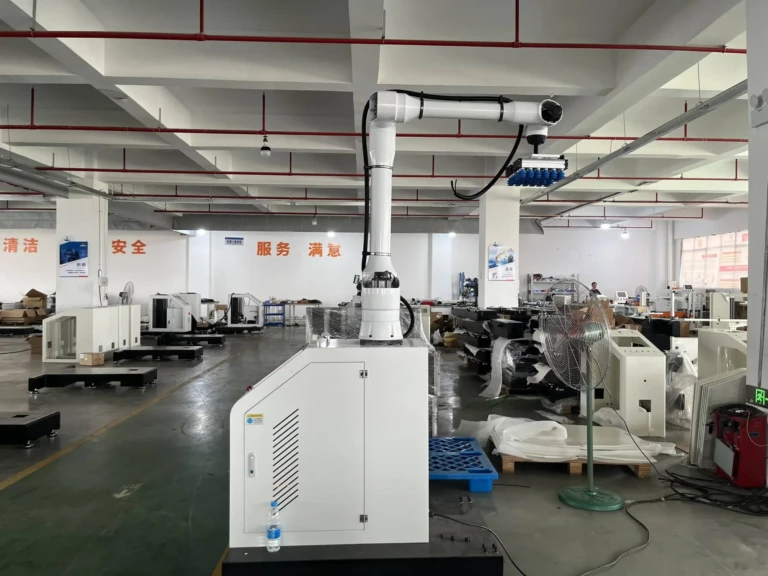
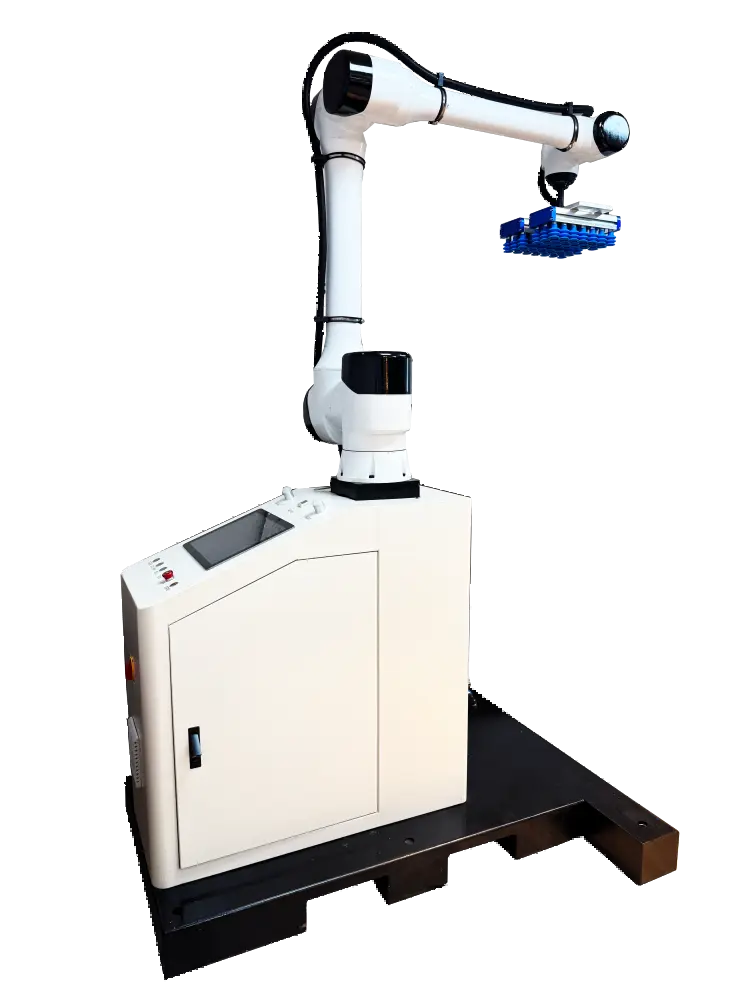
- Collaborative Palletizing Robots (Cobots): Safe to operate alongside workers, these cobots handle delicate items and quick task switching with intuitive programming interfaces.
- Automated Unpacking/Sealing Robots: Integrate with conveyors to unpack raw materials or seal finished pallets, eliminating bottlenecks.
- Pallet Forming & Stabilization Systems: Robots assemble custom pallets and secure them with strapping, stretch film, or shrink wrapping—ensuring load integrity during transit.
- Semi-Automatic Solutions: Hybrid systems bridge automation gaps in legacy facilities, allowing phased upgrades without operational disruption.
These systems leverage machine vision, force-sensing grippers, and IoT connectivity to handle diverse formats—boxes, bags, drums, or irregularly shaped items—with zero reprogramming downtime.
The Future: AI, Sustainability, and Hyperautomation
Robotic palletizers are evolving beyond “dumb” machines into intelligent, eco-conscious assets:
- Predictive Maintenance: Sensors monitor equipment health, preemptively flagging wear-and-tear to avoid unplanned outages.
- Carbon Footprint Reduction: Energy-efficient motors, optimized pallet patterns, and reduced material waste support ESG goals.
- Self-Learning Capabilities: Reinforcement learning enables robots to adapt to new SKUs autonomously, accelerating onboarding for seasonal products.
- Blockchain Integration: Immutable records of palletization steps enhance compliance for regulated industries like pharmaceuticals.
By 2030, analysts project that 75% of warehouses will deploy AI-driven palletizing robots, driven by plummeting ROI periods (now as low as 12–18 months for Huaxiu’s systems).
Conclusion: Automation as a Competitive Imperative
The question for logistics managers is no longer if to automate, but how. Robotic palletizers are central to building resilient, future-proof operations capable of absorbing demand surges, labor shortages, and geopolitical supply chain shocks. Huaxiu Robot’s modular, scalable solutions offer a clear path toward leapfrogging competitors in accuracy, throughput, and operational agility. As AI advancements blur the lines between physical and digital workflows, early adopters stand to dominate the next era of logistics.
FAQs: Robotic Palletizers Demystified
Q1: Are robotic palletizers cost-prohibitive for SMEs?
A: Not anymore. Flexible leasing models and Huaxiu’s semi-automatic systems put automation within reach. ROI is often achieved in <2 years via labor savings and error reduction.
Q2: Can robots handle fragile or irregularly shaped items?
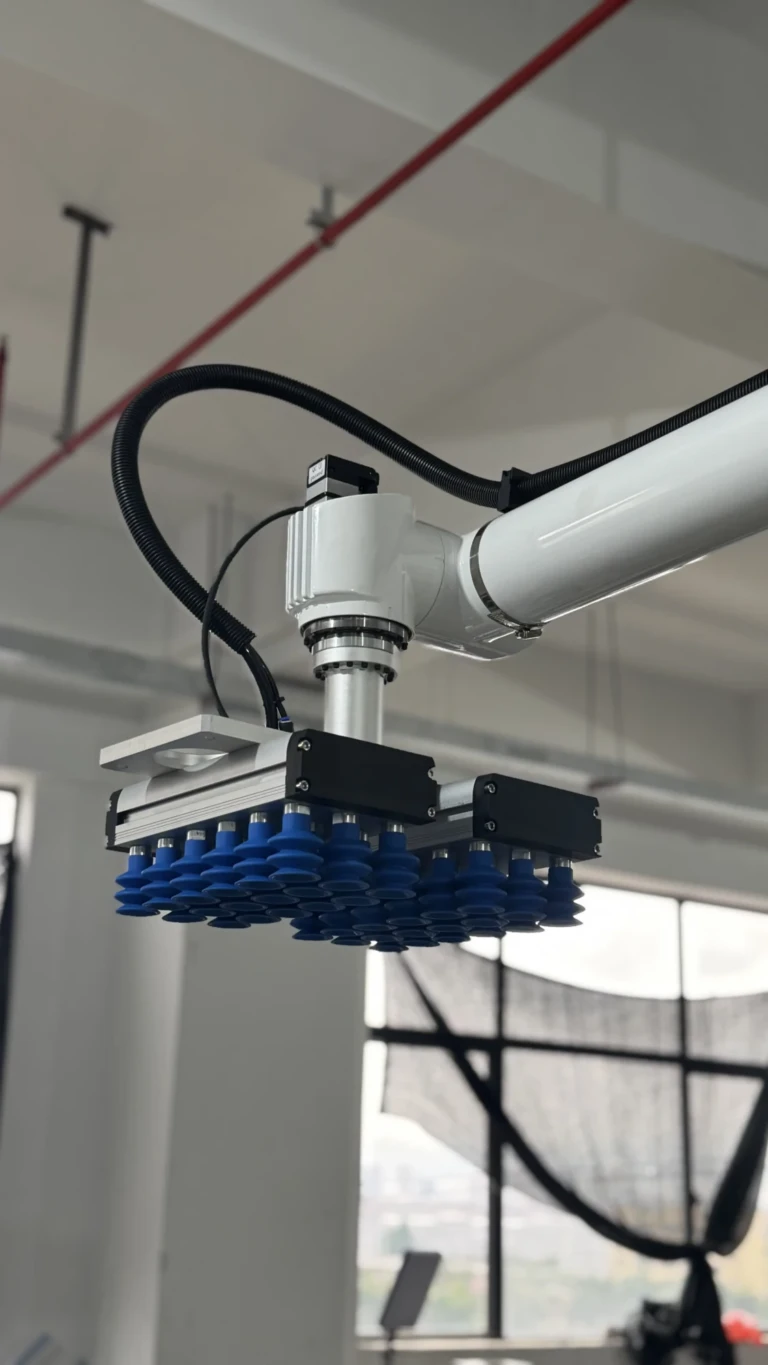
A: Yes. Vision-guided robots with vacuum, claw, or soft grippers adapt to ceramics, glass, bags, and more without damage.
Q3: How long does deployment take?
A: Huaxiu’s plug-and-play systems can be operational in days, while custom setups may take 4–8 weeks. Minimal facility retrofitting is required.
Q4: What about maintenance?
A: Robots require less upkeep than manual systems. Huaxiu offers 24/7 remote diagnostics and modular part replacements to minimize downtime.
Q5: Do employees need robotics expertise?
A: No. User-friendly interfaces allow workers to operate robots with basic training. Huaxiu’s Academy also provides certification courses.
Q6: How do robots impact existing jobs?
A: Automation reshapes roles rather than eliminating them. Workers transition to supervisory, programming, or maintenance positions with higher pay and safety.
By embracing robotic palletization, businesses can future-proof their logistics—building faster, leaner, and more adaptable supply chains ready for tomorrow’s challenges.