The Future of Warehousing: How Robotic Palletizing Transforms Efficiency
In an era where speed, accuracy, and cost-effectiveness define competitiveness, manufacturers and logistics providers face relentless pressure to optimize operations. Palletizing—a critical step in the supply chain—has long been a bottleneck, reliant on manual labor prone to fatigue, inconsistency, and safety risks. Enter robotic palletizing: a technological leap that not only accelerates workflows but reshapes productivity paradigms.
Why Robotic Palletizing Is a Game-Changer
1. Unmatched Speed & Consistency
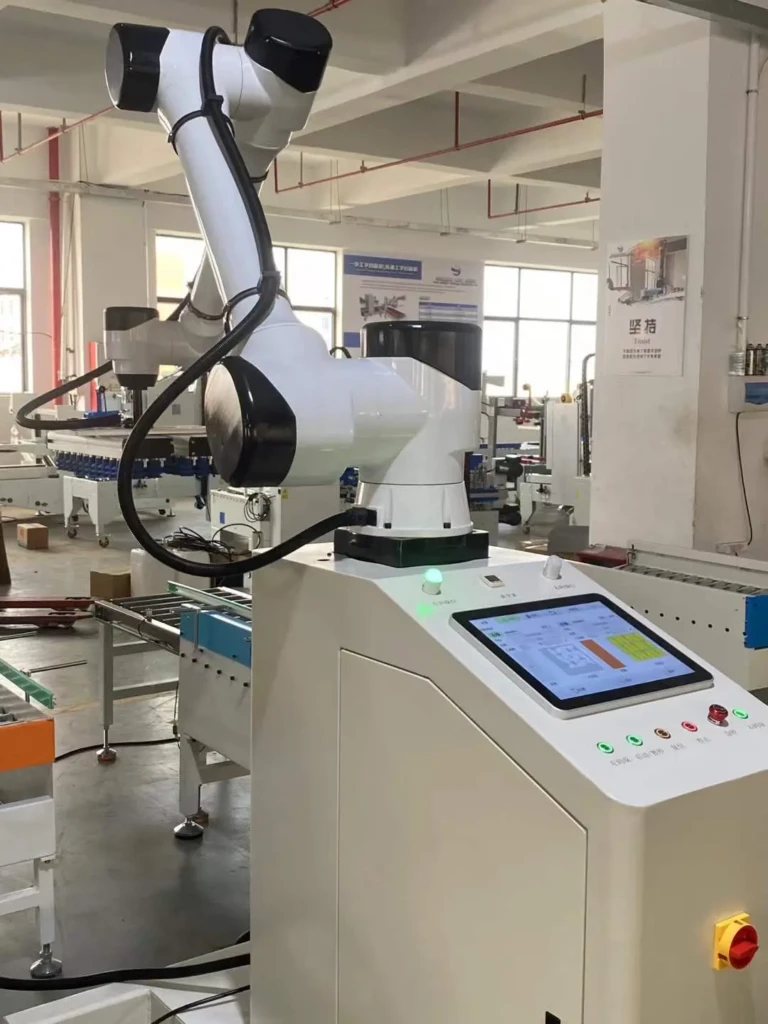
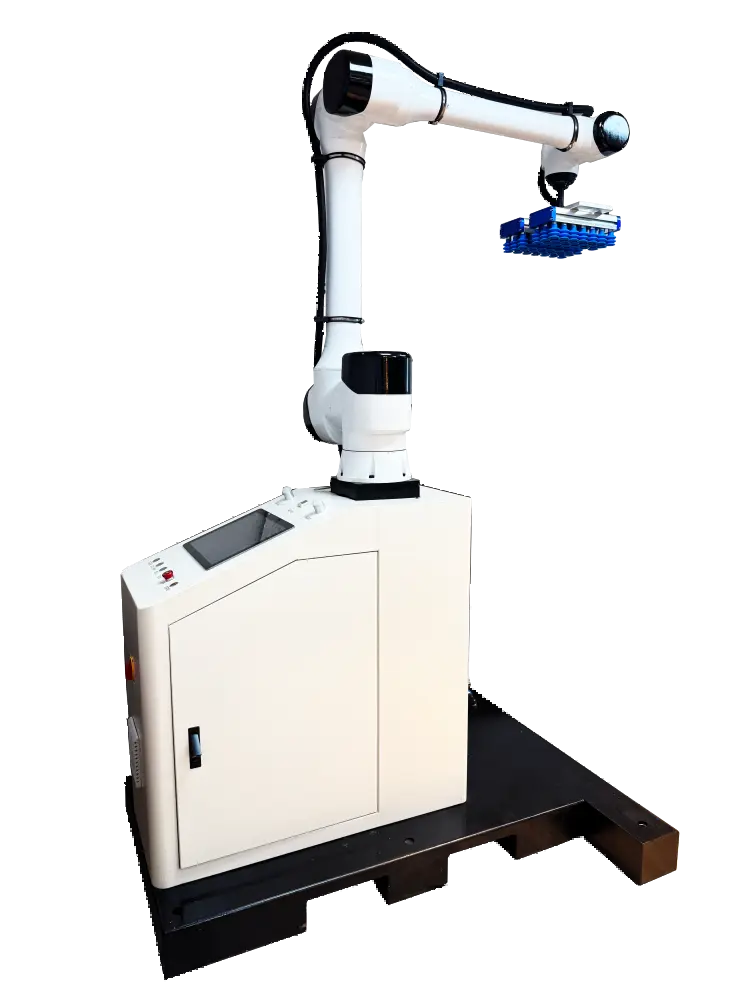
Human workers, even at peak performance, cannot match the relentless efficiency of robots. Huaxiu Robot’s collaborative palletizing robots operate 24/7, handling 10–20 cycles per minute with micron-level precision. Whether stacking boxes of uniform sizes or mixed-SKU pallets, these systems eliminate variability in placement, reducing product damage and stabilizing output rates during peak demand.
2. Labor and Safety Revolution
With global labor shortages and rising wage costs, automation mitigates dependency on manual labor. Huaxiu’s robots integrate advanced safety features like force-sensitive collision detection, enabling them to work alongside humans without barriers. This “cobot” approach slashes workplace injuries—particularly strains from repetitive heavy lifting—while freeing staff for higher-value tasks like quality control.
3. Flexibility for Dynamic Environments
Traditional fixed automation struggles with product diversity, but modern robotic palletizers thrive on it. Equipped with machine vision and AI-driven software, Huaxiu’s systems auto-adjust to new box sizes, weights, or stacking patterns in minutes. This agility is invaluable for industries like e-commerce, where SKU proliferation demands rapid reconfiguration.
4. Space Optimization
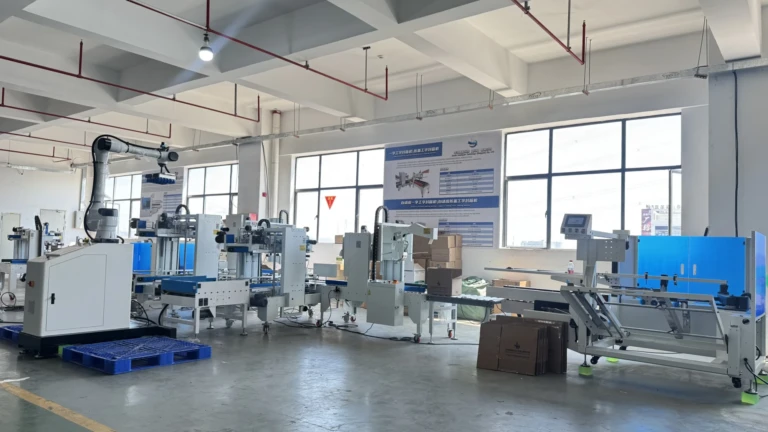
Robots require far less floor space than manual workstations or conveyor-dependent systems. Huaxiu’s compact designs, such as their fully automatic stretch film packaging robots, integrate palletizing with wrapping, strapping, or sealing in a single footprint. Vertical stacking capabilities further maximize warehouse cubic space.
5. Data-Driven Continuous Improvement
Industrial IoT sensors embedded in Huaxiu’s palletizing robots collect real-time data on cycle times, error rates, and machine health. This enables predictive maintenance and process refinements—turning automation into a live feedback loop for operational excellence.
Beyond Palletizing: Building End-to-End Automation Ecosystems
While robotic palletizing is transformative, its impact multiplies when paired with complementary systems. Huaxiu Robot specializes in creating unified solutions:
- Upstream Integration: Automatic unpacking robots unload inbound goods, feeding products directly to palletizers.
- Downstream Protection: Shrink packaging robots and strapping robots secure loads post-palletizing, minimizing transit damage.
- Customization: Semi-automatic sealing robots enable hybrid workflows for low-volume, high-mix scenarios.
This holistic approach ensures seamless material flow—from receiving to outbound shipping—without manual intervention.
Calculating the ROI of Robotic Palletizing
Investment in automation isn’t just about cutting costs; it’s about future-proofing operations. Key ROI drivers include:
- Labor Savings: 1 robot replaces 2–3 shifts of human workers, with a payback period as short as 12–18 months.
- Error Reduction: Near-zero misloads or unstable pallets decrease product write-offs and customer chargebacks.
- Uptime Boost: Huaxiu’s systems achieve >98% operational availability versus ~75% for manual lines.
Factor in indirect benefits like improved worker morale and higher customer satisfaction (from flawless on-time deliveries), and the case becomes irrefutable.
Industries Leading the Adoption Curve
- Food & Beverage: Hygiene-sensitive environments benefit from robots’ washdown-ready designs and contamination-free handling.
- Pharmaceuticals: Precise stacking ensures compliance with strict regulatory packing standards.
- Retail/E-Commerce: High-speed adaptability handles seasonal spikes and endless SKU variability.
Conclusion: The Palletizing Imperative
Robotic palletizing is no longer a luxury—it’s a necessity for businesses aiming to scale sustainably. Huaxiu Robot’s innovations demystify automation, offering scalable, user-friendly solutions that elevate productivity while future-proofing supply chains. As material handling evolves, early adopters will cement dominance in their markets by leveraging speed, safety, and data-driven intelligence.
The question isn’t whether to automate palletizing, but how quickly your operation can transition.
FAQs: Robotic Palletizing Demystified
Q1: How difficult is it to integrate robotic palletizers into existing lines?
Huaxiu’s systems use modular interfaces compatible with most PLCs, ERP, and WMS platforms. Installation typically takes 2–4 weeks, with minimal line downtime.
Q2: Can robots handle fragile or irregularly shaped items?
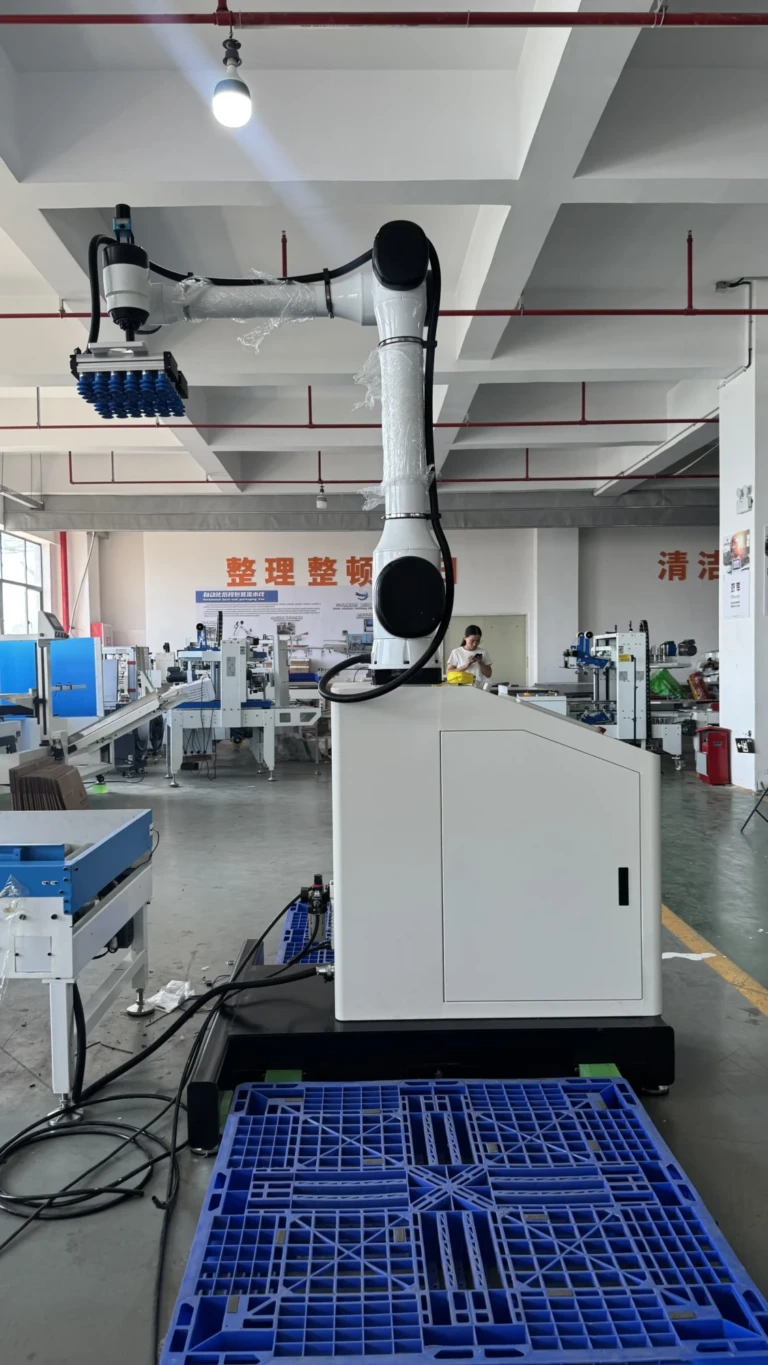
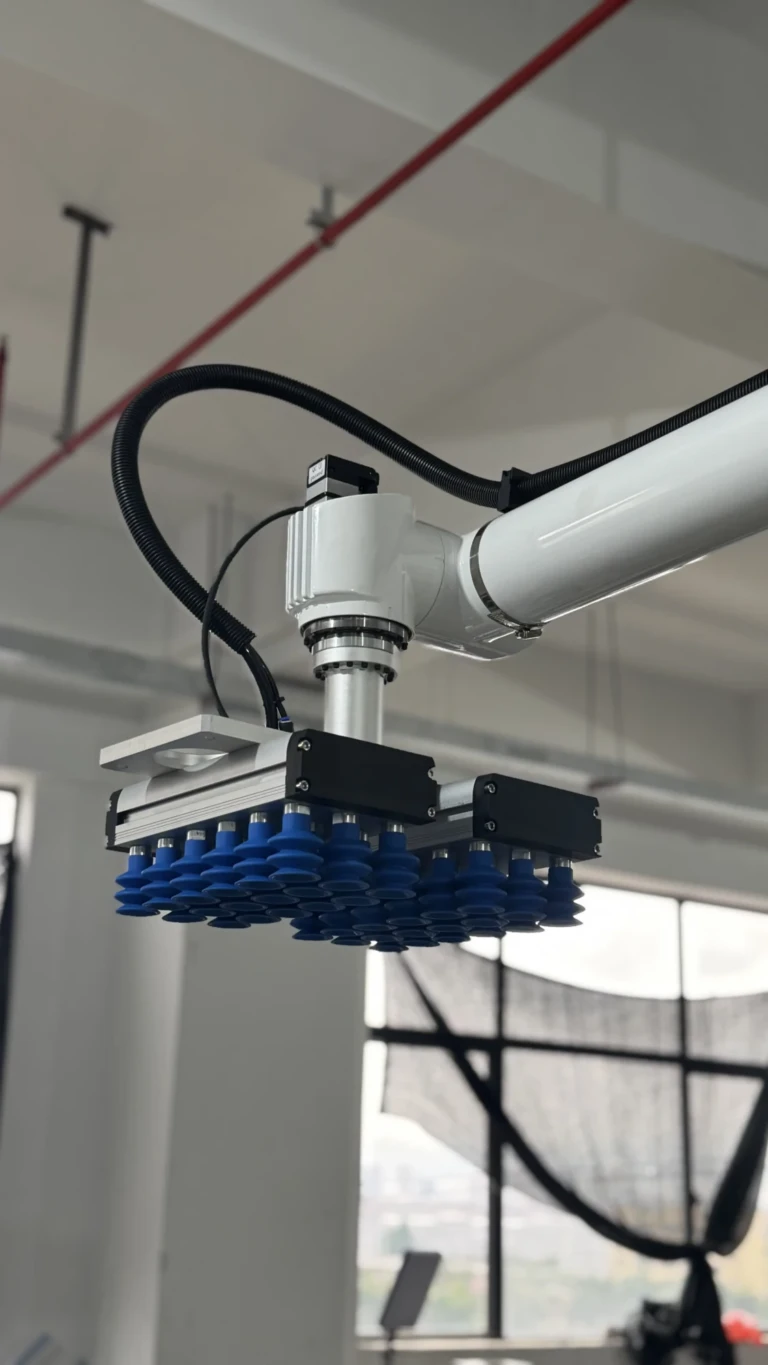
Yes. Custom EOAT (end-of-arm-tooling) options include vacuum grippers, servo claws, or soft grippers designed for delicate products like glass or bags.
Q3: What’s the difference between collaborative and industrial palletizing robots?
Collaborative robots (cobots) work alongside humans without safety cages, ideal for flexible, small-batch workflows. Industrial robots excel in high-speed, heavy-duty (1,000+ kg payload) environments.
Q4: How does maintenance compare to manual systems?
Robots require scheduled servicing (e.g., lubrication, part inspection) but eliminate ongoing labor management. Huaxiu offers remote diagnostics and <24hr on-site support contracts.
Q5: Are robotic palletizers adaptable to facility layout changes?
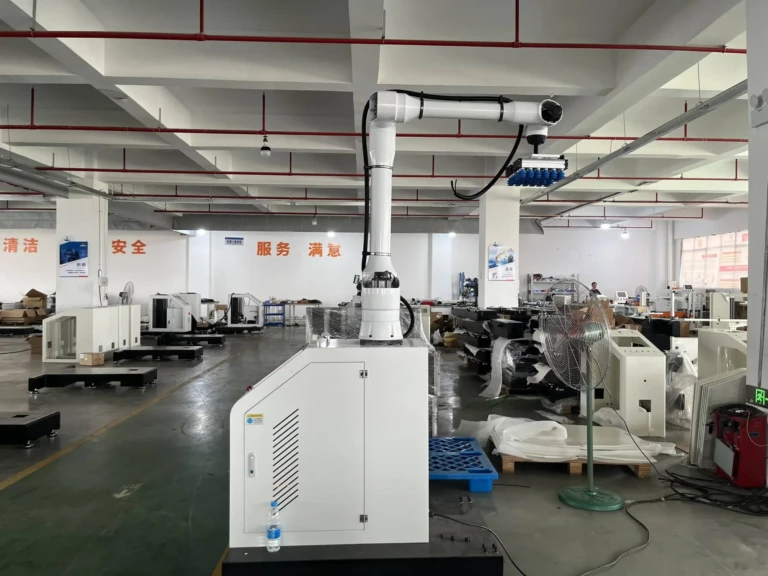
Absolutely. Mobile units with SLAM navigation can relocate as workflows evolve, while ceiling-mounted robots free up floor space entirely.
Elevate your operational IQ with Huaxiu Robot—where innovation meets execution. Contact us to engineer your efficiency breakthrough.