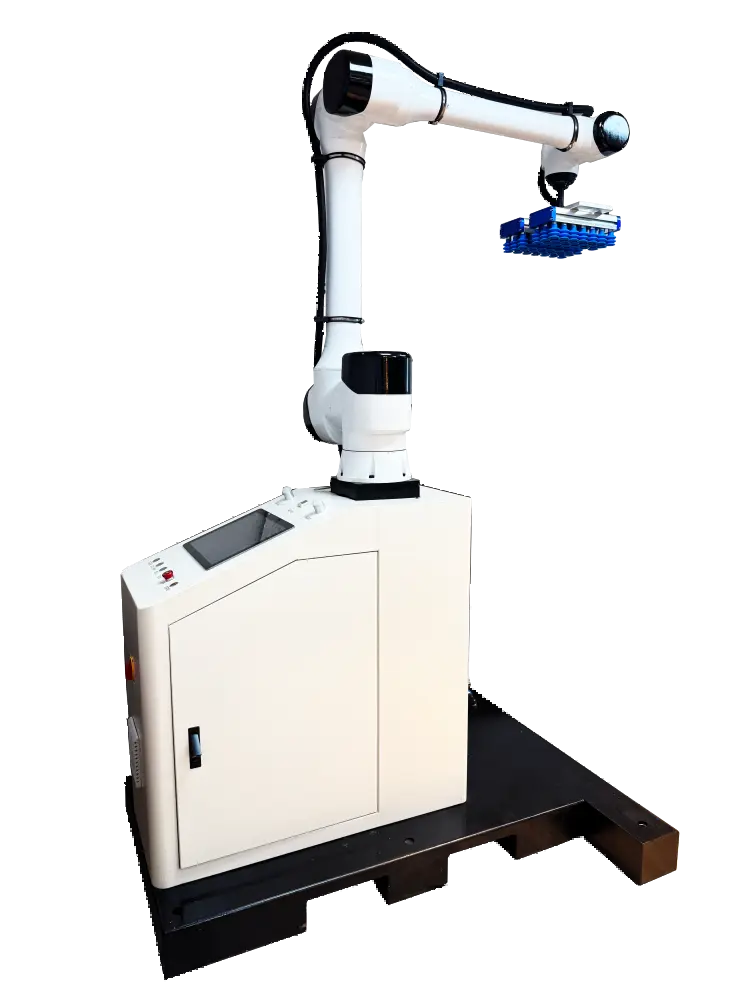

Robotic Palletizing: Efficiency Redefined
In the fast-paced world of logistics and manufacturing, the race to optimize operations has led to revolutionary advancements in automation. Robotic palletizing stands at the forefront of this transformation, offering unprecedented speed, accuracy, and scalability. Far from being a luxury, these systems have become a necessity for businesses aiming to thrive in competitive markets. This blog explores how robotic palletizing redefines efficiency, spotlighting innovations like those from industry leaders such as Huaxiu Robot.
The Rise of Automation in Material Handling
Traditional palletizing methods—reliant on manual labor—are increasingly unsustainable. Human workers face physical strain, inconsistencies in stacking patterns, and inevitable downtime. Worse still, labor shortages exacerbate delays and inflate costs. Robotic palletizing addresses these challenges head-on by streamlining workflows, reducing errors, and enabling 24/7 operational capabilities.
How Robotic Palletizing Supercharges Efficiency
-
Speed & Throughput:
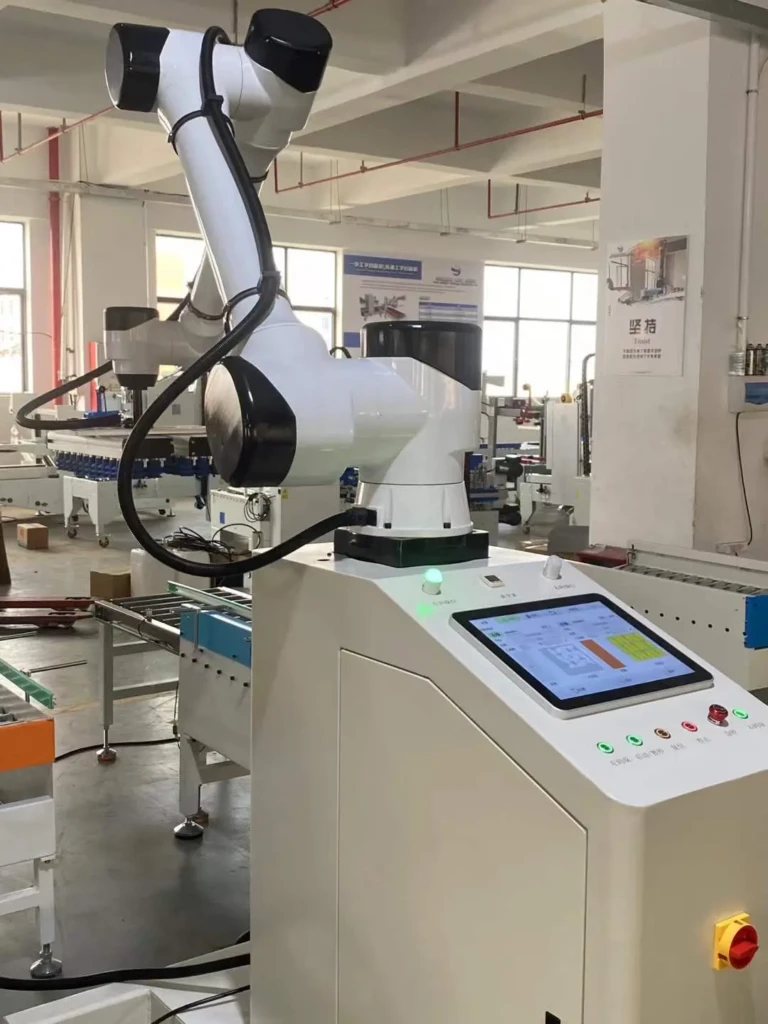
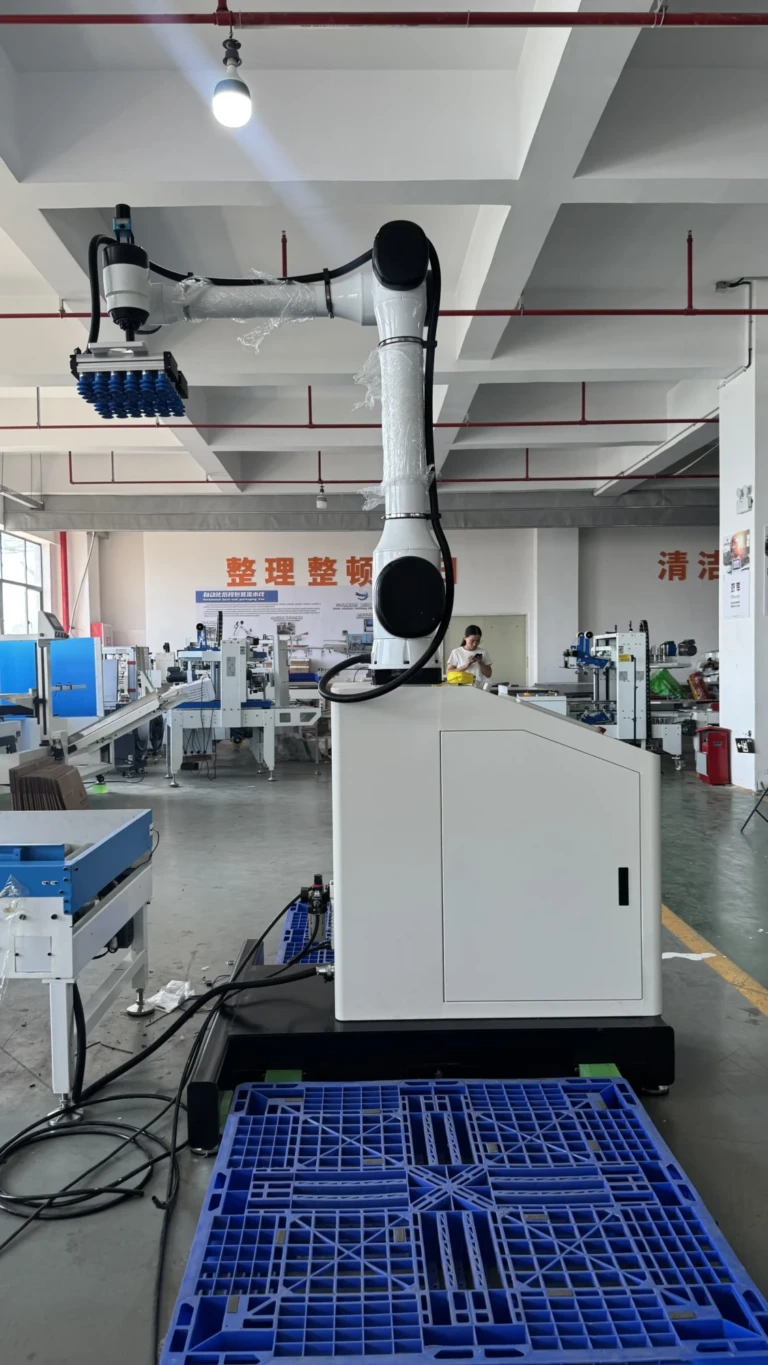
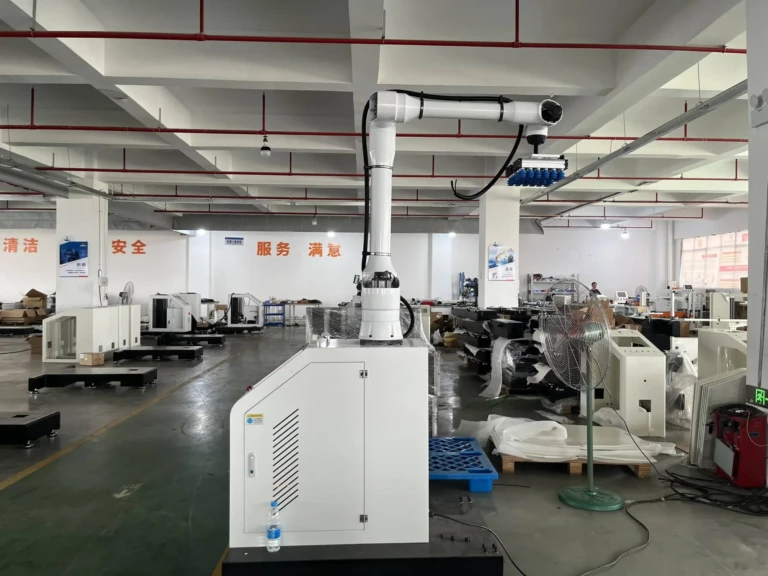
Robots operate at unmatched speeds. Advanced models, like Huaxiu Robot’s collaborative palletizing robots, handle up to 1,500 cycles per hour with millimeter-level precision. This acceleration translates to faster order fulfillment, shorter lead times, and heightened customer satisfaction. -
Error-Free Operations:
Human fatigue leads to misplaced items, uneven stacks, and product damage. Robotic arms equipped with AI vision systems (e.g., Huaxiu’s VisionStack™) scan and adjust pallet patterns dynamically, ensuring flawless stacking even with irregularly shaped items. -
Labor Optimization:
Automating repetitive palletizing tasks frees your workforce to focus on high-value activities like quality control and process improvement. Collaborative robots (cobots) from Huaxiu work safely alongside humans without safety cages, further enhancing productivity. -
Space & Resource Savings:
Robotic systems like fully automatic stretch film packaging robots and strapping robots consolidate multiple processes into a single compact footprint, minimizing warehouse congestion and reducing energy consumption. - Adaptability Across Industries:
Whether handling fragile pharmaceuticals, heavy automotive parts, or unevenly weighted agricultural goods, modular solutions—such as Huaxiu’s shrink packaging robots or pallet forming robots—can be reprogrammed swiftly for new products or packaging formats.
Huaxiu Robot’s Cutting-Edge Palletizing Ecosystem
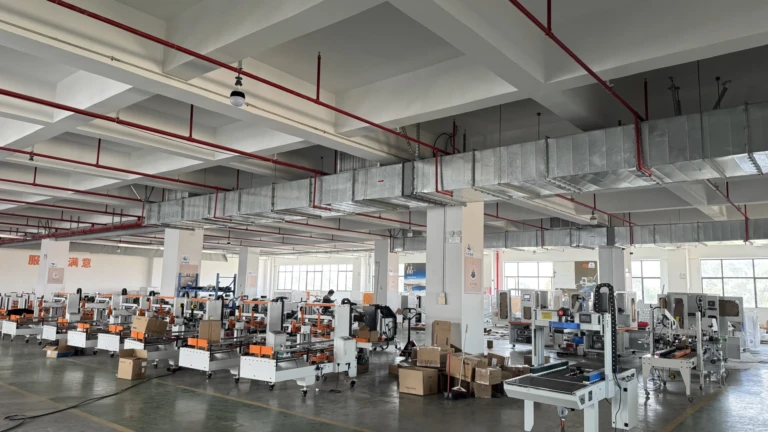
Huaxiu Robot doesn’t just sell robots; it delivers end-to-end automation ecosystems tailored to modern supply chains. Their flagship solutions include:
- Collaborative Palletizing Robots: Ideal for SMEs needing flexible, easy-to-deploy automation.
- Integrated Packaging Lines: Combining automatic unpacking robots, sealing robots, and semi-automatic sealing robots into seamless workflows.
- Smart Pallet Management: Pallet forming robots build custom pallet configurations on-demand, while strapping robots secure loads autonomously.
- Sustainability-Driven Design: Energy-efficient motors and recyclable material handling reduce carbon footprints.
What sets Huaxiu apart is its proprietary SmartPath AI, which optimizes robot trajectories in real time, cutting cycle times by 20% while minimizing wear and tear.
The Technology Behind the Revolution
Modern palletizing robots leverage these innovations:
- 3D Vision & Machine Learning: Identifies objects regardless of orientation or packaging.
- IoT Integration: Live data feeds allow predictive maintenance and remote troubleshooting.
- Force-Torque Sensors: Delicate items are handled with precise pressure control.
- Cloud-Based Control: Reprogram robots across global facilities via a centralized dashboard.
Implementing Robotic Palletizing: Key Considerations
While the benefits are undeniable, successful adoption requires strategic planning:
- Workflow Analysis: Identify bottlenecks where automation will yield the highest ROI.
- Payload & Speed Requirements: Match robot specifications (e.g., Huaxiu’s 5kg–1,300kg payload range) to your product mix.
- Integration Compatibility: Ensure new systems sync with existing WMS or ERP software.
- Scalability: Opt for modular designs that grow with your business.
Conclusion: The Future Is Automated
Robotic palletizing isn’t just about replacing labor—it’s about reimagining efficiency. By eliminating inconsistencies, accelerating throughput, and future-proofing operations, businesses unlock new levels of competitiveness. Companies like Huaxiu Robot are pioneering this shift with intelligent, adaptable solutions that cater to industries from e-commerce to heavy manufacturing. As labor challenges mount and consumer demands escalate, automation transitions from a strategic advantage to an operational imperative.
The question is no longer if to automate, but how soon.
FAQs: Robotic Palletizing Demystified
Q1: How much does a robotic palletizing system cost?
A: Costs vary based on payload, speed, and customization. Entry-level cobots start around $50,000, while high-speed turnkey systems can exceed $200,000. Huaxiu offers scalable solutions with ROI often achieved in 12–18 months via labor savings.
Q2: Can robots handle mixed-SKU pallets?
A: Absolutely. With AI vision systems, robots dynamically adjust to varying box sizes, weights, and stacking patterns—even building "rainbow pallets" with multiple SKUs.
Q3: Are these systems safe for human workers?
A: Yes. Collaborative robots feature force-limiting sensors and emergency stops. Huaxiu’s cobots comply with ISO/TS 15066 safety standards, enabling shared workspaces.
Q4: How long does deployment take?
A: Standard systems integrate in 4–8 weeks. Huaxiu’s plug-and-play models require minimal programming, reducing downtime.
Q5: What industries benefit most from robotic palletizing?
A: Food & beverage, pharmaceuticals, automotive, and consumer goods see the fastest ROI due to high-volume, repetitive tasks.
Q6: Can existing packaging lines be automated?
A: Yes. Hybrid solutions (e.g., retrofitting manual stations with Huaxiu’s semi-automatic sealing robots) allow phased automation upgrades.
Embrace the future—where efficiency isn’t just improved, redefined.