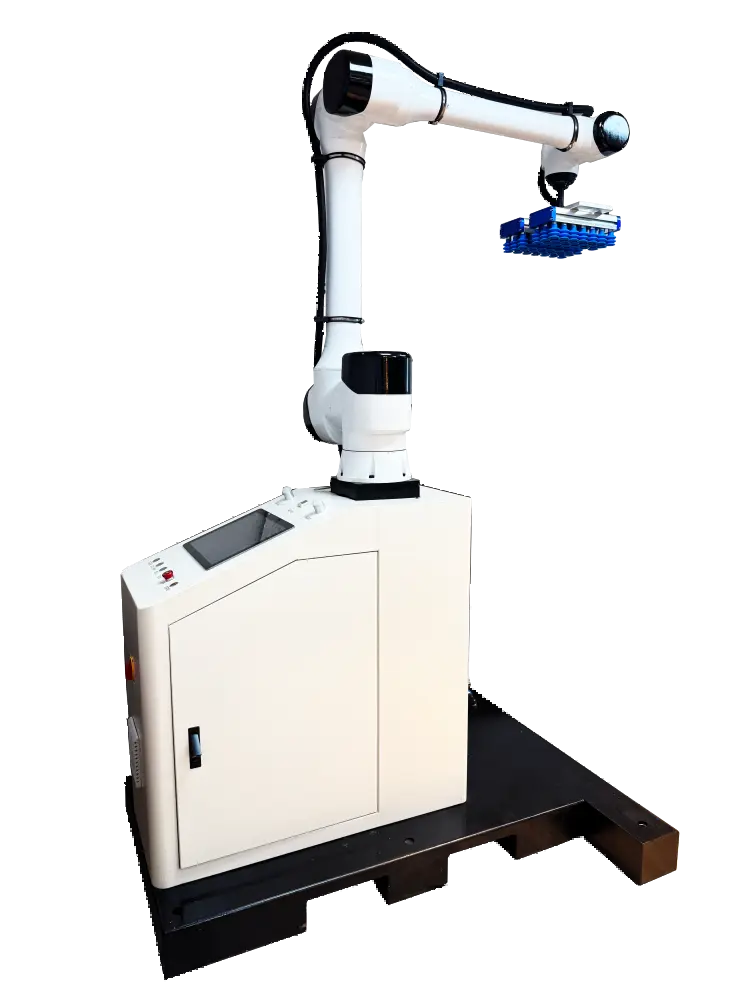

The Silent Revolution in Warehousing: How Robotic Palletizing Software Is Redefining Efficiency
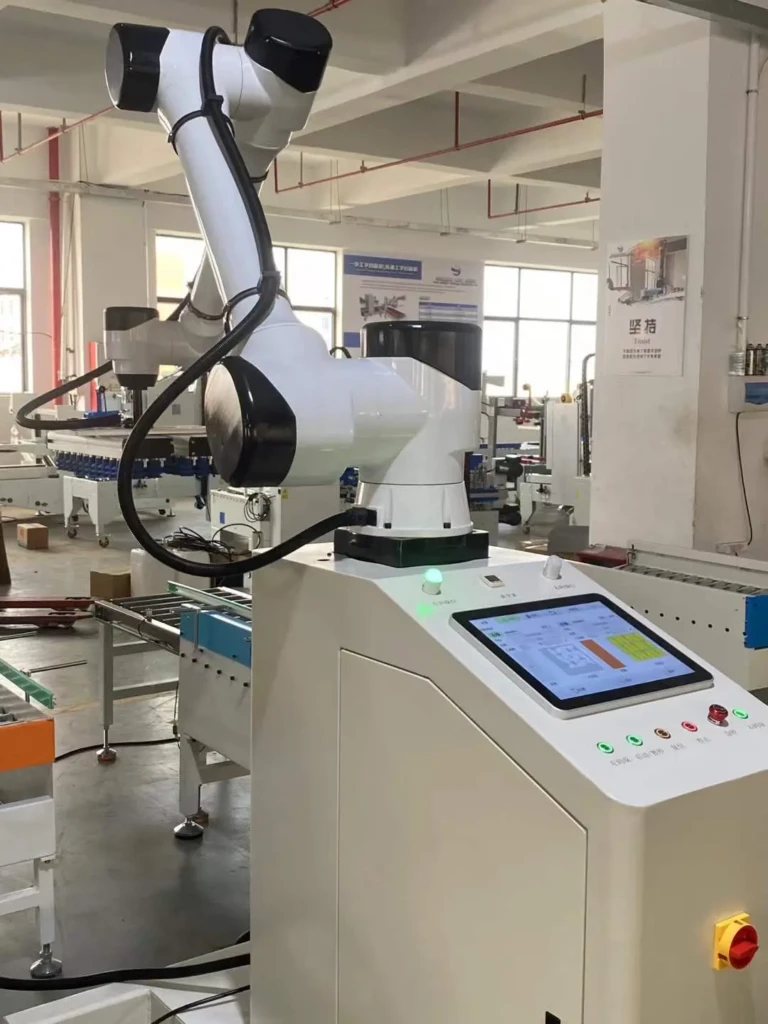
In the bustling world of logistics and manufacturing, palletizing—the process of stacking goods onto pallets for storage or transport—remains one of the most physically demanding, repetitive, and time-consuming tasks. Traditional manual palletizing not only strains human workers but also introduces bottlenecks that ripple through supply chains. Enter robotic palletizing software, the invisible brain behind automated systems that’s transforming warehouses from chaotic hubs into seamless, hyper-efficient ecosystems. For companies like Huaxiu Robot, which specializes in collaborative palletizing robots and automated packaging solutions, this software is the cornerstone of innovation.
Why Robotic Palletizing Software Matters More Than Ever
While robotic arms often steal the spotlight, it’s the software that truly unlocks their potential. Think of it as the conductor of an orchestra: without it, even the most advanced robots would lack coordination, flexibility, and intelligence. Modern palletizing software integrates machine learning, 3D vision systems, and real-time data analytics to optimize every movement, minimize waste, and adapt to dynamic environments—all while operating 24/7.
Key Efficiency Drivers:
-
Speed & Precision:
Advanced algorithms calculate optimal pallet patterns in milliseconds, accounting for box dimensions, weight distribution, and stability requirements. Huaxiu’s collaborative palletizing robots, guided by intelligent software, can handle 15+ cycles per minute with millimeter accuracy—far exceeding human capabilities. -
Adaptive Workflows:
Unlike fixed automation, modern software allows robots to switch palletizing patterns on the fly. For example, if a production line shifts from producing small cosmetic boxes to large appliance crates, the system auto-adjusts without manual reprogramming. -
Seamless Integration:
Leading solutions like those from Huaxiu sync with Warehouse Management Systems (WMS), Enterprise Resource Planning (ERP) software, and IoT sensors. This creates a closed-loop system where inventory data, order priorities, and machine performance feed into palletizing decisions in real time. - Resource Optimization:
By minimizing misplacements, product damage, and pallet rebuilds, the software reduces material waste by up to 25%. It also cuts energy consumption by optimizing robot paths and idle times.
Huaxiu Robot’s Ecosystem: Where Software Meets Hardware
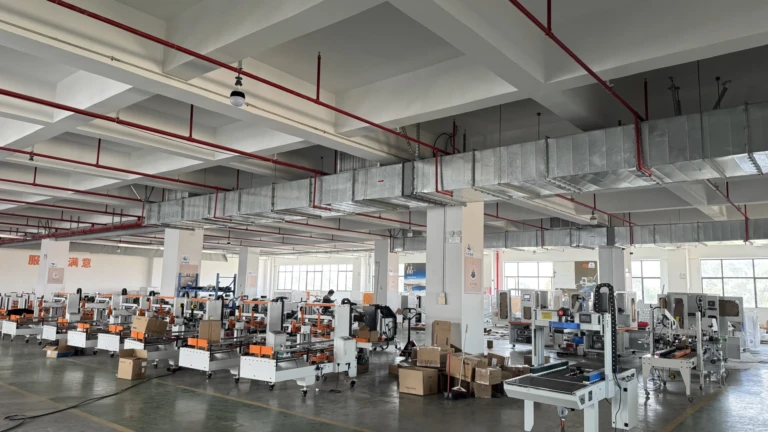
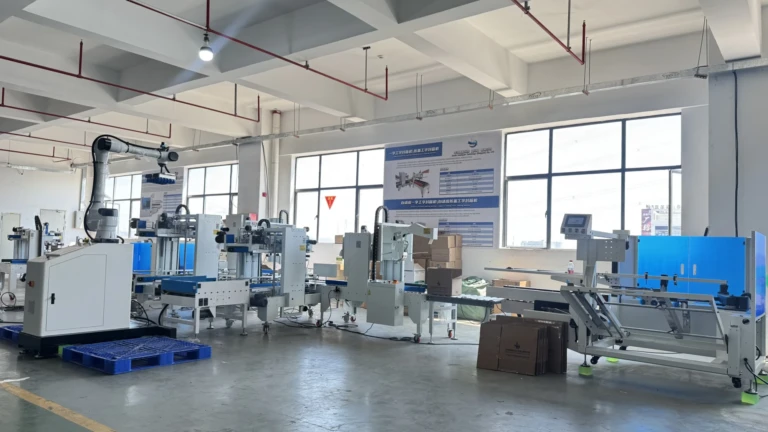
Huaxiu doesn’t just sell robots—it delivers end-to-end automation ecosystems. Their palletizing software acts as the glue binding their diverse product range:
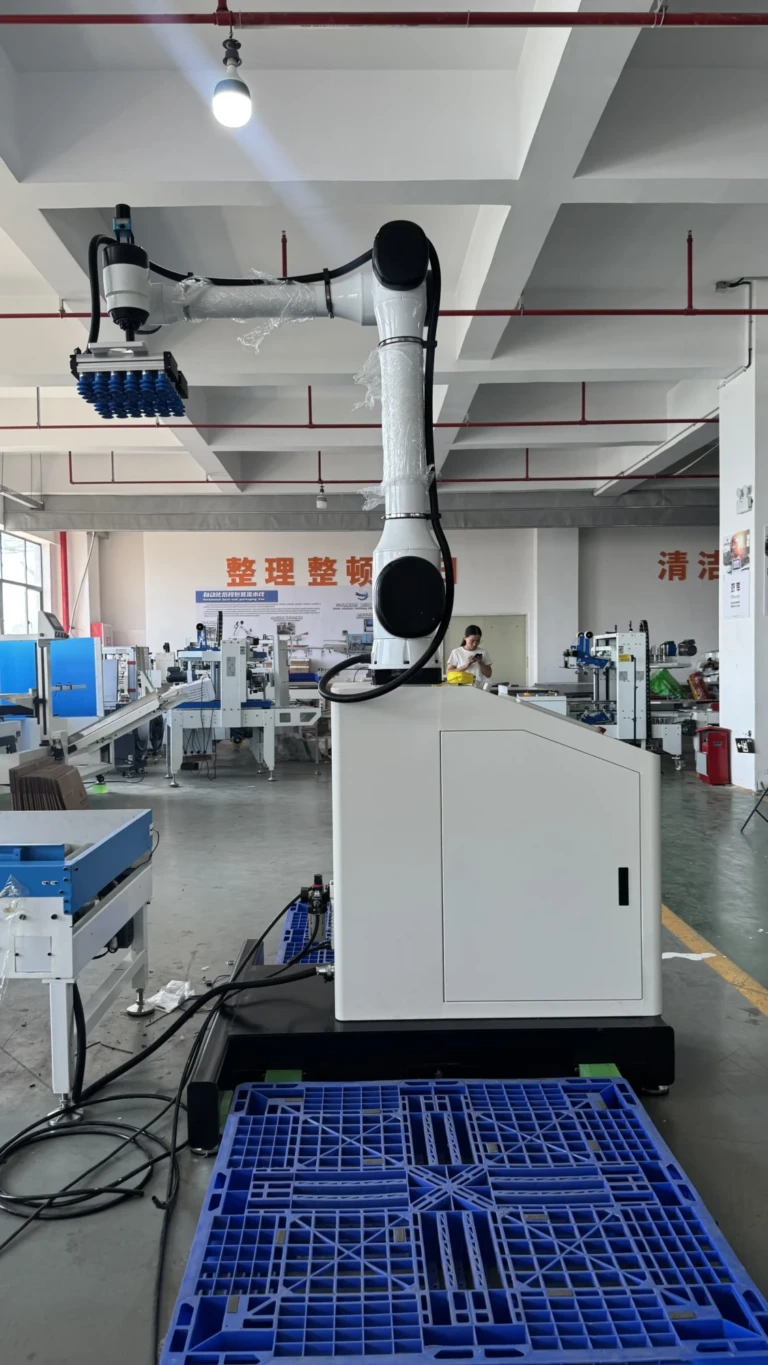
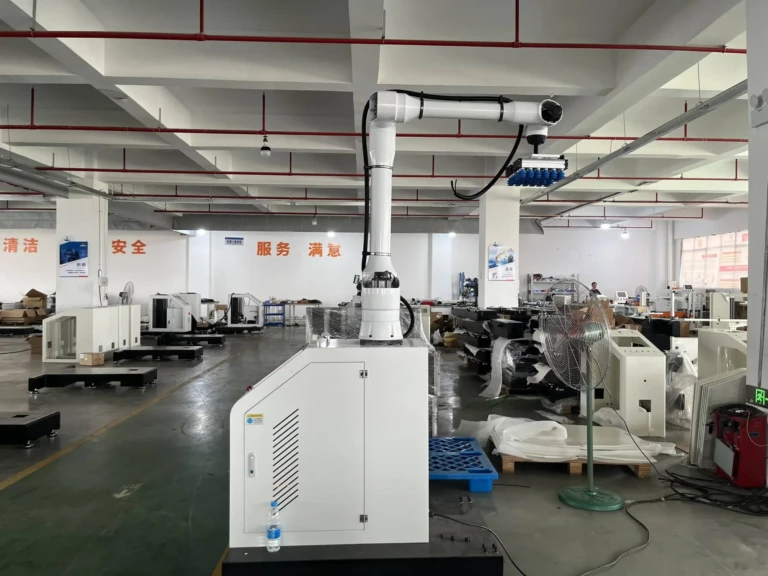
- Collaborative Palletizing Robots: Safe to work alongside humans, these robots use software with collision-avoidance AI.
- Automatic Stretch Film & Shrink Wrap Robots: Integrated software triggers wrapping sequences post-palletizing, ensuring load stability.
- Pallet Forming & Strapping Robots: Algorithms coordinate these systems to build custom pallet bases and secure loads without pauses.
This interoperability eliminates silos between packaging stages, turning fragmented processes into a unified, high-speed workflow.
The Data Difference: How Analytics Supercharge ROI
The latest software platforms don’t just execute tasks—they learn from them. By analyzing historical performance data, they identify trends like:
- Peak inefficiency periods (e.g., slowdowns during shift changes).
- Recurring stability issues with specific box sizes.
- Energy usage spikes tied to suboptimal gripper movements.
Armed with these insights, managers can tweak workflows, preempt maintenance needs, and even simulate the impact of scaling operations. For a beverage manufacturer using Huaxiu’s system, this led to a 40% reduction in palletizing time within 3 months.
Overcoming Implementation Myths
Many SMEs hesitate to adopt robotic palletizing, fearing complexity or upfront costs. However, modern software has demolished these barriers:
- No-Code Interfaces: Drag-and-drop tools let staff configure pallet patterns without programming skills.
- Scalability: Start with one robot handling a single line, then expand as needs grow. Huaxiu’s semi-automatic sealing robots, for instance, can later integrate into full automation.
- ROI Clarity: With energy savings, labor cost reductions, and error minimization, most systems pay for themselves in 12–18 months.
Conclusion: The Future Is Automated, Adaptive, and Agile
Robotic palletizing software isn’t just a "nice-to-have"—it’s the backbone of next-gen supply chains. As consumer expectations for faster delivery grow and labor shortages persist, businesses leveraging platforms like Huaxiu Robot’s will dominate their niches. The marriage of intelligent software with versatile hardware (from sealing robots to stretch film wrappers) creates resilience against disruptions while unlocking unprecedented efficiency.
Investing in this technology isn’t about replacing humans; it’s about empowering them to focus on creative, strategic tasks while machines handle the grind. The question isn’t whether to automate palletizing—it’s how soon you can start.
FAQs: Demystifying Robotic Palletizing Software
Q1: Can this software handle irregularly shaped items?
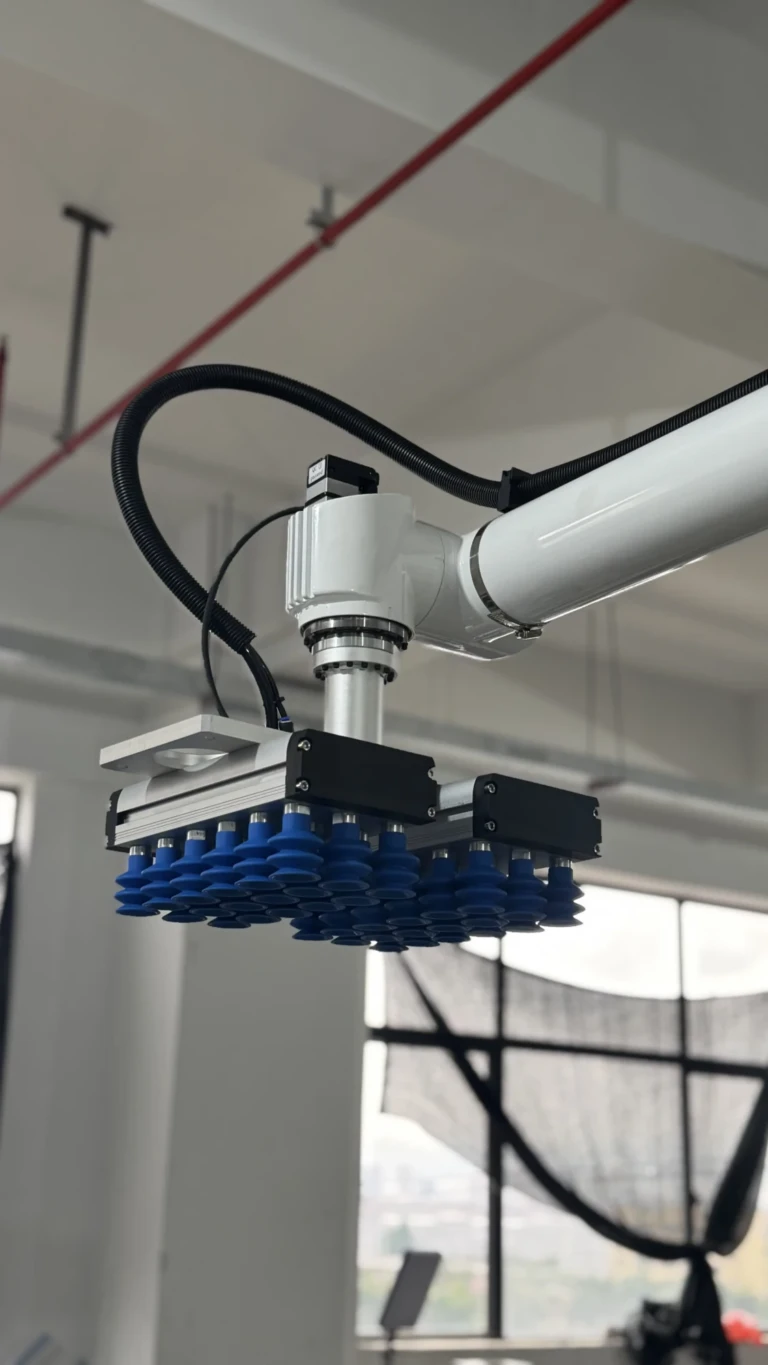
Yes. Advanced 3D vision systems and AI-driven shape recognition allow the software to adapt patterns for cylinders, bags, or even fragile items like glass bottles. Huaxiu’s systems, for example, use suction grippers with pressure sensitivity to adjust on the fly.
Q2: Is it compatible with legacy equipment?
Most modern software supports integration via APIs or middleware. Huaxiu’s solutions often interface with existing conveyors, wrappers, or ERP systems, minimizing retrofit costs.
Q3: How does software improve workplace safety?
By automating heavy lifting and repetitive motions, it reduces musculoskeletal injuries. Collaborative robots (like Huaxiu’s) also feature force-limiting software to halt motion upon human contact.
Q4: What’s the typical ROI timeline?
Businesses report 30–50% efficiency gains within 6 months, with full ROI in 1–2 years. Factors include labor cost savings, reduced product damage, and throughput increases.
Q5: Can it manage multi-SKU pallets?
Absolutely. The software can build mixed pallets based on订单优先级, weight limits, or delivery routes. For instance, it might layer heavier appliances beneath lighter boxes automatically.
Q6: Does weather (heat/cold) affect performance?
Industrial-grade software and hardware (like Huaxiu’s strapping robots) are tested to operate in -10°C to 50°C environments. Redundant sensors ensure consistent accuracy.
Innovate or stagnate—the choice is clear. With robotic palletizing software, efficiency isn’t just boosted; it’s reimagined.