
The Evolution of Industrial Efficiency: Top Robotic Palletizer Manufacturers Shaping Modern Logistics
The rise of automation in logistics and manufacturing has transformed industries, with robotic palletizers emerging as indispensable tools for streamlining operations. These machines automate the stacking, arranging, and transporting of goods onto pallets—tasks traditionally prone to human error, physical strain, and inefficiency. As demand grows for faster, safer, and more precise material handling, selecting the right robotic palletizer manufacturer becomes critical. This guide explores leading innovators in the field, with a spotlight on Huaxiu Robot, a trailblazer in intelligent palletizing solutions, and compares their offerings against global competitors.
Why Robotic Palletizers? Key Factors Driving Adoption
Before diving into manufacturers, it’s essential to understand why businesses are rapidly adopting robotic palletizers:
- Labor Shortages & Safety: Repetitive heavy lifting leads to workplace injuries. Robots eliminate this risk.
- Scalability: Automated systems handle spikes in production without hiring/training delays.
- Precision & Consistency: Algorithms optimize load patterns, maximizing pallet stability and space efficiency.
- 24/7 Operations: Robots work uninterrupted, boosting throughput in high-volume environments.
Choosing the Right Manufacturer: Critical Considerations
Not all robotic palletizers are created equal. Key factors to evaluate include:
- Payload Capacity: Ranges from lightweight (e.g., food boxes) to heavy-duty (e.g., automotive parts).
- Speed & Cycle Time: Measured in layers or cases per hour.
- Integration Flexibility: Compatibility with existing conveyors, wrappers, or ERP systems.
- Software Intelligence: Vision systems, AI-driven adjustments, and user-friendly programming interfaces.
- Durability: Build quality for harsh environments (e.g., cold storage, dusty warehouses).
Huaxiu Robot: A Leader in Customized Palletizing Solutions
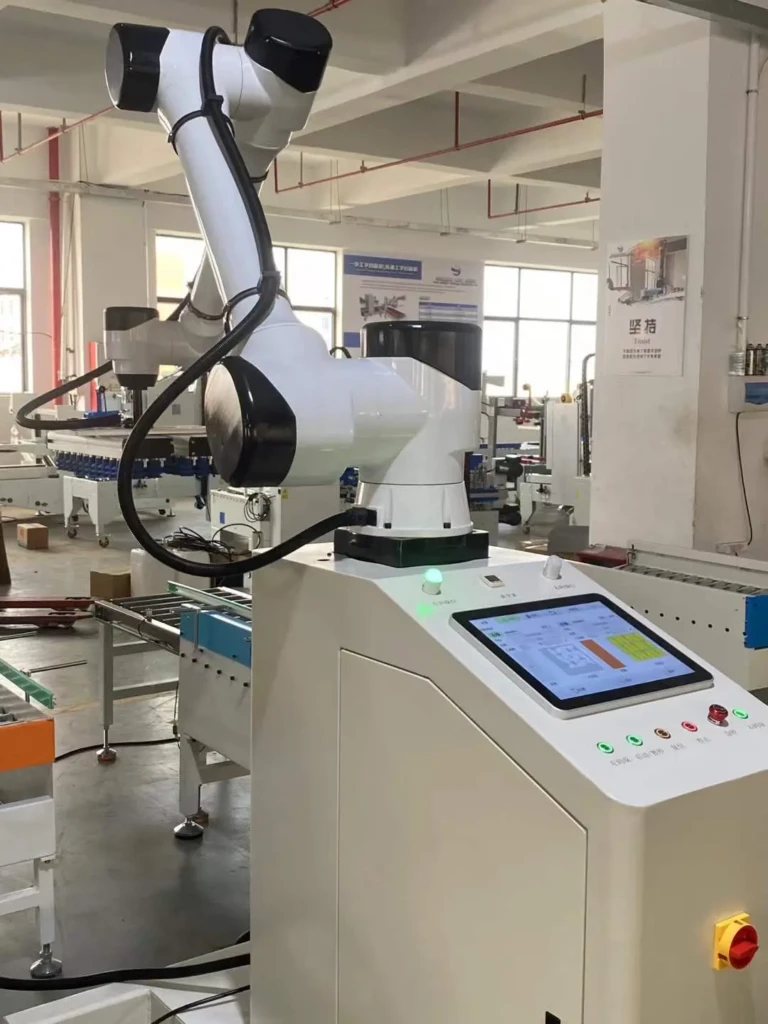
Among the most forward-thinking manufacturers, Huaxiu Robot combines cutting-edge engineering with a modular approach to solve diverse palletizing challenges. Their product suite includes:
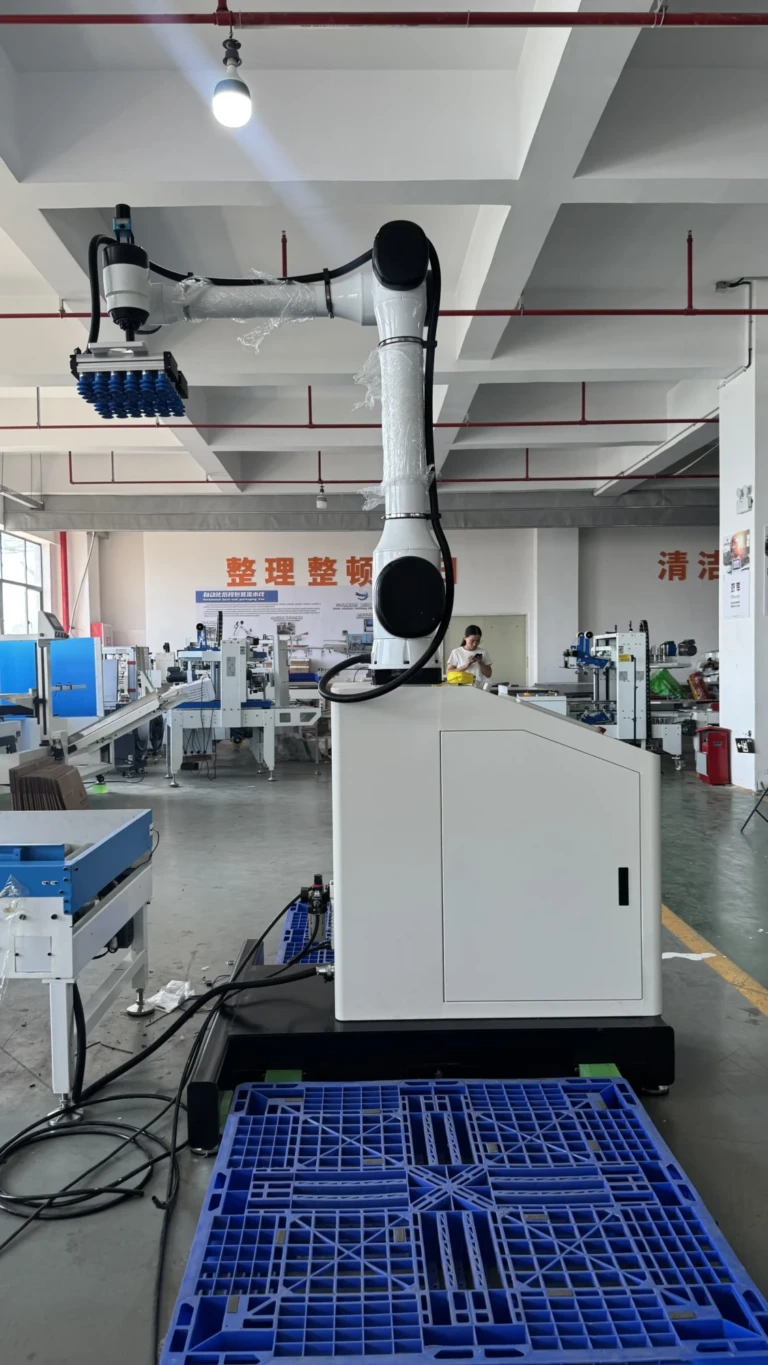
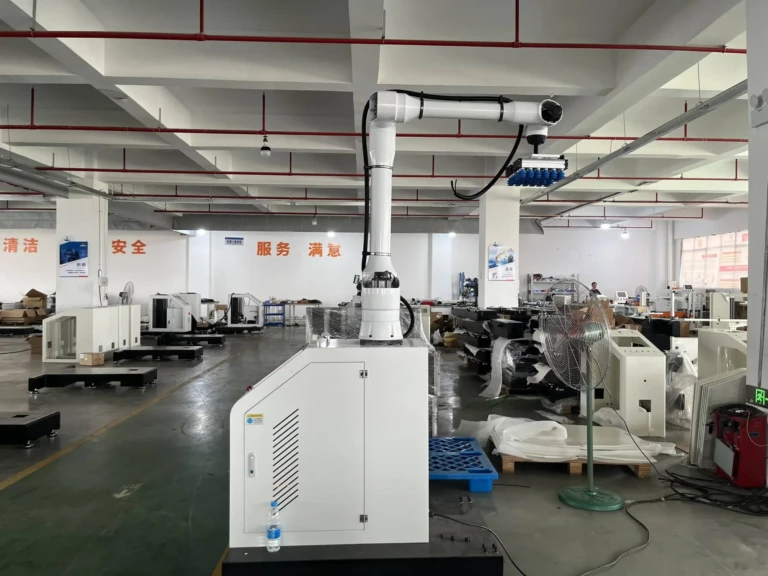
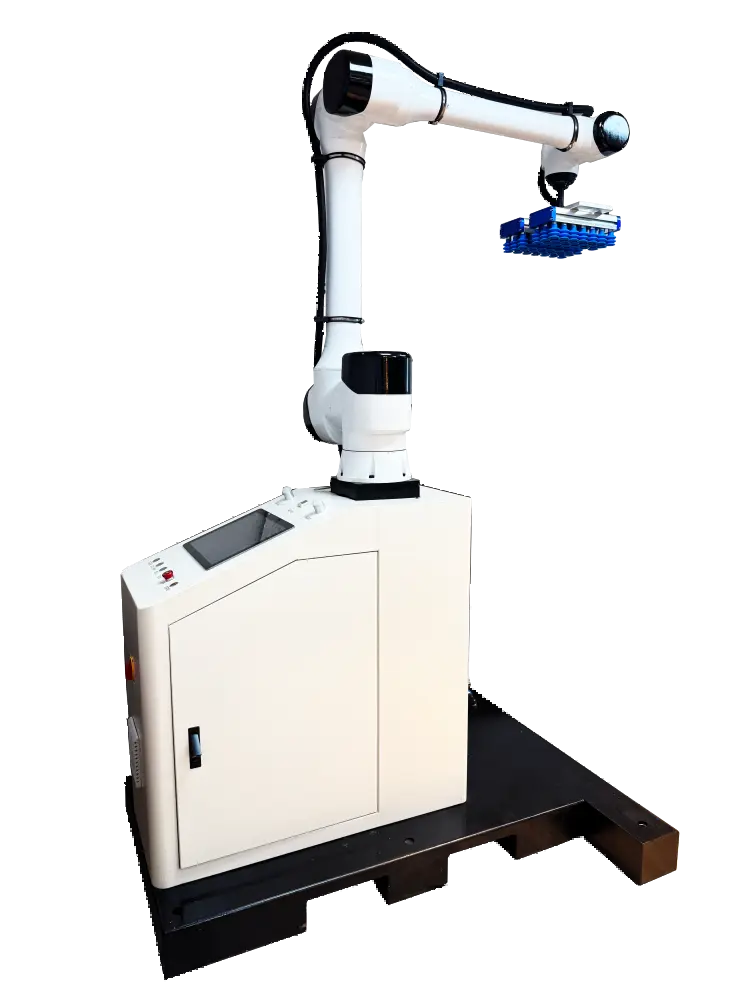
- Collaborative Palletizing Robots (Cobots): Safe for human-robot interaction, ideal for dynamic SMEs.
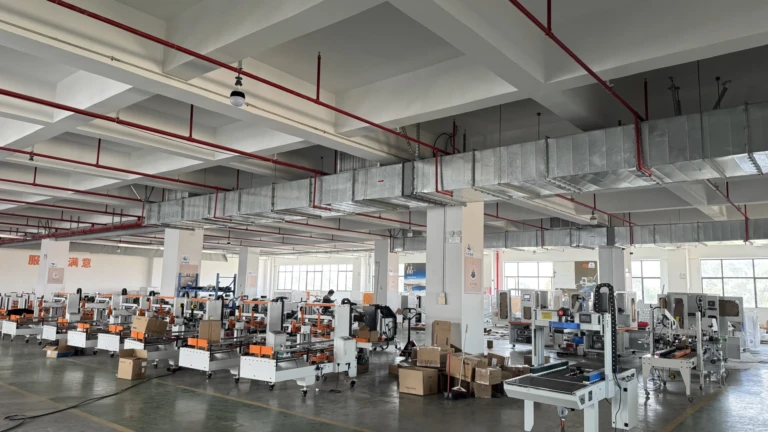
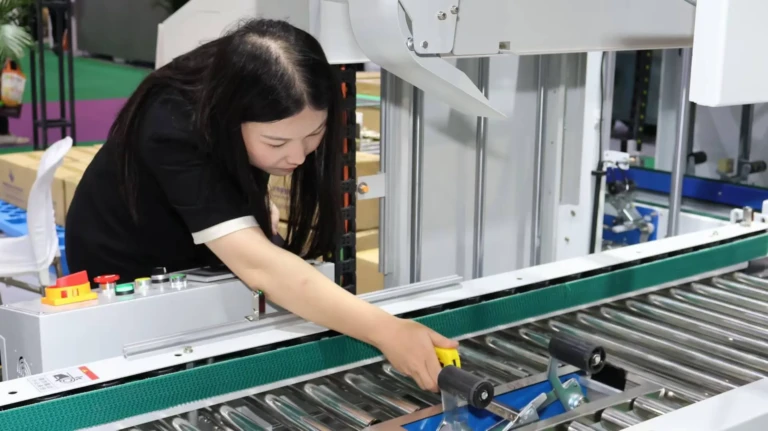
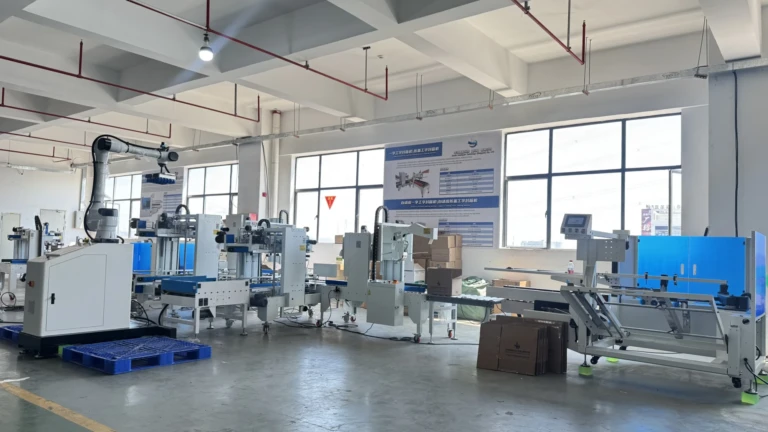
- End-to-End Packaging Systems: From automatic unpacking/sealing to strapping/stretch wrapping, Huaxiu offers integrated workflows.
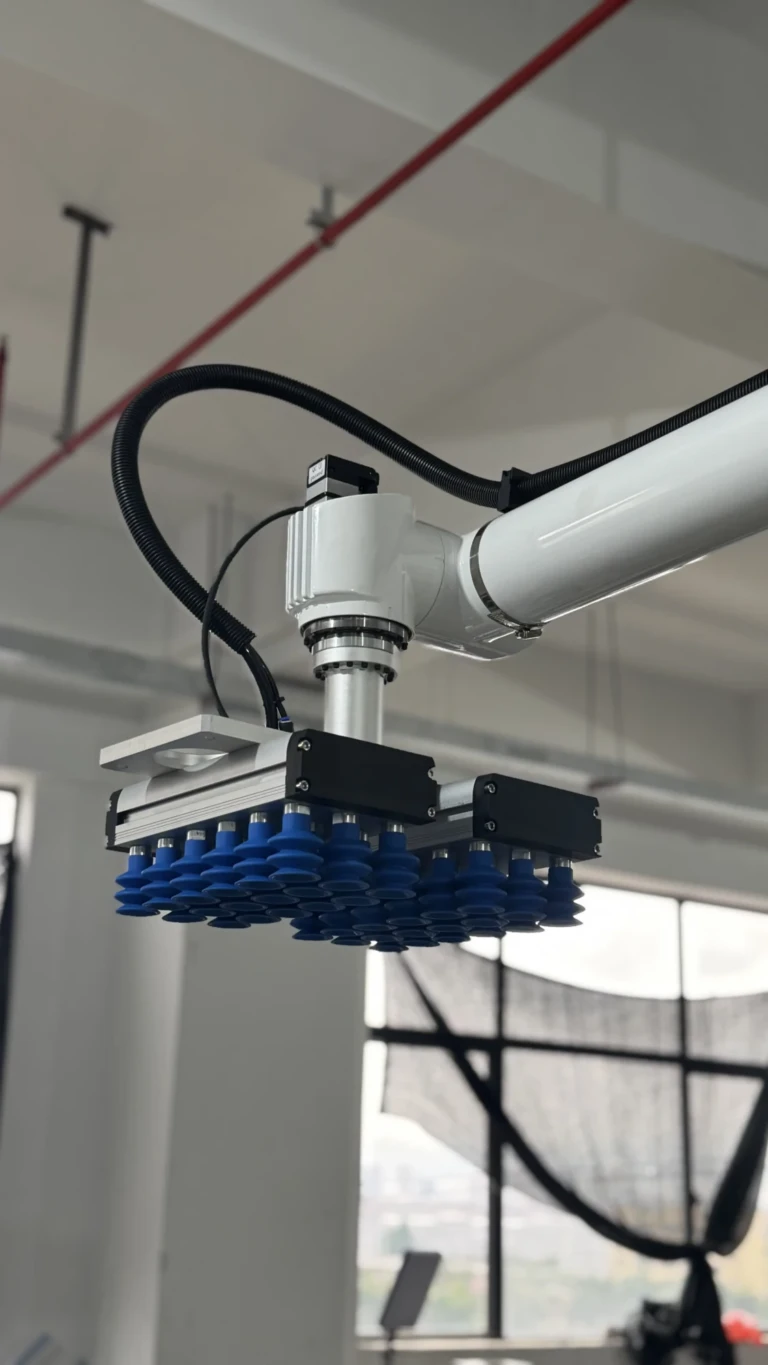
- Adaptive Grippers & Vision Systems: Handles irregular shapes (e.g., bags, bottles) with real-time adjustments.
- Energy-Efficient Designs: Reduce power consumption by up to 35% vs. traditional models.
Innovation Highlights:
- AI-Powered Predictive Maintenance: Minimizes downtime via self-diagnostic algorithms.
- Hybrid Mobile Palletizers: Autonomous mobile robots (AMRs) that transport pallets between stations.
- Cloud-Based Monitoring: Remote diagnostics and performance analytics via IoT platforms.
Top Global Robotic Palletizer Manufacturers Compared
While Huaxiu excels in flexibility and cost-effectiveness, other giants dominate specific niches:
-
FANUC (Japan)
- Strengths: Ultra-high-speed arms (e.g., M-410 series), legendary durability for automotive/heavy industry.
- Ideal For: Large-scale facilities prioritizing speed (up to 1,600 cycles/hour).
-
ABB (Switzerland)
- Strengths: IRB 760FX with advanced path optimization; seamless integration with PLC networks.
- Ideal For: Pharma/food sectors requiring hygienic, washdown-safe models.
-
KUKA (Germany)
- Strengths: KR QUANTEC palletizers for heavy payloads (up to 240kg); OpenController compatibility.
- Ideal For: Aerospace and industrial manufacturing.
-
Yaskawa Motoman (Japan)
- Strengths: Dual-arm solutions (e.g., HC20DT) for mixed-SKU palletizing.
- Ideal For: E-commerce fulfillment centers with highly variable product sizes.
- Brenton Engineering (US)
- Strengths: Custom turnkey solutions with robotic stretch wrapping/storage retrieval.
- Ideal For: Beverage and CPG industries needing end-of-line automation.
The Future of Robotic Palletizing: Trends to Watch
- Cobots Expansion: Smaller enterprises adopt collaborative robots due to lower upfront costs.
- Sustainability Focus: Energy recovery systems and lightweight materials reduce carbon footprints.
- Blockchain Integration: Track palletized shipments in real-time for supply chain transparency.
- AI-Driven Layout Optimization: Dynamic recalibration of stacking patterns based on box dimensions.
Conclusion
Robotic palletizers are no longer a luxury but a necessity for competitive warehousing and manufacturing. While giants like FANUC and ABB dominate in raw power and speed, Huaxiu Robot stands out for its agility, affordability, and holistic approach to packaging automation. By prioritizing modularity and smart software, Huaxiu empowers SMEs to automate without overcommitting resources—a critical edge in fast-evolving markets. Whether you’re handling fragile consumer goods or industrial machinery, aligning with a manufacturer that offers tailored support and future-proof tech will define your operational success.
FAQs: Robotic Palletizer Selection
Q1: How much does a robotic palletizer cost?
A: Entry-level models (e.g., Huaxiu’s collaborative units) start around $50,000, while high-speed systems with advanced vision can exceed $200,000. Consider lifecycle ROI—most businesses recoup costs in 18–36 months via labor/productivity savings.
Q2: Can robotic palletizers handle mixed-SKU pallets?
A: Yes. Leading manufacturers like Yaskawa and Huaxiu offer AI vision systems that identify and adapt to varying box sizes/shapes in real time.
Q3: What maintenance is required?
A: Minimal. Lubrication, joint inspections, and software updates (often remote). Huaxiu’s predictive AI reduces unplanned downtime by up to 70%.
Q4: Are cobots safe to work alongside humans?
A: Absolutely. Collaborative palletizers have force-limiting sensors and emergency stops compliant with ISO/TS 15066 safety standards.
Q5: How long does installation take?
A: Modular systems (e.g., Huaxiu) deploy in weeks. Complex custom lines may require 3–6 months for integration and testing.
Q6: Do robotic palletizers integrate with warehouse management software (WMS)?
A: Top-tier models sync with WMS like SAP or Oracle via API, enabling real-time inventory tracking and order prioritization.
Q7: What industries benefit most?
A: Food/beverage, pharmaceuticals, e-commerce, automotive, and chemicals—any sector with high-volume, repetitive palletizing needs.
Note: Specifications and pricing vary by application. Request a site assessment from manufacturers to tailor solutions to your throughput, space, and budget.