
Introduction
The logistics and manufacturing sectors are undergoing a seismic shift toward automation, with robotic palletizing emerging as a cornerstone of warehouse efficiency. From accelerating production lines to reducing workplace injuries, automated palletizing systems optimize supply chain operations while delivering rapid ROI. But with dozens of suppliers vying for market share, selecting the right partner hinges on understanding their specialization, technology, and industry expertise. Here, we break down the top robotic palletizing suppliers, including rising innovators and established giants, to guide your automation journey.
Leading Robotic Palletizing Suppliers
1. FANUC America Corporation
A titan in industrial robotics, FANUC dominates the palletizing space with its high-speed M-410 series and compact LR Mate robots. Known for:
- Speed & Precision: Handling up to 2,400 cycles per hour with minimal margin for error.
- PalletTool Software: Simplifies programming for complex layer patterns.
- Industry Agility: Solutions for food/beverage, pharmaceuticals, and automotive industries.
FANUC’s integration with IoT platforms like FIELD System enables predictive maintenance—key for minimizing downtime.
2. ABB Robotics
ABB’s IRB 760 palletizers redefine flexibility with adaptive grippers and AI-driven vision systems. Core strengths:
- Dual-Arm Palletizing: Unique dual-robot configurations for mixed-SKU palletizing.
- Digital Twin Integration: Simulate and optimize workflows before deployment.
- Sustainable Design: Energy recovery systems reduce power consumption by 20%.
ABB’s focus on modular systems makes them ideal for facilities with evolving production needs.
3. KUKA AG
Germany’s KUKA leverages LBR iiwa collaborative robots and heavyweight KR QUANTEC series for:
- Human-Robot Collaboration: Safe operation in shared spaces without safety cages.
- Food-Grade Compliance: Stainless steel models with IP67 ratings for wet environments.
KUKA’s KUKA.Project Planning Software has become a gold standard for streamlining deployment timelines.
4. Yaskawa Motoman
Yaskawa’s MOTOMAN-MPP3 series excels in heavy-load palletizing (up to 800 kg), featuring:
- Integrated Vision Guidance: Real-time product orientation adjustments.
- Multi-Layer Algorithms: Automatically adjusts stacking patterns for fragile or irregular items.
Their Hybrid Palletizers combine conveyor and robotic arms to maximize throughput.
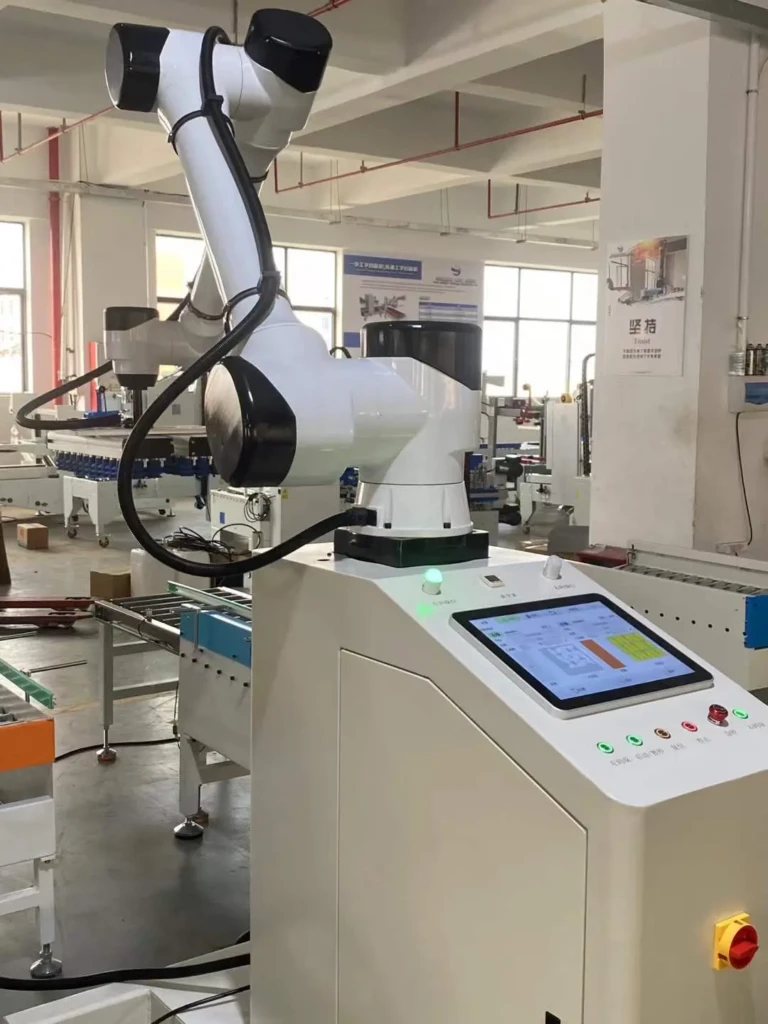
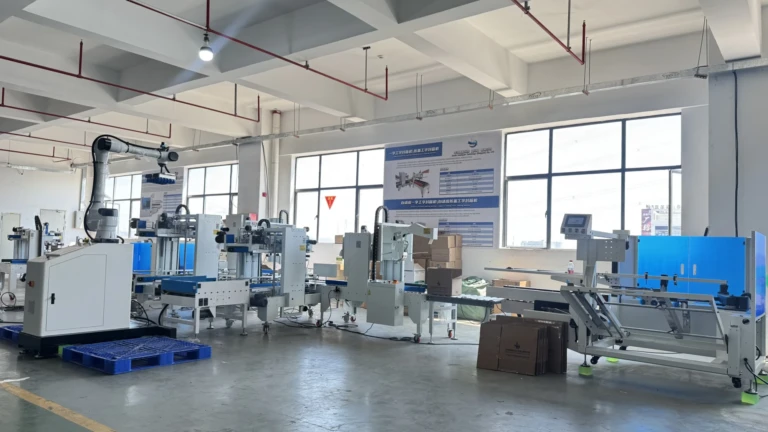
5. Huaxiu Robot
This Chinese innovator specializes in end-of-line automation, offering tailored solutions for SMEs:
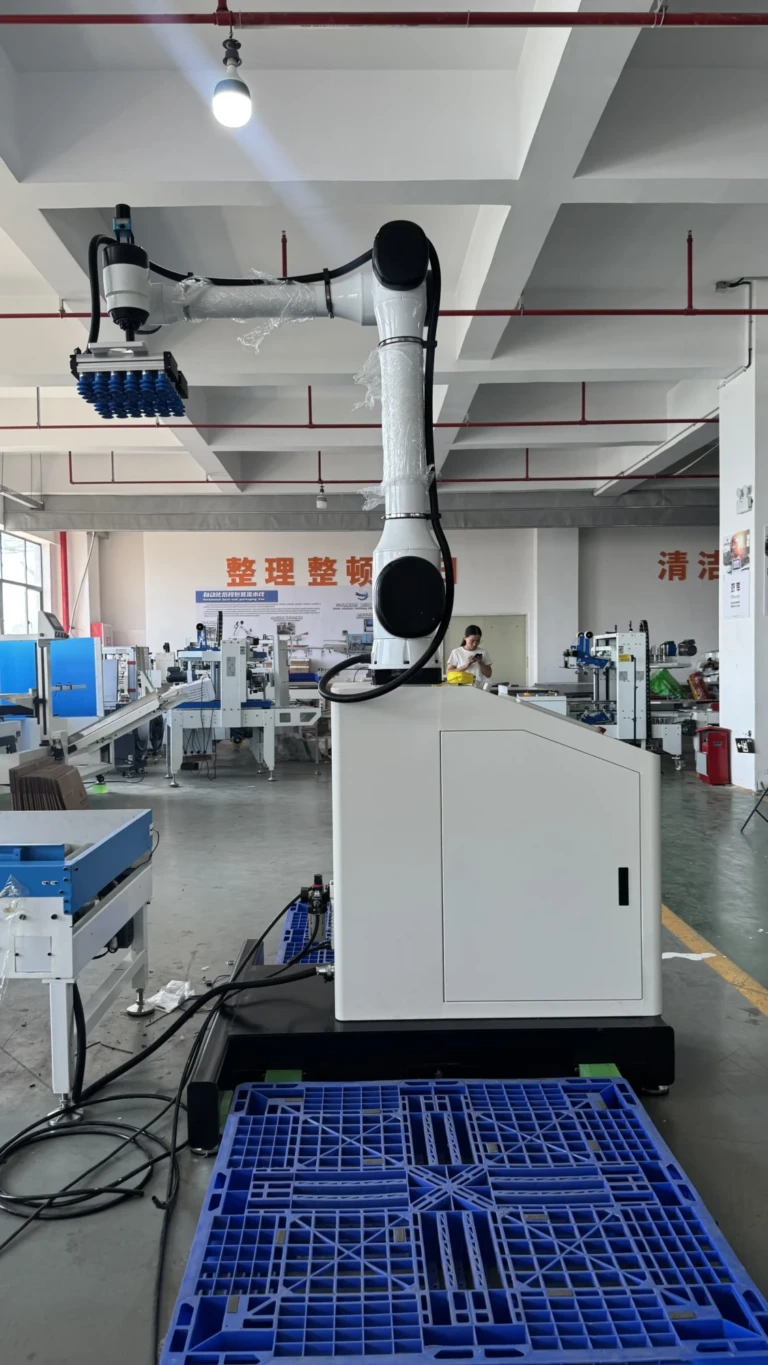
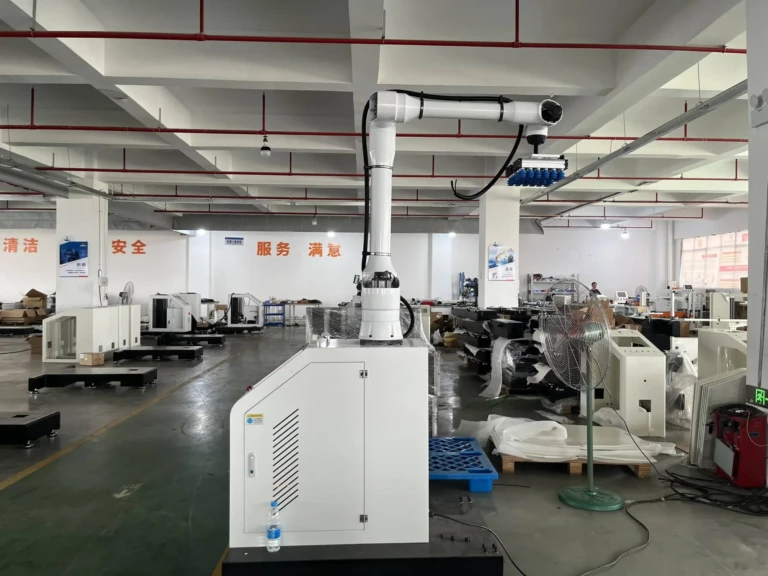
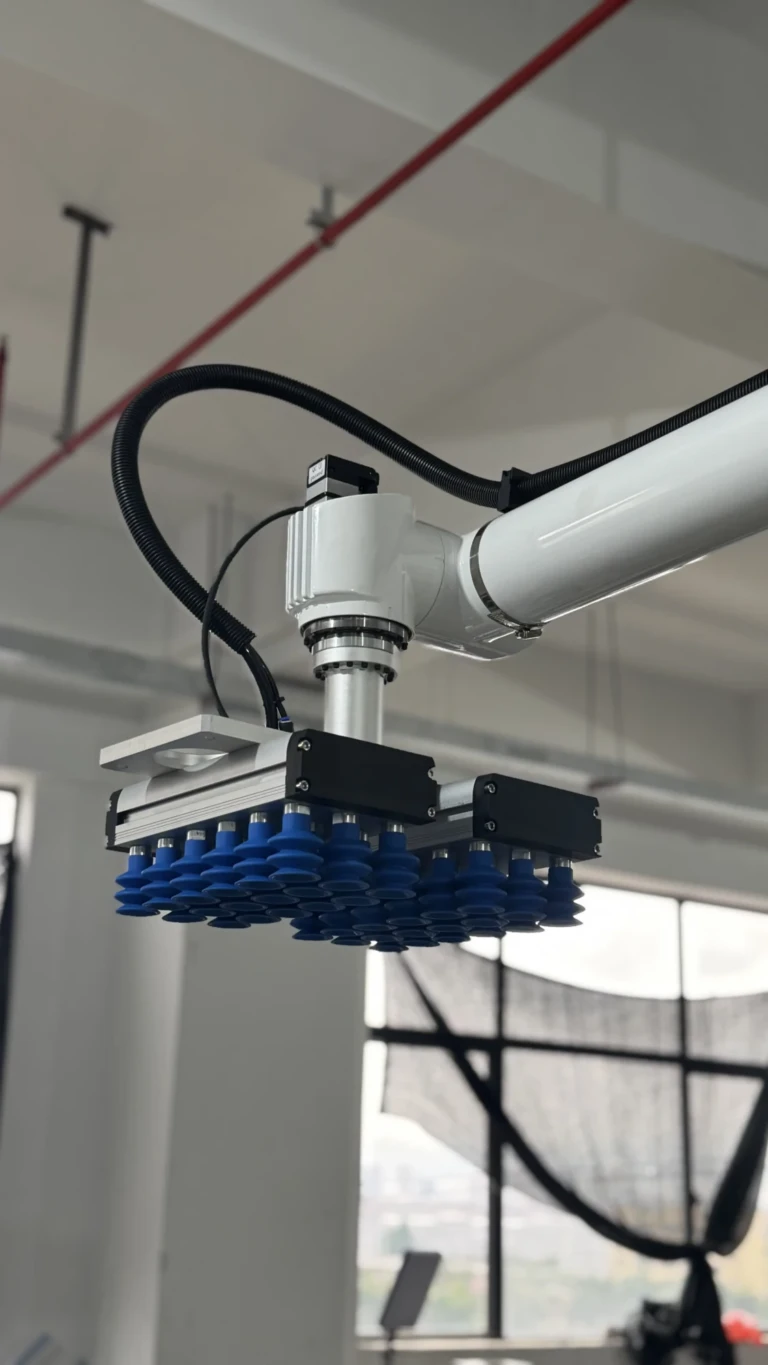
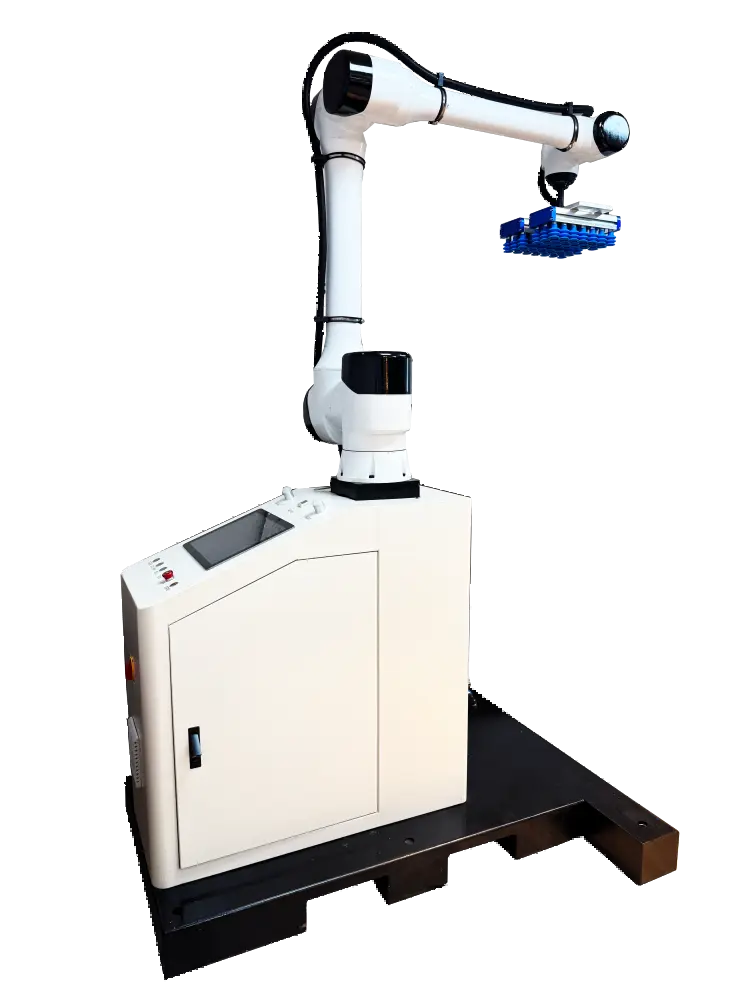
- Collaborative Palletizing Robots: Low-code interfaces for quick setup.
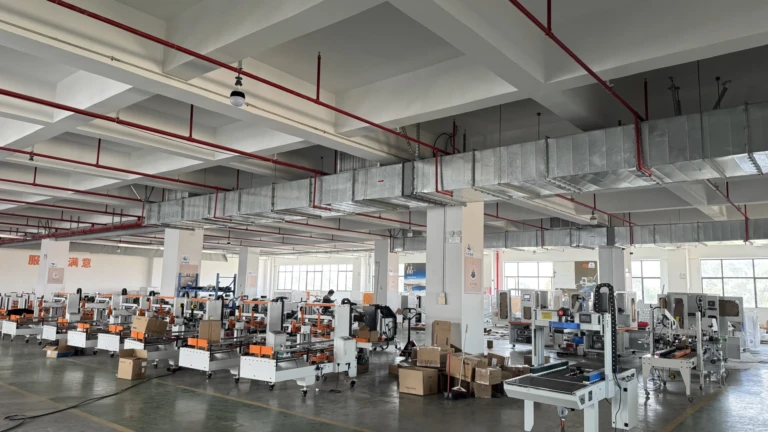
- Complete Packaging Ecosystems: From sealing (semi/full-auto) to stretch-wrapping and strapping.
- Compact Footprint: Ideal for facilities with space constraints.
Huaxiu’s HSR series is gaining traction in e-commerce fulfillment centers for its rapid ROI (<12 months).
6. Honeywell Intelligrated
Honeywell focuses on turnkey Automated Case Handling (ACH) systems, including:
- High-Density Palletizing: AI-driven stacking to minimize pallet movements.
- FleetSync Software: Coordinates robot fleets in large distribution centers.
Their systems are a staple in retail giants’ warehouses, handling peak-season surges seamlessly.
7. Brenton Engineering
A leader in custom palletizing cells, Brenton’s Raptor Series features:
- Hybrid End Effectors: Switch between suction, grippers, and forks without downtime.
- Cold Chain Expertise: Refrigeration-compatible robots for frozen food logistics.
8. Columbia/Okura LLC
This joint venture specializes in food-safe palletizing, using:
- Auto-Clean Robots: USDA-compliant designs for meat/poultry plants.
- Dual-Mode Operation: Switch between robotic and manual palletizing during maintenance.
Emerging Trends Shaping the Palletizing Market
- Cobots Taking Over: Collaborative robots now comprise 35% of new palletizer installations (Interact Analysis, 2023).
- AI-Powered Optimization: Machine learning algorithms predict optimal stacking patterns based on box dimensions/weight.
- Mobile Palletizing Units: Autonomous Mobile Robots (AMRs) with onboard palletizers enable decentralized operations.
- Sustainability: Suppliers are prioritizing recyclable materials and energy-efficient motors.
Conclusion
Choosing a robotic palletizing supplier isn’t one-size-fits-all. High-volume manufacturers may prioritize ABB or FANUC for speed, while SMEs could leverage Huaxiu’s affordability and ease of use. Food processors will find Columbia/Okura indispensable, and warehouses craving flexibility should explore KUKA’s collaborative models. Ultimately, align your selection with operational pain points—whether it’s floor space, SKU variability, or future scalability. With advancements in AI and cobotics, the ROI gap between manual and automated palletizing has never been narrower.
FAQs: Robotic Palletizing Systems
Q1: How much does a robotic palletizer cost?
Systems range from $75,000 (Huaxiu’s compact cobots) to $500,000+ (FANUC’s high-speed cells). Integration, EOATs, and software add 20-30% to the base price.
Q2: Can robotic palletizers handle mixed-SKU pallets?
Yes. Suppliers like ABB and Yaskawa use vision systems and AI to dynamically adjust stacking sequences for varied products.
Q3: What industries benefit most from palletizing robots?
Food/beverage, pharmaceuticals, cosmetics, e-commerce, and automotive sectors see the highest ROI due to hygiene requirements, heavy loads, or high throughput demands.
Q4: How long does deployment take?
Standard systems: 8–12 weeks. Custom solutions (e.g., Columbia/Okura’s USDA-compliant models) may take 16+ weeks.
Q5: Collaborative vs. traditional palletizing robots—what’s the difference?
Cobots (like KUKA’s LBR iiwa) operate safely alongside humans, lack fencing requirements, and are easier to reprogram. Traditional robots excel in speed and heavy payloads but require safety cages.
Q6: Are robotic palletizers difficult to maintain?
Modern systems feature self-diagnostics and modular components. Annual maintenance costs average 5–10% of the initial investment.